
How to Find the Right Autism Therapist: A Neurodivergent Professional's Checklist
If you've spent any time in autistic communities online, you've heard the same story repeated: someone finally works up the courage to see a therapist, only to leave sessions feeling more broken than before. Maybe the therapist kept pushing eye contact. Maybe they framed every autistic trait as a problem to solve. Maybe they had never worked with an autistic person and it showed.
That experience is not uncommon. And it is not your fault.
Autistic people are up to three times more likely to experience anxiety and depression than neurotypical peers, and approximately three times more likely to die by suicide than non-autistic individuals, with autistic women facing even higher relative risk. The mental health stakes are high, and the cost of ending up with the wrong therapist is higher than most people realise.
The stakes of finding the right therapist are not abstract. They are life-altering.
This checklist gives you a practical framework for evaluating therapists before you commit, and for knowing when a therapeutic relationship simply is not working.
Table of Contents
What "Autism-Affirming" Therapy Actually Means
Red Flags: What to Watch Out For
Green Flags and Must-Ask Interview Questions
Where to Actually Find These Therapists
How to Evaluate Fit After the First Session
The Bottom Line
Autism-Affirming
What "Autism-Affirming" Therapy Actually Means
The phrase "autism-affirming" gets used a lot. It has also been adopted by practitioners who use it as a marketing term without understanding what it requires in practice.
At its core, autism-affirming therapy starts from the position that autism is a neurological difference, not a disorder or a collection of symptoms to be eliminated. A genuinely affirming therapist is not trying to make you appear neurotypical. They are helping you navigate a world that was not designed for your brain, while honouring who you actually are.
This means they understand:
Masking (the exhausting process of suppressing autistic traits to fit in) and the burnout it causes
Sensory processing differences and why they matter to daily functioning
Autistic burnout as distinct from (though often co-occurring with) depression
The double empathy problem: communication breakdowns are mutual, not a failure of the autistic person
Affirming therapy also means that your goals drive the work, not a standardised programme designed to make you more palatable to neurotypical environments.
The Autistic Self Advocacy Network (ASAN) has published clear guidance on what constitutes respectful, affirming support. It is worth reading before you start your search, so you can recognise the real thing when you encounter it.
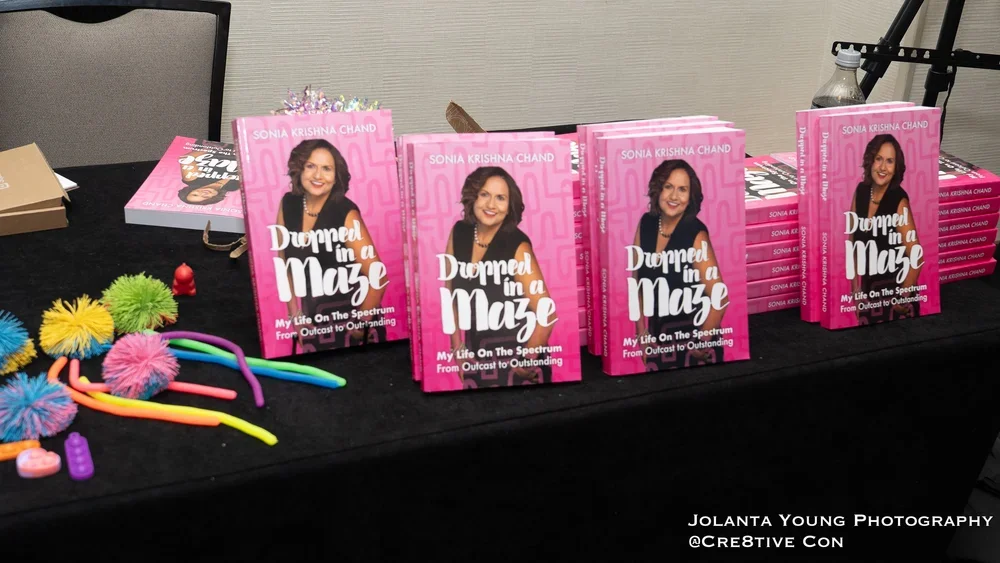
If this topic resonates with you, the themes around navigating systems designed for neurotypical people are explored in depth inDropped in a Maze. Get your copy here.
Red Flags: What to Watch Out For
Many autistic people have finely tuned instincts. If something feels wrong in a therapy session, it probably is. Here are specific warning signs worth naming clearly.
Related reading: 7 Red Flags of Unethical Mental Health Practice
Compliance-Based Approaches
Therapists who rely heavily on ABA or ABA-adjacent methods, particularly those focused on eliminating behaviours rather than understanding their function, are a significant red flag. ABA's core mechanics involve reinforcing neurotypical-appearing behaviour and discouraging autistic behaviour. That is not the same as supporting someone's mental health.
TheAutistic Self Advocacy Network's position on ABA makes this case clearly and is worth sharing with anyone who pushes back on your concern about it.
Framing Autism as the Problem
If a therapist consistently frames your autism as the source of your difficulties rather than examining environmental factors, systemic barriers, or the impact of years of masking, they are working from an outdated and harmful model. Watch for language like "your autism is causing you to" rather than "the demands placed on you are creating".
Pushing Eye Contact or Social Scripts
A therapist who encourages you to make more eye contact, practise small talk, or perform social norms that exhaust you is not helping you. They are helping you mask more effectively. This increases burnout risk, not wellbeing.
Dismissing Sensory Needs
If a therapist minimises sensory sensitivities, treats stimming as a habit to break, or creates an office environment that is overwhelming without offering alternatives, that is a sign they have not done the foundational work of understanding autism.
Ignoring Your Language Preferences
Many autistic people strongly prefer identity-first language ("autistic person" rather than "person with autism"). A therapist who ignores your stated preference, especially after being corrected, is signaling that they are not actually listening to you.
Must-Ask Interview Questions for your Therapist
Green Flags and Must-Ask Interview Questions
Most therapists offer a free initial consultation. Use it. This is your interview of them, not the other way around.
Green Flags to Look For
They follow your lead on language (identity-first vs person-first)
They ask what you want from therapy, not what they think you need
They have experience with or lived proximity to neurodivergence
They understand masking and autistic burnout as distinct concepts
They can name specific frameworks they use, such as ACT or adapted CBT, rather than offering vague assurances
They are comfortable with directness and do not penalise blunt communication
Questions to Ask
"What is your approach to working with autistic adults?" (Listen for whether they focus on changing you or supporting you.)
"How do you view masking and what is your approach to working with it?"
"Do you have experience with autistic burnout specifically, as distinct from depression?"
"How do you handle communication differences, for example if I am very direct or need more processing time?"
"What is your position on ABA?" (A therapist who defends it uncritically is not the right fit for most autistic adults.)
For more honest, unfiltered conversations about neurodivergent mental health, tune into the podcast.https://www.buzzsprout.com/2307116/episodes.
Related reading: 5 Signs You've Found the Right Therapist
Where to Actually Find These Therapists
Standard directories likePsychology Today are a starting point, but their autism filters will surface many practitioners who list autism as a specialty without meaningful affirming practice. Here are more targeted strategies.
Specialist Directories
Inclusive Therapists: a directory specifically built around finding affirming, social-justice-informed therapists, with neurodivergent filters
Neurodivergent Therapist: a directory and resource hub focused specifically on ND-affirming practitioners
AANE (Autism Asperger Network): maintains a therapist referral list with detailed practitioner profiles
Community Recommendations
Ask in autistic community spaces such as Reddit'sr/AutisticAdults andr/autism, local Facebook groups, or Discord communities for late-diagnosed autistic adults. Personal recommendations from other autistic people carry more weight than any directory listing.
Telehealth Has Changed Access
If you are outside a major urban area or find in-person sessions difficult, telehealth dramatically widens your options. Many of the best affirming therapists work entirely online. Do not limit your search geographically if you can avoid it.
Ask Directly Before Booking
When you find a therapist who looks promising, email them first. A brief message asking about their approach to autistic adults will tell you a great deal from the response alone, both in content and in how they receive the question.
How to Evaluate Fit After the First Session
Finding a therapist who looks right on paper is step one. Knowing whether the relationship is actually working is harder, particularly for autistic people who may mask even within therapy sessions.
Here is what to check for yourself after the first few sessions.
Notice Your Body, Not Just Your Mind
Many autistic people are skilled at intellectualising their experiences and less connected to somatic signals. After a session, notice: are you exhausted in the familiar way that follows masking? Are you relieved it is over? Or do you feel genuinely lighter, even if the session was difficult?
Are Your Goals Driving the Sessions?
After two or three sessions, you should be able to clearly articulate what you are working on and why. If sessions feel directionless, or if the therapist consistently redirects toward their own agenda, that is worth naming directly. Notice how they respond to that directness.
Do You Feel Safer Being Yourself?
This is the clearest measure. Over time, good therapy with a genuinely affirming practitioner should mean you mask less in sessions, not more. If you are performing wellness or performing neurotypicality in the therapy room, that is important information.
Trust Your Instincts, Even If You Have Been Told Not To
Many autistic people have been socialised to distrust their own perceptions, told that they are too sensitive, misreading situations, or overreacting. This history can make it hard to trust a gut sense that something is wrong in therapy.
Trust it anyway. You do not owe any therapist your continued attendance. Leaving a poor therapeutic fit is not failure. It is self-advocacy.
Related reading: Breaking the Stigma of ABA
The experience of having your instincts dismissed is one of the threads running throughDropped in a Maze. If that resonates, grab a copy here.
The Bottom Line
You deserve a therapist who understands that autism is not a problem to be fixed, and who has the knowledge and humility to back that up in practice. The process of finding that person can be slow and frustrating, but it is worth the investment.
Use this checklist. Ask the hard questions in the consultation call. And when something feels wrong, believe yourself.
The right support exists. You are allowed to hold out for it.
Get your copy of Dropped in a Maze and Listen to the podcast for honest conversations about neurodivergence, mental health, and finding support that actually works
6 Ways to Support Your Autistic Friend
You care about your autistic friend. You want to be supportive. But you're not quite sure how to help without overstepping or coming across as condescending.
Maybe you've noticed they struggle in certain situations. Maybe they've opened up to you about their challenges. Or maybe you just want to be a better friend and create a more inclusive friendship.
The good news? Supporting an autistic friend doesn't require grand gestures or complicated strategies. It requires understanding, patience, and a willingness to see the world from their perspective.
April is Autism Acceptance Month, and there's no better time to learn how to show up for your autistic friends in meaningful ways. Here are six practical strategies that actually make a difference.
Table of Contents
Learn What Autism Actually Is (Beyond Stereotypes)
Respect Their Communication Style
Understand Sensory Sensitivities Are Real
Support Their Need for Routine and Predictability
Advocate Alongside Them, Not For Them
Educate Yourself Continuously
Acceptance is the first stage of support
1. Learn What Autism Actually Is (Beyond Stereotypes)
Move Beyond What You've Seen on TV
Most people's understanding of autism comes from movies like Rain Man or TV shows that portray autistic characters as either savants or completely non-verbal. The reality is much more nuanced.
Autism is a neurological difference that affects how people process information, communicate, and experience the world. It's a spectrum, which means it looks different for everyone.
Your autistic friend might:
Make excellent eye contact or avoid it entirely
Be highly verbal or prefer written communication
Excel in certain areas while struggling in others
Need accommodations that seem unusual to you but are essential for them
Start With Reliable Resources
Instead of relying on outdated stereotypes or random internet articles, educate yourself through credible sources.
TheAutism Self Advocacy Network (ASAN) is an excellent starting point. Run by autistic people themselves, ASAN provides accurate information about autism from those who actually live with it.
Another great resource is theAutistic Women & Nonbinary Network (AWN), which addresses the unique experiences of autistic women and nonbinary individuals who are often underdiagnosed and misunderstood.
Ask Your Friend About Their Experience
Every autistic person is different. What's true for one person might not be true for another.
The best way to understand your friend's specific experience? Ask them.
Questions you might consider:
"What does autism mean to you?"
"Are there things I do that make social situations harder for you?"
"How can I be a better friend to you?"
"What do you wish people understood about autism?"
Just make sure you're asking because you genuinely want to understand, not because you're treating them like a teaching opportunity. There's a difference between curiosity and interrogation.
2. Respect Their Communication Style
Not Everyone Communicates the Same Way
Your autistic friend might communicate differently than you're used to. They might:
Take longer to process what you've said before responding
Prefer texting over phone calls
Be very direct without social "softening" phrases
Struggle with open-ended questions
Need things explained explicitly rather than implied
None of these differences make their communication "wrong." It's just different from neurotypical communication patterns.
Direct Doesn't Mean Rude
One of the biggest misunderstandings about autistic communication is interpreting directness as rudeness.
If your autistic friend says "I don't want to go to that restaurant," they're not being difficult. They're being honest. Neurotypical people might say "Oh, I'm not sure, maybe we could go somewhere else?" to soften the message.
Autistic communication tends to be more straightforward. What you hear is what they mean. No hidden messages, no passive aggression, no reading between the lines.
This is actually refreshing once you get used to it. You always know where you stand.
Give Them Processing Time
If you ask your autistic friend a question and they don't respond immediately, don't assume they're ignoring you or didn't hear you.
They might be:
Processing what you said
Formulating their response
Dealing with sensory input that's distracting them
Managing internal thoughts before they can respond
Give them time. Don't fill the silence with more questions or rephrase what you just said. Just wait.
Accommodate Their Preferred Communication Method
Some autistic people find phone calls overwhelming but are great at texting. Others prefer in-person conversations where they can read body language.
Ask your friend how they prefer to communicate and respect that preference. If they say "Can we text about this instead of calling?" that's not rejection—it's them telling you how they communicate best.
To understand how autism affects communication and daily interactions, read How Autism Affects Daily Life.
Understand Sensory Sensitivitie
3. Understand Sensory Sensitivities Are Real
The World Is Overwhelming
Imagine walking into a restaurant where the music is too loud, the lights are too bright, people are talking over each other, there are competing smells from the kitchen, and your clothes tag is scratching your neck.
For many autistic people, this isn't an occasional annoyance. This is daily life.
Sensory sensitivities mean that sounds, lights, textures, smells, and other stimuli that neurotypical people can filter out become overwhelming and sometimes painful.
Common Sensory Triggers
Your autistic friend might be sensitive to:
Sound: Background noise, multiple conversations at once, sudden loud noises, certain frequencies, humming lights or appliances
Light: Fluorescent lighting, bright sunlight, flashing lights, LED screens
Touch: Certain fabrics, tags in clothing, tight or loose clothing, unexpected physical contact, specific textures
Smell: Strong perfumes, cleaning products, food smells, air fresheners
Taste/Texture: Specific food textures, mixed textures, strong flavors
How to Be Supportive
Ask before making plans. Instead of picking a loud, crowded restaurant, ask "Is there a place you're comfortable with?" or suggest a quieter alternative.
Be understanding if they need to leave. If your friend says they need to go because they're getting overwhelmed, don't take it personally. Sensory overload is real and can be debilitating.
Don't dismiss their experience. "It's not that loud" or "Just ignore it" aren't helpful. What's manageable for you might be excruciating for them.
Respect their coping mechanisms. If they wear sunglasses indoors, use noise-canceling headphones, or stim (repetitive movements like hand-flapping or rocking), that's how they regulate their nervous system. Don't ask them to stop.
Sensory Overload Isn't Dramatic
When autistic people talk about sensory overload, they're not exaggerating for effect. It's a physiological response that can lead to:
Shutdowns (going non-verbal, unable to process information)
Meltdowns (emotional overwhelm that looks like a breakdown)
Physical pain
Exhaustion that lasts for days
Being a supportive friend means recognizing these aren't choices or tantrums. They're neurological responses to overstimulation.
Support your autistic friends always
4. Support Their Need for Routine and Predictability
Why Routines Matter
Many autistic people rely heavily on routines and predictability. This isn't about being inflexible or controlling—it's about managing a world that often feels chaotic and overwhelming.
Routines provide:
A sense of safety and control
Reduced anxiety about what's coming next
Mental energy conservation
Structure in an unpredictable world
How Last-Minute Changes Affect Them
What seems like a small, spontaneous change to you might completely derail your autistic friend's day.
"Let's grab dinner tonight instead of tomorrow" might seem fun and casual to you. For your autistic friend, it might mean:
Disrupting their planned routine for the evening
Not having time to mentally prepare for social interaction
Anxiety about the unexpected change
Needing to reorganize other commitments
This doesn't mean you can never be spontaneous. It just means understanding that what's easy for you might be difficult for them.
How to Be Considerate
Give advance notice when possible: If you're planning to get together, give your friend as much heads-up as you can. A week's notice is better than a day's notice.
Provide details: Instead of "Want to hang out Saturday?" try "Want to get coffee at that café on Main Street Saturday at 2pm? We could stay for about an hour."
Specific details help autistic people prepare mentally and reduce anxiety about unknowns.
Understand if they decline last-minute invitations: It's not that they don't want to spend time with you. They might just not have the capacity to adjust their day on short notice.
Stick to plans when you make them: Constantly changing or canceling plans is exhausting for everyone, but especially for someone who has already mentally prepared for the original plan.
5. Advocate Alongside Them, Not For Them
The Difference Between Support and Speaking Over
There's a crucial difference between advocating alongside your autistic friend and speaking for them.
Advocating alongside means:
Amplifying their voice, not replacing it
Supporting their decisions, even if you'd choose differently
Standing up against ableism when you see it
Creating space for them to self-advocate
Speaking for them means:
Deciding what's best for them without asking
Answering questions directed at them
Making assumptions about what they need
Treating them as incapable of speaking for themselves
How to Advocate Effectively
Listen to what they're telling you: If your autistic friend says something is a problem, believe them. Don't dismiss or minimize their experience.
Challenge ableist language and attitudes: When someone uses "autistic" as an insult or says something offensive about autism, speak up. You don't have to give a lecture—sometimes a simple "That's not cool" is enough.
Support their self-advocacy: If your friend is trying to explain their needs to someone (a boss, teacher, service provider), be their backup. Your presence alone can make them feel more confident.
Educate others, but don't burden your friend: If someone has questions about autism, you can direct them to resources rather than expecting your autistic friend to constantly explain themselves.
Understand the importance of advocacy. The autistic community has long fought for acceptance, accommodations, and basic respect. The Importance of Advocacy in Autism explores why this work matters and how you can contribute to creating a more inclusive world.
Respect Their Autonomy
Your autistic friend is the expert on their own experience. Even if you think you know what's best for them, check yourself.
They have the right to:
Make their own decisions
Decline help they don't want
Choose how they navigate the world
Define what support looks like for them
Good intentions don't override autonomy. Always ask before assuming what kind of support someone needs.
One powerful way to advocate is by sharing resources that increase understanding. The On the Spectrum Empowerment Stories podcast features real conversations with autistic individuals and experts, providing authentic perspectives that challenge stereotypes. Listening to episodes together or recommending specific episodes to your friend shows you're committed to understanding their experience.
6. Educate Yourself Continuously
Your Friend Isn't Your Teacher
Yes, asking your autistic friend questions can be part of building understanding. But it's not their job to educate you about everything autism-related.
Constantly asking them to explain autism, justify their needs, or teach you about accommodations puts an unfair burden on them.
Instead, take initiative to educate yourself through books, articles, podcasts, and resources created by autistic people.
Seek Out Autistic Voices
The best autism education comes from autistic people themselves—not from parents of autistic children, not from therapists, not from organizations that don't include autistic leadership.
Look for content created by actually autistic individuals. Their lived experience provides insight that no amount of clinical training can match.
Sonia Chand's book offers exactly this kind of firsthand perspective. Get your copy here to understand the autistic experience from someone who's lived it. Reading books like this not only educates you but also shows your friend you're willing to put in the work to understand their world.
Stay Current on Autism Research and Advocacy
Our understanding of autism continues to evolve. What was considered "best practice" ten years ago might be considered harmful today.
Stay updated on:
Current research about autism
Advocacy movements led by autistic people
Changes in terminology and language
Critiques of harmful therapies or approaches
Follow autistic advocates on social media. Read blogs written by autistic adults. Listen to podcasts hosted by autistic individuals.
Recognize Your Own Biases
We all absorb ableist messages from society. Part of being a good friend is recognizing when those biases show up in your thinking.
Ask yourself:
Am I treating my friend as less capable because they're autistic?
Am I making assumptions about what they can or can't do?
Am I viewing their differences as deficits rather than just differences?
Am I trying to "fix" them instead of accepting them?
This isn't about beating yourself up for having biases. It's about recognizing them so you can actively work against them.
Keep Learning, Keep Growing
Supporting your autistic friend isn't a one-time thing. It's an ongoing commitment to understanding, respecting, and valuing who they are.
Another way to deepen your understanding is by gifting your autistic friend resources that validate their experience. Purchase Sonia's book as a thoughtful gesture that says "I see you, I value your perspective, and I want to understand your world better." Many autistic individuals find comfort in reading about others' experiences—it reminds them they're not alone.
Dropped in a Maze
Being a True Friend
At the end of the day, supporting your autistic friend comes down to the same principles that define any good friendship: respect, communication, empathy, and genuine care.
The difference is being willing to expand your understanding of what those things look like. Respect might mean honoring their need to leave a loud environment. Communication might mean texting instead of calling. Empathy might mean recognizing that their brain processes the world differently than yours.
You don't have to be perfect. You'll make mistakes. What matters is that you're willing to learn, adjust, and show up consistently.
Small Actions Make a Big Difference
You don't need to become an autism expert overnight. Small, consistent actions matter more than grand gestures:
Believe them when they tell you something is hard
Don't force eye contact
Accept their stims without comment
Choose quieter venues when possible
Give them advance notice about plans
Don't take it personally when they need space
Challenge ableism when you encounter it
Keep educating yourself
These aren't difficult things. They just require awareness and intention.
This Autism Acceptance Month, Go Deeper
April is Autism Month—a time to move beyond simple "awareness" and into genuine understanding and inclusion.
Here are three concrete actions you can take this month:
1. Listen to autistic voices: Start with the On the Spectrum Empowerment Stories podcast, which features real conversations about the autistic experience. Share episodes that resonate with your autistic friend—it might spark meaningful conversations between you.
2. Educate yourself: Read books written by autistic authors. Sonia's book provides invaluable firsthand perspective on navigating the world as an autistic person. Understanding her journey will help you understand your friend's.
3. Have a conversation: Use what you've learned as a starting point to ask your friend how you can be more supportive. Listen without defensiveness. Adjust your behavior based on what they tell you.
Autism Month isn't just about posting blue puzzle pieces (which many autistic people actually find offensive). It's about doing the real work of creating a world where your autistic friend feels safe, valued, and fully accepted for who they are.
That work starts with you. It starts with education, empathy, and a willingness to see the world through their eyes.
Be the friend who says "You don't have to mask with me. You don't have to pretend. You're perfect exactly as you are."
That's what real support looks like. And that's what every autistic person deserves.
NeuroWell: 7 Ways to Create Safer and Happier Classrooms
Classrooms are struggling. Teachers are exhausted. Students are disengaged. And despite countless new initiatives, programs, and technology, things seem to be getting worse, not better.
The problem isn't lack of effort. Teachers are working harder than ever. The problem is we're focused on the wrong things. What if instead of teaching content, we started teaching kids? What if we aligned our classrooms with actual brain science instead of outdated models that treat students like information receptacles?
Dr. Lisa Riegel's NeuroWell framework does exactly that. By combining neuroscience with practical classroom strategies, NeuroWell creates environments where students feel safe, engaged, and ready to learn—and where teachers don't burn out trying to make it happen.
Here are seven core principles from the NeuroWell approach that can transform any classroom into a space where both students and teachers actually want to be.
Table of Contents
Build Belonging First, Everything Else Second
Transform Your Classroom Into a True Learning Community
Give Every Student a Role That Matters
Use Learning Sprints to Match Actual Attention Spans
Make Learning Relevant or Lose Your Students
Understand Behavior Through Brain Science, Not Punishment
Measure What Actually Matters for the Future
1. Build Belonging First, Everything Else Second
The Invisible Student Problem
There's a hidden crisis happening in schools right now. Students are physically present but emotionally absent. They come in, sit down, stay quiet, and leave—completely unseen by the adults around them.
These aren't just the "troubled" kids acting out. They're often the quiet ones who slip through the cracks because they don't cause disruptions.
When students don't feel like they belong, their bodies respond as if they're in danger. They shut down emotionally. They disengage mentally. And no amount of "rigorous instruction" will reach a brain that's in survival mode.
The Science of Collective Identity
Research on collective identity reveals something important: humans are wired for belonging. When we feel part of something bigger than ourselves, we're more engaged, more motivated, and more willing to contribute.
Think about sports teams, military units, or tight-knit companies. People wear the gear, adopt the language, and identify with the group—even if they've never officially been part of it.
Schools can create this same sense of belonging, but most don't. Instead, students feel isolated, alone in a sea of desks, competing rather than collaborating.
Creating Your Classroom's Collective Identity
Building belonging starts with intentional practices:
Create a class name, mascot, and mantra: Yes, even in high school. The NFL does it. Sororities do it. Ted Lasso's "Believe" sign works because it creates shared identity.
Develop rituals and traditions: Weekly celebrations, inside jokes, specific phrases that only your class uses—these build familiarity and connection.
Use nicknames appropriately: When a teacher uses a friendly nickname, it signals relationship and trust. It says "we know each other."
Make "we" language the default: "We're a learning community" beats "I'm the teacher and you're my students" every time.
2. Transform Your Classroom Into a True Learning Community
The Hierarchy Problem
Traditional classrooms operate on a power structure: teacher at the top, students as subordinates who follow orders.
This creates compliance at best, resistance at worst. It doesn't create engagement.
A learning community operates differently. Everyone has a role. Everyone contributes. The mission isn't "do what the teacher says"—it's "we're all here to learn together."
Defining Good Learning Together
Start by asking students to define what makes a good learner. Not what the textbook says, but what they think.
Then identify characteristics of good community members. What does it look like to support each other's learning? What behaviors help versus hurt the group?
Make these definitions concrete. "Be respectful" is too vague. "Let people finish talking before interrupting" is specific and observable.
Goal-Setting With Peer Support
Once you've defined what good learning looks like, have students set personal goals.
Maybe someone struggles with coming to class prepared. Maybe another person interrupts constantly. Maybe someone else has trouble getting started on assignments.
Group students so they can support each other's goals. This builds accountability without punishment. It creates a culture where we help each other improve rather than compete to be the best.
Want to hear Dr. Riegel explain exactly how she builds these learning communities from day one? Listen to her full interview on the On the Spectrum Empowerment Stories podcast where she walks through specific scripts and strategies.
3. Give Every Student a Role That Matters
Jobs Create Purpose
Right now, most students have one job: sit down, be quiet, absorb information, regurgitate it on tests.
That's not engaging. It's not purposeful. And for neurodivergent students or those who learn differently, it's often completely disconnected from how they actually function.
What if every student had a specific role in the classroom that contributed to the community?
Practical Classroom Jobs
Sound Manager: Turns lights off when the room gets too loud. Clicks a doorbell to signal volume control.
Tech Manager: Passes out and collects devices. Troubleshoots basic tech issues.
Previewer: Starts class by reviewing the day's learning targets.
Reviewer: Ends class by summarizing what was covered and what's coming next.
Supply Manager: Distributes and organizes materials.
Cleaner: Wipes tables before the end of class.
These aren't busywork. They're legitimate responsibilities that keep the classroom running smoothly.
Adapting Roles for Different Needs
Not every student is comfortable with every role. A neurodivergent student who struggles with public speaking might not want to be the previewer, but they might excel as the supply manager.
Some teachers have students apply for the jobs they want. Others rotate roles so everyone gets different experiences.
The key is making sure everyone has something—a reason to show up, a way to contribute, a sense of "this classroom needs me."
When students have purpose, engagement follows.
Want to hear Dr. Riegel explain Neurowell in detai? Listen to her full interview on the On the Spectrum Empowerment Stories podcast where she walks through specific scripts and strategies.
4. Use Learning Sprints to Match Actual Attention Spans
The 45-Minute Lecture Myth
Teachers still design lessons as if students can sit and absorb information for 45 straight minutes.
They can't. Adults can't either.
Our brains aren't built for sustained passive attention. We need movement, social interaction, and mental breaks.
The Learning Sprint Model
Instead of lecturing for extended periods, chunk instruction into sprints:
10 minutes of direct instruction: Then a 2-5 minute break for unstructured conversation or a positivity prompt.
Another 10 minutes of learning: Then another brief social break.
This pattern continues throughout the class period.
Positivity Prompts That Build Connection
During those short breaks, use prompts like:
"Turn to your neighbor and tell them one thing you really like about them"
"Share one good thing that happened today"
"Tell someone next to you something people don't know about you that makes you special"
These aren't wasted time. They're teaching social skills, building relationships, and giving brains the break they need to consolidate learning.
Plus, they address the complaint that "kids today don't know how to socialize." They'll never learn if we don't give them safe opportunities to practice.
5. Make Learning Relevant or Lose Your Students
The Disengagement Crisis Isn't About Laziness
Absenteeism is skyrocketing. Students are checked out. And the usual response is to blame kids for not caring or being disrespectful.
But what if the problem isn't disengagement—it's irrelevance?
Students today have access to all information instantly through the internet. They can ask ChatGPT any factual question and get an answer in seconds.
So when we ask them to memorize dates, definitions, and formulas they could look up in five seconds, they rightfully ask: why?
Reframing Assignments for the AI Era
Instead of asking "Can ChatGPT do this assignment?" and then punishing students who use it, ask "How can I design this assignment so ChatGPT is a tool, not the answer?"
Focus on:
Application of knowledge, not regurgitation
Creative problem-solving with multiple possible solutions
Collaboration that requires human interaction
Reflection on the learning process itself
Projects that connect to students' actual lives and interests
When learning has relevance, students engage. When it doesn't, they check out—and we can't blame them.
6. Understand Behavior Through Brain Science, Not Punishment
When a student "misbehaves," our instinct is often to punish, correct, or remove them from the situation.
But behavior isn't about defiance. It's the intersection of biology and context.
Every behavior a student exhibits is their brain's response to their entire life experience up to that moment—their home situation, past trauma, neurological wiring, current stress levels, and the environment you've created.
The Regulated Teacher Creates Regulated Students
If you're dysregulated—stressed, anxious, frustrated, exhausted—your students will mirror that energy.
If you're calm, centered, and emotionally safe, students can access that calm too.
This is especially critical for neurodivergent students who may already be managing sensory overload, executive function challenges, or social anxiety.
Creating Emotional and Intellectual Safety
Safety isn't just about locked doors and security protocols. It's about:
Emotional safety: Students can express feelings without judgment. They can make mistakes without shame. They can ask for help without being labeled "needy."
Intellectual safety: It's okay to not understand something. Questions are welcomed, not punished. Struggle is part of learning, not a sign of failure.
When you understand that the kid acting out is actually a kid in pain, you respond differently.
You don't take it personally. You don't escalate. You create a context so different from what they experience outside school that their brain makes new, positive associations.
You become the safe oasis in their otherwise chaotic world. And that changes everything.
7. Measure What Actually Matters for the Future
The Testing Trap
Right now, schools measure math scores and reading scores. Maybe some end-of-course exams on specific content.
That's it. That's what determines whether teachers are "effective" and schools are "successful."
The problem? Those metrics measure the things AI can do better than humans.
What we're not measuring:
Can students think critically?
Can they communicate effectively?
Can they work collaboratively?
Can they resolve conflicts?
Can they self-regulate?
Can they show empathy?
These are the skills that will matter in the future. But because we don't measure them, we don't prioritize them.
What You Measure Matters
If you want students to be happy, healthy, and successful, you can't only measure their ability to recall facts.
You need observable, measurable indicators of the skills that actually matter:
Critical thinking: What does it look like? What does it sound like? How do we assess it beyond just the final product?
Communication: Are students learning to express ideas clearly? To listen actively? To adapt their message for different audiences?
Community contribution: Are they supporting each other's learning? Taking responsibility for the group's success?
Self-awareness and regulation: Can they identify when they're dysregulated? Do they have strategies to calm themselves?
The Equity Gap in "Teaching"
Teachers often say "I teach collaboration by putting students in groups."
But the students who already know how to collaborate do great. The ones who don't? They're never actually taught.
That's an equity issue. We assume skills rather than explicitly teaching them.
The same goes for critical thinking, communication, and all the "soft skills" that are actually the hardest to develop.
To hear Dr. Riegel's complete framework for measuring what matters and creating systems-level change, check out the full podcast episode. She breaks down exactly how leaders can shift from aspirational goals to operational reality.
Why NeuroWell Matters Right Now
Education is at a crossroads. With potential cuts to the Department of Education, increased scrutiny on teachers, and rapid changes from AI, schools need a framework that actually works.
NeuroWell isn't about adding more to teachers' plates. It's about reframing what's already happening through a brain-science lens.
It's about recognizing that:
Belonging comes before learning
Community beats hierarchy
Purpose drives engagement
Relevance matters more than rigor
Behavior is communication, not defiance
What we measure determines what we value
For Teachers
You don't have to become Hollywood's version of the heroic teacher who sacrifices everything. You can make a massive difference in 45 minutes a day by creating a space where students feel safe, seen, and valued.
For Parents
If your child is struggling in school, it might not be about their ability or effort. It might be about a system that isn't designed for how their brain actually works.
Advocate for environments that prioritize belonging, safety, and relevance over compliance and test scores.
For Leaders
Culture eats strategy for breakfast. You can implement all the programs you want, but if teachers don't feel supported and students don't feel safe, nothing will stick.
Start with the conditions that allow brains to learn, then build from there.
Taking the First Step
You don't have to overhaul your entire classroom or school overnight. Small shifts create big changes when they're aligned with how brains actually work.
The NeuroWell framework isn't about perfection. It's about progress. It's about creating classrooms where both teachers and students can thrive—not just survive.
Ready to transform your classroom or school? Check out the full podcast episode here
15 Reasons Why Being on the Autism Spectrum Is Awesome
For most of my life, the world told me that my autism was a problem to be solved. I was made to feel like I was too much, not enough, and everything in between. But somewhere along the way, I stopped believing that story.
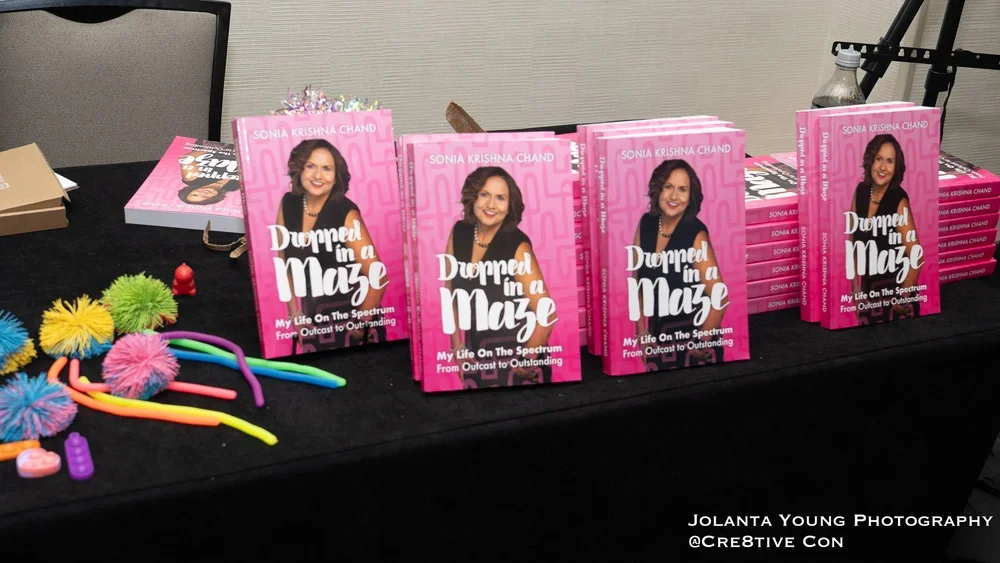
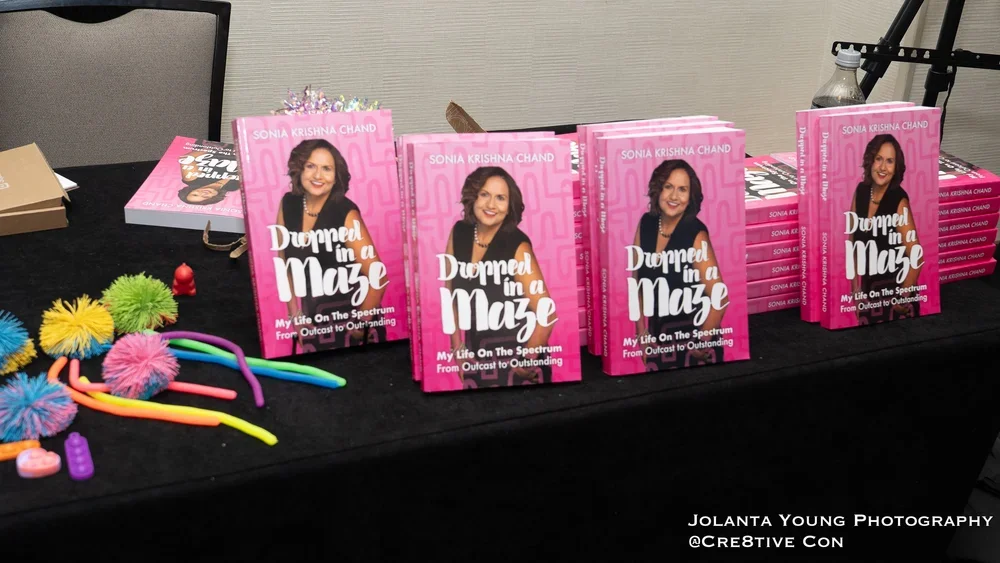
I am an autistic psychotherapist, advocate, author, and ultra-marathoner. I wrote Dropped in a Maze: My Life On The Spectrum because I needed the world to hear a different kind of story about autism. Not the clinical one. Not the one written by people who have never lived it. The real one.
In the book, I share 26 reasons why being on the spectrum is something to be celebrated. Today I am sharing 15 of them with you. Because if nobody has told you lately, being autistic is not your weakness. It is one of your greatest strengths.
Table of Contents
Intro
15 Reasons Why Being on the Autism Spectrum Is Awesome
Conclusion
There Is So Much More in the Book
1. You Think of Things in Different Ways
You can put a unique perspective on ideas because Autism taught you to think differently. That perspective is not a flaw. It is something most people will never have access to, and it belongs entirely to you.
2. You Are Intelligent in the Things You Are Passionate About
Autism allows you to absorb information about the things you hyper-focus on at a depth that is extraordinary. That kind of knowledge is rare. Own it.
3. You Take Your Passions Seriously
You geek out on the things you love with immense pride, and you should. Not everyone has the ability to go that deep into something they care about. You do.
4. You Have a Unique Sense of Humor
You like to laugh at random things, and that humor is entirely your own. After all, laughter makes life fun, right?
5. You Are a Late Bloomer and That Is a Gift
You get excited by milestones in ways that other people may take for granted because they may have already surpassed them long ago. That excitement keeps a positive outlook on life alive in you. Do not underestimate how powerful that is.
6. You Are Capable and Equipped to Take On Life's Challenges
Autism taught you to be resilient and strong. That resilience was not handed to you. It was built through real experience, and it makes you genuinely capable of handling whatever life puts in front of you.
7. You Are Strong Mentally and Physically
Autism taught you to be both in order to keep affecting change and thrive in a world that is not always welcoming of neurodivergence. That strength is yours, and it shows.
8. You Are a Warrior
Autism taught you to fight for the life you deserve. Not once, not occasionally, but consistently, even when the world was not on your side. That warrior spirit is something to be proud of.
9. You Are Ambitious
Autism taught you that you can use your strengths and desires to attain the life you want. That ambition, grounded in self-knowledge, is more powerful than most people realize.
10. You Are Good at Helping People
Autism showed you the ugly side of humanity, and instead of hardening you, it taught you to rise above it and show people more love and kindness. That choice is what makes you exceptional at helping others.
11. You Have a Strong Ability to Empathize
Even when you may not always completely understand, Autism taught you that you needed to set an example so that people could learn to one day understand you. That effort is its own form of emotional leadership.
12. You Learned to Become Your Own Best Friend
Autism taught you that the most important person in your corner was yourself. That relationship is one of the most valuable ones you will ever have.
13. You Are Fiercely Loyal and Compassionate
Autism taught you well enough how it feels when people are not. That knowledge shaped who you chose to become, and the people you love feel the difference every single day.
14. You Learned to Embrace the Word Weird
Autism taught you that it is okay to be your unique self. Anything otherwise would be a disservice to yourself and to everything you offer the world.
15. You Learned to Use Your Challenges as Your Strengths
Autism showed you that turning challenges into strengths was a way to go forth and prosper. What the world called a limitation, you turned into your foundation.
If you found yourself nodding along to these 15 reasons, this is worth reading next: How to Stand Up for Yourself as an Autistic Person
Conclusion
Being on the spectrum is a layered experience. It is not just the challenges people read about in articles or hear about in passing conversations. It is also the resilience, the depth, the loyalty, the humor, and the fierce love you carry with you every single day.
The 15 reasons above are just a starting point. They are reminders that your brain is not broken. It is wired differently, and that difference has given you a set of qualities that the world genuinely needs. Your ability to think in ways others cannot, to feel things deeply, to persevere when most people would have stopped, and to turn pain into purpose are not small things. They are remarkable.
If you have ever been made to feel like autism was the reason you could not have the life you wanted, I want you to sit with these 15 reasons and read them again. Because autism is also the reason you are as strong as you are. It is the reason you do not give up. It is the reason you know the value of kindness in a way that people who have never struggled do not.
You are not behind. You are not broken. You are building something, and it is worth celebrating.
There Is So Much More in the Book
These 15 reasons are just a glimpse of what is inside Dropped in a Maze: My Life On The Spectrum. In the book, I share all 26, alongside the raw and honest story of what it has really meant to live on the spectrum, fight for a place in the world, and come out the other side knowing your worth.
If you are autistic, this book was written for you. If you love or support someone who is, this book will help you understand them in a way that nothing else can.
Purchase your copy of Dropped in a Maze here
If this post resonated with you, come and hear more. I talk about neurodivergence, mental health, self-advocacy, and life on the spectrum with the kind of honesty and depth you will not find everywhere.
Sonia Chand is an autistic psychotherapist, advocate, author, and ultra-marathoner. Her work is dedicated to changing the narrative around autism one story at a time. Visit her at soniakrishnachand.net.

6 Steps to Rebuild Your Life After Hitting Rock Bottom
Rock bottom looks different for everyone. For some, it's a public breakdown at a birthday party. For others, it's finding yourself crying to strangers at 4:45 AM because you have nobody else. Sometimes it's the moment a so-called friend tells you "it's uncomfortable being around you" and calls your struggles a burden.
Do you know mental health crises often precede major life transformations but only when the crisis becomes a catalyst for genuine change rather than a cycle of shame and self-destruction?
When I hit rock bottom in New York City in 2011, I was drinking to excess, acting out at social events, and alienating the few friends I had. The breakdown felt devastating. But it became the foundation for rebuilding my entire life—changing careers, developing genuine self-worth, and finally living authentically instead of performing for others' approval.
This is about the specific steps that actually work when you're starting over from nothing, based on what pulled me out of the darkest period of my life.
Table of Contents
Step #1: Acknowledge What Actually Happened (Without Minimizing)
Step #2: Find Specialized Support That Understands Your Specific Challenges
Step #3: Stop Performing and Start Being Authentic
Step #4: Invest in Your Physical Presentation (It Matters More Than You Think)
Step #5: Open Up to People Who've Earned Your Trust
Step #6: Face Your Fears Instead of Numbing Them
Step #7: Listen to What Your Life Is Telling You
Step #8: Make the Change Everyone Says You Shouldn't
Key Takeaways for Rebuilding After Crisis
Step #1: Acknowledge What Actually Happened (Without Minimizing)
The Breakdown I Couldn't Ignore
After a disastrous birthday celebration where I became a "sloppy drunk," I ended up crying to doormen outside a building at 4:45 AM, telling complete strangers my life story—the rejection, emptiness, loneliness, and loss.
When my friend Susan called the next day, her message was clear: "It's uncomfortable being around you. You were sloppy. I can't be friends with you if you are going to be this way. It's not fair to have this kind of burden on others."
Why Minimizing Keeps You Stuck
My initial response was defensive: "I was just having a good time and encouraging others to have a good time."
But this minimization prevented me from seeing the truth: I was using alcohol to numb pain I hadn't processed, performing comedy for others' approval, and making people genuinely uncomfortable with my behavior.
The Harsh Truth That Starts Healing
Another person at a speed dating event told me bluntly: "The way you read people is wrong. You are a lost puppy."
My mother's words rang true: "Truth is bitter." These harsh assessments hurt, but they contained information I needed to hear.
What Acknowledgment Actually Looks Like
Real acknowledgment means:
Admitting your coping mechanisms aren't working
Recognizing when you've made others uncomfortable
Accepting that being "lost" is temporary, not permanent
Understanding that rock bottom is information, not identity
Step #2: Find Specialized Support That Understands Your Specific Challenges
Why Generic Therapy Wasn't Enough
Previous therapists had given me surface-level advice or harmful criticism focused on weight and appearance. What I needed was someone who understood:
Autism spectrum challenges in social situations
How autistic people process social feedback differently
The intersection of autism, mental health, and life transitions
Finding Dr. Forrester
I found a therapist in Midtown Manhattan who specialized in autism spectrum disorder and mainly worked with autistic people. Dr. Forrester was inquisitive from the start and immediately identified patterns I hadn't recognized.
What She Identified That Others Missed
The performance problem: I was treating social situations like a stage performance after taking improv classes, missing the social cue that acting on stage is different from behaving naturally with people.
The discomfort signals: When couples showed public displays of affection, I might make painful faces or show discomfort that made others uncomfortable around me.
The comedian defense: Using jokes and performance as a shield prevented genuine connection and made me exhausting to be around.
The Internal Rap Battle Tool
Dr. Forrester created a practical tool: an internal rap battle to use when feeling othered or reminded of rejections.
"Hey, enemy, you say nobody likes me, and I was a loser. Yo, let me tell you I got my mom, I got my dad, I got my relatives, I got my friends."
This gave me language to counter negative thoughts in the moment rather than spiraling.
Why Specialization Matters
Generic therapists treat autism as one factor among many. Autism-specialized therapists understand it's the lens through which everything else is experienced.
For more on finding the right therapeutic support, read our article on 5 Signs You've Found the Right Therapist.
Step #3: Stop Performing and Start Being Authentic
The Comedian Mask
After improv classes in Chicago, I thought I'd found my calling—making people laugh, being the entertainer, using comedy as my social currency.
But Dr. Forrester identified the problem: I was confusing performance with connection. Being "on" all the time, especially when drinking, wasn't building relationships—it was creating exhausting spectacles.
What Authentic Connection Actually Requires
Stopping the performance meant:
Having real conversations instead of delivering jokes
Being vulnerable instead of deflecting with humor
Showing actual emotions instead of manufactured entertainment
Letting others see me, not just my act
The Fear Behind the Performance
Performance protected me from rejection. If people laughed at my jokes, I couldn't be rejected for who I actually was. But this created a catch-22: nobody could accept the real me because they only met the performer.
Practicing Authenticity
Dr. Forrester taught me to:
Recognize when I was slipping into performance mode
Pause and ask "am I being genuine right now?"
Practice having conversations without trying to be funny
Allow natural silences instead of filling them with jokes
This felt terrifying at first. Without the performance, what did I have to offer? But genuine connection requires genuine presence.
If you want to hear more stories of following your authentic path despite others' expectations? Purchase my book today.
Step #4: Invest in Your Physical Presentation (It Matters More Than You Think)
The Image Consultation That Changed Everything
My friend Roseanne, a fashion consultant and CEO, offered to help fix my wardrobe and teach me how to dress. Unlike my previous experience with Dr. Grey's wife (where my mother restricted what I could buy), this time I had freedom to explore.
What Made This Different
Roseanne took me shopping near my apartment for:
Blazers, dresses, skirts, pants, cardigans, and scarves
Mix-and-match outfits I could combine multiple ways
Boots that completed the looks
The key difference: she helped me find my own style rather than imposing someone else's vision.
The First Impressions Lesson
Roseanne reminded me of something from high school speech class: "People know if they are going to like you within two seconds."
First impressions aren't superficial—they're neurological. How you present yourself signals to others before you speak.
The Confidence Transformation
For the first time in a long time, I felt beautiful. I glowed walking to school. People nodded in approval as I passed. The external transformation reinforced internal confidence I was building.
The Professional Photo Shoot
Connected through Roseanne, I hired a photographer for professional photos with hair, makeup, and multiple outfit changes:
Rooftop with chess pieces in a dress and boots
Outdoor professional shot in blazer and pencil skirt
Indoor law office aesthetic near bookshelves
Brooklyn Bridge walk in red sweater dress and brown boots
Seeing the photos, I felt beautiful for the first time in years. The shoot revealed what had been there all along—beauty that could shine through when I took care of myself inside and out.
Why This Isn't Superficial
Physical presentation isn't about conforming to beauty standards. It's about:
Showing yourself you're worth the investment
Building confidence through taking care of yourself
Signaling to others that you value yourself
Creating external alignment with internal growth
Step #5: Open Up to People Who've Earned Your Trust
The Isolation That Kept Me Stuck
Before the breakdown, I tried to handle everything alone. I minimized struggles, performed happiness, and never let people see the real pain underneath.
This isolation made everything worse. When the breakdown came, I had nobody to turn to except random doormen at 4:45 AM.
Opening Up to Maya
After the breakdown, I started opening up to Maya, my friend who'd moved to NYC and encouraged me to follow. I told her everything—the mental health struggles, the drinking to escape, the desperate loneliness.
Her response: "If you are ever feeling that low again, please feel free to reach out to me. You don't have to go find random doormen to find support, especially in the wee hours of the morning!"
Why Her Response Mattered
Maya didn't:
Judge me for struggling
Tell me to "get over it"
Make it about herself
Use my vulnerability against me
Instead, she:
Shared her own similar struggles
Validated my feelings
Offered concrete support
Made me feel less alone
The Difference Between Dumping and Sharing
Opening up to Maya was different from emotionally dumping on acquaintances because:
We had an established, reciprocal friendship
She explicitly welcomed the sharing
I wasn't using her as a therapist
The vulnerability went both ways
What Authentic Sharing Looks Like
Maya shared: "I always craved companionship when I was living in Chicago. I wasn't happy with who I was. I felt like I didn't know how to enjoy my own company because I didn't really know who I was."
This reciprocal vulnerability deepened our connection and made me feel genuinely understood.
The Skydiving Moment
When I randomly ran into Maya on the sidewalk and she invited me skydiving, I impulsively said yes. Jumping out of a plane helped me appreciate life and recognize that choosing adventure over comfort creates the moments worth living for.
Step #6: Face Your Fears Instead of Numbing Them
The Binge Eating Cycle
As I transitioned between leaving compliance work and trying to open my own law practice, binge eating crept in slowly. My usual order at the Indian restaurant: naan, rice, paneer tikka, yogurt, and four glasses of Pinot Noir—followed by frozen yogurt down the street.
What I Was Really Afraid Of
The food wasn't the problem—it was the fear I was trying to numb:
Fear of disappointing my parents
Fear of having to leave NYC
Fear of admitting I'd chosen the wrong career
Fear of starting over from nothing
Why Numbing Doesn't Work
Whether through alcohol or food, numbing doesn't address the underlying fear. It just:
Delays the inevitable reckoning
Creates additional problems (weight gain, health issues)
Compounds shame and self-hatred
Prevents you from taking action on what actually needs to change
The Wake-Up Call
Taking medication to help concentrate for the GRE while binge eating led to chest pains. This was a wake-up call about the importance of stopping the numbing and facing what needed to be faced.
How to Face Fear Instead of Numbing It
Name the specific fear: Not "I'm anxious," but "I'm afraid of disappointing my parents by leaving law."
Ask what the fear is protecting: Fear of disappointment = fear of losing love/approval.
Challenge the underlying assumption: "Will my parents actually stop loving me? Or am I catastrophizing?"
Take one small action toward the fear: Tour therapy schools. Talk to people in the field. Do something concrete.
Build support before big decisions: Talk to friends, therapist, trusted people who can help you process.
Ready to hear more stories of following your authentic path despite others' expectations? Purchase my book today.
Key Takeaways for Rebuilding After Crisis
Rock Bottom Is Information, Not Identity
The breakdown wasn't who I was, it was information about what needed to change. The drinking, performing, and isolation all pointed to deeper issues requiring attention.
You Need Specialized Support
Generic therapy, well-meaning friends, or family advice often isn't enough. Find practitioners who specialize in your specific challenges and understand your neurological differences.
Physical Transformation Supports Internal Growth
Investing in appearance isn't superficial when it reinforces that you're worth caring for. External alignment with internal growth accelerates confidence.
Vulnerability Requires the Right People
Opening up to everyone is dumping. Opening up to people who've earned trust through reciprocal care is healing. Choose wisely who gets your vulnerability.
Numbing Delays Necessary Change
Whether through alcohol, food, or distraction, numbing prevents you from facing what needs facing. The only way through is through.
Someone Will Always Disapprove
Making authentic choices means disappointing people invested in you staying the same. Their resistance is information about them, not about your decision.
Moving Forward
Rebuilding after rock bottom isn't linear. There were setbacks, moments of doubt, and fears that kept me frozen for months. But each step forward—finding the right therapist, stopping the performance, investing in myself, opening up to trusted people, facing fears instead of numbing them—built momentum.
The breakdown in 2011 became the catalyst for the life I'm living now. Without hitting bottom, I might still be in law, miserable, performing, and numbing. Rock bottom forced me to rebuild from truth instead of from others' expectations.
If you're currently at rock bottom, know this: the only direction from here is up. But up requires specific, intentional steps—not just hoping things get better.
The steps that pulled me out can guide you too. But you have to take them, even when scared, even when others disapprove, even when you're not sure they'll work.
Social Skills Autistic Adults Need
Most people learn basic social skills naturally throughout childhood—table manners, how to walk confidently, appropriate fidgeting management. But for autistic people, these skills often need to be explicitly taught. And by the time you reach adulthood without them, the gap becomes glaringly obvious.
The embarrassment of being in your mid-twenties and needing someone to teach you how to hold a fork properly, walk fluidly, or order appropriately at restaurants is profound.What's rarely discussed is how practical, specific coaching in these areas can transform your social experiences, when delivered constructively rather than judgmentally.
This is about the social skills autistic adults actually need, how constructive coaching differs from harmful criticism, and why learning these basics in your twenties (or thirties, or forties) isn't shameful—it's courageous.
Table of Contents
Skill #1: Table Manners and Eating Mechanics
Skill #2: Proper Posture and Fluid Movement
Skill #3: Managing Fidgeting and Stimming in Social Settings
Skill #4: Appropriate Food Choices and Healthy Eating Presentation
Skill #5: Personal Grooming and Appearance Details
Skill #6: Flexibility in Social Planning
Skill #7: Distinguishing Constructive Feedback From Harsh Judgment
The Difference Between Helpful Coaching and Harmful Criticism
Key Takeaways for Learning Social Skills as an Adult
Skill #1: Table Manners and Eating Mechanics
Why This Matters
According to the National Library of Medicine, motor planning difficulties are common in autistic people and can affect fine motor tasks like using utensils properly. When Kelly first observed me eating, she noticed several issues I was completely unaware of.
What I Needed to Learn
Eating pace: "The first thing is you need to eat slowly. Remember this rule: two bites, one sip of water, two bites, one sip of water."
Fork grip and mechanics: I was holding my fork incorrectly and using it like a spoon at times. The fork was hitting my teeth and making noise.
Proper utensil-to-mouth motion: Kelly demonstrated the correct way to bring food to my mouth and had me practice until I got it right.
Why This Is Important for Dating and Professional Life
As Kelly explained: "We are going to focus on eating because when you first start dating someone, that is what you are going to be doing."
First dates typically involve meals. Business meetings happen over lunch or dinner. Poor table manners create negative first impressions that can overshadow everything else about you.
The Embarrassment Factor
It felt profoundly embarrassing that someone in her mid-twenties needed to be taught table manners that others learn substantially younger. But the embarrassment of learning is temporary—the impact of not learning lasts forever.
How to Practice
Watch yourself eat in a mirror to see what others see
Practice the two-bite, one-sip rhythm until it becomes automatic
Record yourself eating to identify specific issues
Ask trusted people for honest feedback about your eating habits
If you missed signs of autism in your youth that could have led to earlier intervention in these skills, read our article on The Journey to Autism Diagnosis: 7 Signs You Might Have Missed in Young Adults for more context.
Skill #2: Proper Posture and Fluid Movement
The Walking Problem
Dr. Grey had previously noticed that my walk wasn't fluid motion. Kelly confirmed this after seeing me walk up stairs and around the mall.
I had a "funny gait" from early childhood—glimpses of memories of walking on my tiptoes, never being fully comfortable with my whole foot on the floor. People had called me out on my walk throughout my life, saying I walked "weird" or too fast, but nobody got into specifics until now.
What I Needed to Learn
Standing posture: Walk standing up straight with shoulders back
Heel-to-toe motion: Use the whole foot in fluid motion, not just toes or balls of feet
Pace and rhythm: Walk at a normal pace rather than rushing
Stair climbing form: Proper technique for going up and down stairs
Why This Matters
Body language communicates before you speak. How you carry yourself signals:
Confidence or insecurity
Comfort or awkwardness
Social awareness or obliviousness
An awkward gait or poor posture can make people uncomfortable around you without them consciously knowing why.
The Lifelong Impact
Poor motor skills don't just affect walking. They impact:
How you're perceived professionally
Whether people feel comfortable around you
First impressions in social and romantic situations
Your own confidence and self-image
How to Practice
Practice walking in front of a mirror to see your posture
Video yourself walking from different angles
Focus on one element at a time: first shoulders back, then heel-to-toe, then pace
Ask for feedback from people who will be honest and constructive
Skill #3: Managing Fidgeting and Stimming in Social Settings
The Hair-Playing Problem
Kelly noticed I played with my hair during meals. She taught me to keep my hands together on my lap when I felt the urge to fidget.
This remains a work in progress, as I have a tendency to fidget with my hair for sensory regulation.
The Balancing Act
For autistic people, stimming serves important regulatory functions. But in professional or dating contexts, obvious stimming can distract others or signal anxiety and discomfort.
Finding Middle Ground
The goal isn't to eliminate stimming entirely—it's to:
Develop less noticeable stims that still provide sensory input (hands on lap, subtle foot tapping)
Save more obvious stims for private moments (hair playing, hand flapping when alone)
Recognize when stimming is increasing and what triggers it (anxiety, overstimulation)
Communicate needs when necessary ("I need a moment to step away and regulate")
Practical Strategies
Identify your most common stims and when they occur
Practice replacement behaviors that are less noticeable
Use discrete fidget tools (smooth stones in pocket, textured jewelry)
Take strategic breaks to stim freely in private
For more on finding therapists and coaches who understand these balance between autistic needs and social expectations, read our article on 5 Signs You've Found the Right Therapist.
Skill #4: Appropriate Food Choices and Healthy Eating Presentation
The Appetizer Incident
During one dinner, Kelly noticed I ordered only an appetizer that wasn't nutritionally valuable. She taught me about ordering healthy foods when eating out.
Her reasoning: "Eating healthy shows people you care about yourself and take care of yourself."
Why This Matters
Food choices signal to others:
Whether you value your health
Your level of self-care
Whether you can make adult decisions
How you'll approach other life areas
The Broader Lesson
This wasn't about restriction or diet culture. It was about demonstrating self-care through choices that show you value yourself.
Ordering appropriately also includes:
Matching the formality of the setting (don't order appetizers only at a formal dinner)
Being adventurous without being inappropriate (don't order the messiest item on a first date)
Considering portion sizes (don't order so much you can't finish or so little you seem restrictive)
Reading the situation (casual lunch versus important business dinner)
How to Develop This Skill
Research menus ahead of time so you're not deciding under pressure
Observe what others order in similar settings
Ask trusted friends for feedback on your food choices
Practice ordering at different types of restaurants
Skill #5: Personal Grooming and Appearance Details
The Constructive Difference
Kelly never commented on my weight—a stark contrast to Dr. Grey's obsessive focus on thinness. Instead, she addressed specific, actionable grooming issues:
Hair appearing disheveled
Bra fit being incorrect
Needing to pay more attention to these aspects before leaving the house
Why This Approach Works
Constructive feedback on grooming:
Focuses on specific, fixable issues
Doesn't shame your body or natural appearance
Provides actionable steps
Addresses presentation, not inherent worth
Common Grooming Gaps for Autistic Adults
Many autistic adults struggle with:
Knowing when hair needs washing or styling
Understanding proper undergarment fit
Recognizing when clothes need replacing
Applying makeup appropriately (if choosing to wear it)
Maintaining consistent hygiene routines
How to Address These Gaps
Create checklists for daily grooming routines
Get professional fittings for undergarments
Ask trusted friends for honest appearance feedback
Set up systems (hair washing schedule, clothing replacement timeline)
Take photos to see how you actually look versus how you think you look
Skill #6: Flexibility in Social Planning
The Restaurant Change Incident
When Kelly set us to meet at a restaurant whose menu didn't appeal to me, I reluctantly asked if we could go somewhere else. She agreed, but her unhappiness showed.
Her response: "Don't do this again! What would've happened if you had done this on a date? Your date would've probably been pissed off and annoyed."
The Social Rule I Violated
Once plans are set, changing them is generally inappropriate unless there's a significant reason (allergies, dietary restrictions, genuine emergency).
Changing plans because you don't like the menu signals:
Inflexibility
Difficulty compromising
Prioritizing your preferences over others'
Poor planning (you should have checked the menu before agreeing)
The Competing Needs
My suspicion was that Kelly may have been bothered because she genuinely wanted to eat at the original restaurant. This highlights the complexity:
Sometimes what's labeled "teaching you social skills" is actually about the other person's preferences.
Learning Flexibility
For autistic people who struggle with food texture, routine, or unexpected changes:
Communicate dietary restrictions upfront: "I have sensory issues with certain foods. Can we choose a restaurant together?"
Review menus before agreeing to plans: Check that there's at least one item you can eat
Bring backup foods if necessary: Keep safe foods available for difficult situations
Practice tolerating imperfect situations: Not every meal needs to be ideal
Skill #7: Distinguishing Constructive Feedback From Harsh Judgment
Constructive Coaching (Kelly's Approach)
Kelly's feedback was:
Specific: "You're making noise with your fork hitting your teeth"
Actionable: "Here's how to hold your fork properly. Watch me, then follow."
Focused on teachable skills: Table manners, walking mechanics, grooming details
Free of body shaming: Never commented on weight, only on specific presentation issues
Harsh Judgment (Dr. Grey's Approach)
Dr. Grey's feedback was:
General and demoralizing: "Something isn't working if you've been going to the gym"
Focused on unchangeable aspects: Body size, facial attractiveness ratings
Lacking specific guidance: "Everything has to be perfect" without defining what that means
Undermining confidence: "Girls are just being nice when they compliment you"
The Breaking Point
Eventually, I had enough of Dr. Grey's weight obsession. When he continued his "serenade about how some of his clients wouldn't go out with women five pounds overweight," I finally pushed back:
"Don't you think it's possible that these clients who are fussing about women being five pounds overweight are just being shallow? Women can pick up on men who are shallow and will keep their distance."
Why This Distinction Matters
Constructive coaching:
Builds skills and confidence
Provides specific, actionable steps
Respects your inherent worth
Focuses on what you can control
Harsh judgment:
Tears down self-esteem
Creates impossible standards
Ties worth to appearance or others' opinions
Focuses on what you can't easily change
Ready to hear more about navigating the difference between helpful support and harmful criticism? Listen to the On the Spectrum Empowerment Stories podcast for real conversations about what actually helps autistic adults build genuine confidence.
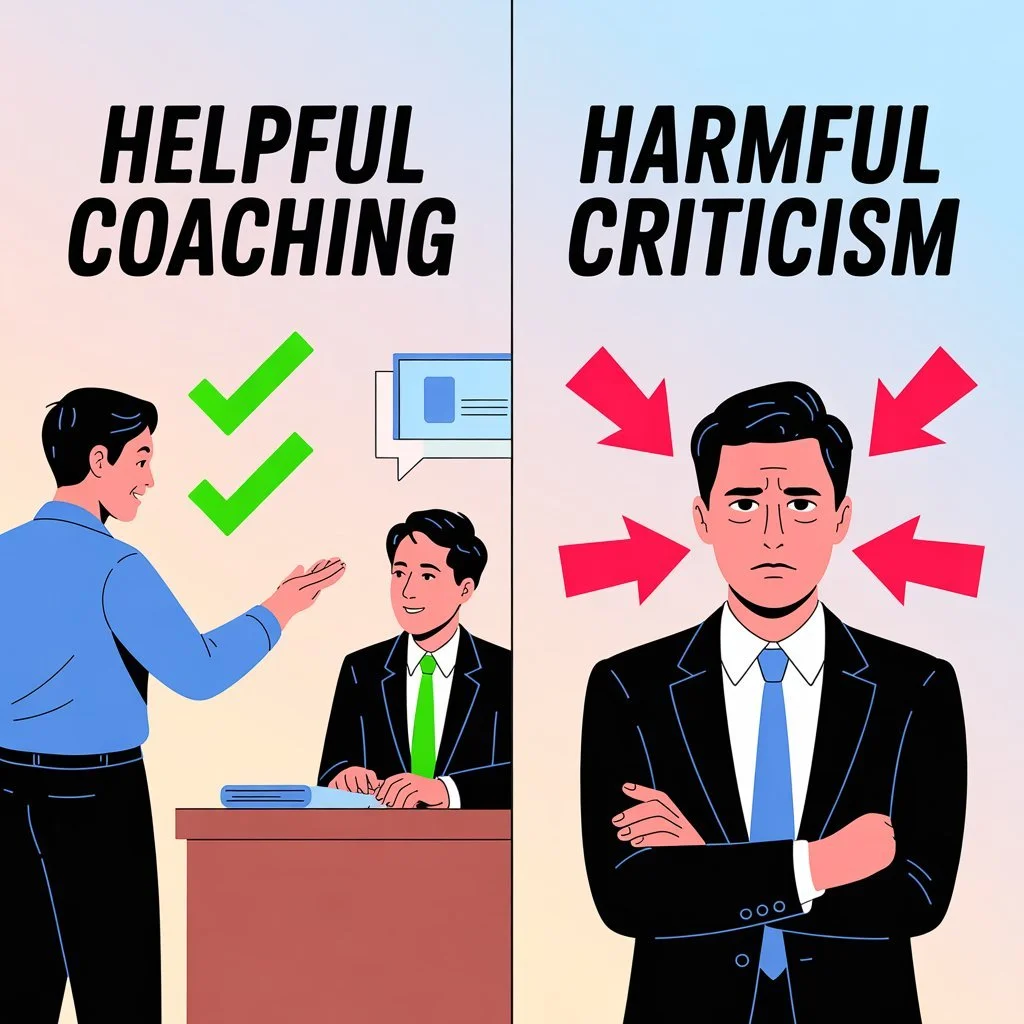
Helpful Coaching and Harmful Criticism
The Difference Between Helpful Coaching and Harmful Criticism
What Made Kelly's Approach Effective
She focused on skills, not worth: Table manners and walking mechanics are learnable skills, not indicators of value as a person.
She demonstrated and practiced: "Watch me, then follow" is effective teaching methodology.
She acknowledged progress: Kelly noticed improvement and commented on it, reinforcing positive changes.
She explained the 'why': Understanding that first dates involve eating helps you prioritize learning table manners.
She addressed specific, fixable issues: Disheveled hair and poor bra fit are concrete problems with concrete solutions.
What Made Dr. Grey's Approach Harmful
He focused on unchangeable aspects: Body size, facial structure, inherent attractiveness.
He provided contradictory messages: Be thin, but also treat yourself to ice cream.
He reinforced perfectionism: "Everything has to be perfect" creates impossible standards.
He undermined confidence: Dismissing genuine compliments as "just being nice."
He projected his clients' shallowness: Treating five-pound weight concerns as legitimate rather than problematic.
The Key Question
After any coaching or feedback session, ask yourself:
Do I feel empowered with specific things I can practice and improve, or do I feel inadequate and hopeless about unchangeable aspects of myself?
If it's the latter, you're receiving harmful criticism, not helpful coaching.
Key Takeaways for Learning Social Skills as an Adult
It's Not Too Late to Learn
Being in your twenties, thirties, or beyond when you finally learn basic social skills doesn't mean you're broken. It means:
You didn't receive the explicit instruction autistic people need
You're brave enough to address gaps now
You're investing in your future social success
Many autistic adults have these same gaps. You're not alone.
Embarrassment Is Temporary, Impact Is Permanent
Yes, it's embarrassing to need table manners coaching as an adult. But:
The embarrassment of learning lasts weeks or months
The benefit of knowing these skills lasts your entire life
People won't remember you needed to learn; they'll just notice you have good manners now
Focus on Specific, Actionable Skills
Effective social skills coaching addresses:
Table manners and eating mechanics
Posture and movement
Grooming and presentation details
Social conventions and flexibility
Ineffective coaching focuses on:
Body size and weight
Inherent attractiveness
Impossible perfectionism
What others think of you
Find Coaches Who Build You Up
The right coach or therapist:
Provides specific, actionable feedback
Acknowledges your progress
Explains why skills matter
Respects your inherent worth
Focuses on what you can control
The wrong coach:
Makes you feel worse about yourself
Provides vague or contradictory advice
Focuses on unchangeable aspects
Ties your worth to others' shallow judgments
Progress Takes Practice
Kelly noticed improvement in my fork grip and eating pace after just a couple of sessions because I practiced the specific techniques she taught.
Social skills improve through:
Conscious practice of specific techniques
Immediate feedback on what's working
Repetition until skills become automatic
Patience with yourself during the learning process
For the complete story of learning these social skills as an adult—including every embarrassing moment, every breakthrough, and what actually worked versus what wasted my time—my book provides all the details you need.
Moving Forward
If you're an autistic adult who knows something is "off" about your social presentation but can't pinpoint what, you're not alone. Most autistic people need explicit coaching in skills neurotypical people absorb through observation.
The key is finding coaches and therapists who can provide that explicit guidance constructively, building your skills and confidence simultaneously.
Ready to learn the complete story of navigating social skills coaching, distinguishing helpful feedback from harmful criticism, and eventually developing genuine confidence? My book details every session with both Kelly and Dr. Grey, showing you exactly what works and what doesn't.
6 Ways Your Therapist May Be Harming You (Even If They Specialize in Autism)
Finding a therapist who specializes in autism feels like winning the lottery, especially after years of working with practitioners who don't understand your neurological differences. But specialization in autism doesn't automatically equal good therapy.
Sometimes the most harmful therapeutic relationships come from practitioners who understand autism intellectually but apply that knowledge in ways that reinforce shame, perfectionism, and self-hatred rather than building genuine self-worth.
This is about recognizing when autism-informed therapy crosses the line from helpful to harmful, and what to do when your therapist's advice is damaging your mental health instead of supporting it.
Table of Contents
Harmful Pattern #1: Obsessive Focus on Your Appearance and Weight
Harmful Pattern #2: Contradictory Messages That Keep You Confused
Harmful Pattern #3: Reinforcing That You Need to Be "Perfect"
Harmful Pattern #4: Judging People With Mental Health Struggles
Harmful Pattern #5: Discouraging Career Paths Based on Your Autism
Harmful Pattern #6: Telling You to Care What Everyone Thinks
What Healthy Autism-Informed Therapy Actually Looks Like
How to Protect Yourself From Harmful Therapy
Harmful Pattern #1: Obsessive Focus on Your Appearance and Weight
When Body Image Becomes Central to Treatment
One of Dr. Grey's frequent topics was my weight and appearance. Sessions would begin with questions like "So, you were never known as the heavy child?" followed by critiques of my eating habits, exercise routine, and overall appearance.
His advice included:
"Maybe you need to start eating more lean meat and protein-based foods"
"Hire a nutritionist to help you"
"Something isn't working if you have been going to the gym as often as you say"
When I mentioned girls complimenting my appearance: "They are just trying to be nice to you"
The Damaging Message
The culmination was this statement: "The reason I am telling you all this is that with your autism and mood disorder, everything has to be perfect. Thin girls get away with more."
This message communicated that:
Your neurological differences mean you're starting from a deficit
You must compensate for autism by achieving physical perfection
Other people's superficial judgments should dictate your self-worth
Being thin is a prerequisite for social acceptance
Why This Is Harmful
According to the National Eating Disorders Association, autistic people already have higher rates of eating disorders and body image issues. A therapist reinforcing that thinness equals worthiness can:
Trigger or exacerbate disordered eating
Create shame about natural body diversity
Tie self-worth to appearance rather than character
Add perfectionism on top of existing mental health struggles
What I Needed Instead
Therapeutic support should have addressed:
Using food emotionally as a coping mechanism
Building self-worth independent of appearance
Challenging societal beauty standards, not reinforcing them
Developing healthy relationship with body and food
For more on recognizing when therapeutic relationships have crossed into harmful territory, read our article on 5 Signs You've Found the Right Therapist (And 3 Red Flags You're With the Wrong One).
Contradictory Messages
Harmful Pattern #2: Contradictory Messages That Keep You Confused
The Ice Cream Paradox
Dr. Grey's messages often contradicted each other:
One session: "Because of your autism and mood disorder, everything has to be perfect. This means you need to be thin. People these days are obsessed with airbrushing, and I have clients who won't date a girl who is even five lbs overweight."
Another session: "On days you feel bad, you need to learn to go do something for yourself, such as go get an ice cream."
Why Contradictory Advice Harms
When therapeutic messages contradict each other:
You can never get it right. Whatever you do violates one piece of advice or another.
You lose trust in your judgment. If the expert keeps changing the rules, you stop trusting your own decisions.
You stay dependent on the therapist. Confusion keeps you coming back for clarity that never arrives.
You internalize the contradiction. The conflicting messages become your inner dialogue—"be perfect" versus "treat yourself" creates paralysis.
The Pattern Across Multiple Areas
The contradictions extended beyond food:
Be yourself / Change everything about yourself
Don't care what people think / Care deeply about what everyone thinks
Build self-worth / Your worth depends on others' judgments
Love yourself / You're not attractive enough as you are
What Consistent Therapeutic Messaging Looks Like
Effective therapy provides:
Clear, consistent principles you can rely on
Messages that align across different situations
Support for developing your own judgment
Acknowledgment when approaches need to shift, with explanation
For the complete story of my autistic journey through law school my book provides all the details, order your copy today.
Harmful Pattern #3: Reinforcing That You Need to Be "Perfect"
The Impossible Standard
Dr. Grey's recurring message: "Because of your autism and mood disorder, everything has to be perfect."
This extended to:
Physical appearance: Thin, fashionable, makeup done correctly
Social skills: Every interaction executed flawlessly
Body language: Walk correctly, posture perfect, no "weird" movements
Dating: Compensate for autism by achieving perfection in all areas
Why Perfectionism Is Toxic for Autistic People
Autistic people already tend toward:
All-or-nothing thinking
High standards for themselves
Difficulty with self-compassion
Shame about not meeting neurotypical expectations
A therapist reinforcing that you must be perfect to be acceptable amplifies these existing vulnerabilities.
The Impossible Equation
The message was clear: Autism + Mood Disorder = Need for Perfection to Compensate
This creates an impossible situation where:
Your neurological differences are framed as deficits
You must work harder than neurotypical people to be "acceptable"
Any imperfection confirms you're not trying hard enough
There's no room for being human, making mistakes, or having bad days
What I Started Teaching Myself Instead
During my deepest depression, I began practicing: "I am a sexy diva," repeatedly in front of the mirror. At first it felt weird, but it became a routine I loved.
When Dr. Grey dismissed this with "Guys don't see you like that," I responded: "I don't care what guys see me as. It's the opinion of myself that should count first, Dr. Grey."
Harmful Pattern #4: Judging People With Mental Health Struggles
The Stigmatizing Statement
During one session, Dr. Grey said: "The unfortunate truth is when people have any kind of psychiatric diagnosis, others don't like to be around that person. People step back."
He continued: "People want to be around someone who has sunshine in their hearts. People don't like to be around people who have all sorts of issues."
The Professional Betrayal
This statement from a psychotherapist—someone whose job is to support people with mental health struggles—was profoundly damaging.
It communicated:
Your mental health diagnosis makes you inherently undesirable
You should hide or minimize your struggles to be acceptable
People are right to avoid those with psychiatric diagnoses
Your worth is contingent on appearing "issue-free"
Why This Is Unethical
A mental health professional stigmatizing psychiatric diagnoses:
Violates the fundamental premise of therapeutic support
Reinforces societal stigma clients come to therapy to escape
Creates shame about seeking help or having diagnoses
Makes clients feel judged in what should be a safe space
The Question This Raises
As I noted at the time: "It made me wonder why someone like him was even a psychologist, but like in any profession, people can enter it for the wrong reasons."
When your therapist judges the very population they're supposed to serve, it reveals they're in the field for reasons other than genuine care and support.
If you're questioning whether your autism diagnosis was missed or misunderstood in your youth, read our article on The Journey to Autism Diagnosis: 7 Signs You Might Have Missed in Young Adults for more context.
Harmful Pattern #5: Discouraging Career Paths Based on Your Autism
The Limiting Beliefs
Despite my expressed desire to become a therapist and help others on the autism spectrum, Dr. Grey actively discouraged this path.
His reasoning:
Autism meant people wouldn't connect with me
I shouldn't be in mental health or trial law
I was better suited for financial advising where expertise mattered more than connection
The Deeper Issue
This advice revealed:
Limited vision of what autistic people can do: Assuming autism automatically disqualifies you from relationship-based work
Projection of his own biases: Perhaps his difficulty connecting with clients reflected his limitations, not autism's
Ignoring my strengths and passions: My heart was suited to helping others heal and feel understood
Reinforcing family pressure: Aligned with parents who wanted me to stay in law school rather than pursuing what called to me
What I Actually Knew
My desire to work in mental health came from authentic experience: "I wanted to be that person for someone else in ways I wish I had that someone for myself."
This is often the deepest calling—helping others through struggles you've survived yourself.
The Career That Actually Fits
Today, I work as an empowerment coach and host the On the Spectrum Empowerment Stories podcast—exactly the kind of relationship-based, healing-focused work Dr. Grey said autism made impossible.
His limiting beliefs about what autistic people can do were wrong. They reflected his biases, not reality.
For the complete, unfiltered story of my therapeutic journey, my book provides all the details.
Harmful Pattern #6: Telling You to Care What Everyone Thinks
The Detective Work
Dr. Grey started one session: "I wonder if perhaps there is a sign you are wearing that is pushing people away."
His solution: "This is where we need to do some detective work and get some feedback from others that could help us."
Later, when I shared feedback: "Well, let's listen to what these people are saying. You should care about what people say about you because this is what carried you throughout your whole life."
The Problem With This Approach
It reinforces external validation: Your worth becomes dependent on others' opinions rather than internal self-knowledge.
It ignores toxic sources: Feedback from people who called me "weird" and avoided me wasn't constructive—it was cruel.
It creates hypervigilance: Constantly monitoring others' reactions keeps you anxious and self-conscious.
It prevents authenticity: You can't be yourself while obsessing over everyone's judgments.
The Contradiction
Dr. Grey simultaneously wanted me to:
Care deeply about what everyone thinks
Develop confidence and self-worth
Be authentic while constantly performing for approval
These goals are incompatible.
What I Eventually Learned
The opinion of myself should count first. Not guys who rejected me. Not classmates who called me weird. Not even my therapist.
Building genuine self-worth requires:
Valuing your own assessment over others' judgments
Distinguishing between constructive feedback and cruel criticism
Developing internal standards rather than chasing external approval
Being selective about whose opinions you allow to matter
Ready to learn the complete story of navigating harmful therapy while struggling through law school? My book details every session, every harmful message, and what I eventually learned about genuine self-worth.
What Healthy Autism-Informed Therapy Actually Looks Like
The Positive Moments Were Real
Despite the harmful patterns, Dr. Grey did provide some valuable support:
CBT techniques: Teaching me to challenge all-or-nothing thinking and reframe negative thoughts like "Just because I never had a boyfriend doesn't mean I am nothing."
Validation of challenges: Acknowledging I had additional challenges other people didn't face because of autism and comorbid mood disorder.
Standing up for me: When family members suggested I was "cured" of autism or should stop therapy, he supported my continued treatment.
Advocacy against family misconceptions: Explaining that graduate school doesn't cure autism and therapy was keeping me afloat.
What Made Me Blind to the Problems
"This was where I blinded myself into thinking everything was okay with these therapy sessions: the fact that somebody understood autism."
When you've spent years with therapists who don't understand autism, finding someone who does feels like salvation. This can make you overlook significant problems with how they're applying that knowledge.
What Truly Helpful Autism Therapy Includes
Understanding autism without pathologizing it: Recognizing differences without framing them as deficits requiring compensation.
Building genuine self-worth: Internal validation that doesn't depend on appearance, dating success, or others' approval.
Consistent, non-contradictory messaging: Clear principles you can rely on to guide decisions.
Supporting authentic career paths: Helping you discover and pursue what genuinely calls to you, not limiting your options based on assumptions about autism.
Non-judgmental stance toward mental health: Creating safety rather than stigma around psychiatric diagnoses.
Balanced feedback processing: Teaching discernment about which opinions to consider versus which to dismiss.
How to Protect Yourself From Harmful Therapy
How to Protect Yourself From Harmful Therapy
Recognize the Warning Signs
Your therapy may be harmful if your therapist:
Makes you feel worse about yourself after sessions
Focuses obsessively on changing your appearance
Gives contradictory advice that keeps you confused
Reinforces that you must be "perfect" to compensate for autism
Stigmatizes mental health diagnoses
Limits your career aspirations based on assumptions about autism
Tells you to care what everyone thinks while claiming to build confidence
Trust Your Inner Voice
The moment I told Dr. Grey "I don't care what guys see me as. It's the opinion of myself that should count first" was pivotal.
Even in harmful therapeutic relationships, your inner wisdom knows truth. Listen to it.
You're Allowed to Push Back
Therapy isn't a one-way street where the expert dictates and you comply. You're allowed to:
Disagree with your therapist's assessments
Question advice that doesn't feel right
Express when something they said hurt you
Stop following guidance that makes you feel worse
Consider Whether the Relationship Is Worth Continuing
Ask yourself:
Is the helpful content worth the harmful messaging?
Am I staying because they understand autism, even though they're hurting me?
Would I tolerate this treatment from a friend or partner?
Is there someone else who could provide autism expertise without the harm?
Seek Second Opinions
If you're unsure whether your therapy is helpful or harmful:
Consult with another autism-informed therapist
Share specific examples with trusted people who know good therapy
Listen to your own emotional responses after sessions
Track whether you're getting better or worse over time
Listen to the On the Spectrum Empowerment Stories podcast for more insights on navigating therapeutic relationships, building genuine self-worth, and recognizing when support systems are helping versus harming.
Moving Forward From Harmful Therapy
The therapeutic relationship with Dr. Grey was complicated—moments of genuine support mixed with deeply harmful messaging that reinforced shame, perfectionism, and external validation.
The most important lesson: Specialization in autism doesn't guarantee good therapy.
What matters is:
How they apply their knowledge
Whether they build you up or tear you down
If they reinforce internal worth or external validation
Whether you feel better or worse after working with them
Today, I use my experience navigating harmful therapeutic relationships to help others recognize red flags earlier than I did. The years I spent absorbing harmful messages about needing to be perfect, thin, and acceptable took additional years to unlearn.
You don't have to repeat my mistakes. You can recognize harmful patterns early and find practitioners who truly support your authentic development.
For the complete, unfiltered story of my therapeutic journey through law school—including every harmful session, what kept me stuck, and how I eventually found genuine self-worth—my book provides all the details these takeaways only begin to address.

5 Signs You've Found the Right Therapist (And 3 Red Flags You're With the Wrong One)
Finding the right therapist can feel like searching for a needle in a haystack—especially when you're autistic, dealing with trauma, or struggling with issues that most practitioners don't fully understand. You show up vulnerable and desperate for help, only to leave sessions feeling dismissed, misunderstood, or worse than when you arrived.
Not all therapy is good therapy. Not all therapists are equipped to handle the specific challenges autistic people face. And sometimes, what sounds like helpful advice in the moment is actually reinforcing the exact patterns that are keeping you stuck.
After self-harm brought me to a breaking point in law school, my parents insisted I find therapeutic help. What followed was a journey through different practitioners—some who offered genuine insight, others who said things that were ultimately harmful, and eventually finding someone who understood both autism and the deeper work I needed.
This is about recognizing when you're getting real help versus when you're wasting time and money on therapy that isn't serving you.
Table of Contents
Good Sign #1: They Tell You Hard Truths You Need to Hear
Good Sign #2: They Help You Understand Patterns, Not Just Feelings
Good Sign #3: They Teach You Practical Self-Protection Skills
Good Sign #4: They Have Specific Expertise in Your Challenges
Good Sign #5: They See Your Bigger Picture, Not Just Your Symptoms
Red Flag #1: They Make Dismissive Statements About Your Struggles
Red Flag #2: They Tell You What You're "Meant" or "Not Meant" to Have
Red Flag #3: They Don't Specialize in What You Actually Need
How to Find the Right Therapeutic Support
Key Takeaways for Choosing Your Therapist
Moving Forward
Good Sign #1: They Tell You Hard Truths You Need to Hear
The Assignment You're Avoiding
After revealing my self-harm to my parents during their visit, they insisted I see a local therapist near law school. This therapist was willing to say something nobody else had directly addressed:
"We all have an assignment we have to do before our time is up on Earth. If you are feeling unfulfilled in a career path you are on, and it is more than just one bad day, then perhaps this is not your assignment."
Why This Matters
A good therapist doesn't just validate your feelings—they help you see uncomfortable truths you're avoiding.
In my case:
I was deeply unhappy in law school
The unhappiness wasn't temporary or situational
I was living a "brainwashed lie" of who I thought I needed to be
Law wasn't my assignment, but I was too scared to admit it
The Difference Between Hard Truth and Harsh Criticism
Hard truth:
Comes from a place of wanting you to live authentically
Helps you see patterns you've been denying
Gives you permission to make changes you're afraid to make
Focuses on your wellbeing, not others' expectations
Harsh criticism:
Focuses on what's wrong with you
Reinforces shame and inadequacy
Doesn't offer pathways forward
Makes you feel worse without clarity on what to change
A therapist who can deliver hard truths with compassion is helping you break through denial into authentic living.
When You're Too Scared to Hear It
At the time, I was too scared to act on this truth. The fear of disappointing parents, of admitting I'd chosen wrong, of having to start over—all of it kept me frozen.
But the therapist planted a seed. She named the reality I couldn't yet speak: You're in the wrong place, living the wrong life, and your suffering is telling you that.
Eventually, that truth became impossible to ignore.
Good Sign #2: They Help You Understand Patterns, Not Just Feelings
Beyond Surface Emotions
Good therapy doesn't just help you feel better temporarily. It helps you understand why things keep happening the way they do.
This therapist taught me about human behavior in ways that gave me a framework for understanding my experiences:
"People know whom to target and go after. It's like how sharks are able to detect their prey. People go after those whom they feel they can go after."
Why Pattern Recognition Matters
Understanding patterns helps you:
Recognize when you're being targeted rather than believing something is wrong with you.
Identify what makes you vulnerable to exploitation or mistreatment.
Make different choices based on understanding dynamics, not just reacting emotionally.
See your role in patterns without drowning in shame about it.
The Vulnerability You Carry
The therapist identified something crucial: "There is a vulnerability about you that you carry around."
This wasn't an insult. It was important information.
For autistic people, this vulnerability often comes from:
Social naivety that others can detect and exploit
Desperation for connection that makes you overlook red flags
Difficulty reading intentions, leaving you open to manipulation
Past trauma that hasn't been processed, creating visible wounds
Understanding this vulnerability is the first step toward protecting yourself from people who will take advantage of it.
Good Sign #3: They Teach You Practical Self-Protection Skills
More Than Just Awareness
Awareness without skills doesn't create change. A good therapist gives you specific strategies you can implement immediately.
This therapist taught me practical self-protection:
About keeping your head held up high: Physical posture matters. The way you carry yourself signals to others whether you're an easy target.
About standing up for yourself: Not just conceptually, but with specific language and boundaries.
About shutting down inappropriate topics: "If people talk about dating issues and are harping you for not being like them, you need to learn to start saying 'that is not up for discussion.'"
Why This Phrase Matters
"That is not up for discussion" is a complete sentence. It requires no explanation, no justification, no defense.
For autistic people who struggle with:
Over-explaining ourselves
Feeling obligated to answer every question
Not knowing how to set boundaries politely
Fearing we'll seem rude if we don't engage
This phrase is revolutionary. It's a boundary that protects you without requiring social finesse to execute.
Teaching About Red Flags
The therapist also helped me understand red flags in men's behavior with blunt honesty:
"A man who flirts with everyone is not special."
She explained that someone who behaves flirtatiously with everyone isn't showing you genuine interest—he's just operating from his natural pattern. The behavior means nothing about you specifically.
This helped me understand that Demetrious's flirtatiousness wasn't special attention. It was his standard operating procedure with everyone.
These kinds of practical skills and frameworks, explained in greater detail throughout my book, are what actually create change in your life, not just insight into why you feel bad.
Good Sign #4: They Have Specific Expertise in Your Challenges
When General Practice Isn't Enough
After attending an autism conference in Chicago, my parents heard keynote speaker Dr. Grey present on autism spectrum behaviors and social blindness. They were impressed by his specific knowledge about:
Repetitious patterns of behavior in autistic people
Social blindness and how it manifests
Autism-specific challenges in social situations
This led them to get his contact information, and I soon found myself in his office.
Why Specialization Matters
General therapists, however well-meaning, often:
Lack understanding of how autism affects everything from social interaction to emotional processing to sensory experiences.
Apply neurotypical frameworks that don't account for different neurological wiring.
Miss crucial context about why certain things are harder for autistic people.
Give advice that works for neurotypical people but fails for autistic clients.
What Autism-Specific Expertise Provides
A therapist with autism expertise:
Understands repetitious thought patterns as neurological, not just behavioral
Recognizes social blindness as a genuine processing difference
Doesn't pathologize autistic traits or try to make you "normal"
Offers strategies designed for how autistic brains actually work
Can distinguish between autistic traits and mental health conditions
When my parents saw Dr. Grey present with clear, specific knowledge about autism, they recognized this was expertise I needed access to. Watch out for these 7 Red Flags of Unethical Mental Health Practice when seeking care
Good Sign #5: They See Your Bigger Picture, Not Just Your Symptoms
Beyond the Presenting Problem
I came to therapy because of self-harm. But good therapists understand that surface behaviors always point to deeper issues.
The self-harm wasn't the problem. It was a symptom of:
Being in a career path that wasn't mine
Years of unprocessed rejection and trauma
Lack of genuine self-worth
Trying to be someone I wasn't to meet others' expectations
Accumulated pain with no healthy outlet
What "Seeing the Bigger Picture" Means
A therapist who sees your bigger picture:
Connects current struggles to past experiences rather than treating each problem in isolation.
Understands how different issues intersect—autism, trauma, depression, social isolation, career dissatisfaction.
Addresses root causes instead of just managing symptoms.
Helps you see patterns across your life that explain why you're stuck.
Works toward authentic living rather than just reducing distress.
The Question of Your Assignment
When the therapist said "perhaps this is not your assignment," she was seeing the bigger picture:
My unhappiness wasn't just about one bad semester
Law school was the wrong path for my authentic self
I was living according to others' expectations, not my own values
The pain would continue until I aligned with my true assignment
This is deeper work than "how do I feel better in law school." This is "why are you in law school in the first place?"
Red Flag #1: They Make Dismissive Statements About Your Struggles
When Good Advice Turns Harmful
The same therapist who offered valuable insights also said things that were ultimately dismissive:
"You aren't meant to have friends right now." "You aren't meant to have a boyfriend." "You could've had a boyfriend years ago."
Why These Statements Are Harmful
They dismiss the real struggle of being autistic in a neurotypical social world.
They frame isolation as destiny rather than addressing the barriers preventing connection.
They suggest you should accept loneliness rather than working to build genuine relationships.
They lack empathy for how painful social isolation actually is.
They offer no pathway forward—just acceptance of a painful reality.
The Impact of Dismissive Statements
Hearing "you aren't meant to have friends right now" when you're desperately lonely:
Reinforces that something is fundamentally wrong with you
Suggests your desire for connection is the problem
Provides no skills for building the friendships you need
Makes isolation feel permanent and unchangeable
These statements felt like the therapist was giving up on the possibility of my social life improving, rather than helping me understand what needed to change to make improvement possible.
What Should Have Been Said Instead
A more helpful approach:
"Building friendships is challenging for autistic people, and it requires specific skills and strategies. Let's work on those."
"The relationships you've had haven't been healthy. Let's focus on what genuine friendship looks like and how to recognize it."
"Your current social strategies aren't working. Here's what we can try differently."
Red Flag #2: They Tell You What You're "Meant" or "Not Meant" to Have
The Problem With Destiny Language
Saying someone is "meant" or "not meant" to have something removed agency and suggests their circumstances are fixed and unchangeable.
This language is particularly harmful for autistic people who:
Already feel fundamentally different and broken
Struggle with social connections that seem effortless for others
Wonder if they're capable of the relationships they see others have
Need to believe change is possible to keep trying
What This Language Communicates
"You aren't meant to have friends right now" communicates:
Your loneliness is somehow cosmically ordained
There's nothing you can do about it
Wanting friends is futile or misguided
You should accept isolation as your fate
This is the opposite of empowering therapeutic language.
The Alternative
Empowering therapeutic language:
"Your current approach to friendships hasn't worked. Let's figure out why and try something different."
"Building authentic connections takes time and specific skills. Here's what we'll work on."
"You haven't yet built the friendships you want, but that doesn't mean you can't. Here's how we'll get there."
This language maintains hope while being realistic about the work required.
Red Flag #3: They Don't Specialize in What You Actually Need
The Generalist Problem
Many therapists are trained in general mental health support but lack specific expertise in:
Autism spectrum disorders
Trauma-informed approaches
Self-harm and crisis intervention
Social skills development for autistic adults
Career and identity issues
When your challenges span multiple specialized areas, a generalist may provide surface-level support without addressing the depth of what you're dealing with.
Why My Parents Sought Dr. Grey
After hearing Dr. Grey speak specifically about:
Autism spectrum behaviors
Social blindness
Repetitious patterns in autistic people
My parents recognized this was specialized knowledge I needed access to. His expertise wasn't just general therapy—it was autism-specific understanding.
The complete story of my therapeutic journey, including what eventually worked with Dr. Grey and other practitioners, is detailed in my book. Understanding what to look for in therapy can save you years of ineffective treatment.
How to Find the Right Therapeutic Support
Step 1: Identify What You Actually Need
Before searching for a therapist, clarify:
Do you need autism-specific expertise?
Is trauma a primary concern?
Are you dealing with specific issues like self-harm or crisis?
Do you need help with social skills, relationships, or life direction?
What hasn't worked in past therapy?
Be specific. "I need someone who understands autism" is better than "I need therapy."
Step 2: Research Specializations
Look for therapists who specifically list:
Autism spectrum disorders (especially adult autism)
Trauma-informed care
CBT, DBT, or other evidence-based approaches
Experience with your specific demographic
Don't settle for "general mental health" if you need specialized support.
Step 3: Ask Direct Questions in Initial Consultations
In your first session or consultation call, ask:
"What experience do you have working with autistic adults?"
"How do you approach social skills development?"
"What's your understanding of how autism affects relationships?"
"Have you worked with clients dealing with [your specific issue]?"
Their answers will tell you if they have real expertise or are winging it.
Step 4: Trust Your Gut About Fit
Even a qualified therapist might not be the right fit for you. Pay attention to:
Do you feel understood or constantly misunderstood?
Are they teaching you new skills or just validating feelings?
Do you leave sessions with clarity or more confusion?
Are they dismissive or empowering?
Do they see your potential or just your deficits?
Step 5: Don't Stay With the Wrong Therapist Out of Obligation
If therapy isn't helping after several sessions, it's okay to:
Tell them it's not the right fit
Ask for a referral to someone more specialized
Simply stop scheduling and find someone new
You don't owe anyone your time and money when they're not serving you well.
Step 6: Look for These Green Flags
The right therapist:
Tells you hard truths with compassion
Teaches practical skills, not just provides support
Has specific expertise in your needs
Sees your bigger picture, not just symptoms
Empowers rather than dismisses
Makes you feel hopeful about change, not hopeless about your circumstances
Get your copy of Dropped in a Maze: My Life On The Spectrum today.
Key Takeaways for Choosing Your Therapist
Good Therapy Challenges You to Grow
The therapist who told me "perhaps this is not your assignment" was challenging me to admit an uncomfortable truth. That's good therapy—not comfortable, but necessary.
Dismissive Language Reveals Underlying Attitudes
When a therapist says "you aren't meant to have friends right now," they're revealing they don't believe in your capacity for change in that area. That's a problem.
Specialization Matters for Complex Needs
Autism plus trauma plus social struggles plus career crisis requires more than general counseling. Seek specialists who understand your specific constellation of challenges.
You Can Switch Therapists
Just because you started with someone doesn't mean you're obligated to stay. If it's not working, find someone better suited to your needs.
Trust Takes Time, But Dismissiveness Happens Fast
Give a new therapist a few sessions to build trust and understand your situation. But if they're dismissive or harmful from the start, that's unlikely to improve.
The Right Therapist Sees Your Potential
Not just your problems, not just your diagnosis, not just your current struggles—but who you could become with the right support.
Moving Forward
Finding the right therapist transformed my trajectory. The wrong therapists provided surface support, made dismissive comments, or lacked the specific expertise I needed. But the practitioners who understood autism, could deliver hard truths with compassion, and taught practical skills made real change possible.
If you're currently in therapy that isn't helping, know that it's not that therapy doesn't work—it's that you haven't yet found the right therapeutic approach or practitioner for your specific needs.
Ready to learn the complete story of navigating therapy as an autistic person in crisis, my book provides everything you need to make informed choices about your own therapeutic journey.
Get your copy of Dropped in a Maze: My Life On The Spectrum today.
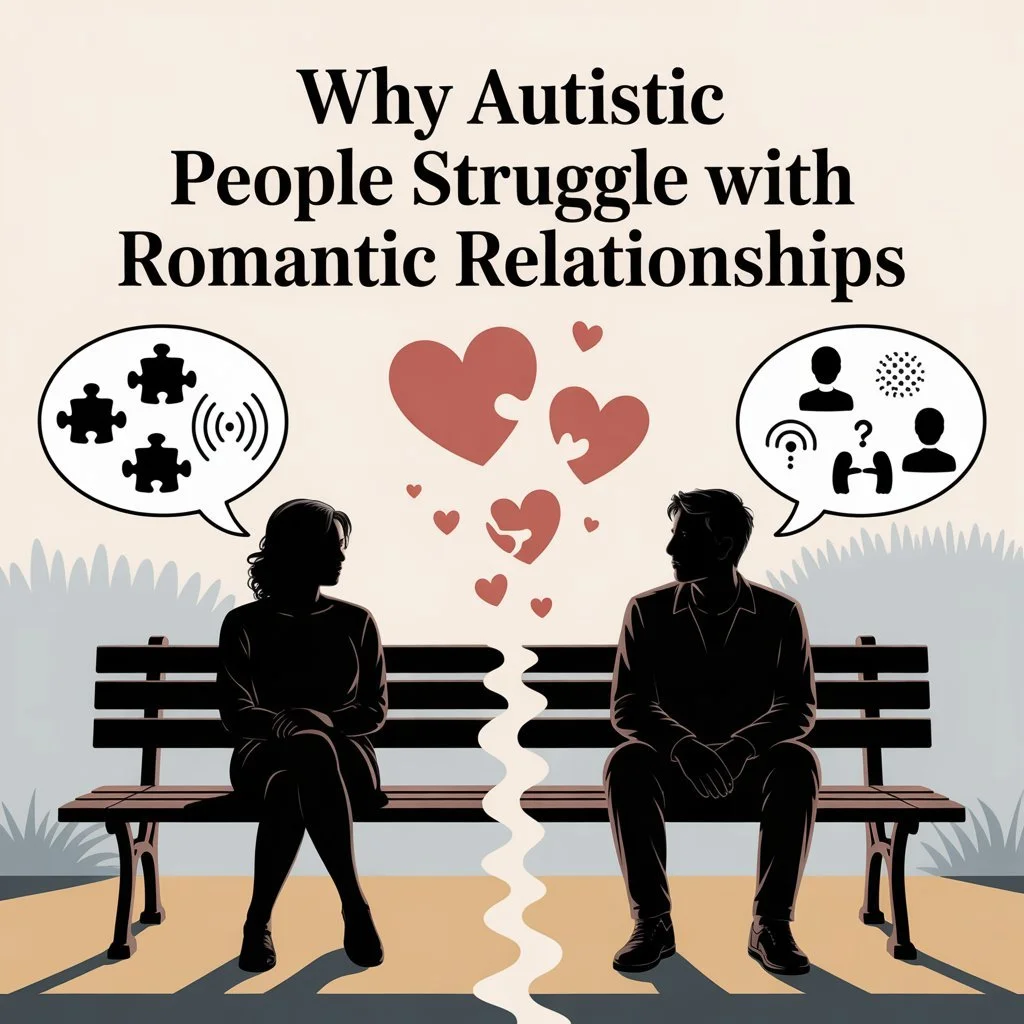
Why Autistic People Struggle With Romantic Relationships
Everyone around you seems to be dating. Getting into relationships. Moving on from breakups and finding someone new within weeks. And there you are, wondering why something that appears so effortless for others feels completely out of reach for you.
For autistic people, romantic relationships aren't just emotionally complicated—they involve a layer of confusion, missed signals, and unprocessed pain that neurotypical people rarely have to navigate. The social rules of dating are already complex. For someone who struggles to read between the lines, misses subtle cues, and has spent years being rejected and mistreated, romantic connection can feel like climbing Mount Everest while everyone else takes the elevator.
This blog post addresses what nobody talks about when it comes to autism and romantic relationships—the real reasons why dating is harder, what happens when that pain goes unaddressed, and what you genuinely need to hear if you're struggling right now.
If you or someone you know is struggling with self-harm or mental health crisis, please contact the 988 Suicide and Crisis Lifeline by calling or texting 988. You are not alone.
Table of Contents
Reason #1: You're Reading Flirtatious Signals as Romantic Interest
Reason #2: Past Rejection Follows You Into New Situations
Reason #3: Dating Milestones Feel Like a Report Card
Reason #4: You're Looking for Answers in the Wrong Places
Reason #5: The Pain of Unmet Needs Reaches a Breaking Point
Reason #6: Nobody Around You Truly Understands
What You Actually Need (Not What People Tell You)
Key Takeaways for Autistic People Navigating Romance
Reason #1: You're Reading Flirtatious Signals as Romantic Interest
The Mixed Signal Problem
One of the most painful experiences in romantic relationships is when someone acts flirtatious—playful physical contact, consistent eye contact, warm smiles—and then completely withdraws when you show genuine interest.
For autistic people, this is particularly devastating because we tend to take behavior at face value. If someone acts as though they like us, we believe they like us. We don't automatically factor in that some people are naturally flirtatious with everyone, or that someone can enjoy the attention of a person they have no actual romantic interest in.
Why Autistic People Miss These Cues
We process social information differently. The subtle distinction between "being friendly" and "being interested" involves reading a complex combination of context, consistency, body language, and social patterns that don't always compute the same way for autistic people.
We have less experience to draw from. Neurotypical people develop romantic intuition through years of casual dating experiences that teach them how to read signals. Without that foundation, every interaction feels like the first time.
We take behavior literally. When someone pats you on the back, shoves your chair playfully, and smiles every time they see you, the logical conclusion is that they're interested. Detecting the subtle difference between flirting for fun and genuine romantic interest requires reading invisible social rules.
We don't factor in inconsistency as rejection. When someone waits three days to respond to a dinner invitation and then declines without suggesting an alternative time, a neurotypical person recognizes this as a clear "no." An autistic person may miss this indirect signal entirely.
The Cruel Reality
What hurts most isn't just the rejection itself. It's not understanding why someone who behaved warmly and flirtatiously could turn around and express no romantic interest. This disconnect—between observed behavior and actual intention—is deeply confusing for autistic people.
The confusion keeps you stuck, trying to decode what happened instead of moving forward.
In my book, I detail the complete story of navigating this exact confusion in law school and the specific strategies that could have helped me recognize these signals earlier. Understanding this pattern can save you enormous pain.
Reason #2: Past Rejection Follows You Into New Situations
The Backpack of Past Pain
Every rejection you've experienced doesn't just disappear. It gets packed into a mental backpack you carry into every new situation.
Years of being rejected, bullied, and told you're not good enough create automatic fear responses:
Fear of asking for someone's phone number in case they laugh at you
Backing out of social situations at the last minute to avoid potential humiliation
Assuming new rejections confirm old messages about your worth
Being unable to distinguish between a new person and past people who hurt you
The Freeze Response
When you want to ask someone for their number but the memory of past humiliation kicks in, your body responds as if the past rejection is happening right now. You freeze. You avoid. You miss the opportunity entirely.
This isn't weakness or lack of confidence. It's a trauma response to repeated painful experiences. Your nervous system learned that social risk means pain, and it's trying to protect you.
Why This Is Different for Autistic People
Autistic people often have:
Longer processing times for social trauma. Neurotypical people may recover from romantic rejection more quickly. For autistic people, who tend to perseverate on difficult experiences, rejection can stay active in the mind for much longer.
Deeper sensitivity to rejection. Many autistic people experience rejection sensitive dysphoria—an intense emotional response to perceived rejection that goes beyond typical hurt feelings.
Less resilience from positive experiences. Without a history of positive romantic experiences to balance the negative ones, each rejection carries disproportionate weight.
Difficulty separating past from present. Clinging to past memories of how people treated you prevents you from recognizing that you're not the same person you were, and that new people aren't the same as the ones who hurt you.
Reason #3: Dating Milestones Feel Like a Report Card
The Comparison Trap
When everyone around you is dating, getting into relationships, and progressing through romantic milestones, not participating in any of these experiences can feel like failing a test everyone else passed.
At law school, when classmates found out I'd never had a boyfriend or been on a date, they were flabbergasted. Some said there was a big part of social life missing in not dating. Comments about singlehood—even well-meaning ones—stacked on top of each other until singlehood felt like a character flaw.
Why Milestones Hurt More for Autistic People
We're already behind on other social milestones: If you've spent your whole life feeling behind your peers socially, romantic milestones become yet another measure of how far you've fallen short.
Society treats romantic experience as a marker of worth: The messaging is everywhere: having a partner means you're likable, attractive, socially successful. Not having one means something is wrong with you.
Autistic people often have delayed development in these areas: This isn't a personal failing—it's a natural result of processing the world differently. But without that context, the gap between your experience and your peers' experience feels deeply personal.
You compare your insides to others' outsides: You see friends walking arm in arm with partners and assume their romantic lives are easy and fulfilling. You don't see the complexity behind what looks effortless from the outside.
The Arranged Match Expectation
For some autistic people—particularly those from cultures with arranged marriage traditions—there's an additional pressure that romantic connection will simply be "handled" by family. But arranged setups don't guarantee anything. People still have to genuinely like each other. And when you've spent years struggling to connect with people, the additional pressure of arranged introductions only amplifies the anxiety.
What everyone needs, above all, is to be genuinely loved for who they truly are. Not strategic matches, not arrangements, not someone tolerating them out of obligation. Genuine love.
Reason #4: You're Looking for Answers in the Wrong Places
The Decoding Obsession
After a painful rejection, it's natural to want to understand what happened. But when the search for answers becomes obsessive, it can take over your life.
Constantly asking others "What does it mean when a guy leads a woman on?" or trying to decode every text and interaction keeps you stuck in the past instead of moving forward. Every person you ask has a different opinion, which creates more confusion rather than clarity.
Why Autistic People Get Stuck Here
We're natural pattern-seekers. Autistic brains are wired to find logic and patterns. When someone's behavior doesn't make logical sense, we keep analyzing until we find an explanation.
We want a definitive answer. Uncertainty is deeply uncomfortable for many autistic people. "Maybe he just wasn't that interested" doesn't satisfy because it leaves too many unknowns.
We look externally for validation we need internally. The real question isn't "What's wrong with me that he rejected me?" The real work is building enough internal self-worth that one person's rejection doesn't define your value.
The Karaoke Coping Mechanism
During this painful period, I was drinking to excess on weekends, doing impersonations of professors at parties, and performing raunchy raps at birthday dinners—all channeling pain into performances for others' entertainment.
This was the same pattern from middle school: using performance as a way to connect, to get people to like you, to find belonging through entertainment.
It wasn't healthy connection. It was pain wearing a costume.
What You're Actually Looking For
The search for answers about why someone rejected you is really a search for:
Confirmation that you're worthy of love
An explanation that doesn't make you the problem
Permission to stop blaming yourself
Evidence that you're likable, valuable, and enough
These things cannot come from the person who rejected you. They have to come from within—which requires deep therapeutic work that goes far beyond surface-level coping.
Reason #5: Nobody Around You Truly Understands
The Isolation of Being Misunderstood
Even when surrounded by people, the autistic experience of romantic struggle can feel profoundly isolating because nobody around you truly gets it.
Friends say:
"Just ask him out"
"You need to give guys a chance"
"Brush it off and move on"
"Everybody goes through this"
These responses, however well-meaning, miss the entire context of what you're actually dealing with:
Years of accumulated rejection
Difficulty reading social and romantic signals
Unprocessed trauma from bullying and social failure
A nervous system that responds to social risk with intense fear
A brain that processes relationships differently than neurotypical people
The Disclosure Dilemma
I didn't disclose my autism diagnosis to people at law school for a long time, out of fear of hearing: "If you have autism, you shouldn't be in the legal profession."
This fear kept me from explaining behaviors that looked like flakiness or indecision to others—like backing out of plans due to sensory overload—but were actually neurological responses to overwhelm.
Not being able to explain yourself creates a painful double bind:
Don't disclose: people misread your behavior and get frustrated
Disclose: risk judgment, discrimination, and reduced expectations
When Disclosure Happens
When I finally told Khloe and Natalia about my autism diagnosis, Natalia's response was: "It makes sense why you didn't get Demetrious's number yet."
That response reduced all the complexity of living with autism to one social behavior. It missed the much bigger picture of what autistic people navigate in every interaction, every day.
Finding people who see the full picture—not just the narrow slice that affects them—is rare. But those people exist, and they're worth finding. Also, if you are finding it hard to make friends, this blogpost will help you navigate friendships as well.
What You Actually Need (Not What People Tell You)
What People Tell You
"Just put yourself out there"
"Confidence is attractive, just be confident"
"You're too picky"
"Stop overthinking it"
"Everyone gets rejected, just move on"
What You Actually Need
Trauma-informed therapeutic support Not just someone to vent to, but a therapist trained in both autism and trauma who can help you process the years of rejection and build genuine self-worth.
Social skills coaching specific to dating General social skills training is different from navigating the specific complexity of romantic interest, mixed signals, and rejection. Targeted coaching for this specific area matters.
Community with other autistic people Connecting with others who share your experience validates that your struggles are real and not personal failings.
Time to develop at your own pace Romantic development for autistic people happens on a different timeline. That's not a deficiency—it's a different path.
Self-compassion as a practice Not just hearing that you're worthy, but doing the internal work to genuinely believe it. This is the foundation everything else is built on.
Realistic expectations about what relationships require Genuine love—being loved for who you truly are—is what matters. Not arrangements, not someone tolerating you, not someone who makes you feel like you have to fight for basic acceptance.
Get your copy of Dropped in a Maze: My Life On The Spectrum today.
Key Takeaways for Autistic People Navigating Romance
Mixed Signals Are a Real Problem, Not Your Imagination
When someone's behavior doesn't match their level of romantic interest, that's genuinely confusing for anyone. For autistic people, it's especially difficult. You're not broken for missing these signals. You're working with a different social processing system in a world that doesn't explain its rules.
Past Rejection Is Not Your Future
The fear response that keeps you from asking for a phone number or accepting a dinner invitation is based on past pain, not present reality. You have grown. You are not the same person who was bullied and rejected in middle school. New people are not the same people who hurt you.
Milestones Are Not Measurements of Worth
Never having dated by your twenties does not mean something is wrong with you. It means your development followed a different timeline. The meaning you assign to it matters more than the fact itself.
Surface-Level Support Is Not Enough
If you've been in therapy and still feel stuck, it may not be that therapy doesn't work for you—it may be that you haven't yet found the right therapeutic approach. Keep looking for a practitioner who understands both autism and trauma at a deep level.
Your Pain Is Valid and Deserves Real Help
Being told to "brush it off" when you're carrying decades of accumulated pain is not support. Your pain is real. It has real roots. It deserves real, substantive help—not dismissal.
You Deserve to Be Loved for Who You Are
Not tolerated. Not accommodated. Not chosen for strategic reasons.
Loved—genuinely and authentically—for exactly who you are.
That kind of love exists. But it starts with doing the internal work to know who you are and believe you're worthy of it.
Final Thoughts
Romantic relationships are hard for everyone. But for autistic people carrying years of rejection, trauma, and social confusion, they can feel impossible.
The struggles aren't personal failings. They're the natural result of navigating a neurotypical world's unspoken rules without the social blueprint that neurotypical people receive through years of casual romantic experience.
Ready to read the complete, unfiltered story of struggling with romantic relationships, rejection, and mental health as an autistic person in law school? My book doesn't sugarcoat the pain or skip the hard parts. It tells the full truth—and offers the wisdom that came from surviving it.
Get your copy of Dropped in a Maze: My Life On The Spectrum today.
7 Signs You've Become the Toxic Person (And How Depression Makes It Worse)
Nobody wants to admit they've become toxic. We're quick to identify toxic people in our lives, but recognizing when we're the problem? That's devastatingly hard.
Depression doesn't just make you sad—it can turn you into someone who drains others, dumps emotions on people who aren't equipped to handle them, and pushes away the few genuine connections you have. Add unprocessed trauma from years of rejection and bullying, and you become a walking red flag to anyone who might have been your friend.
This is the uncomfortable truth I had to face after my 21st birthday disaster. The depression that followed didn't just make me miserable—it made me toxic to be around. I became the person others avoided, the one who brought negative energy into every interaction, the friend who took without giving back.
For autistic people struggling with depression after years of social failure, this pattern is particularly dangerous. We already struggle with social skills. When depression turns us toxic, we destroy the few chances we have at genuine connection.
This is about recognizing when you've crossed the line from struggling to toxic—and what you need to do differently to heal.
Table of Contents
Sign #1: You're Emotionally Dumping on Acquaintances
Sign #2: You Can't Stop Talking About Your Pain
Sign #3: Your Envy of Others' Friendships Poisons Interactions
Sign #4: You Obsess Over One Topic Despite People's Discomfort
Sign #5: You Stand People Up or Cancel Because of Your Mood
Sign #6: You Can't Pull Yourself Out of Depression Alone
Sign #7: You're Disconnected From Yourself and Your Needs
How to Stop Being Toxic and Start Healing
Key Takeaways for Breaking the Cycle
Sign #1: You're Emotionally Dumping on Acquaintances
What Emotional Dumping Looks Like
After my birthday disaster, something strange started happening. Sapna, one of the people who'd bailed on my celebration, began encouraging me to vent to her about what was going on.
I took her up on it. I would share my frustrations, cry about how things turned out, and unload all my pain onto her.
This wasn't healthy communication. This was emotional dumping on someone who wasn't actually my close friend.
The Difference Between Sharing and Dumping
Healthy sharing:
Reciprocal conversations where both people contribute
Appropriate to the relationship depth
Includes positive interactions, not just problems
Respects the other person's emotional capacity
Happens with people who've explicitly offered support
Emotional dumping:
One-sided unloading of problems and pain
Too intense for the relationship level
Happens repeatedly without reciprocation
Ignores whether the other person can handle it
Treats acquaintances like therapists
Why This Is Toxic
Emotional dumping:
Burdens people who didn't sign up for it. Acquaintances aren't equipped to handle your deepest trauma and pain.
Creates imbalanced relationships. You're taking emotional support without giving anything back.
Pushes people away. Even people who initially felt sympathetic will start avoiding you.
Prevents real friendships from forming. People see you as needy and draining before getting to know you.
What I Should Have Done Instead
Looking back, I recognize that my pain was my responsibility to bear, not Sapna's to carry. I owed her an apology for the emotional dumping.
What I needed:
A therapist trained to handle that level of pain
Processing past trauma, not just surface emotions
Skills for managing depression, not just people to vent to
Healthy boundaries about what to share and with whom
Dropped in a Maze: My Life On The Spectrum
Sign #2: You Can't Stop Talking About Your Pain
The Depression That Clung Like an Octopus
The Fall 2003 semester was numbing and depressing. Every day felt like struggling to stay above water. The feelings from my birthday—anger, hurt, betrayal, self-loathing—clung to me like an octopus clinging to a face.
I couldn't shake it off. Worse, I couldn't stop talking about it.
When Pain Becomes Your Identity
Depression can make your pain become the only thing you can talk about:
Every conversation circles back to your struggles. No matter what topic starts the discussion, you redirect it to your pain.
You can't engage with others' lives. When people share their experiences, you immediately relate it back to your own suffering.
Happy moments feel impossible. Even when good things happen, you can't fully experience them because depression clouds everything.
You become a black hole of negativity. People start to dread interactions with you because they know it'll just be more pain.
The Triggering Environment
It didn't help that birthday conversations were happening constantly around me. People were:
Going on trips with friends for their birthdays
Having dinner celebrations
Throwing parties they were excited about
None of which included eating a fish sandwich alone at a fast-food place.
Every conversation about birthdays was a trigger that sent me spiraling back into the shame and embarrassment of my own experience.
Why This Pushes People Away
When you can't stop talking about your pain:
People feel helpless. They don't know how to help and feel bad that nothing they say makes a difference.
Interactions become exhausting. Every conversation requires emotional labor they're not getting paid for.
They start avoiding you. It's not personal—they're protecting their own mental health.
You miss opportunities to connect. Shared interests and positive experiences are what build friendships, not shared misery.
What's Actually Needed
My therapist, Dr. Theroux, kept validating my feelings: "Anybody who was in a similar situation to you would also feel devastated to feel that nobody was close enough to celebrate them."
But validation alone wasn't enough. She also kept telling me to "pull myself out of the depression."
I tried. I couldn't. I didn't have the skills.
What I actually needed was deeper therapeutic work on:
Processing childhood trauma that the birthday triggered
Learning to love myself, which I had no clue how to do
Developing skills to manage intense emotions
Healing the root causes, not just managing symptoms
In my book, I detail the complete struggle with depression during this semester and what eventually helped me move beyond just talking about pain to actually healing from it. Understanding this difference is crucial for anyone stuck in this pattern.
Sign #3: Your Envy of Others' Friendships Poisons Interactions
The Toxic Combination
When I vented to Sapna, I wasn't just expressing sadness. I was emotionally dumping while simultaneously being envious that she had friends despite sharing her own childhood difficulties.
Sapna emphasized how hard she worked to get friends. I kept thinking I was doing the same thing, and that aggravated me.
The anger was really about my own frustrations, but it poisoned our interactions.
How Envy Shows Up
Envy in friendships manifests as:
Resentment when others succeed socially. Instead of being happy for them, you feel bitter about your own situation.
Comparing constantly. "Why do they have friends and I don't? What's wrong with me?"
Inability to celebrate others. Their wins feel like your losses.
Passive-aggressive comments. Subtle digs that reveal your jealousy.
Taking their friendship for granted. You're so focused on what you lack that you don't appreciate what you have.
Why This Is Toxic
Envy:
Creates negative energy that people can feel even if you don't voice it.
Prevents genuine connection because you're focused on what you don't have rather than building what's in front of you.
Makes people feel bad about their own happiness around you.
Reveals that you're using them as a measuring stick for your own inadequacy rather than valuing them as individuals.
The Reality Check
The truth was Sapna and I were both unhealthy in our own ways. I had no business emotionally dumping on her, and my envy made the dynamic even more toxic.
Her having friends didn't take anything away from me. But depression and unprocessed trauma made it feel that way.
Sign #4: You Obsess Over One Topic Despite People's Discomfort
The Sorority Fixation
During Fall 2003, my interest in joining a sorority grew. I thought if I was part of one, I would finally learn how to be likable and have friends.
I saw sorority girls dressed impeccably with nice outfits, hair done, and makeup on. I wished I could look like them and be like them.
I talked about sorority life constantly with Savannah, who was actually in a sorority, until she finally snapped.
When She Called Me Out
"This is why I get so irritated every time I talk to you! You always talk about sorority life," Savannah exclaimed.
"Oh, I am so sorry! I didn't realize," I said, feeling horrible.
"Nobody really talks about sororities much anymore. I'm about to graduate. Nobody even brings up sorority stuff anymore."
Why This Happens
Autistic people often develop intense interests that we want to discuss constantly. When that interest is tied to social belonging we desperately want, it becomes even more consuming.
I didn't realize I was:
Bringing it up in every conversation
Ignoring Savannah's discomfort with the topic
Making her feel like I only valued her for sorority information
Being tone-deaf about what was appropriate to discuss
The Impact
Obsessing over one topic:
Makes people feel like you're not interested in them as individuals, only as resources.
Creates irritation and frustration that builds over time until they explode.
Signals poor social awareness that makes people wary of deeper friendship.
Prevents balanced conversations that could actually build connection.
How to Recognize the Pattern
Warning signs you're doing this:
People change the subject when you bring up your topic
Someone explicitly tells you to stop talking about it
You notice yourself steering every conversation back to one thing
People start avoiding certain topics around you because they know you'll hijack the conversation
Sign #5: You Stand People Up or Cancel Because of Your Mood
The Pattern With Sapna
Sapna and I made plans throughout the semester to hang out on weekends. Most often, I would be stood up.
This was bewildering because she encouraged vulnerable conversations but then wouldn't follow through on plans.
When Depression Controls Your Reliability
Being stood up is toxic behavior. But depression can also make you:
Cancel plans last minute because you can't handle leaving your room.
Not show up because your mood tanked and you couldn't face socializing.
Make commitments you can't keep because you feel better in the moment but crash later.
Flake repeatedly without explanation, leaving people confused and hurt.
Why This Destroys Relationships
Unreliability:
Shows people they can't count on you. Trust is built on consistency.
Wastes their time when they've arranged their schedule around you.
Creates resentment that builds with each cancellation.
Signals that your needs always trump theirs, which isn't sustainable in friendship.
The Missing Piece
I missed the social cue that this wasn't a genuine friendship. Sapna was more of an acquaintance, and I should have recognized that earlier.
But the pattern of unreliability—whether from her, from me, or both—prevented anything deeper from forming.
Sign #6: You Can't Pull Yourself Out of Depression Alone
The Therapist's Impossible Advice
Dr. Theroux kept telling me to "pull myself out of the depression."
I tried so hard. I couldn't do it. I didn't have the skills.
My emotions ate me up every day. I had major crying outbursts when alone. Sometimes tears would well up during class.
Why "Pull Yourself Out" Doesn't Work
Depression isn't a choice. You can't just decide to feel better any more than you can decide to cure a broken leg through positive thinking.
What doesn't work:
Telling yourself to snap out of it
Trying harder to be happy
Forcing yourself to socialize when you're empty inside
Pretending everything is fine
What's actually needed:
Deep therapeutic work on root causes, not just surface symptoms
Processing past trauma that the current situation triggered
Learning specific skills for emotional regulation and self-compassion
Sometimes medication to address chemical imbalances
Time and patience with the healing process
The Childhood Connection
What really needed to be worked on was processing the past and how it affected my present situation. I needed to learn how to heal and how to love myself. I hadn't the first clue how to do that.
The embarrassment and shame from my 21st birthday traced all the way back to childhood:
Years of rejection and bullying
Being made to sit alone at events
Constant social failure and isolation
Messages that I was unworthy and should be destroyed
You can't "pull yourself out" of depression rooted in decades of trauma without addressing the trauma itself.
What Changed Things
The intense depression lasted the entire Fall 2003 semester. The only times I felt somewhat "normal" were when I hung out with others at bars in The Village, where I felt like part of the group—even if it was just a facade.
Real change didn't come from trying harder. It came from:
Getting a new start in Spring 2004
Meeting people like Leslie who asked the right questions
Learning healthier connection patterns over time
Eventually doing deeper therapeutic work (though not until much later)
The complete story of struggling with this depression and what eventually helped me move beyond it is detailed in my book. If you're stuck in this pattern, understanding what actually works versus what well-meaning therapists tell you to do can save you years of suffering.
Sign #7: You're Disconnected From Yourself and Your Needs
The Missing Connection
During this time, I was focused entirely on:
Making friends
Being accepted
Learning to be likable
Looking like the sorority girls
Having what others had
What I wasn't focused on: myself. Who I actually was. What I actually wanted.
The Void at Graduation
I graduated college feeling a void because I knew I was about to enter a career I didn't have a sincere heart for.
Even though I would've still had social challenges, I believe the edges of loneliness and the overall college experience would've been better if I had listened to my own heart.
That would've meant:
Exploring psychology or journalism—courses I would've enjoyed
Taking classes aligned with my interests
Feeling connected to what I was studying
Becoming connected to the most important person: myself
Why Self-Disconnection Makes You Toxic
When you're disconnected from yourself:
You can't offer authentic connection because you don't know who you authentically are.
You seek validation externally instead of building internal self-worth.
You try to be what others want rather than discovering what you want.
You create relationships based on need rather than genuine compatibility.
You don't have boundaries because you don't know what you need or value.
The Real Work
The real connection missing was the one I had with myself. All the social skills training in the world won't fix that fundamental disconnection.
True healing requires:
Learning who you are beyond others' expectations
Discovering your own interests and passions
Building self-worth from internal sources
Honoring your needs, not just accommodating others
Making choices aligned with your authentic self
How to Stop Being Toxic and Start Healing
Step 1: Recognize You Can't Do This Alone
Stop trying to "pull yourself out of depression" through willpower. You need:
A therapist trained in trauma who can help you process the root causes
Support groups with people who understand what you're experiencing
Possibly medication if depression has a chemical component
Time and patience with the healing process
Depression rooted in trauma requires professional help, not just positive thinking.
Step 2: Stop Emotional Dumping on Acquaintances
Create clear boundaries about what you share and with whom:
Acquaintances: Surface-level updates, no deep trauma Developing friends: Some challenges, balanced with positive interactions Close friends: Deeper struggles, but still reciprocal and boundaried Therapists: The full weight of trauma and pain
Your pain is your responsibility to heal, not others' to carry.
Step 3: Learn to Sit With Envy Without Acting on It
Envy is a normal human emotion. The problem is when you:
Let it poison your interactions
Express it through passive-aggressive comments
Use it as fuel for resentment
Instead:
Acknowledge the envy to yourself
Recognize it's about your pain, not their success
Use it as information about what you want
Don't let it leak into the relationship
Step 4: Monitor How Often You Bring Up Your Obsessions
Pay attention to:
How often you steer conversations to your topic of interest
Whether people seem uncomfortable or change the subject
If you're asking about others' lives or just talking about yours
When someone explicitly tells you to stop
Make a conscious effort to:
Ask questions about the other person
Let them lead some conversations
Notice when you're dominating with one topic
Diversify what you talk about
Step 5: Be Reliable or Don't Make Plans
If depression makes you unreliable:
Option 1: Only commit to plans when you're reasonably sure you can follow through
Option 2: Be honest about your limitations: "I'd like to make plans, but I'm dealing with depression and might need to cancel. Is that okay with you?"
Option 3: Stick to low-commitment hangouts that don't require advance planning
Don't repeatedly stand people up or cancel last minute. It destroys trust.
Step 6: Process Trauma, Don't Just Manage Symptoms
Surface-level therapy that validates feelings without addressing root causes won't create lasting change.
You need to:
Process childhood experiences that created current patterns
Understand how past trauma affects present relationships
Heal the wounds, not just bandage the symptoms
Learn new patterns based on self-worth, not desperation
This takes time and the right therapeutic approach.
Step 7: Reconnect With Yourself
Ask yourself questions you've been avoiding:
What do I actually enjoy?
What interests me beyond social acceptance?
What would I study if I weren't trying to please others?
Who am I when I'm alone?
What do I value and need?
Build a relationship with yourself before expecting others to have relationships with you.
If you're autistic, Sonia's podcast offers essential guidance on finding ethical mental health support
Key Takeaways for Breaking the Cycle
Toxicity Often Comes From Unprocessed Pain
You're not a bad person for becoming toxic. You're a hurt person who hasn't healed, acting out of that pain in ways that push people away.
Recognizing this is the first step toward change.
Depression Makes Everything Harder
When depression tells you to "just try harder," remember:
Depression is a liar
You can't think your way out of clinical depression
Professional help isn't weakness—it's necessary
Healing takes time and appropriate treatment
Some Friendships Form Despite Your Struggles
During Spring 2004, healthier friendships started forming:
Leslie arrived as my new roommate and asked insightful questions about my autism diagnosis that showed she understood.
Carrie connected with me on deeper intellectual levels and shared her own healing journey, introducing me to books like The Four Agreements.
These friendships were testament to never giving up on making connections, even when depression made it feel impossible.
The Most Important Connection Is With Yourself
All the social skills in the world won't fix fundamental self-disconnection.
Learning to:
Know yourself
Honor your interests
Make choices aligned with your authentic self
Build internal self-worth
These are prerequisites for genuine, healthy connections with others.
Ready to learn the complete journey from toxic patterns to healthy friendships? Get a copy of dropped in a Maze today and learn how to break the cycle of toxicity rooted in unprocessed pain.
Moving Forward
The Fall 2003 semester was one of the darkest periods of my life. I became someone I'm not proud of—emotionally dumping on acquaintances, unable to stop talking about pain, envious of others' friendships, obsessing over sororities, and disconnected from my authentic self.
But recognizing these toxic patterns was the beginning of change. Spring 2004 brought new friendships with Leslie and Carrie that showed me what healthy connection could look like.
Eventually, I learned that:
Emotional dumping isn't the same as authentic sharing
Depression requires professional help, not just willpower
Envy reveals what you want, not what others have taken from you
Obsessions push people away instead of creating connection
The most important relationship is with yourself
If you're recognizing toxic patterns in yourself right now, know that awareness is the first step. Change is possible. Healing takes time, professional support, and deep work on root causes—but it's absolutely possible.
For the complete story of moving from toxic depression to genuine healing and healthy friendships my book provides everything you need.
Get your copy today and start your journey from toxicity to authentic connection.
6 Hard Truths About Social Expectations When You're Autistic
You spent weeks planning it. You invited people who seemed interested. You built up this vision in your head of how it would all unfold—the perfect celebration that would finally prove you belonged, that you had friends, that you were just like everyone else.
Then reality hits. One by one, people cancel. The plans fall apart. You end up alone on what was supposed to be your big night, eating fast food by yourself while everyone else celebrates with their tight-knit friend groups.
For autistic people who struggle with social connections, this pattern is painfully familiar. We hear about how others celebrate milestones and assume we can create the same experience. We mistake polite responses for genuine commitment. We build elaborate fantasies to cope with loneliness, then crash when reality refuses to cooperate.
This is about the hard lessons I learned when my 21st birthday became one of the most humiliating experiences of my college years—and what every autistic person needs to understand about the difference between acquaintances and actual friends.
Table of Contents
Truth #1: Acquaintances Are Not Friends (No Matter How Nice They Seem)
Truth #2: "Common Courtesy" Responses Don't Mean Commitment
Truth #3: Your Fantasy Fills the Gap Where Real Friendships Should Be
Truth #4: You Can't Build a Celebration on Casual Connections
Truth #5: Oversharing With the Wrong People Damages Your Reputation
Truth #6: Desperation Pushes People Away Instead of Drawing Them In
What Actually Builds Real Friendships
Key Takeaways for Managing Expectations
Truth #1: Acquaintances Are Not Friends (No Matter How Nice They Seem)
The Fundamental Mistake
When I planned my 21st birthday celebration, I invited people I barely knew. I had:
Taken one class with Savannah over the summer
Watched TV a handful of times with Tia
Seen various floormates occasionally in the dorm
These were acquaintances at best. But because I was desperate for friends and they'd been polite to me, I convinced myself they were close enough to celebrate my birthday.
Understanding the Difference
Acquaintances:
People you see regularly in shared spaces
Classmates you chat with before or after class
Neighbors you exchange pleasantries with
Colleagues you make small talk with
Friends:
People who actively seek out your company
Individuals you've spent significant one-on-one time with
Those who share personal information reciprocally
People who reach out to you, not just respond when you reach out
Why Autistic People Confuse the Two
Autistic people often struggle to distinguish acquaintances from friends because:
Limited social experience means we lack the pattern recognition that helps neurotypical people gauge relationship depth.
Literal thinking makes us take polite responses at face value rather than reading between the lines.
Desperate for connection causes us to elevate any positive interaction into potential friendship.
Difficulty reading social cues prevents us from noticing when someone is being polite versus genuinely interested.
The Reality Check
Most of the people I invited weren't spending time with me outside of class or casual dorm encounters. They hadn't invited me to their events. They didn't text or call me to hang out.
These weren't friends. They were people who knew my name and were polite when they saw me.
Expecting them to celebrate my birthday was asking for a level of emotional investment they'd never demonstrated.
Truth #2: "Common Courtesy" Responses Don't Mean Commitment
What People Actually Mean
When I told people about my birthday plans over the summer, many said things like:
"That sounds fun!"
"I'd be up for that"
"Yeah, maybe I'll come"
"We'll see what happens"
I took these responses as commitments. They were actually polite ways of saying "maybe" or even "probably not."
The Polite Response Trap
Neurotypical people use vague, noncommittal language as social lubrication. When they say "I'd be up for celebrating," they often mean:
"That's a nice idea but I'm not committing"
"I'll come if I don't have anything better to do"
"I'm being polite but don't actually plan to attend"
"I'm leaving myself an easy out"
What Actual Commitment Sounds Like
Compare those vague responses to what actual commitment looks like:
"Yes, I'll be there! What time should I meet you?"
"I'm definitely coming. Should I invite anyone else?"
"I've marked it on my calendar. Looking forward to it!"
"I'll make sure I'm free that night"
Notice the difference? Real commitment is specific, enthusiastic, and action-oriented.
Why This Matters for Autistic People
Autistic people tend to communicate directly and honestly. When we say we'll do something, we mean it. We assume others operate the same way.
This creates painful misunderstandings when we take polite, non-committal responses as genuine promises.
Sonia's podcast is a must-listen resource for autistic individuals seeking affirming mental health care - tune in here.
Truth #3: Your Fantasy Fills the Gap Where Real Friendships Should Be
Building the Story in Your Head
Throughout the summer, I constructed an elaborate vision of my 21st birthday:
Group dinner at the Italian restaurant downtown
Everyone going to bars together afterward
Celebrating with friends who cared about me
Finally feeling like I "arrived" and belonged
This fantasy became more real to me than actual reality. I replayed it in my mind constantly, adding details, imagining conversations, picturing the whole evening.
Why We Build Fantasies
Fantasy serves important psychological functions when you're lonely:
It provides hope that things will eventually get better and you'll find your people.
It creates temporary relief from the pain of current isolation.
It offers control over an imagined scenario when real relationships feel impossible to build.
It fills the void where genuine connections should exist.
The Danger of Living in Fantasy
The problem with elaborate fantasies is they:
Set unrealistic expectations that reality can't possibly meet.
Prevent you from seeing the actual state of your relationships clearly.
Increase devastation when the fantasy inevitably crumbles.
Distract from building real connections by providing imaginary ones.
The Crash
When the fantasy bubble burst—when people canceled one after another, when Tia said "I'll only come if I feel like it," when Nadia had to work—the emotional crash was severe.
I cried every day the week of my birthday. The anxiety built to the point where I could barely eat. The cortisol in my stomach made me physically ill.
The gap between fantasy and reality was so extreme that it felt like trauma.
Truth #4: You Can't Build a Celebration on Casual Connections
The Foundation Problem
Imagine trying to build a house on sand. No matter how well you design it, the foundation won't support the structure. The same applies to celebrations built on casual acquaintanceships.
What I Did Wrong
I made several critical errors:
I invited people I barely knew to an intimate celebration that requires close friendships.
I assumed their politeness meant closeness when it just meant they had good manners.
I didn't have established patterns of hanging out with these people outside structured activities.
I expected them to prioritize my event when they had no emotional investment in me.
What Milestones Actually Require
Celebrating major milestones like 21st birthdays requires:
Close friends who genuinely care about you
Established relationships with regular contact and reciprocal investment
People who seek you out, not just respond when you reach out
Mutual emotional investment built over time through shared experiences
You can't manufacture this foundation in a few weeks or months of casual contact.
The Alternative Approach
Instead of planning an elaborate celebration with acquaintances, I could have:
Celebrated with family who genuinely cared
Done something meaningful alone or with one close person
Acknowledged I didn't yet have the friend group for the celebration I wanted
Set a goal to build those friendships before the next milestone
This would have been emotionally difficult but far less devastating than watching an elaborate fantasy crumble.
Truth #5: Oversharing With the Wrong People Damages Your Reputation
What I Shared (That I Shouldn't Have)
According to my floormate Ankita, I had damaged my reputation by sharing personal information with people who weren't close friends:
Talking about having a crush on someone who didn't like me back
Mentioning I'd never been kissed
Sharing personal struggles with people I barely knew
Why This Matters
Information you share gets used in ways you can't control:
It becomes gossip that spreads through social networks.
It gives people ammunition to mock or judge you.
It makes others uncomfortable when shared prematurely in relationships.
It signals poor social boundaries, which makes people wary of getting closer.
The Oversharing Trap for Autistic People
Autistic people often overshare because:
We struggle to gauge relationship depth and don't know what's appropriate to share at different stages.
We're honest and straightforward by nature and assume others will be too.
We're desperate to connect and use personal disclosure to create intimacy quickly.
We don't realize information spreads and gets used against us.
What Appropriate Sharing Looks Like
Information should be shared gradually as relationships deepen:
Early stage (acquaintances):
Surface-level topics: classes, weather, general interests
Safe small talk that doesn't reveal vulnerabilities
Developing friendship:
Some personal preferences and opinions
Stories about experiences that don't involve deep emotions
Interests and hobbies in more detail
Close friendship:
Personal struggles and challenges
Romantic interests and rejections
Deeper emotional experiences
Vulnerabilities and insecurities
Sharing deep personal information with acquaintances creates discomfort and damages how people perceive you.
In my book, I provide detailed guidance on what's appropriate to share at different relationship stages and how to recognize when you're oversharing before it damages your reputation further.
Truth #6: Desperation Pushes People Away Instead of Drawing Them In
The Anxiety Spiral
As my birthday approached and people started canceling, my anxiety skyrocketed. I:
Reminded people constantly about the celebration
Felt physically ill from stress and cortisol buildup
Could barely eat or concentrate on anything else
Became increasingly frantic about making the fantasy happen
Why Desperation Repels
Desperation creates discomfort in others because:
It signals neediness that feels overwhelming to people who barely know you.
It creates pressure to fulfill expectations they never agreed to.
It makes them feel guilty for not caring as much as you want them to.
It highlights the imbalance in how you view the relationship versus how they view it.
The Therapist's Warning
My therapist, Dr. Theroux, tried to warn me: "Remember, Sonia, people don't like to keep hearing about the same thing again and again. Do your best to stay in the present."
She recognized I was becoming overeager and overexcited—classic signs of desperation that turn people off.
What Confidence Looks Like Instead
Confidence in social situations means:
Having plans but not being attached to specific people showing up
Being okay if people decline without taking it personally
Not reminding people repeatedly about your event
Having backup plans that don't depend on others' participation
Maintaining emotional stability regardless of who attends
This is incredibly difficult when you're lonely and desperate for connection. But desperation has the opposite effect of what you want—it pushes people away instead of drawing them in.
The Devastating Reality
The day of my 21st birthday, the last pieces fell apart:
Leila wasn't feeling well and couldn't come
Phaedra was eating dinner earlier than I could join
Nadia had to work and was told not to encourage alcohol consumption
Savannah had a mandatory sorority meeting
I ended up alone at a fast-food restaurant eating a fish sandwich and chocolate shake for my birthday dinner.
What Actually Builds Real Friendships
The Brutal Truth I Had to Learn
You can't force friendships into existence by planning elaborate events. Real friendships develop through:
Consistent, low-key contact over extended time periods.
Reciprocal effort where both people initiate and invest equally.
Shared experiences that happen organically, not through forced celebrations.
Gradual deepening of trust and emotional intimacy.
Natural compatibility that can't be manufactured through willpower.
What I Should Have Done Instead
Rather than planning an elaborate 21st birthday with acquaintances, I should have:
Focused on building one or two deeper friendships through regular, consistent contact.
Accepted my current social reality instead of trying to force it to match others' experiences.
Celebrated modestly in ways that matched my actual relationship status.
Used the milestone as motivation to build genuine friendships over the coming year, not as a deadline to manufacture them.
Worked with my therapist on realistic relationship-building strategies instead of fantasy fulfillment.
The Skills I Lacked
Ankita pointed out important skills I needed:
How to help a friend in need - When she hurt her foot and I rushed past to my exam, I should have said: "I'm so sorry you aren't feeling well. Is there anything I can do? I have an exam I need to rush to at the moment."
Understanding boundaries - Both my own and others', recognizing what's appropriate to share and when.
Standing up for myself - Which I was learning with Janet but needed to extend to other relationships.
Reading social situations - Understanding when someone is genuinely interested versus being polite.
These skills can't be learned overnight. They require practice, feedback, and often professional guidance.
Key Takeaways for Managing Expectations
Adjust Expectations to Match Reality
The most painful part of my 21st birthday wasn't being alone—it was the enormous gap between what I expected and what happened.
If I'd recognized that I had acquaintances, not friends, I could have:
Celebrated with family instead
Had modest plans that matched my social reality
Avoided the devastating crash when fantasy met reality
Quality Matters More Than Quantity
Stop measuring social success by:
Size of celebration
Number of people who attend your events
How your milestones compare to others' experiences
Start measuring it by:
Depth of a few genuine connections
Reciprocal investment in relationships
Quality of interactions, not quantity
Build Friendships Before Planning Celebrations
Celebrations are the result of established friendships, not the catalyst for creating them.
Before planning group events, ask:
Do these people regularly spend time with me outside structured settings?
Have they invited me to their events?
Is there reciprocal effort in maintaining contact?
Would they notice if I disappeared from their lives?
If the answers are no, you're dealing with acquaintances who won't show up for celebrations.
Learn From Each Painful Experience
My 21st birthday was humiliating. Eating that fish sandwich alone while imagining others celebrating with their friend groups felt like rock bottom.
But it taught me critical lessons:
Fantasy doesn't create reality
Desperation pushes people away
You can't force friendships on your timeline
Acquaintances won't show up like friends do
These lessons, painful as they were, eventually helped me build genuine friendships by adjusting my approach.
Protect Yourself From Repeated Devastation
If you keep experiencing this pattern:
Work with a therapist on realistic relationship-building
Learn to distinguish polite responses from actual commitments
Stop building elaborate fantasies to cope with loneliness
Focus on one or two potential friends at a time
Accept that building genuine friendships takes years, not weeks
Ready to learn the complete story of my 21st birthday disaster and what I eventually learned about building real friendships instead of manufacturing fake ones? My book provides the full account, get your copy today.
Moving Forward
The night didn't end with the fish sandwich. I eventually went to the bar where my roommate was celebrating with her friends. I got lost in the sensory overload—the lights, the music, the crowds. My roommate kept telling me to drink more. I wanted to forget the harsh reality through alcohol.
I heard the DJ announce other people's birthdays over the stereo. Each announcement felt like a bee sting—a reminder that other people had the tight friend groups celebrating them that I desperately wanted but didn't have.
That night crystallized a brutal truth: you can't drink away loneliness. You can't force friendships through elaborate planning. You can't manufacture belonging through sheer determination.
What you can do is learn from the devastation, adjust your approach, and slowly build the genuine connections that eventually replace the fantasy.
For the complete journey from devastating birthday disasters to eventually building real friendships—including all the mistakes I made, lessons I learned, and strategies that actually worked—my book provides everything you need to stop repeating this painful pattern.
Get your copy today and learn how to build realistic expectations that protect you from crushing disappointment.

5 Reasons Why Your Gut Knows Before Your Brain Does (And How to Finally Trust It)
Have you ever had a bad feeling about something but talked yourself out of it? Ignored the warning signs because you thought you were being paranoid? Agreed to plans that made your stomach turn because you didn't want to seem rude or difficult?
Your gut was screaming at you to say no. But your brain—trained by years of people-pleasing, low self-esteem, and desperate need for acceptance—overruled it.
For autistic people and anyone who's spent years being rejected or told they're "too sensitive," learning to trust your gut instinct feels nearly impossible. We've been conditioned to doubt ourselves, to assume our discomfort is our problem to fix, to override our internal warning system in favor of what others expect from us.
But here's what I learned the hard way: your gut knows things your brain hasn't processed yet. It picks up on patterns, energy shifts, and danger signals that your conscious mind hasn't caught up to. And when you consistently ignore it to please others or avoid conflict, you end up in situations that harm you.
Table of Contents
Reason #1: Your Gut Recognizes Patterns Your Brain Hasn't Named Yet
Reason #2: Your Body Responds to Energy Before Your Mind Analyzes It
Reason #3: Low Self-Esteem Convinces You to Ignore Warning Signals
Reason #4: People-Pleasing Overrides Self-Protection
Reason #5: Your Gut Protects You From What You Can't Yet Articulate
How to Start Trusting Your Gut Instinct
Key Takeaways for Building Self-Trust
Reason #1: Your Gut Recognizes Patterns Your Brain Hasn't Named Yet
The Week of Bad Feelings
When Janet asked to come over and stay the night, something inside me immediately screamed "no." It wasn't logical. I couldn't point to a specific reason. But my gut was screaming: "Cancel your plans now!"
All week leading up to that Friday, the bad feeling intensified. It wasn't anxiety about hosting or nervousness about having company. It was a visceral warning that something was wrong.
Why Your Gut Knows First
Your gut instinct operates on pattern recognition that happens below conscious awareness. It processes:
Past experiences with this person Every snippy comment, every backhanded compliment, every time they made you feel small—your gut remembers even when your brain tries to give people the benefit of the doubt.
Behavioral patterns Your gut notices consistency. If someone consistently makes you feel bad, your gut expects more of the same—even if your brain hopes "this time will be different."
Energy shifts Changes in how someone interacts with you register in your body before your brain consciously processes them. Your gut noticed Janet wasn't in a good mood before she even articulated it.
Danger signals Your nervous system is wired for survival. When it detects threat patterns—even emotional or social threats—it sends warning signals through physical sensations.
What Happens When You Ignore It
I knew my gut was right. But my low self-esteem and self-doubt overruled the warning. I said "yes" when everything inside me was screaming "no."
The result? Exactly what my gut predicted:
Janet showed up in a bad mood
She made snippy, demanding comments
She picked a fight over breakfast
She stormed out like a child having a tantrum
My gut knew. I just didn't trust it yet. Trusting your gut can lead to life-changing self-discovery, including recognizing the autism signs that often go unnoticed in young adults.
Reason #2: Your Body Responds to Energy Before Your Mind Analyzes It
The Physical Warning System
When you have a "bad feeling" about something, it's not just emotional—it's physical. Your body is responding to information your conscious mind hasn't processed yet.
Common physical gut reactions include:
Stomach tightening or nausea
Chest heaviness or tightness
Jaw clenching or teeth grinding
Shoulders tensing up
Heart rate increasing
Feeling suddenly drained or exhausted
An urge to leave or create distance
Why This Happens
Your nervous system picks up on:
Micro-expressions and body language Even if you struggle with reading faces (common for autistic people), your subconscious registers micro-expressions, tone shifts, and body language that signal hostility, insincerity, or danger.
Tone and vocal patterns The way someone says something carries more information than the words themselves. Your gut hears the edge in someone's voice before your brain consciously recognizes they're being passive-aggressive.
Environmental stress When someone brings negative energy into your space, your body responds to the shift in atmosphere. You feel it physically before you can name it.
Incongruence When someone's words don't match their energy, your gut knows something is off. Janet might have asked to come over in a friendly way, but the energy behind it wasn't friendly—and my body knew.
The Autistic Experience
Many autistic people are told they're "too sensitive" or "reading too much into things." But often, we're picking up real information through sensory and energetic channels that neurotypical people dismiss.
Learning to honor these physical responses instead of dismissing them is crucial for self-protection.
In my book, I detail the complete weekend with Janet and how my body was trying to protect me at every step. Learning to recognize and honor these physical warning signals transformed my ability to protect myself from toxic people and situations.
Reason #3: Low Self-Esteem Convinces You to Ignore Warning Signals
The Internal Battle
When my gut screamed "cancel your plans," my low self-esteem fought back with powerful counter-arguments:
"You're being paranoid"
"Give her a chance"
"You're too sensitive"
"You're lucky anyone wants to spend time with you"
"Don't be difficult"
"What if you're wrong?"
Low self-esteem convinced me that my gut feeling was the problem, not Janet's behavior.
Also, as an autistic person, you'll find valuable insights in Sonia's podcast about navigating mental health care and trusting your gut.
How Low Self-Esteem Sabotages Intuition
It makes you second-guess yourself When you don't trust yourself in general, you don't trust your instincts about specific situations.
It prioritizes others' comfort over your safety Low self-esteem teaches you that other people's feelings matter more than your own boundaries and wellbeing.
It reframes warning signals as character flaws Instead of "this person makes me uncomfortable," low self-esteem says "I'm uncomfortable because something is wrong with me."
It creates fear of being seen as difficult You'd rather endure a bad situation than risk being perceived as rude, picky, or high-maintenance.
It convinces you that you deserve poor treatment Years of rejection and bullying create a belief that toxic behavior is what you should expect and accept.
The Cost of Self-Doubt
By doubting my gut and saying yes to Janet's visit, I:
Spent a week with escalating anxiety
Endured a miserable Friday night
Got into a fight over breakfast
Had to deal with her tantrum and dramatic exit
All of this could have been avoided if I'd trusted that bad feeling and said "I'm not available that night."
Breaking the Pattern
Learning to trust your gut requires rebuilding self-esteem so that your inner voice becomes stronger than others' expectations.
This means practicing:
Valuing your comfort as much as others' comfort
Recognizing that "no" is a complete sentence
Understanding that protecting yourself isn't being difficult
Believing your feelings are valid data, not character flaws
Reason #4: People-Pleasing Overrides Self-Protection
The "I Didn't Know How to Say No" Problem
When Janet asked to stay over, I immediately knew I didn't want her to. But I said "Sure" anyway.
Why? Because I didn't know how to say no.
Not because I literally didn't know the word exists. But because years of conditioning had taught me that:
Saying no makes you selfish
Declining invitations means you're unfriendly
Setting boundaries means you're difficult
Protecting yourself means you're rude
The People-Pleasing Trap
People-pleasing is particularly common among:
Autistic people We're often taught from childhood that our natural responses are "wrong" and we need to accommodate neurotypical expectations, even at our own expense.
People with trauma histories Bullying, rejection, and social isolation create hypervigilance about others' reactions. We learn to prioritize keeping others happy to avoid further rejection.
Women and people socialized as women Societal conditioning teaches that being agreeable, accommodating, and pleasant is more important than honoring your own needs and boundaries.
Anyone with low self-worth When you don't value yourself, you treat others' preferences as more important than your own wellbeing.
The Physical Toll
People-pleasing doesn't just create bad social situations—it creates physical and emotional stress:
Chronic anxiety from ignoring your needs
Resentment that builds toward others
Exhaustion from constantly performing
Difficulty identifying what you actually want
Erosion of self-trust over time
What Changed Everything
When Janet stormed out over the breakfast misunderstanding, I didn't feel sad—I felt relieved. And then I felt proud.
I had finally stood up for myself. I had spoken my mind. I had stopped accommodating unreasonable behavior.
Instead of feeling guilty or chasing after her to apologize, I celebrated. I treated myself to a nice meal. I honored the fact that I had finally prioritized my own wellbeing over someone else's mood.
The complete story of ending this toxic friendship and what I learned about setting boundaries is detailed in my book. These lessons about people-pleasing versus self-protection changed every relationship I had going forward.
Reason #5: Your Gut Protects You From What You Can't Yet Articulate
The Thing About Gut Feelings
Gut feelings are frustrating because they often can't be explained logically. You just know something is off, but you can't always point to concrete evidence.
This makes them easy to dismiss, especially for autistic people who are used to wanting clear, logical explanations for everything.
What Your Gut Knows
Your gut processes information that your conscious mind hasn't caught up to yet:
Emotional patterns Janet had been consistently dismissive, critical, and condescending. My gut knew this pattern would continue. My brain hoped it wouldn't.
Power dynamics My gut recognized that Janet saw me as someone she could use as a punching bag. My brain wanted to believe she was my friend.
Incompatibility Deep down, I knew Janet and I weren't compatible as friends. My gut was trying to protect me from continuing an unhealthy relationship.
Future consequences Some part of me knew that if I said yes to this visit, I'd regret it. My gut was trying to save me from that outcome.
The Gift of Hindsight
Looking back, every bad feeling I had was correct:
The week of increasing dread? Accurate prediction of how the visit would go.
The sense that I should cancel? Exactly right.
The physical discomfort? Warning that this person brought toxic energy.
The relief when she left? Confirmation that my gut had been protecting me all along.
Why We Ignore It Anyway
Even when gut feelings prove accurate again and again, we still ignore them because:
We're taught to prioritize logic over feeling "That's not a good enough reason" dismisses intuition as invalid.
We fear being wrong What if you say no and miss out on something good? (Spoiler: Your gut is rarely wrong about danger.)
We've been gaslit When people tell you you're "too sensitive" or "overthinking," you learn to distrust your perceptions.
We want to be accommodating Especially for autistic people who've been told we're "difficult," we overcompensate by being overly flexible with others.
Learning to Listen
The turning point came when I finally honored my gut:
When Janet stormed out, I didn't chase her. I didn't call to apologize. I didn't try to fix it.
I celebrated getting rid of someone who treated me poorly.
That moment taught me: My gut was protecting me. I just needed to start listening.
How to Start Trusting Your Gut Instinct
Step 1: Notice Physical Sensations
Start paying attention to how your body responds to:
Specific people
Social invitations
Requests for your time or energy
Situations that make you uncomfortable
Common gut signals:
Stomach tightening
Chest heaviness
Sudden fatigue
Jaw clenching
Desire to leave or create distance
Don't dismiss these as "just anxiety." They're information.
Step 2: Track Patterns
Keep a journal of:
When you had a bad feeling about something
Whether you honored it or ignored it
What actually happened
Over time, you'll see that your gut is usually right. This builds trust in your instincts.
Ready to learn the complete story of how trusting my gut transformed my college experience and beyond? My book details the full journey from people-pleasing to self-protection, including specific strategies for distinguishing anxiety from intuition and building the self-trust that changes everything.
Step 3: Practice Small Nos
Start with low-stakes situations:
"I'm not available that day"
"That doesn't work for me"
"I need to think about it"
"I'm going to pass this time"
Notice that saying no doesn't create the catastrophes you fear. This builds confidence in setting boundaries.
Step 4: Challenge the Voice of Self-Doubt
When you have a gut feeling and self-doubt tries to override it, ask:
"What if my gut is right and self-doubt is wrong?"
"What's the worst that happens if I honor this feeling?"
"Am I prioritizing someone else's comfort over my safety?"
"Would I give this advice to a friend in the same situation?"
Step 5: Separate Anxiety From Intuition
This is tricky, especially for people with anxiety disorders. Here's a general guide:
Anxiety:
Spirals and catastrophizes
Creates "what if" scenarios about the future
Feels chaotic and overwhelming
Isn't connected to specific present-moment information
Intuition:
Is calm and clear (even if uncomfortable)
Focuses on present-moment data
Provides specific direction ("don't do this")
Feels grounded in your body
Both can create physical sensations, but intuition feels more like information while anxiety feels like panic.
Step 6: Honor the Gut Feeling Even Without Evidence
You don't need to justify your gut feelings with concrete evidence. "This doesn't feel right" is sufficient reason to:
Decline an invitation
Leave a situation
End a relationship
Change your mind
You're allowed to protect yourself based on instinct, not just provable facts.
Step 7: Celebrate When You're Right
Every time you honor your gut and it proves correct, acknowledge it:
"I knew that person wasn't trustworthy and I was right." "I didn't want to go and I'm glad I didn't." "My gut told me to leave and that was the right call."
This positive reinforcement strengthens the connection between gut feelings and action.
Key Takeaways for Building Self-Trust
Your Gut Deserves Respect
After years of being told we're "too sensitive" or "overthinking," autistic people and trauma survivors often dismiss our instincts as invalid.
But your gut reactions are:
Valid data about your environment
Protection mechanisms that evolved to keep you safe
Information your subconscious processed before your conscious mind caught up
They deserve to be honored, not overridden.
Liberation Comes From Self-Protection
When I finally stood up to Janet and felt relief instead of guilt, everything changed. That summer became one of the most liberating periods of my life because I:
Eliminated toxic people
Started meeting new friends
Built confidence in my judgment
Learned that protecting myself felt good, not selfish
The liberation didn't come from having more friends. It came from trusting myself enough to say no to people who treated me poorly.
Low Self-Esteem Is Your Gut's Biggest Enemy
The biggest obstacle to trusting your gut isn't lack of intuition—it's low self-esteem convincing you that:
Your feelings don't matter
Others' comfort is more important than yours
You should be grateful for any social connection
Protecting yourself makes you difficult
Building self-esteem doesn't just make you feel better—it allows you to finally hear the wisdom your gut has been offering all along.
People-Pleasing Puts You in Danger
Every time you override your gut to please someone else, you:
Teach yourself that your needs don't matter
Put yourself in situations that harm you
Reinforce the pattern of self-abandonment
Weaken your ability to trust future gut feelings
Breaking the people-pleasing pattern is essential for self-protection.
"No" Is Protection, Not Rejection
Saying no when your gut screams at you isn't:
Being mean
Being difficult
Being antisocial
Missing out on opportunities
It's:
Honoring your needs
Protecting your energy
Respecting your boundaries
Practicing self-care
The right people will respect your boundaries. The wrong people will prove your gut right by getting angry when you set them.
Ready to learn the complete story of how trusting my gut transformed my college experience and beyond? My book details the full journey from people-pleasing to self-protection, including specific strategies for distinguishing anxiety from intuition and building the self-trust that changes everything.
Get your copy of Dropped in a Maze: My Life On The Spectrum today.
Moving Forward
That summer when I finally trusted my gut and ended the friendship with Janet, everything shifted. I made new friends—Savannah from my Middle Eastern History class, Tia the international student from Brazil—who treated me with genuine kindness.
My confidence built. I started working out at the gym, feeling good in my clothes, and looking forward to what was coming next. I felt hopeful and happy.
None of that would have been possible if I'd continued ignoring my gut and tolerating toxic people.
Your gut is always trying to protect you. The question is: will you finally start listening?
The next time you get that sinking feeling, that tightness in your stomach, that voice saying "something is off"—trust it. Even if you can't explain it logically. Even if it means disappointing someone. Even if it makes you seem difficult.
Your gut knows. It's been trying to tell you. It's time to start believing it.
For the complete journey from self-doubt to self-trust, including detailed accounts of learning to set boundaries, eliminate toxic relationships, and build genuine confidence—get my book today.
7 Signs Someone Isn't Really Your Friend (Lessons from College Life on the Autism Spectrum)
College is supposed to be where you find your people. Where lifelong friendships form over late-night study sessions and shared experiences. Where you finally escape the social hierarchy of high school and start fresh.
But what if you can't tell who's genuinely interested in being your friend versus who's just being polite? What if you're so desperate for connection that you miss obvious red flags? What if the people you think are your friends are actually talking about you behind your back?
As a newly diagnosed autistic college student navigating a campus of 40,000 people, I learned these lessons the hard way. The social confusion didn't end with my diagnosis—in some ways, it got harder because I was now hyperaware of my differences while still lacking the skills to navigate complex social dynamics.
If you're autistic, socially isolated, or simply struggling to distinguish genuine friendship from fake niceness, these warning signs will help you protect yourself from people who don't have your best interests at heart.
Table of Contents
Sign #1: They Only Compliment You With Backhanded Comments
Sign #2: They Dismiss Your Problems While Claiming to Support You
Sign #3: They're Nice to Your Face But Talk Behind Your Back
Sign #4: They Give You Contradictory or Harmful Advice
Sign #5: They Make You Feel Compared and "Less Than"
Sign #6: They Tell You That You Make Them Uncomfortable
Sign #7: They Keep You Around Out of Obligation, Not Genuine Interest
How to Spot Genuine Friendship
Key Takeaways for Autistic People Navigating Friendships
Sign #1: They Only Compliment You With Backhanded Comments
What a Backhanded Compliment Looks Like
A backhanded compliment appears positive on the surface but contains a hidden insult or criticism. It's praise that makes you feel worse, not better.
My "friend" Janet was a master of this technique:
"You're very intelligent, but you shouldn't need other people to tell you that."
I never asked for the compliment, yet she managed to turn it into criticism about my supposed need for validation.
Why This Is a Red Flag
Real friends celebrate your strengths without adding conditions or criticisms. They don't use compliments as vehicles for putting you down.
Backhanded compliments serve several purposes for fake friends:
They maintain superiority. By adding criticism to praise, they position themselves as the one who "sees clearly" while you remain flawed.
They keep you insecure. You can't fully enjoy the compliment because it's paired with something negative, keeping you off-balance and seeking their approval.
They appear nice to others. If called out, they can point to the "compliment" part and claim you're being too sensitive about the criticism.
Common Backhanded Compliments to Watch For
"You're so brave to wear that"
"You're pretty for someone who..."
"You're smart, but you lack common sense"
"That's a great idea, considering you don't have experience"
"You're doing better than I expected"
What Genuine Compliments Sound Like
Real friends give straightforward praise without qualifiers:
"You're really intelligent"
"I love that outfit on you"
"That was a brilliant idea"
"You did amazing on that project"
If someone consistently packages compliments with criticism, they're not your friend—they're your critic.
Sign #2: They Dismiss Your Problems While Claiming to Support You
The "I'm Here for You" Lie
Janet loved to position herself as my supportive friend. But when I actually needed support, her response revealed her true feelings.
When I was hurt that my friend Alisha hadn't responded to my emails, I called Janet for perspective. She started kindly: "I'm so sorry to hear that Alisha did that to you. You don't deserve to be treated that way."
Then she dropped the bomb.
"The problem with you is that you only like pretty people with long black hair as your friends. Alisha was beautiful, thin, and everything you wanted to be. That's why you wanted her to be your friend. But you don't consider me a friend, and I'm here for you, always. This is some shit. This is really some shit."
The Pattern of Fake Support
Fake friends follow a predictable pattern:
Step 1: Express initial sympathy to appear supportive Step 2: Pivot to criticizing you instead of the situation Step 3: Make the problem about themselves and what you're not giving them Step 4: Leave you feeling worse than before you shared
Why They Do This
People who dismiss your problems while claiming to support you are often:
Jealous. Your other friendships threaten them because they want to be your only source of support (and control).
Resentful. They feel you owe them something for "putting up with you" and use your vulnerable moments to extract payment.
Competitive. They see your pain as an opportunity to position themselves as superior or more valued.
Manipulative. They keep you emotionally dependent by being the only person you feel you can turn to, then make you feel guilty for needing support.
What Real Support Looks Like
When I learned that Alisha's father had undergone major cardiac surgery, I felt terrible for jumping to conclusions. My therapist, Dr. Theroux, had helped me see other possibilities before assuming rejection.
Real support involves:
Asking questions before making judgments
Offering alternative perspectives
Validating your feelings while helping you see the full picture
Not making your problem about themselves
So if you are feeling unsure about a friendship? Your gut might be protecting you - read about why your gut knows before your brain does and how to trust it.
Sign #3: They're Nice to Your Face But Talk Behind Your Back
The Double Life
One of my floormates organized group events and invited me to dinner and Valentine's Day activities. She seemed friendly and interested in getting to know me.
Later in the semester, she admitted to my face: "You make people feel really uncomfortable. You make me feel very uncomfortable."
This was the same person who'd been smiling at me, inviting me to events, and acting like we were friends. Behind my back, she was telling people how "repulsed" she was by me.
Why Autistic People Are Vulnerable to This
Autistic people often struggle to detect:
Fake enthusiasm. We take people at face value. If someone acts friendly, we believe they're being friendly.
Social performance. We don't realize that some people maintain pleasant facades while harboring completely different feelings.
Group dynamics. We miss when someone is including us for appearances while simultaneously mocking us to others.
Subtle cues. The microexpressions, tone shifts, and body language that signal insincerity fly under our radar.
Warning Signs Someone Is Two-Faced
Others warn you that people are "laughing at you" without specifics
You're included in group activities but never invited to smaller hangouts
People seem friendly individually but ignore you in groups
You hear through others that someone has been talking about you
Someone's behavior toward you changes drastically depending on who else is present
The "Common Courtesy" Trap
Janet once screamed at me: "People who meet you are only acting out of common courtesy, something learned at home. Not everybody who is nice to you is trying to be your friend."
This was actually valuable information buried in a toxic delivery. Many autistic people mistake politeness for friendship because:
We don't have extensive experience distinguishing the two
We're desperate for connection after years of isolation
We take social interactions at face value
We assume good intentions because that's how we operate
How to Protect Yourself
Don't share personal information with people you just met
Watch for consistency over time—do actions match words?
Notice if invitations are genuine or performative
Trust people who warn you about others talking behind your back
Remember that silence in group settings often means agreement with gossip
Sign #4: They Give You Contradictory or Harmful Advice
When "Help" Makes Things Worse
After Janet dismissed Alisha's family emergency—"Then what is the mother there for? To sit and look pretty?! Bullshit!!"—I realized her advice was designed to isolate me from other friendships.
She wanted to be my only friend so she could continue using me as an emotional punching bag.
The Advice Test
Good advice helps you. Bad advice serves the advice-giver's interests.
When evaluating advice from a supposed friend, ask:
Does this advice help me or them? If following the advice would make you more dependent on them or isolated from others, it's not good advice.
Is this advice realistic? "Just be confident" isn't actionable advice. "Practice one conversation starter this week" is.
Does this advice consider my situation? Generic advice that ignores your autism, social challenges, or specific circumstances isn't helpful.
Do I feel worse after receiving this advice? Real support leaves you feeling encouraged or clearer. Fake support leaves you confused and deflated.
The Danger of Contradictory Advice
Janet told me different things at different times:
"You think everybody is your friend" (criticizing me for being too trusting)
"You don't consider me a friend" (criticizing me for not valuing her enough)
This kept me off-balance, never sure what I was doing wrong, always trying to please her.
What Good Advice Sounds Like
My therapist, Dr. Theroux, offered helpful guidance:
"Instead of jumping to conclusions, why don't you first find out what's happening with Alisha? Maybe send her an email."
She helped me:
Challenge my all-or-nothing thinking
Consider alternative explanations
Take action based on facts, not assumptions
Communicate directly rather than spiraling
The difference between helpful therapeutic guidance and toxic friendship advice is night and day. In my book, I share how working with Dr. Theroux taught me to recognize when advice was actually helpful versus when it was designed to control me.
Get a copy of Dropped in a Maze: My Life On The Spectrum to understand how to navigate friendships
Sign #5: They Make You Feel Compared and "Less Than"
The Constant Comparisons
My roommate Tracy told me: "Part of making friends is knowing who you are and what you stand for. People don't come talk to you much because they don't see the confidence in you and a person who knows who she is; whereas, people love to come to talk to me and others because we know who we are."
Every conversation left me feeling like I didn't measure up to her social success.
Why Comparisons Are Harmful
Real friends don't:
Constantly point out your deficits compared to them
Make their social success a benchmark for your failure
Position themselves as the standard you should aspire to
Use your differences to elevate themselves
The "You Should Know By Now" Trap
Tracy would say things like: "You should know how to read people by now. You are in college."
This assumes everyone develops social skills on the same timeline, ignoring that:
Autistic people develop social skills differently and later
Not having friends growing up means less practice with friendships
College isn't a magic cure for years of social isolation
Shaming someone for not knowing something doesn't teach them
What Supportive Friends Do Instead
Supportive friends:
Meet you where you are without judgment
Offer specific help rather than vague criticism
Share their knowledge without implying you're behind
Celebrate your progress instead of comparing you to others
When someone constantly makes you feel inferior, they're not trying to help you improve—they're trying to feel superior.
Sign #6: They Tell You That You Make Them Uncomfortable
The Uncomfortable Confession
Lucy, who'd invited me to multiple floor events, eventually told me: "You make people feel really uncomfortable. You make me feel very uncomfortable."
When I asked what I did, she said: "You tend to invite yourself to things you aren't invited to."
I genuinely didn't remember doing this except once, when I asked to join her on a store trip after we'd had brunch together that same day.
The Problem With Vague Accusations
When someone tells you that you make them uncomfortable without:
Specific examples of what you did
Clear explanation of what bothered them
Actionable feedback on what to change
Compassion for your perspective
They're not trying to help you improve. They're trying to make you feel bad while appearing reasonable.
The Double Standard
Lucy had:
Invited me to multiple events
Gone to brunch with me
Organized floor activities that included me
Acted friendly for months
Then suddenly declared I made her uncomfortable—without explaining why she'd been including someone who supposedly made her so uncomfortable.
Why Autistic People Get Blamed
Autistic people are often told we make others uncomfortable because:
We're enthusiastic about potential friendships. Neurotypical people see this as "too much" or "desperate."
We don't pick up on subtle rejection. When someone doesn't explicitly say no, we assume they mean yes.
We take invitations literally. If you invite us once, we think you meant it. We don't realize it was performative.
We ask clarifying questions. This can be perceived as not "getting it" when social rules are supposed to be obvious.
What To Do When Someone Says This
If someone tells you that you make them uncomfortable:
Ask for specific examples
Request actionable feedback
Consider whether their discomfort stems from your autism, not actual wrongdoing
Evaluate whether this person has been genuine with you
Remember that not everyone will like you, and that's okay
Sometimes people's discomfort says more about them than you.
Sign #7: They Keep You Around Out of Obligation, Not Genuine Interest
The Moral Obligation Friend
Janet made it clear she felt morally obligated to be my friend. She stayed connected not because she enjoyed my company but because abandoning someone with my challenges would make her look bad.
This manifested in:
Resentment when I needed support
Keeping score of everything she did for me
Making me feel like I owed her for tolerating me
Treating our friendship like charity work
Signs Someone Feels Obligated
They emphasize how much they do for you. Real friends don't keep score or remind you how much they sacrifice to be your friend.
They act inconvenienced by your needs. When you reach out for support, they respond with sighs, eye rolls, or comments about how they're always there for you.
They compare themselves favorably to your other friends. "At least I'm here for you, unlike [other person]."
They make you feel guilty for wanting friendship. Your desire for connection becomes a burden they heroically bear.
The Gratitude Trap
People who feel obligated to be your friend often expect excessive gratitude:
For including you in activities
For responding to your messages
For "dealing with" your autism
For being the "only" person who tolerates you
Real friends don't require constant thanks for basic friendship behaviors.
Why This Happens to Autistic People
Autistic people are particularly vulnerable to obligation-based friendships because:
Years of rejection make us grateful for any social connection
We've internalized messages that we're difficult to be around
We don't recognize when someone views us as charity work
We mistake obligation for loyalty
Breaking Free
If someone makes you feel like a burden they've nobly chosen to carry:
Recognize that this isn't friendship
Stop investing emotional energy in maintaining the relationship
Find people who genuinely enjoy your company
Remember that you deserve friends who want you around, not ones who tolerate you
My book details how the friendship with Janet finally ended and what I learned about recognizing obligation-based relationships before investing years in them. This lesson transformed how I approach friendships today.
How to Spot Genuine Friendship
After all these fake friendships, I did eventually find genuine connections. Here's what real friendship looked like:
Alisha: The Real Friend
When Alisha didn't respond to my emails, my immediate thought was rejection. My therapist helped me consider other possibilities.
It turned out Alisha's father had undergone major cardiac surgery. She wasn't ignoring me—she was dealing with a family crisis.
Real friends:
Have legitimate reasons when they're less available
Don't play games with your feelings
Communicate when they can
Pick up where you left off without resentment
Wendy: The Encouraging Roommate
My first roommate, Wendy, was genuinely supportive:
She reassured me about starting the semester with a full campus
She didn't compare herself to me
She was happy for me when I got to transfer dorms, even though it meant losing her roommate
She had "impeccable manners" and a "good aura"
Real friends:
Encourage rather than criticize
Are happy for your successes
Don't see your growth as a threat
Create a comfortable, safe energy
Key Takeaways for Autistic People Navigating Friendships
You Don't Have to Accept Crumbs
Years of rejection taught me to be grateful for any social connection, even toxic ones. But accepting fake friendship out of desperation only prolongs loneliness.
It's better to be alone than to be with people who:
Criticize you constantly
Talk about you behind your back
Keep you around out of obligation
Make you feel worse about yourself
Not Everyone Has Your Best Interests at Heart
This is a hard lesson for autistic people who assume good intentions. Some people will:
Use your naivety against you
Take advantage of your difficulty reading social situations
Exploit your desperation for connection
Maintain friendly facades while harboring resentment
Trust Your Gut, But Learn to Read It
Many autistic people experience anxiety that makes it hard to distinguish genuine intuition from fear. But there's usually a difference between:
Anxiety: "What if they don't like me?" Intuition: "Something feels off about how they treat me."
Learning to recognize this difference takes time and often requires:
Therapy to process past experiences
Social skills training to understand patterns
Support from people who can offer objective perspectives
Practice trusting yourself when something doesn't feel right
Quality Over Quantity Always
Janet asked me: "What sounds better? One friend whom you could trust or having a group where you don't even know if you could trust them?"
She was right about one thing (even if her motives were wrong): one genuine friend is worth more than an entire group of fake ones.
Don't measure your social success by:
Number of friends
Size of your friend group
How busy your social calendar is
Measure it by:
How you feel after spending time with people
Whether friendships are reciprocal
If people celebrate you rather than criticize you
Whether you can be yourself without fear of judgment
Social Skills Take Time—And That's Okay
Tracy said: "You should know how to read people by now. You are in college."
But social skills aren't age-dependent—they're experience-dependent. If you didn't have friends growing up, you're learning in college what others learned in childhood.
This doesn't make you behind. It makes you on a different timeline.
Be patient with yourself while learning to:
Distinguish genuine interest from politeness
Recognize when someone is two-faced
Set boundaries with people who make you feel bad
Trust your instinctive responses to people's energy
Ready to learn the complete story of navigating college friendships as a newly diagnosed autistic person? My book provides detailed accounts of these relationships, what I learned from each experience, and practical strategies for protecting yourself from fake friends while finding genuine connections.
Get your copy today and learn from my mistakes so you don't have to repeat them.
Final Thoughts
Looking back at my sophomore year of college, I wish someone had taught me these red flags before I invested so much emotional energy in people who didn't deserve it.
Janet wasn't my friend—she was my critic who enjoyed feeling superior to someone she viewed as socially inferior.
Lucy wasn't my friend—she was someone who included me out of politeness while complaining about me behind my back.
Tracy wasn't my friend—she was a roommate who saw my social struggles as an opportunity to position herself as more evolved.
But Alisha, Wendy, and even brief connections like Phaedra showed me what real friendship could look like. Those glimpses of genuine connection kept me going through the lonely times and taught me that not everyone would treat me poorly.
The maze post-diagnosis wasn't easier than before—in some ways, it was harder because I was now hyperaware of my differences. But with each fake friendship that ended and each genuine connection that formed, I learned to navigate it better.
You will too. It just takes time, practice, and the willingness to walk away from people who don't deserve access to you.
For the complete journey through college friendships, toxic relationships, and learning to recognize genuine connection—plus practical strategies for every situation I faced—get my book today. You'll find validation, wisdom, and tools that will transform how you approach friendships as an autistic person.

5 Things That Happen When You Finally Get Your Autism Diagnosis
Getting an autism diagnosis as an adult is nothing like getting diagnosed as a child. There's no early intervention plan waiting for you. No teachers adjusting their approach. No parents advocating on your behalf.
Instead, you're sitting in a neuropsychologist's office at age 19, finally understanding why life has felt like navigating a maze blindfolded while everyone else seemed to have a map.
When I received my Asperger's Syndrome diagnosis (now classified as autism spectrum disorder) at the beginning of my fall semester in college, I experienced a flood of contradictory emotions. Relief mixed with grief. Validation tangled with frustration. Freedom alongside pain.
If you're pursuing a diagnosis, recently diagnosed, or supporting someone through this process, understanding what comes next can help you navigate the complex emotional landscape that follows those life-changing words: "You're autistic."
Table of Contents
The Blindfold Finally Comes Off
When Professionals Tell You What You Already Knew
The Double-Edged Sword of Vulnerability Awareness
Navigating Identity: "Why Couldn't I Be Normal?"
What Depression Couldn't Explain
Moving Forward After Diagnosis
Key Takeaways for Late-Diagnosed Adults
1. The Blindfold Finally Comes Off
You've Been Lost in a Maze Your Entire Life
Before diagnosis, you've spent years—maybe decades—knowing something was different about you but lacking the language to explain it. You've heard:
"You're too sensitive"
"You just need to try harder socially"
"Everyone struggles with this"
"You're being dramatic"
"It's just anxiety/depression"
You've blamed yourself for social failures, sensory overwhelm, and difficulties that seemed easy for everyone else. You've internalized the message that you're broken, defective, or simply not trying hard enough.
Suddenly, the Map Appears
Diagnosis provides the framework that makes everything make sense. All those puzzle pieces that never seemed to fit together suddenly form a coherent picture.
The strict routines you needed weren't "being difficult"—they were accommodations for autism.
The sensory issues that made certain clothes unbearable weren't "being picky"—they were legitimate neurological responses.
The social confusion that left you friendless wasn't "being weird"—it was the result of processing social information differently.
That realization brings grief alongside the relief.
In my book, I explore the complete emotional journey of receiving an autism diagnosis in college and how it shaped my understanding of everything that had happened in the years leading up to that moment. If you're navigating similar territory, knowing you're not alone in these contradictory feelings makes all the difference.
2. When Professionals Tell You What You Already Knew
The Testing Process Confirms Your Suspicions
By the time I sat down for my diagnosis appointment, I'd already completed extensive psychological testing. The neuropsychologist reviewed:
Test results showing developmental delays and autistic traits
My entire history from childhood through college
Feedback from the summer internship where my immature behavior had been documented
She asked pointed questions: "How do you think your behavior came off this past summer?"
"That I didn't live up," I answered honestly.
"Do you think it is typical for people your age?" she pressed.
"No," I admitted.
Hearing the Truth Out Loud Hurts
"That behavior is very much like a child," she said directly.
Even though I knew this on some level, hearing it stated so plainly was embarrassing. The gap between my chronological age and my social-emotional development was now officially documented, not just privately suspected.
You Learn About Vulnerabilities You Didn't Know You Had
The neuropsychologist didn't just confirm autism. She pointed out specific vulnerabilities:
Naivety: "You are a bit naive, as shown by the tests. You also are immature for your age, which sets you up big time."
Risk of exploitation: "You are more at risk of being taken advantage of and used."
Susceptibility in social situations: "I strongly urge you to think twice before you even think of picking up a drink. You could easily be made to laugh and be the one made to dance on a table while everyone enjoys fun at your expense."
The Warning About College Party Culture
The neuropsychologist knew my university had a significant party scene. Her stern warning wasn't meant to shame me—it was meant to protect me.
Autistic people, especially those who are naive and desperate for social acceptance, are prime targets for exploitation. People can:
Manipulate you into doing embarrassing things for their entertainment
Take advantage of your literal thinking and trust
Use your desire to fit in against you
Exploit your difficulty reading social situations
Hearing these vulnerabilities spelled out was sobering. I went from relief at having a diagnosis to fear about how exposed I'd been all along.
What Professionals See That You Don't
The testing revealed things I hadn't fully recognized about myself:
Developmental delays that put me behind my peers emotionally
Autistic traits that explained my social struggles
Naivety that made me vulnerable to manipulation
Immaturity that others had noticed but I hadn't fully acknowledged
Sometimes the hardest part of diagnosis isn't the label itself—it's confronting the specific ways your differences have made life harder and put you at risk.
Infact, many autistic people sense they're different long before diagnosis. Discover 5 reasons why your gut knows before your brain does.
3. The Double-Edged Sword of Vulnerability Awareness
You Suddenly Realize How Many Times You've Been Used
Once the neuropsychologist explained my naivety and vulnerability to exploitation, my mind immediately went to past experiences:
The "friends" who invited me to parties just to see my house, not to spend time with me.
The people who prompted me to act out in middle school for their entertainment.
The classmates who manipulated me into doing embarrassing things while everyone laughed.
The arranged friendship that turned out to be a business scheme.
Suddenly, all these experiences had context. I hadn't been paranoid or oversensitive—I had been vulnerable and exploited, exactly as the neuropsychologist described.
My book details the specific strategies I developed for protecting myself from exploitation after diagnosis, including how to recognize red flags in relationships and when to walk away from situations that feel unsafe. These skills are essential for any late-diagnosed autistic adult.
Ready to understand the autistic experience from the inside? Order 'Dropped in a Maze: My Life on the Spectrum' today."
4. Navigating Identity: "Why Couldn't I Be Normal?"
The Grief That Accompanies Relief
The diagnosis brought immediate relief—finally, an explanation for everything. But it also brought profound grief.
Sitting in that neuropsychologist's office with my mother, I felt the weight of a question I'd been asking my whole life: "Why couldn't I have been born normal?"
The Painful Questions That Surface
Why does it have to be so difficult? Watching peers navigate social situations effortlessly while you struggle with basic interactions is exhausting. Diagnosis confirms that this difficulty is permanent, not something you'll eventually outgrow.
Why did I have to live in a world where people don't understand? Autism doesn't just mean you're different—it means you're different in a world designed for neurotypical people. Every system, every social norm, every expectation assumes you process information the way the majority does.
Why me? This question isn't productive, but it's inevitable. Why do I have to work ten times harder for basic social competence? Why do I have to deal with sensory overload in normal environments? Why can't I just be like everyone else?
The Conflict Between Acceptance and Resentment
Diagnosis creates internal conflict:
Relief: Finally, I understand myself. Resentment: I have to live with this forever.
Validation: My struggles are real and have a name. Frustration: Knowing the cause doesn't make it easier.
Freedom: I can stop blaming myself. Pain: I have to accept limitations I didn't choose.
The Identity Shift
Before diagnosis, you might have thought: "I'm struggling, but I can fix this if I just try harder."
After diagnosis, the narrative changes: "I'm autistic. This is who I am. The world needs to accommodate me, not the other way around."
That shift from "I need to change" to "the world needs to change" is empowering but also frightening. It requires advocating for yourself in systems that don't want to accommodate you.
Simultaneous Freedom and Pain
The neuropsychologist's words—"Sonia has Asperger's Syndrome"—were simultaneously freeing and painful.
Freeing: I could stop pretending to be something I wasn't. I could seek accommodations without guilt. I could explain my needs without shame.
Painful: I had to grieve the "normal" life I'd never have. I had to accept that some things would always be harder for me. I had to come to terms with being different in a world that values conformity.
This duality is normal. You don't have to choose between relief and grief—you can feel both simultaneously.
5. What Depression Couldn't Explain
When One Diagnosis Isn't Enough
Before my autism diagnosis, I'd been diagnosed with depression. That label explained some things:
Low mood
Difficulty finding motivation
Social withdrawal
Negative self-talk
But depression didn't explain everything. There were symptoms and struggles that didn't fit neatly into a depression diagnosis.
The Gaps Depression Left
Sensory issues: Depression doesn't cause physical pain from clothing tags or inability to tolerate certain sounds. That's sensory processing differences associated with autism.
Social confusion: Depression can make you withdraw from social situations, but it doesn't explain the fundamental confusion about unwritten social rules and inability to read nonverbal cues.
Literal thinking: Missing sarcasm, taking things at face value, and struggling with abstract concepts aren't depression symptoms—they're autistic traits.
Need for routine: Depression can disrupt routines, but autism creates a neurological need for predictability and sameness that has nothing to do with mood.
Special interests: The intense focus on specific topics that brings joy isn't explained by depression—it's a core feature of autism.
Autism as the Missing Piece
The autism diagnosis filled in the gaps that depression left. It explained:
Why social situations were confusing, not just uncomfortable
Why sensory experiences could be physically painful
Why routines weren't just comforting but necessary
Why I thought differently than my peers in fundamental ways
Why certain behaviors that seemed immature were actually neurological differences
As an autistic person, you'll find valuable insights in Sonia's podcast about navigating Autism Diagnosis.
Depression Was Real, But It Wasn't the Whole Picture
Many autistic people are diagnosed with depression or anxiety first because mental health professionals are more familiar with those conditions. The underlying autism goes unrecognized, especially in girls and women who mask their autistic traits.
In my case, depression was real and valid. The years of bullying, social rejection, and feeling fundamentally broken had absolutely caused depression.
But the depression was secondary to the autism. I was depressed because I was an undiagnosed autistic person trying to survive in a neurotypical world without support or understanding.
The Relief of Complete Understanding
Having both diagnoses—depression and autism—finally provided a complete picture.
The autism explained the fundamental differences in how I processed the world.
The depression explained my emotional response to years of struggling with those differences without support.
Together, they gave me a roadmap for what I needed: autism-informed therapy, accommodations for my neurological differences, and treatment for the depression that resulted from years of struggling alone.
Moving Forward After Diagnosis
What Comes Next
Diagnosis isn't the end of the journey—it's the beginning of a new chapter. After those words "you're autistic," you face important decisions:
Who do you tell? Coming out as autistic to family, friends, employers, and educators is a personal choice with real consequences. Not everyone will understand or be supportive.
What accommodations do you need? In college, I could now request academic accommodations through disability services. In work settings, adults can request reasonable accommodations under the ADA.
How do you process the grief? The loss of the "normal" life you thought you'd have is real and deserves to be mourned. Therapy, support groups, and connecting with other autistic adults can help.
What strengths can you lean into? Autism isn't just deficits. Many autistic people have exceptional abilities in areas of interest, pattern recognition, attention to detail, and creative thinking.
Building Your Support System
After diagnosis, you need people who understand:
Other autistic adults who share your experiences
Therapists trained in autism (not just childhood autism)
Family and friends willing to learn and accommodate
Medical professionals who take your sensory needs seriously
Educators or employers who provide necessary supports
Reframing Your Past
Diagnosis allows you to look back at your life with new understanding:
Those "behavioral problems" in school? Autistic meltdowns from sensory overload.
That "immaturity" everyone criticized? Developmental delays that are part of autism.
Those "failed friendships"? Difficulty with unwritten social rules, not personal failings.
That "sensitivity"? Sensory processing differences and emotional intensity.
Reframing your past through an autistic lens reduces shame and increases self-compassion.
Embracing Your Autistic Identity
Over time, many late-diagnosed adults shift from viewing autism as a deficit to embracing it as identity. This doesn't mean denying real challenges—it means recognizing that autism is a fundamental part of who you are, not something to be cured or hidden.
This journey from diagnosis to acceptance isn't linear. You'll have days when you wish you were neurotypical and days when you appreciate your unique perspective. Both are valid.
Key Takeaways for Late-Diagnosed Adults
Your Diagnosis Is Valid
Whether you were diagnosed at 5, 19, or 55, your autism diagnosis is legitimate. Late diagnosis doesn't mean your autism is less real—it means it was overlooked or misunderstood for years.
Contradictory Emotions Are Normal
Feeling relief and grief simultaneously isn't confusing—it's completely normal. You can be grateful for understanding while also mourning the support you should have received years ago.
You're Not Alone
Thousands of adults are diagnosed with autism every year. The autistic community includes people diagnosed at every age, and late-diagnosed adults often have unique insights and experiences that help others.
Depression and Autism Often Co-Occur
If you have both diagnoses, you're not unusual. Many autistic people develop depression or anxiety from years of struggling without support. Treating both conditions is important for overall wellbeing.
Vulnerability Awareness Is Protective
Learning about your specific vulnerabilities—naivety, difficulty reading social situations, susceptibility to manipulation—isn't meant to scare you. It's meant to help you protect yourself going forward.
You Deserved Better
You deserved to be diagnosed earlier. You deserved accommodations and support. You deserved understanding instead of criticism. Acknowledging this isn't dwelling on the past—it's validating your experience.
The Future Can Be Different
With diagnosis comes access to:
Appropriate therapeutic support
Accommodations in education and employment
Community with other autistic people
Self-understanding that reduces shame
Strategies tailored to your specific needs
Your past may have been filled with confusion and struggle, but your future can include acceptance, support, and thriving as your authentic autistic self.
Ready to explore the complete journey from diagnosis through self-acceptance? My book provides the full story of receiving an autism diagnosis in college and learning to navigate the world as an openly autistic adult.
Final Thoughts
Walking out of that neuropsychologist's office with my autism diagnosis, I carried a complex mix of emotions that would take years to fully process. The relief of finally understanding myself. The grief of all the years I'd struggled without support. The fear of future vulnerabilities. The hope that maybe, finally, things could be different.
If you're reading this as a newly diagnosed adult or someone considering evaluation, know that these feelings are valid and shared by countless others who've walked this path.
Diagnosis doesn't fix everything—but it gives you the framework to understand everything. And that understanding, painful as it sometimes is, is the foundation for building a life that works with your neurology instead of against it.
The blindfold is off. The maze is still there, but now you can see it clearly. And seeing it clearly is the first step toward finding your way through.
For the complete story of life before, during, and after autism diagnosis—including practical strategies for navigating college, relationships, and self-advocacy as an autistic adult—get my book today.
A Parent's Guide to Supporting Neurodiverse Children
Parenting is challenging. Parenting a neurodiverse child brings unique complexities that many parents feel unprepared to handle. From sensory meltdowns in public places to navigating school systems that don't always understand your child's needs, the journey can feel overwhelming.
But what if we shifted our perspective from fixing deficits to celebrating strengths? What if sensory sensitivities weren't just challenges to overcome, but signals helping us understand how our children experience the world?
Sarah Hartley, author of the Purposefully Me book series and creator of the ALIGN parenting method, has walked this path with both of her sons who have ADHD and sensory processing disorder. In a recent episode of On the Spectrum Empowerment Stories, she shared practical strategies that transformed her family's approach to neurodiversity.
Whether you're a parent of a neurodiverse child, an educator, or someone navigating your own late diagnosis, these insights will help you move from survival mode to thriving together.
Table of Contents
Early Warning Signs: What to Watch For
The Pandemic's Impact on Sensory-Seeking Children
Building a Sensory Gym at Home
The ALIGN Method: Staying Calm When It Matters Most
Shifting to a Strengths-Based Approach
Getting Support Into Schools
Key Takeaways for Parents and Educators
Early Warning Signs: What to Watch For
Walking on Tippy Toes
One of the first signs Sarah noticed in her oldest son was toe walking around age two. Her sister-in-law, whose own children had sensory sensitivities, pointed this out as something to watch for.
Toe walking is a common indicator of sensory processing differences, particularly in children who are vestibular avoiders—meaning they feel like they're constantly in motion and struggle with balance-related activities.
Other Early Indicators of Sensory Processing Disorder
Tactile sensitivities:
Refusing to touch certain textures like play-doh or slime
Discomfort with food textures or messy hands
Sensitivity to clothing tags or seams
Auditory sensitivities:
Covering ears at sudden or loud noises
Being startled by sounds like door slams or fire alarms
Tolerating only self-created noise versus external sounds
Temperature regulation:
Extreme resistance to getting in the bath or shower
Once in, refusing to get out due to temperature changes
Difficulty with transitions between warm and cold environments
Seeking behaviors:
Craving deep pressure through strong hugs
Deliberately crashing into things or falling
Constantly moving or fidgeting
The Mixed Profile Challenge
Sarah's oldest son presented as both a vestibular avoider and a proprioceptive seeker—avoiding swinging and bike riding while simultaneously seeking deep pressure and crashing activities.
This mixed profile is common in sensory processing disorder. Children aren't simply "sensory seeking" or "sensory avoiding." They often display both patterns across different sensory systems, making intervention more complex.
Understanding your child's specific sensory profile is the first step toward providing appropriate support.
The Pandemic's Impact on Sensory-Seeking Children
When Early Intervention Stopped
For many families with neurodiverse children, the pandemic created devastating setbacks. Sarah's oldest son was just starting to make progress with occupational therapy when everything shut down in March 2020.
The anxiety from losing structure and routine became so severe that her then-three-year-old stopped sleeping. His four-month-old brother was waking throughout the night, and the entire household was in crisis.
Creative Problem-Solving During Lockdown
Sarah made a difficult decision: she kept her newborn home but sent her older son to daycare for structure and routine. She also enlisted family members to help build an entire sensory gym in their garage.
The gym included:
A climbing wall with chalkboard paint and magnetic backing
A large crash pad
A jungle gym
A ball pit for proprioceptive input
This dedicated sensory space became crucial for managing her son's sensory needs when professional therapy wasn't available.
The Lasting Impact
Children who were certain ages during the pandemic experienced unique challenges. Sarah notes that while her oldest barely remembers wearing masks to preschool graduation, the developmental impact of missing crucial therapy and social experiences during formative years cannot be understated.
For parents still dealing with pandemic-related setbacks in their children's development, know that you're not alone. Many children are still catching up from that lost time.
Want to hear Sarah's complete story about navigating the pandemic with two neurodiverse children? Listen to the full episode of On the Spectrum Empowerment Stories for more insights on creative problem-solving during impossible circumstances.
Building a Sensory Gym at Home
Beyond Equipment: Organization of Sensory Input
Sarah discovered something crucial: it's not just about providing sensory input, but about organizing that sensory input in meaningful ways.
Instead of just letting her son climb the wall or play in the ball pit, she created activities that combined sensory input with cognitive tasks:
Climbing wall activities:
Place magnetic letters at the top in a jumbled order
Have your child climb to retrieve letters one at a time
Bring letters down to spell a specific word
Ball pit activities:
Ask for specific colored balls one at a time
Request a certain number of one color
Create patterns or sequences
This approach provides sensory input while simultaneously teaching organization, sequencing, and following multi-step directions.
The Long-Term Investment
Most of the sensory gym equipment has been retired as Sarah's children aged, but the crash pad remains. Both boys, now ages 9 and 6, still use it regularly.
Her youngest has also discovered gymnastics, which provides structured sensory input similar to what the home gym offered. He's constantly doing flips on furniture and cartwheels on any patch of grass—reminiscent of Sarah's own childhood behavior that she now recognizes as her undiagnosed ADHD.
Sound Therapy at Home
Sarah's occupational therapist provided a classical music soundtrack with intentionally scratchy sounds as part of sound therapy. While her son wouldn't wear headphones, they played it every time they were in the car.
This is similar to auditory integration therapy, which helps desensitize the auditory system to certain frequencies. Consistency matters more than duration—daily exposure in the car was more effective than occasional sessions with headphones.

The ALIGN Method: Staying Calm When It Matters Most
When Traditional Strategies Aren't Enough
Sarah developed the ALIGN method out of necessity. She had tried various calming strategies—morning walks, meditation, journaling—but struggled most in the moment when her children were dysregulated.
As a parent with ADHD herself, she found that noises that never bothered her before (like coming home from school) became overwhelming triggers. She needed a quick, actionable framework for regulating herself so her children could mirror her calm.
The ALIGN Framework Explained
A - Awareness Become aware of your own physical sensations. Notice your heart racing, sweating, tight fists, or shallow breathing. Metacognition—thinking about your thinking—is the first step.
L - Listen and Label Listen to what your child is saying and label the emotions. "You're feeling overwhelmed. I'm feeling overwhelmed too." Naming emotions reduces their intensity.
I - Identify Triggers Become a detective. What's causing the dysregulation? Is it sensory overload? Hunger? Fatigue? Transitions? Identifying the trigger helps you address the root cause.
G - Grounding Use a quick grounding technique to reset the nervous system:
Take a sip of water
Find three things of a specific color
Use the 5-4-3-2-1 technique (five things you see, four you can touch, etc.)
Play I Spy
N - Nurture Show empathy and give grace. "I totally understand why you're feeling this way. I get it." You cannot hold empathy and anger simultaneously—empathy dissolves anger.
Real-World Application: The Baseball Game
At a Savannah Bananas game, Sarah's son became overwhelmed waiting in a long line in the heat with crowds, smells, and sounds everywhere. He started complaining: "This is boring. This is awful. I thought you said this would be fun."
Sarah's immediate instinct was frustration—they'd spent money on tickets, and here he was being "ungrateful."
Instead, she used ALIGN:
Awareness: She noticed her own heart racing, sweating, tight fists.
Listen and Label: "It's really hot outside. I'm feeling overwhelmed. I think you're feeling overwhelmed too."
Identify: "There are so many smells, sounds, and people. This is sensory overload."
Grounding: "Let's both take a sip of water and find three things that are purple."
Nurture: "I totally understand why you're feeling this way. I'm also feeling really overwhelmed. The line's moving—do you want to go in and visit the gift shop, or would you rather go home?"
Within 60 seconds, her son decided he wanted to go in and get a ball signed by players. Crisis averted, connection maintained.
This is just one example of the ALIGN method in action. For more detailed strategies and Sarah's complete parenting workbook, listen to the full podcast episode where she walks through additional scenarios and provides free holiday-specific resources.
Shifting to a Strengths-Based Approach
The Deficit Model vs. Strengths Model
Traditional approaches to neurodiversity focus on what's "wrong" and what needs to be "fixed." Children are defined by their deficits: attention problems, social difficulties, sensory issues.
Sarah's Purposefully Me book series takes a different approach. Each of the 14 books features a fourth-grade character with different neurodivergent traits—autism, ADHD, dyslexia, Down syndrome, sensory processing disorder—but focuses on their strengths, interests, and unique perspectives.
Why Fourth Grade?
Sarah chose fourth-graders as her characters intentionally. Third grade is when hormones start changing, conflict increases, and many ADHD diagnoses happen as academic demands increase. By fourth grade, these challenges are in full swing.
Fourth-graders are old enough for third-graders to look up to but young enough for fifth-graders to still relate to. This age range captures most of elementary school.
Celebrities Who Prove the Point
When Sarah's basketball-obsessed son learned that Michael Jordan has ADHD, it transformed his self-perception. Suddenly, ADHD wasn't just a limitation—it was something he shared with his hero.
Other successful people with ADHD include:
Simone Biles (gymnastics)
Adam Levine (musician)
Justin Timberlake (entertainer)
Will Smith (actor)
When children see successful people "just like them," they develop confidence in who they are rather than shame about being different.
The Creativity Connection
Recent research presented at psychological conferences highlights how ADHD supports creativity. The same brain that struggles with sustained attention excels at:
Seeing connections others miss
Thinking outside conventional frameworks
Hyperfocusing on passion projects
Generating novel ideas rapidly
This applies across neurodiversity. Autistic individuals often have exceptional pattern recognition, attention to detail, and deep expertise in areas of interest. Sensory sensitivities can translate into heightened awareness and appreciation for art, music, or nature.
Getting Support Into Schools
The Ultimate Goal
Sarah's mission extends beyond individual families. She's working to get the Purposefully Me books into school systems through foundation partnerships.
Her proposal targets foundations focused on:
Dyslexia support
Children's literacy programs
Educational equity
Special education resources
The idea is for foundations to gift box sets of these books to schools, making them available to all students—not just those identified as neurodiverse.
Why Every Child Benefits
Even neurotypical children benefit from understanding neurodiversity. These books help them:
Recognize why a classmate might behave differently
Develop empathy and compassion
See characteristics as superpowers rather than disabilities
Understand that everyone's dealing with something
When schools embrace comprehensive neurodiversity education, bullying decreases and inclusion increases. Children who understand why a peer stims, needs movement breaks, or processes information differently are less likely to mock and more likely to support.
The Slow Rollout
Sarah is releasing one book per month to ensure high-quality illustrations that evoke appropriate emotions. Books currently available or coming soon:
Purposefully Brave (available now)
Purposefully Calm - sensory processing disorder (available this week)
Purposefully Enough - ADHD (printing now)
Additional titles will address autism, dyslexia, Down syndrome, bullying, social anxiety, school drills, and more aspects of the neurodivergent experience.
How Parents Can Advocate
While Sarah works on getting her books into school systems, parents can advocate by:
Requesting neurodiversity education for all students, not just special education classes
Donating inclusive books to classroom libraries
Asking for professional development on strengths-based approaches
Partnering with teachers to provide resources
Joining or forming parent advocacy groups
Change happens when parents collectively push for better understanding and support.
Key Takeaways for Parents and Educators
Early Identification Matters
The earlier you identify sensory sensitivities and neurodivergent traits, the sooner you can provide appropriate support. Don't dismiss early warning signs—trust your instincts and seek evaluation if something feels off.
You're Parenting Yourself Too
If you're a neurodiverse parent raising neurodiverse children, you're on a parallel journey. Many strategies you implement for your children will benefit you as well. Sarah describes it as "parenting myself as much as I'm parenting them."
Regulate Yourself First
Children mirror the emotional state of their caregivers. When you remain calm, they can access calm. When you're dysregulated, they become dysregulated. The ALIGN method helps you manage your own nervous system so you can be the regulating presence your child needs.
Mixed Profiles Are Normal
Don't expect your child to fit neatly into one category. Sensory avoiders can also be sensory seekers in different domains. ADHD often co-occurs with sensory processing disorder, autism, dyslexia, or giftedness. Embrace the complexity rather than trying to simplify.
Strengths Over Deficits
Yes, your child has challenges. But they also have incredible strengths. The ADHD brain that struggles with boring tasks hyperfocuses intensely on passions. The autistic mind that finds social situations confusing sees patterns and details others miss. The sensory-sensitive child has heightened awareness that can translate into artistic gifts.
Focus on developing strengths rather than only remediating weaknesses.
Late Diagnosis Brings Relief
Sarah wasn't diagnosed with ADHD until age 25, and it didn't fully click until she had children and started understanding her own neurodiversity in her 30s and 40s. Late diagnosis isn't a failure—it's an opportunity to finally understand yourself and access appropriate support.
Connection Over Perfection
You won't always stay calm. You'll sometimes yell and fly off the handle. What matters is repair—explaining what happened, showing empathy, and modeling that everyone struggles sometimes. This builds trust that carries into the teenage years.
Sarah shares many more practical strategies, personal stories, and resources in the full podcast episode. Listen now to hear her discuss everything from sound therapy protocols to navigating school IEPs to managing decision fatigue as a neurodiverse parent.
Moving Forward with Confidence
Parenting neurodiverse children requires creativity, flexibility, and endless patience. But it also offers unique gifts: deeper empathy, appreciation for differences, creative problem-solving skills, and the joy of celebrating progress that others might take for granted.
Sarah's journey from building sensory gyms during a pandemic to developing comprehensive parenting frameworks and children's books demonstrates what's possible when we shift from deficit-focused to strengths-based approaches.
Whether you're just beginning to notice sensory sensitivities in your toddler or you're years into supporting a neurodiverse child, remember:
You're not alone in this journey
Your child's differences are not deficiencies
Regulating yourself is the foundation for regulating them
Strengths-based approaches work better than deficit-focused interventions
Small shifts in perspective create massive changes in outcomes
The ALIGN method provides a practical framework for those overwhelming moments when everything feels like too much. Sarah's books give children language to understand themselves and others. And shifting from "what's wrong" to "what's strong" transforms how your child sees themselves.
Ready to dive deeper into strengths-based parenting strategies and learn more about Sarah's journey with her neurodiverse sons?
Listen to the complete On the Spectrum Empowerment Stories podcast episode featuring Sarah Hartley.

The Journey to Autism Diagnosis: 7 Signs You Might Have Missed in Young Adults
Getting an autism diagnosis as a young adult can feel like finally finding the missing piece of a lifelong puzzle. For years, you've struggled with social connections, sensory sensitivities, and feeling fundamentally different from your peers without understanding why. When someone finally suggests autism spectrum disorder, everything suddenly makes sense.
The path to diagnosis often begins when a perceptive educator, therapist, or family member recognizes patterns that have been present all along. Understanding these signs can help young adults and their families seek appropriate evaluation and support, potentially transforming their entire trajectory.
Late diagnosis is incredibly common, especially for individuals who masked their symptoms or didn't fit stereotypical presentations. Recognizing the signs that point toward autism can be life-changing, providing clarity, self-understanding, and access to resources that make navigating the world significantly easier.
Table of Contents
Teachers and Educators Often Notice Patterns First
Difficulty Reading Social Cues and Unspoken Rules
Intense Special Interests That Don't Fade
Sensory Sensitivities That Persist Into Adulthood
Challenges With Tone and Communication Style
Difficulty Letting Go of Interests or Ideas
Mirroring Behavior Without Understanding Context
1. Teachers and Educators Often Notice Patterns First
Educators who work with neurodivergent students develop keen observational skills for recognizing autism spectrum traits. When a teacher encounters a new student on the spectrum, they often mentally review former students who displayed similar characteristics but were never diagnosed.
Elementary school teachers particularly notice patterns in their students that persist across years. They observe which children struggle with loud sounds, have difficulty navigating social situations, need extra guidance understanding unspoken rules, and face challenges with routine transitions. These observations create a mental database of characteristics.
Years later, when a teacher becomes educated about autism spectrum disorder through professional development or working with a diagnosed student, they may have profound realizations about former students. The sensory issues, social navigation difficulties, and need for explicit instruction suddenly form a recognizable pattern pointing toward undiagnosed autism.
These educators often take extraordinary steps to help, including reaching out to families years after a student has left their classroom. Their outside perspective and pattern recognition can be invaluable in starting the diagnostic journey, as they've observed the individual in demanding social environments where differences become most apparent.
Want to understand how one teacher's recognition changed everything? Order your copy now to read the complete story of recognition, diagnosis, and finally understanding why everything felt so difficult.
2. Difficulty Reading Social Cues and Unspoken Rules
One of the most persistent challenges for individuals on the autism spectrum is interpreting the unwritten social rules that neurotypical people navigate intuitively. These unspoken guidelines govern everything from conversation flow to friendship boundaries to understanding when someone is being genuine versus polite.
Young adults with undiagnosed autism often struggle to understand why their social attempts fail. They try to be friendly but get feedback that they're "trying too hard." They attempt to join conversations but somehow say the wrong thing. They mirror what they see others doing but get negative reactions for the same behavior.
The confusion stems from missing subtle cues about timing, context, and appropriateness. While neurotypical peers instinctively know when to share personal information, when to give space, and how to gauge interest levels, autistic individuals must consciously analyze these situations without a reliable internal compass.
This difficulty extends to reading relationships accurately. Understanding whether someone is truly a friend or just being polite, whether interest is genuine or obligatory, and whether relationships are reciprocal or one-sided requires reading nuanced signals that may not register clearly for autistic individuals.
3. Intense Special Interests That Don't Fade
Neurotypical individuals typically have varied interests that shift over time with reasonable intensity. Autistic individuals often develop deep, consuming interests that can last months or years, dominating their thoughts and conversations in ways that others find unusual or excessive.
These special interests might focus on specific people, topics, hobbies, or fields of study. The intensity goes beyond typical enthusiasm—it becomes all-consuming, with the person wanting to discuss the interest constantly, learn everything about it, and incorporate it into most aspects of their life.
For young adults, special interests might manifest as intense focus on particular crushes that persist despite clear unavailability, deep dives into academic subjects that captivate them, or fascination with understanding how relationships and social connections work. The interest doesn't fade when others suggest moving on; it continues until it naturally runs its course. Also, as someone on the autism spectrum, you'll benefit from the neurodivergent-affirming approach in Sonia's podcast.
Others often find these intense interests off-putting or inappropriate, particularly when they involve real people or social situations. Well-meaning friends might provide feedback that the person talks about their interest too much, but the autistic individual genuinely struggles to understand why or how to moderate their enthusiasm.
4. Sensory Sensitivities That Persist Into Adulthood
Many people assume sensory issues are exclusively childhood concerns that fade with maturity. For autistic individuals, sensory sensitivities often persist throughout life, though people may develop better coping strategies or masking techniques that hide their discomfort.
These sensitivities can involve any sense: hypersensitivity to loud sounds, uncomfortable reactions to certain textures or fabrics, strong responses to smells, visual overwhelm in busy environments, or tactile defensiveness. The individual may need specific accommodations that seem unusual to others.
Young adults with undiagnosed autism often develop self-soothing strategies involving sensory input. They might seek out specific locations that provide calming sensory experiences, like fountains with visual appeal and soothing sounds, or quiet spaces away from overwhelming stimuli. These aren't random preferences but necessary regulation tools.
When sensory needs have been present since childhood—requiring interventions like hearing desensitization therapy, showing strong food texture preferences, or demonstrating clear sensory-seeking or sensory-avoiding behaviors—they warrant consideration as part of a broader autism assessment.
Many autistic people sense they're different long before diagnosis. Discover 5 reasons why your gut knows before your brain does
5. Challenges With Tone and Communication Style
Autistic individuals frequently struggle with both producing and interpreting appropriate tone. They may speak in ways that sound harsher or more direct than intended, or they may miss when others are using harsh tones with them. This creates frequent misunderstandings and relationship conflicts.
Others might describe them as "taking things too personally" or being "overly sensitive," but the issue isn't sensitivity—it's difficulty accurately reading emotional content in communication. When someone speaks in a certain way, the autistic person may interpret it literally rather than picking up on intended nuance or social softening.
Conversely, when an autistic person speaks, they may come across as rude, blunt, or aggressive when they simply mean to be honest or direct. They don't naturally add the social padding that neurotypical communication includes, leading to feedback that they're being inappropriate or disrespectful.
This communication gap creates ongoing friction in relationships. Roommates, friends, and colleagues may feel offended by direct communication while the autistic individual remains confused about what they did wrong. Meanwhile, they may feel genuinely hurt by others' tone but get dismissed as oversensitive.
Curious about how communication challenges and sensory needs affect daily college life? Purchase your copy to see how these challenges played out in real situations.
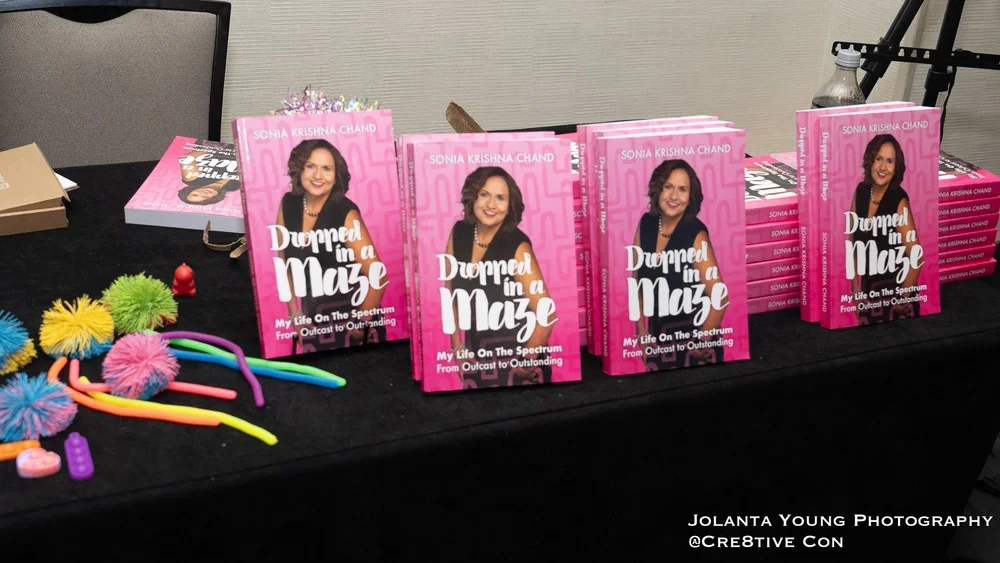
6. Difficulty Letting Go of Interests or Ideas
Cognitive flexibility—the ability to shift focus, adapt to change, and let go of ideas that aren't working—is often challenging for autistic individuals. This manifests as perseveration, where they continue pursuing something despite clear feedback that it's not working or appropriate.
This might look like continuing to pursue a romantic interest despite clear unavailability, repeatedly bringing up topics others have asked them to drop, or struggling to abandon approaches that aren't succeeding. The person isn't being intentionally stubborn; they genuinely struggle to redirect their focus.
Friends and family often become frustrated, repeatedly giving the same advice about moving on or changing approach. The autistic person may intellectually understand the feedback but find it extremely difficult to actually shift their thinking and behavior. The interest or idea maintains its grip despite conscious efforts to let go.
This perseveration creates patterns of repeatedly making the same social mistakes even after receiving feedback. Others interpret this as not listening or not caring about their input, when actually the person is struggling with neurological differences in cognitive flexibility and impulse control.
7. Mirroring Behavior Without Understanding Context
Many autistic individuals develop masking strategies where they observe and copy others' behavior to fit in socially. However, without understanding the underlying social rules and context, this mirroring often backfires, leading to negative reactions that confuse the autistic person.
They might notice a friend casually entering rooms without knocking and try the same behavior, only to be told they're being rude or invasive. They observe others sharing personal information and attempt similar sharing, but get feedback that they're oversharing or being inappropriate.
The confusion stems from not recognizing the nuanced contexts that make certain behaviors acceptable in some situations but not others. Relationships have different levels of intimacy with corresponding appropriate behaviors, but these hierarchies aren't always obvious to autistic individuals.
This creates painful situations where the person genuinely tries to fit in by copying what they see, only to face rejection and criticism. They followed what appeared to be the social blueprint but missed invisible factors like relationship closeness, timing, or reciprocal consent that made the behavior appropriate for others.
The Relief and Clarity of Diagnosis
Receiving an autism diagnosis as a young adult often brings profound relief rather than distress. Suddenly, years of confusion, failed social attempts, and feeling fundamentally different make sense. The diagnosis isn't a limitation—it's an explanation and a roadmap.
Understanding autism spectrum disorder allows individuals to stop blaming themselves for struggles that stem from neurological differences. They can learn specific strategies for their challenges, connect with others who share similar experiences, and advocate for accommodations that help them thrive.
The diagnostic process typically involves comprehensive neuropsychological testing that examines social cognition, communication patterns, sensory processing, and cognitive functioning. These evaluations provide detailed insights into an individual's specific profile of strengths and challenges.
For families and educators, diagnosis enables appropriate support and understanding. Instead of interpreting behaviors as willful or character flaws, everyone can recognize them as manifestations of autism and respond with appropriate strategies rather than punishment or criticism.
Moving Forward With Understanding
If these signs resonate with your experience or that of someone you care about, pursuing evaluation with a neuropsychologist or autism specialist can provide life-changing clarity. Late diagnosis is increasingly common as understanding of autism spectrum disorder expands beyond childhood stereotypes.
The journey to diagnosis may feel long and sometimes frustrating, but the self-understanding and validation it provides makes the process worthwhile. Knowing you're autistic doesn't limit your potential—it helps you understand yourself better and access the right supports for success.
Whether you're an educator noticing patterns in students, a family member concerned about a loved one, or a young adult recognizing yourself in these descriptions, taking steps toward evaluation demonstrates wisdom and self-advocacy. Understanding your neurology empowers you to work with your brain rather than against it.
Purchase Dropped in a Maze: My Life on Spectrum today to explore the detailed path to diagnosis and discover how understanding changes everything.

8 Ways Summer Breaks Can Transform Your Life
When you're struggling through a difficult school year, drowning in social isolation and academic pressure, summer break can feel like a lifeline. But it's more than just a pause from stress. The right summer experience can become a turning point that reshapes your entire trajectory.
Sometimes stepping away from your daily environment provides the clarity and perspective needed to discover who you really are and what you're capable of becoming. Geographic distance, supportive family members, honest conversations, and new social environments can work together to create transformation that seemed impossible just months earlier.
Whether you're a struggling student, a parent seeking solutions, or someone who survived difficult years and wants to understand your journey better, recognizing how change happens can provide hope and direction when you need it most.
Table of Contents
Physical Distance Creates Emotional Clarity
Makeovers Are More Than Skin Deep
New Environments Offer Fresh Social Opportunities
Family Can See What You Cannot
Honest Conversations Change Life Trajectories
Work Experience Builds Character and Confidence
Creative Outlets Provide Emotional Release
Setting New Anchors Creates Hope
1. Physical Distance Creates Emotional Clarity
When you're stuck in a toxic environment day after day, it becomes impossible to see beyond your immediate circumstances. Your world narrows to survival mode. Getting physical distance through travel or staying elsewhere provides perspective you simply cannot gain while immersed in daily struggles.
Leaving your hometown, even temporarily, removes you from the social hierarchies and painful dynamics that define your everyday existence. You're no longer the person everyone has labeled and boxed in. You become anonymous, which paradoxically allows you to be more authentically yourself.
This geographical shift often reveals that your struggles aren't inherent character flaws but products of specific environments and circumstances. What feels like personal failure in one setting can dissolve completely in another, proving that context matters enormously in how we experience ourselves.
The breathing room that distance provides allows suppressed emotions to surface and process. When you're constantly in fight-or-flight mode, real reflection becomes impossible. Space creates safety for honest self-examination.
Discover how one transformative summer away from a toxic school environment changed everything.
2. Makeovers Are More Than Skin Deep
External transformations often receive criticism as superficial, but they can serve as powerful catalysts for internal change. When you've spent years feeling invisible, unattractive, or wrong in your own skin, experiencing yourself differently through appearance changes can be revelatory.
A good makeover isn't about conforming to beauty standards. It's about seeing yourself with fresh eyes and recognizing that you're worthy of care, attention, and effort. For someone who has been bullied or ostracized, looking in the mirror and genuinely liking what they see can be the first positive self-perception they've had in years.
The confidence that comes from feeling good about your appearance isn't shallow. It affects how you carry yourself, how you interact with others, and how you allow yourself to be treated. When you feel attractive and put-together, you're more likely to advocate for yourself and expect respect.
These external changes can mark important turning points, serving as visual reminders that transformation is possible. They represent taking control over at least one aspect of your life when so much feels uncontrollable.
3. New Environments Offer Fresh Social Opportunities
One of the most liberating aspects of spending time in a new place is encountering people who know nothing about your past. You're not defined by mistakes you made in middle school or behaviors people won't let you forget. You meet others as a blank slate.
This fresh start allows you to practice social skills without the weight of reputation and judgment. When classmates in summer programs or new settings accept you easily, it proves that the rejection you face at home isn't inevitable or deserved. The problem wasn't you; it was the specific social ecosystem you were trapped in.
Meeting ambitious, talented peers in different environments expands your vision of what's possible. Seeing others balance academics, sports, and active social lives demonstrates that thriving is achievable, even if it hasn't been your experience yet. These encounters plant seeds about the kind of life you might build.
Even brief friendships formed during summer experiences matter. They provide templates for healthy interaction, show you what genuine acceptance feels like, and prove that connection is possible for you. These relationships, however fleeting, offer hope that lasting friendships will eventually come.
Want to understand how temporary friendships and new environments can plant seeds for future growth? Dropped in a Maze explores the profound impact of summer experiences, get the book today to see how small moments of acceptance create ripples of lasting change.
4. Family Can See What You Cannot
When you're drowning in immediate struggles, it's nearly impossible to think clearly about your future. You're focused on surviving this week, this day, sometimes just this hour. Extended family members who aren't caught up in daily crises often see your potential more clearly than you can see it yourself.
Relatives observing from outside your immediate household notice strengths you've stopped recognizing in yourself. They see your intellectual curiosity, your determination, your creativity—qualities buried under the weight of social failure and academic stress. Their outside perspective becomes invaluable.
These family members can also provide honest feedback about limitations without it feeling like criticism. When someone who genuinely cares about your success points out that your strengths lie elsewhere than your stated goals, it opens possibilities rather than closing them. They redirect rather than deflate.
The validation that comes from extended family believing in you creates a lifeline during periods when you don't believe in yourself. Knowing that someone sees promise in your future, even when you can't, keeps hope alive during the darkest stretches.
5. Honest Conversations Change Life Trajectories
Single conversations can pivot entire lives. When someone asks the right questions at the right time, they create space for truths to emerge that were waiting to be acknowledged. These moments of clarity often happen away from the pressure and noise of daily life.
Realizing you're pursuing a path because of external expectations rather than genuine interest is liberating. Many young people chase goals based on what parents want, what seems prestigious, or what they think they "should" do. Honest dialogue exposes these misalignments.
When trusted adults point out the disconnect between your stated goals and demonstrated abilities, it's not cruelty—it's kindness. Struggling miserably in chemistry and physics while excelling in writing and thinking should inform your path forward. Acknowledging this isn't giving up; it's being realistic.
These conversations work best when they highlight strengths rather than just identifying weaknesses. Hearing "your strengths lie elsewhere" while being reminded of your intellectual nature, good character, and specific talents creates a positive redirection. You're not failing at the right path; you're being redirected toward a better one.
Curious about how one dinner conversation completely changed a teenager's future trajectory? The complete story in Dropped in a Maze reveals how honest family dialogue and outside perspective created the clarity needed to choose an authentic path forward.
Purchase your copy to explore the power of transformative conversations.
6. Work Experience Builds Character and Confidence
Actually contributing to something productive, even in a small way, provides a sense of purpose and capability that academic struggles can't offer. Work experiences during summer breaks expose you to adult responsibilities and expectations in manageable doses.
Showing up consistently, completing tasks, and being part of a functioning operation proves to yourself that you're capable and reliable. When school makes you feel incompetent, work can restore confidence by demonstrating your ability to meet expectations and add value.
These experiences also provide glimpses into various career paths and work environments, helping clarify what you might enjoy or want to avoid in your future. Abstract career aspirations become more concrete when you see daily operations firsthand.
Additionally, work environments judge you on current performance rather than past reputation. Your coworkers don't know or care about your middle school behavior. They evaluate you based on how you show up today, providing yet another fresh start.
7. Creative Outlets Provide Emotional Release
When you've experienced trauma, bullying, isolation, or depression, creative expression becomes essential for processing and healing. Reading stories about characters grappling with loneliness, writing your own narratives, or engaging with art that explores difficult emotions provides catharsis.
Finding authors and characters who articulate feelings you've struggled to express makes you feel less alone. When Tennessee Williams explores isolation in The Glass Menagerie or Salinger captures alienation in Catcher in the Rye, readers struggling with similar emotions find validation and connection through literature.
Creative writing allows you to shape narratives, exercise control over outcomes, and explore possibilities that don't exist in your current reality. The imaginative space becomes a laboratory for working through emotions and envisioning different futures. It's both escape and processing.
Bonding with others over shared responses to creative works builds connections based on intellectual and emotional resonance rather than social status. Discussing stories, sharing viewpoints, and appreciating artistry together creates intimacy that superficial social interactions lack.
8. Setting New Anchors Creates Hope
Hope requires something concrete to attach to—a future goal, a vision of who you might become, a destination beyond your current circumstances. When you're mired in present suffering without any sense of future possibility, despair takes hold. Creating new anchors changes everything.
Identifying a field of study that genuinely interests you rather than one chosen by default creates excitement about learning. When education shifts from obligation to pathway, motivation follows. Having academic goals aligned with genuine interest rather than external pressure transforms the entire experience.
Setting geographical goals—deciding you want to attend college on the East Coast, planning to leave your hometown—provides direction and purpose. Every difficult day becomes endurable because it's one day closer to escape and new beginnings. The future becomes something to build toward rather than dread.
These anchors must be specific enough to be real but flexible enough to evolve. "I'm going to study psychology at a good East Coast college" gives clear direction while leaving room for adjustment. The specificity creates motivation without becoming rigid prison.
Most importantly, having something to look forward to, work toward, and hope for makes present suffering survivable. You're no longer just enduring; you're preparing. Each challenge overcome becomes proof of your determination and capability, building the strength needed for the journey ahead.
Ready to read the complete journey from despair to determination? Dropped in a Maze offers the full story of finding purpose, setting new anchors, and building toward a future that felt impossible during the darkest times.
Moving Forward
Summer breaks, family support, honest conversations, and new environments can catalyze profound personal transformation. When you're stuck in toxic situations feeling hopeless about your future, remember that change is possible. Distance creates perspective, fresh starts prove your worth, and single conversations can redirect your entire life trajectory.
The journey from surviving a difficult year to discovering purpose and setting meaningful goals isn't linear or easy, but it's achievable. Whether you're currently struggling or supporting someone who is, understanding how transformative experiences unfold provides a roadmap for change.
This exploration of summer transformation and life-changing conversations comes from a deeply personal journey chronicled in Dropped in a Maze. The complete book reveals how one summer away from a toxic environment, combined with family support and honest dialogue, created the turning point needed to move from survival to hope.
Get your copy today to read the full story of transformation, resilience, and finding your authentic path forward in the face of overwhelming obstacles.
7 Red Flags of Unethical Mental Health Practice
Therapy should be a safe space where you can be vulnerable without judgment. Your therapist should maintain professional boundaries while helping you navigate challenges. But what happens when those boundaries get blurred? What if your therapist's actions make your life worse instead of better?
If you're in therapy—whether you're a teen, parent, or adult—you need to know when professional boundaries are being violated. These violations might seem helpful in the moment, but they can cause lasting harm.
Here are major red flags that indicate your therapist is crossing ethical boundaries, based on my personal experience and what I've learned since.
Table of Contents
Your Therapist Shares Your Information With People in Your Life
Your Therapist Orchestrates Your Friendships
Your Therapist Uses Other Clients to Monitor You
Your Therapist Gives Clues About Other Clients' Identities
Your Therapist Gets Defensive About Your Valid Concerns
Your Therapist Has Undisclosed Conflicts of Interest
Your Therapist Fails to Teach You Essential Self-Advocacy Skills
What Ethical Therapy Looks Like
Moving Forward
1. Your Therapist Shares Your Information With People in Your Life
Perhaps the most fundamental principle of therapy is confidentiality. When a mental health professional begins discussing your case with people you know personally, they've violated a sacred trust.
Therapists are bound by strict confidentiality rules. They cannot share details about your treatment with classmates, neighbors, colleagues, or acquaintances without your explicit written consent. Even well-intentioned disclosures made in an attempt to help you socially constitute serious ethical violations.
The harm extends beyond the immediate privacy breach. When your therapist talks about you to others in your social circle, they compromise your autonomy and create complex dynamics that interfere with genuine relationship building. You deserve to form connections based on authentic interest, not orchestrated interventions.
If your therapist casually mentions speaking with people you know about your case, this should immediately raise concerns about their professional judgment and adherence to ethical standards.
These violations aren't just theoretical—they happen to real people with lasting consequences. Dropped in a Maze chronicles Sonia's journey through these exact scenarios during high school, showing how unethical practices affected relationships, self-esteem, and personal growth.
2. Your Therapist Orchestrates Your Friendships
Therapy should empower you to develop social skills and confidence. It should never involve your therapist arranging friendships on your behalf or coordinating with others to befriend you.
When mental health professionals step into the role of social coordinator, they cross into territory that undermines your growth. Manufactured friendships don't teach you how to navigate relationships authentically. Instead, they create artificial scenarios that can actually delay your social development.
Real therapeutic work involves helping you understand social dynamics, build communication skills, and develop the confidence to pursue connections independently. A therapist who calls potential friends on your behalf or sets up playdates like you're a child has lost sight of their professional role.
These orchestrated relationships often come with hidden complications. The people involved may feel obligated rather than genuinely interested, creating unstable foundations that eventually crumble. You're left not only without the friendship but also with the painful knowledge that it was never authentic to begin with.
3. Your Therapist Uses Other Clients to Monitor You
The therapeutic relationship should be a confidential space between you and your provider. When your therapist has multiple clients from the same school, workplace, or community, they must maintain strict boundaries to prevent information from crossing between cases.
A therapist who tells you about other clients, even without naming them, has already begun eroding appropriate boundaries. When they go further and actually discuss you in other clients' sessions or use those clients to report back on your behavior, they've created an unethical surveillance network.
This practice is deeply problematic for several reasons. First, it violates the confidentiality of everyone involved. Second, it creates divided loyalties that compromise the therapeutic relationship. Third, it transforms peers into informants rather than supporting you in developing genuine connections.
You might hear hints that your therapist knows things about you that you didn't share directly. They might reference your behavior in specific settings or repeat comments others made about you. These are warning signs that information is flowing inappropriately between sessions.
Curious about what happens when multiple clients from the same school see the same therapist? Dropped in a Maze provides an insider's perspective on the tangled web that forms when professional boundaries collapse.
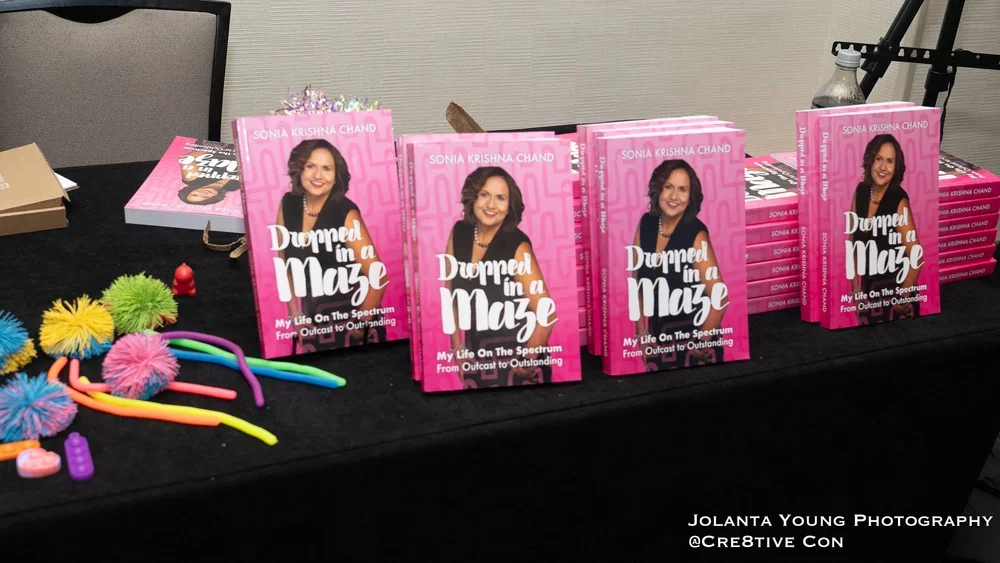
4. Your Therapist Gives Clues About Other Clients' Identities
Professional ethics require therapists to protect client identities rigorously. When a therapist suggests you "pay attention to students who might start being nice to you" as a way to identify their other clients, they've violated multiple ethical principles.
This behavior shows poor professional judgment and a concerning lack of respect for confidentiality. It also puts clients in awkward positions, knowing or suspecting who else is in treatment and potentially changing how they interact with those individuals.
The mental health field has clear standards about client privacy precisely because violations can cause significant harm. Knowing who else sees your therapist can influence your relationships, create uncomfortable dynamics, and make you question whether your own information is being protected.
If your therapist hints at, suggests, or outright tells you who their other clients are, recognize this as a serious red flag about their professional standards.
5. Your Therapist Gets Defensive About Your Valid Concerns
Healthy therapeutic relationships allow space for clients to express concerns, ask questions, and even challenge their therapist's approaches. When a therapist responds to legitimate concerns with defensiveness, blame, or dismissiveness, the relationship has become problematic.
Expressing that you feel uncomfortable with certain dynamics or questioning therapeutic decisions is not only appropriate but essential for effective treatment. A competent therapist welcomes this feedback and works collaboratively to address concerns.
Defensive responses often sound like: "What, they can't have any other friends? That's really unfair of you!" or "You're being too sensitive" or "I'm the professional here." These reactions shut down communication and make you feel guilty for advocating for yourself.
This defensiveness may stem from the therapist's ego being tied to your progress. When they view your struggles as their professional failure, they may double down on questionable strategies rather than acknowledging limitations and adjusting their approach.
6. Your Therapist Has Undisclosed Conflicts of Interest
Ethical practice requires transparency about any relationships or interests that could compromise objectivity. When your therapist has hidden financial arrangements, business relationships, or other connections related to your case, they're operating in ethically murky territory.
These conflicts create situations where the therapist's judgment may be clouded by factors other than your best interest. They might push certain relationships, make specific recommendations, or take particular approaches based on outside considerations you're unaware of.
Warning signs include the therapist being unusually invested in you connecting with specific people, especially if those people or their families have business interests. Other red flags include the therapist seeming to benefit personally from connections they're facilitating or relationships they're encouraging.
You have the right to know if your therapist has any relationships or interests that could affect their objectivity in your care. If you discover undisclosed conflicts after the fact, this represents a serious breach of trust.
7. Your Therapist Fails to Teach You Essential Self-Advocacy Skills
Perhaps the most subtle but damaging boundary violation is when a therapist manages your life rather than teaching you to manage it yourself. Effective therapy should progressively empower you to handle challenges independently.
When your therapist intervenes directly in your social situations, speaks to others on your behalf, or handles conflicts for you rather than coaching you through them, they're preventing your growth. The goal should be to help you develop skills, not to become your permanent intermediary.
You should be learning how to set boundaries, how to respond to difficult comments, how to advocate for your needs, and how to navigate complex social situations. If your therapist consistently steps in to do these things for you, they're creating dependency rather than building competence.
Real therapeutic progress looks like gradually needing less intervention, not more. You should feel increasingly capable over time, not more reliant on your therapist to manage your relationships and daily challenges.
What Ethical Therapy Looks Like
Understanding what went wrong helps illuminate what right looks like. Ethical, effective therapy operates within clear boundaries that protect and empower you.
In appropriate therapeutic relationships, your confidentiality is sacrosanct except in legally mandated situations involving safety risks. Your therapist maintains professional distance from your social world, helping you develop skills rather than managing your relationships. They welcome your feedback, acknowledge limitations, and adjust approaches based on your needs.
Good therapists teach you to fish rather than fishing for you. They help you understand social dynamics, practice communication skills, and build confidence to pursue connections authentically. They celebrate your independent successes rather than taking credit for orchestrated outcomes.
If you recognize these warning signs in your own therapeutic relationship, trust your instincts. Speak with the therapist about your concerns, consult with another mental health professional for a second opinion, or consider finding a new provider who operates within appropriate boundaries.
Moving Forward
Mental health treatment should be empowering, not disempowering. It should build your independence, not create dependency. And it should always operate within clear ethical boundaries that protect your privacy, autonomy, and dignity.
Understanding these principles helps you become an informed consumer of mental health services and advocate for the quality care you deserve. Whether you're currently in therapy or considering it, knowing what's appropriate and what crosses the line is essential for your wellbeing.
This exploration of therapy boundaries comes from a deeply personal story of navigating mental health care during the vulnerable teenage years.
Dropped in a Maze provides an unflinching look at the challenges of growing up different, the lasting impact of bullying, and the complicated relationship between mental health support and personal growth.

How to Stand Up for Yourself
"Just stand up for yourself." "Give them a taste of their own medicine." "Put them in their place." If you're being bullied, you've probably heard this advice countless times from well-meaning adults.
It sounds empowering. It sounds like the solution. But for autistic teens who struggle with social cues and context, this kind of black-and-white advice can backfire spectacularly—turning you from victim to villain in the eyes of everyone around you.
I learned this the hard way during my freshman year of high school. After years of bullying in middle school, my parents found me a therapist who promised to teach me how to defend myself. Dr. Shah's advice was simple: "If someone is being rude to you, give them a double dose of what they've given you. Let them have it!"
It made sense. It felt empowering. And it completely blew up in my face.
This is the story of why standard "stand up for yourself" advice doesn't work for autistic people, what actually does work, and how to navigate social conflicts when you can't read the invisible rules everyone else seems to understand instinctively.
Table of Contents
When Therapy Advice Misses the Mark
The Pickleball Incident: When Standing Up Goes Wrong
Why Literal Interpretation Creates Problems
The Pattern That Kept Repeating
What Actually Works: Better Strategies for Self-Advocacy
Finding Safe Spaces Outside of School
Key Takeaways for Teens and Parents
Moving Forward
When Therapy Advice Misses the Mark
At the start of freshman year, my parents' biggest fear was a repeat of my sixth-grade behavioral outbursts. Forest Ridge High School was made up of the same people from middle school, plus a few students from St. Joseph's Catholic School. Everyone already had established friend groups from community sports and church. I was still the outsider.
My mom made sure I started seeing a therapist right away. When I met Dr. Shah, I was impressed. She was sharp and picked up on my peculiarities immediately:
Delayed social skills compared to my peers
Different and awkward facial expressions
Lack of eye contact during conversation
Dr. Shah taught me social skills, including how to stand up to bullies. Her advice was clear and confident:
"You have to put people in their place. If someone is being rude to you, then give them a double dose of what they've given you. Let them have it! No one should treat people that way. And when you stand up for yourself, they won't."
Her idea made me smile. Maybe this was the answer I'd been looking for. Maybe if I just showed people I wouldn't take their abuse anymore, they'd finally respect me.
I didn't know if I could actually do it, but I was willing to try anything to avoid getting picked on again.
The Problem with One-Size-Fits-All Advice
Here's what Dr. Shah didn't account for: autistic people tend to take advice very literally. We don't automatically understand:
When to apply the advice and when not to
How much is "standing up for yourself" versus "going too far"
The social context that determines appropriate responses
The invisible line between assertiveness and aggression
Neurotypical people have an instinct for these nuances. They can read a room, gauge reactions, and adjust their approach on the fly. For autistic people, these invisible rules might as well be written in a language we don't speak.
The Pickleball Incident: When Standing Up Goes Wrong
The first place I tried Dr. Shah's advice was gym class during our pickleball unit. While other students paired up in teams of two, I played solo against Misty's team.
I wasn't coordinated or athletic. I missed the ball frequently and moved slowly. The comments came from multiple directions:
"You couldn't hit that ball?" "Can't you move any faster?" "Pick up the damn ball, and hurry up!"
The frustration and irritation built up inside me. Following Dr. Shah's advice, I told people to "shut up" and "fuck off."
As we left the court, Misty suddenly tried to be nice. "That was fun. We should do that again."
This confused me, but I remembered what Dr. Shah taught me. I had to stick up for myself. I didn't like how snippy Misty had been the entire time, so I used the exact phrase Dr. Shah had taught me:
"You were being so rude, and now you are being so nice. What is your scenario?"
Misty looked shocked. "Excuse me, but you told me to fuck off."
She went around telling other girls, "Sonia is such a trip," laughing about it with everyone.
When Things Escalated Further
I didn't think anything was funny. I turned to a classmate from a different grade and said, "Some freshman girls are just bitches."
Another classmate overheard me and said, "You're a bitch, too, because you're a freshman."
Then she went to others and twisted my words: "Sonia said you're bitches because you're freshmen."
That's not what I said at all, but it didn't matter. Girls started giving me deadly stares. People kept their distance. I was confused and hurt. I thought I was simply standing up for myself like Dr. Shah told me to.
The Therapist's Response
When I told Dr. Shah what happened, she said, "It's good not to be too over-eager or too nice at school, but Sonia, you have to be careful about name-calling."
I took part of her advice to heart. I started ignoring people I thought were fake, especially the popular girls. But I never really understood why I couldn't retaliate with name-calling if I felt attacked. If they could call me names, why couldn't I defend myself the same way?
This is where the advice broke down for me. The rules weren't clear. The boundaries weren't defined. And I was left to figure out the invisible line on my own.
In my book, I explore the complete aftermath of this incident and detail the specific communication strategies that actually work for autistic teens trying to navigate social conflicts without making things worse.
Why Literal Interpretation Creates Problems
Autistic people are often very literal thinkers. When Dr. Shah said "give them a double dose of what they've given you," I heard:
If they're rude, be rude back
If they curse at me, curse at them
Match their energy exactly
What she probably meant was something more nuanced:
Stand firm in your boundaries
Don't let people walk all over you
Respond assertively but appropriately
But those subtleties weren't spelled out. And without clear guidelines on when, where, and how much to push back, I applied the advice indiscriminately.
The Gym Class Locker Room Problem
Gym class presented another challenge. During dodgeball and soccer units, the teacher had one team turn their gym shirts inside out to distinguish teams.
The first time the teacher gave this order, I didn't comply. I was afraid of being laughed at because I didn't know how to turn my shirt around without my bra showing, the way other girls seemed to do effortlessly.
Eventually, I had to comply to avoid looking defiant. But I couldn't do it without showing my bra. Girls started noticing and staring. I felt uncomfortable with the way their eyes wandered during shirt-turning times.
Then I overheard a conversation where this became a topic of discussion. Of course, they brought up the middle school swimming unit locker room drama. Even guys who hadn't attended the same middle school heard about it.
I couldn't escape my past mistakes, and every new situation felt like a trap waiting to spring.
The Spanish Class Confrontation
Spanish class was another place where my snappy, defensive side emerged. A classmate repeatedly called me "Sanya" after I corrected her pronunciation of my name. She continued saying "Sanya" in a sardonic tone.
I told her I wasn't going to answer to that name. She laughed and became defensive herself, exclaiming loudly to others: "Sonia just gets worked up over nothing."
I was following what Dr. Shah taught me, hoping people would learn to respect me. Instead, I got the opposite of respect. I became more of a target, more of a pariah.
What I Should Have Done Instead
Looking back, I could have handled the Spanish class situation differently:
Responded in a way that wasn't defensive
Tried going along with it by mispronouncing her name in the same joking manner
Said something light like "Who is Sanya? I don't know her"
Used humor to deflect instead of confrontation to escalate
But these strategies require reading social context and understanding tone. They require knowing when someone is genuinely trying to hurt you versus when they're just teasing. For autistic people, that distinction isn't always clear.
The Pattern That Kept Repeating
Every Friday, I would call Dr. Shah crying out of loneliness. I felt alone and alienated at school every single day. I sat by myself at lunch tables, then moved to the Hangout Area where I'd sit alone again, either doing homework or watching other people socialize.
I was trying to learn social skills through observation, but watching isn't the same as understanding. I could see what people did, but I couldn't figure out why it worked for them and not for me.
Dr. Shah had me read a book about friendships that talked about learning hobbies, dressing nicely, and being interesting so people would want to be around you. But by freshman year, I didn't have hobbies. I didn't know what I was good at or what interested me. I had no idea who I even was. My self-concept never really had a chance to develop or be explored.
The Tennis Recommendation
Dr. Shah recommended to my parents that I learn a sport. She introduced us to the Love All Tennis Club in a nearby town, about 15 minutes from Forest Ridge. She knew one of the tennis instructors because he taught her family.
I grew to like tennis, and eventually, tennis became my anchor to get through high school. It gave me something I was working toward, something where I could measure progress, something that was mine.
Sports and hobbies won't solve social problems, but they provide structure, purpose, and sometimes a community of people who share your interests rather than your history.
Finding Safe Spaces Outside of School
Dr. Shah emphasized the importance of trying to make friends outside of school. She insisted I attend a Halloween Party at a place called the After School Center. I finally agreed because, honestly, who doesn't like Halloween candy and themed desserts?
The person in charge, Ruth, was dressed as the wicked witch from The Wizard of Oz. Her excitement in welcoming me was refreshing. There were activities everywhere—scary movies in one room, dancing in the gymnasium, people sitting on bleachers.
After touring the place, Ruth introduced me to a group of girls on the bleachers. Within minutes, I realized they were talking about wanting to beat up someone who was at the party that night.
I was immediately turned off. I didn't know how to leave the conversation gracefully, so I tried to divert by talking to the person next to me. She immediately launched into intense topics about wanting to drop out of school because she was failing.
I got up and left altogether. My dad and brother had been watching scary movies in the other room, so I found them and we went home.
I later learned the After School Center was for at-risk youth to keep them off the streets. The conversation that night made complete sense in that context.
The Temple Experience
The next place I tried was the Hindu Temple, about an hour from Forest Ridge. I signed up for two classes: Bhagavad Gita and Hindi.
When I first attended the Bhagavad Gita class, people were welcoming. I struck up a good conversation with someone named Bhavna. We ate lunch together in the temple cafeteria, bonded over TV shows, movies, and tennis. We exchanged numbers and had a phone conversation after my second visit.
We even discussed making plans to go shopping together after temple. I thought I was finally making progress.
I couldn't have been more wrong.
When Friendship Disappeared Without Explanation
The next time I attended class, Bhavna treated me like I'd done something horrible. She didn't acknowledge me at all. When I tried to talk to her during a break, she blew me off and continued her conversation with another friend. That friend gave me a sympathetic look, but Bhavna remained standoffish.
I never found out what happened. My first automatic thought was "another friendship failure." After all, it was easy to assume the problem was me because of my relentless social challenges.
But here's something important: it's easy for people on the autism spectrum to believe that every rejection or mistreatment is about something they said or did. However, that isn't always the case. Sometimes it's about the other person and their own shortcomings.
After that experience, I stopped going to the classes. I figured if I was going to be driven an hour away just to be treated poorly, what was the point? I was already dealing with enough rejection at school. I deserved better.
The full story of these friendship attempts—and the crucial lessons about when to keep trying and when to walk away—is something I explore extensively in my book. Understanding this distinction is vital for protecting your mental health while still remaining open to genuine connections.
What Actually Works: Better Strategies for Self-Advocacy
After years of trial and error, I've learned that effective self-advocacy for autistic people looks different than the standard "stand up for yourself" advice. Here's what actually works:
Understand Your Literal Interpretation Tendency
When someone gives you advice, ask clarifying questions:
"Can you give me specific examples of when I should use this?"
"What are situations where this approach wouldn't work?"
"How do I know if I've gone too far?"
"What does 'standing up for myself' look like in different contexts?"
Don't assume you understand the nuances. Ask for explicit guidelines.
Learn the Difference Between Types of Conflict
Not all negative interactions require the same response:
Genuine bullying (intentional, repeated, power imbalance)
Document incidents
Report to trusted adults
Remove yourself from the situation when possible
Don't engage directly with the bully
Teasing that includes you (joking, reciprocal, everyone's laughing together)
Try responding with light humor
Don't take it personally
Observe how others respond in similar situations
Teasing that excludes you (mocking, one-sided, laughing at you not with you)
State clearly: "I don't find that funny"
Walk away
Don't try to joke back if you can't read whether it will land well
Misunderstandings (confusion, miscommunication, no malice intended)
Ask clarifying questions
Explain your perspective calmly
Give people the benefit of the doubt initially
Use "I" Statements Instead of Attacks
Instead of: "You're being rude!" Try: "I feel uncomfortable when you talk to me that way."
Instead of: "What is your scenario?" Try: "I'm confused because you seemed upset earlier, but now you seem friendly. Can you help me understand?"
Instead of: "Some freshman girls are just bitches." Try: "I'm having a hard time with some of the social dynamics in our class."
"I" statements express your feelings without attacking others. They're less likely to escalate conflicts.
Know When to Walk Away
Sometimes the best self-advocacy is recognizing when a situation isn't worth your energy:
If people consistently disrespect you, find different people
If an environment is toxic, seek healthier spaces
If someone blows you off without explanation, accept it and move on
If "standing up for yourself" consistently makes things worse, try a different approach
Walking away isn't weakness. It's wisdom.
Find Your Anchors
Develop interests, hobbies, or activities that:
Give you purpose beyond social acceptance
Provide measurable progress you can see
Connect you with people who share interests, not history
Build confidence in areas where you can succeed
For me, tennis became that anchor. It gave me something stable when everything else felt chaotic.
In my book, I provide a comprehensive guide to these strategies with real-life examples, scripts you can use in different situations, and step-by-step approaches for building genuine self-advocacy skills that work for autistic people.
Key Takeaways for Teens and Parents
For Autistic Teens
Standard advice often doesn't account for literal thinking. When adults give you social advice, ask for specific examples and clear boundaries. Don't assume you understand all the unspoken nuances.
Not every conflict requires confrontation. Sometimes the most powerful response is no response at all. Learn to distinguish between situations that require action and situations that require distance.
Your confusion is valid. If you don't understand why something that seemed like self-advocacy backfired, that's not a personal failure. The social rules are genuinely confusing and often contradictory.
Find spaces where you can be yourself. Whether it's a hobby, sport, or interest-based community, having places where you're valued for what you contribute rather than judged for how you socialize makes an enormous difference.
Walking away is a form of self-respect. You don't have to keep trying with people who consistently reject or mistreat you. Protecting your mental health by removing yourself from toxic situations is healthy self-advocacy.
For Parents and Therapists
Be specific with social advice. Don't assume autistic teens will understand implied nuances. Provide explicit examples, contexts, and boundaries for when advice applies and when it doesn't.
Teach distinction between conflict types. Help your teen understand the difference between bullying, teasing, misunderstandings, and genuine malice. Each requires a different response strategy.
Monitor how advice is being applied. Check in regularly to see if the strategies you've taught are working or backfiring. Be ready to adjust your approach based on real results.
Prioritize mental health over social success. If pursuing friendships or social integration is causing significant distress, it's okay to pull back and focus on building confidence in other areas first.
Create opportunities outside school. School is one ecosystem with established social hierarchies. Extracurricular activities, hobby-based groups, and community programs offer fresh starts with different people.
Validate their interpretation. When an autistic teen applies advice literally and it goes wrong, don't just correct them. Acknowledge that your advice wasn't clear enough. Take responsibility for the miscommunication.
Moving Forward
The "stand up for yourself" advice I received from Dr. Shah was well-intentioned but fundamentally flawed for someone who processes social interactions literally. It turned me from a victim of bullying into someone who appeared aggressive and confrontational—making my social isolation worse, not better.
If you're struggling with similar challenges—or if you're a parent or therapist trying to help an autistic teen navigate social conflicts, my book provides the detailed guidance I wish I'd had during those difficult high school years. It's filled with specific strategies, real conversations, and practical approaches that account for how autistic people actually think and process social situations.

From "Problem Child" to Honor Roll: The Sweetest Revenge
There's a particular kind of satisfaction that comes from proving everyone wrong. Not through words or arguments, but through undeniable results that speak louder than any comeback ever could.
When my name was called during study hall for making the honor roll, I heard the whispers ripple through the classroom: "Sonia?" The bewilderment in their voices was palpable. After all, I was the girl they'd labeled a "problem child," the one administrators said was "unfit to attend a 4-star school district," the student they predicted would be "lucky to make it to eighth grade."
Yet there I stood, receiving my certificate and pencil alongside students who'd never doubted their place in that moment. My brother summed it up perfectly later: "You just told your school 'fuck you,' right?" And he was absolutely right—though I'd done it in the classiest way possible.
This is the story of how setting boundaries, refusing to be entertainment for bullies, and focusing on what actually mattered transformed me from the girl everyone wrote off to someone they couldn't ignore. It's about the academic wins that felt like personal victories and the social skills that finally clicked into place when I stopped trying to fit in and started protecting my peace.
Table of Contents
The Birthday Party They'll Never Attend
The "You Go First" Strategy That Changed Everything
The Loneliness That Follows Liberation
The Victory Nobody Saw Coming
What This Victory Actually Meant
The Lessons That Honor Roll Taught Me
The Sweetest Kind of Victory
From Eighth Grade to Beyond
The Birthday Party They'll Never Attend
The school year started with the same girls who'd ignored me all summer suddenly becoming very interested in my plans. They remembered that last year, I'd thrown a birthday party during the first weekend of school. Suddenly, they were all smiles, asking if I'd be having another party and whether they'd be invited.
My answer was simple: "No."
Their shock was almost comical. But here's what I'd learned over that summer of loneliness and reflection: people who weren't there for you during your struggles don't deserve a spot in your celebrations. This is one of those life lessons that sounds obvious but takes real pain to truly understand.
These were the same girls who'd:
Blown me off repeatedly when I tried to connect
Set me up to act weird for their entertainment
Called me names and excluded me from their groups
Made my middle school years a living nightmare
Why would I reward that behavior with access to my home, my family, and my celebration? I wouldn't. And that boundary felt incredibly empowering to hold.
The "You Go First" Strategy That Changed Everything
At the beginning of eighth grade, Dr. Wagner gave me advice that would become a turning point in how I handled social manipulation. He noticed how other students would set me up to act out, getting me to do embarrassing things while they watched and laughed.
His strategy was brilliantly simple: "The next time someone tries to set you up to act weird, you tell them, 'I will go after you go first.' That way, you let them be the ones doing the acting."
I was confused. "What happens after they're done?"
"You tell them, 'I changed my mind. But it looks great on you, so keep on going.'"
The genius of this approach is that it flips the script entirely. Instead of being the target, you become the observer. Instead of entertaining others at your own expense, you hand them the spotlight and watch them squirm.
The Power of Refusing to Perform
It only took one more incident of being called "weird" and remembering Dr. Wagner's advice for me to completely stop the repertoire of acting out. I simply refused to be their entertainment anymore.
The reaction from my peers was telling. They kept asking, "What's wrong? What's wrong with you?" Nothing was wrong—that was the point. What had changed was that I finally got a clue and stopped letting people use me as their personal comedy show.
Here's what refusing to perform looked like:
Saying no when asked to do embarrassing things
Calling out manipulation attempts directly
Walking away from situations designed to humiliate me
Protecting my dignity even when it meant being alone
The bullying continued for a while after I stopped playing along, but once those incidents were handled, something interesting happened: people completely left me alone. They ignored me, yes, but at least they weren't actively tormenting me anymore.
Learning to set boundaries and protect yourself from manipulation is a critical skill for neurodivergent individuals navigating hostile social environments. Discover the complete journey of building these skills and what happens when you finally stop performing for others in the full book.
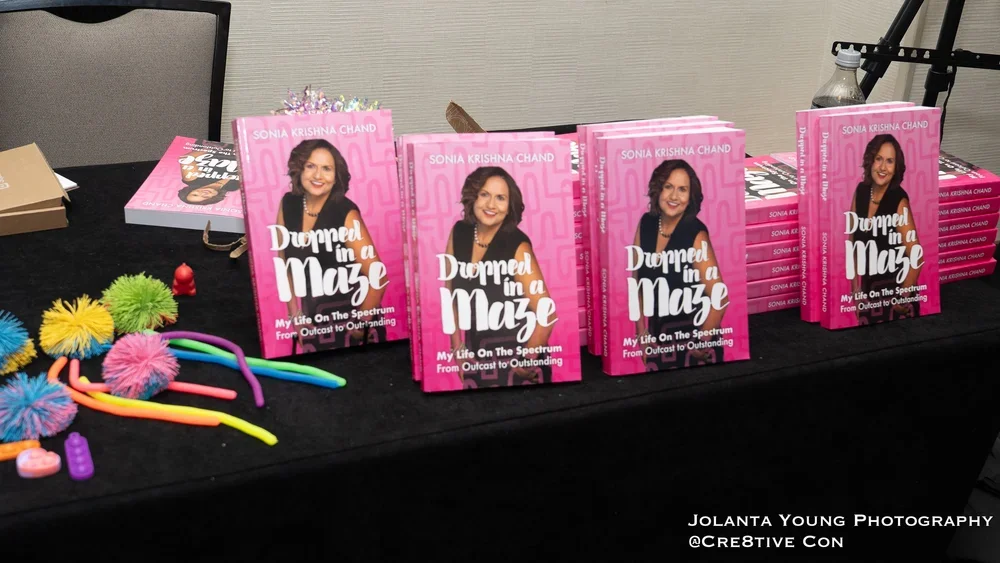
The Loneliness That Follows Liberation
Stopping the act of entertaining others came with an unexpected cost: profound loneliness. While I'd been busy acting out and being bullied during previous school years, everyone else had formed strong friendship groups. By the time I realized how my behavior and others' cruelty had affected my ability to bond with anyone, it was too late. People had already formed their tight-knit circles, and they were miles ahead in the social maze.
The loneliness hit hardest during passing periods and lunch. In those moments sitting alone in the cafeteria, I found myself missing the resource room where I used to eat lunch. At least there, even without peers to sit with, I was still around people who weren't judging me. There were even times I started missing being on restrictions and being escorted to classes—at least then I had adult supervision and structure.
Where Crying Happens When You're Older
During my acting-out years, I'd cry openly at school, expressing to anyone who'd listen that I had no friends. Family members would comfort me, with one uncle simply acknowledging that kids can be very cruel. Somehow, hearing that validation was soothing.
By eighth grade, the crying had moved from school hallways to Friday nights and weekends at home. I'd stopped being a spectacle at school, but the pain of isolation hadn't disappeared—it had just found a more private stage.
Dance classes had been my outlet and source of comfort, a way to find relief from the daily throws of being in a horrible environment. But the homework in eighth grade became so overwhelming that I had to stop. Even my tutor, Mrs. Goldstein, noticed the excessive workload.
"Does everybody have this much homework every night?" she'd ask.
I didn't know about everyone else, but I was drowning in assignments every single night, plus periodic exams that seemed designed to break me.
The relationship between academic pressure, social isolation, and mental health for neurodivergent students is complex and often misunderstood. Learn how to navigate these challenges and find support systems that actually work in the complete book.
The Victory Nobody Saw Coming
Remember how school administrators told my parents I'd be "lucky to make it to eighth grade"? Not only did I make it to eighth grade, but I did something nobody expected: I made the honor roll for the very first time ever.
I didn't even know I'd achieved it until Ms. Anderson told me on the day report cards came out. The news spread quickly—Mrs. Horowitz called my mom before I even got home to tell her. We celebrated with ice cream, a simple but perfect acknowledgment of what felt like an impossible achievement.
Mrs. Goldstein's reaction was the most memorable. She couldn't contain her excitement, asking repeatedly with genuine joy, "Did you really?! Did you really?!" Her face lit up the entire room. After all the struggles, all the late nights, all the times I wanted to give up—this moment validated everything.
The Public Recognition
The next day during study hall, all students who made the honor roll were recognized in front of the class. Each recipient received a pencil and a certificate—small tokens that represented so much more.
When my name was called, I heard the whispers immediately: "Sonia?" The tone was pure bewilderment. You could feel the shock rippling through the room as students turned to their friend groups, trying to process what they'd just heard.
What made this moment so powerful:
I was the "problem child" who supposedly didn't belong
Administrators had written me off as unlikely to succeed
Peers had spent years treating me as less than
Yet here I was, being recognized for academic achievement alongside everyone else
Jessica, one of the girls who'd been particularly cruel to me over the years, witnessed the whole thing. Watching her watch me receive that award added an extra layer of satisfaction to an already sweet victory.
My brother Jay understood exactly what I'd accomplished. "Sonia, you know you just told your school 'fuck you,' right?"
He was absolutely right. And it was the classiest way to say it.
What This Victory Actually Meant
Making the honor roll wasn't just about grades or academic validation, though those things mattered. It represented something far more significant: proof that everyone who'd written me off was wrong.
The school administrators who said I was unfit for their district? Wrong.
The teachers who predicted I'd never make it to eighth grade? Wrong.
The peers who treated me like I was stupid and incapable? Wrong.
The system that punished my differences instead of accommodating them? Wrong about my potential.
The Ingredients of an Unlikely Success
Looking back, several factors contributed to this achievement:
Setting Boundaries: Refusing to be entertainment for bullies freed up mental and emotional energy I could redirect toward academics.
Professional Support: Despite some problematic therapists, having people like Dr. Wagner who gave practical advice made a real difference.
Tutoring and Structure: Mrs. Goldstein's support and the systems she helped me implement allowed me to manage the workload.
Shifting Focus: When social acceptance seemed impossible, I channeled that energy into something I could control—my academic performance.
Sheer Determination: There's something powerful about wanting to prove everyone wrong. That anger, when properly directed, becomes fuel.
Success for neurodivergent students looks different for everyone and requires understanding what specific supports each individual needs. Explore the strategies, systems, and mindset shifts that made this transformation possible in the full book.
The Lessons That Honor Roll Taught Me
Making the honor roll in eighth grade taught me lessons that extended far beyond academics:
You Don't Need Everyone's Approval
Those girls who suddenly wanted birthday party invitations when they'd ignored me all summer? They taught me that some people only show up when there's something in it for them. Learning to say no to those relationships was liberating.
Boundaries Are Protection, Not Punishment
Refusing to act weird for others' entertainment wasn't mean—it was self-preservation. Setting boundaries felt uncomfortable at first, but it was essential for my dignity and growth.
Your Worth Isn't Determined by Others' Predictions
Every adult who said I wouldn't make it, every peer who treated me as less than—they were all operating from their own limitations and biases. Their inability to see my potential didn't make it any less real.
Loneliness Can Be a Catalyst
The isolation that came with refusing to perform for others was painful, but it created space for me to focus on what actually mattered. Sometimes you have to be alone before you can find your people.
Success Is the Best Response
No amount of arguing or defending myself could have made the impact that silently achieving honor roll made. Results speak louder than any words ever could.
The Sweetest Kind of Victory
There's something particularly satisfying about achieving what everyone said was impossible. Not because it proves you're better than them, but because it proves you're capable despite them. Despite the bullying, the restrictions, the low expectations, the isolation—you still found a way.
The honor roll certificate was just a piece of paper, but what it represented was everything. It was validation that I could succeed in a system designed for neurotypical students. It was proof that labels like "problem child" didn't define my capabilities. It was evidence that the administrators and teachers who'd written me off had fundamentally misunderstood who I was and what I could achieve.
Most importantly, it was the beginning of understanding that my worth didn't depend on social acceptance or others' approval. I could define success on my own terms, achieve it through my own efforts, and feel proud regardless of whether anyone else celebrated with me.
From Eighth Grade to Beyond
That honor roll achievement in eighth grade became a turning point—not just academically, but in how I viewed myself and my place in educational environments. It didn't erase the loneliness or make friends suddenly appear. It didn't undo years of bullying or make the school system suddenly understand neurodivergence.
But it did something perhaps more important: it showed me I was capable of success despite obstacles, that I could thrive even in hostile environments, and that the people who counted me out were operating from incomplete information.
The girl who sat alone in the cafeteria, who cried on Friday nights because she had no friends, who'd been told she was lucky to make it to eighth grade—she made the honor roll. And in doing so, she discovered that sometimes the best revenge isn't getting back at people who hurt you. It's succeeding in ways they never thought possible.
For the complete story—including how high school changed everything, what strategies actually worked for building genuine friendships, and how early struggles transformed into strengths, read the full book and discover that being counted out doesn't mean you're out of the running.