

5 Signs You've Found the Right Therapist (And 3 Red Flags You're With the Wrong One)
Finding the right therapist can feel like searching for a needle in a haystack—especially when you're autistic, dealing with trauma, or struggling with issues that most practitioners don't fully understand. You show up vulnerable and desperate for help, only to leave sessions feeling dismissed, misunderstood, or worse than when you arrived.
Not all therapy is good therapy. Not all therapists are equipped to handle the specific challenges autistic people face. And sometimes, what sounds like helpful advice in the moment is actually reinforcing the exact patterns that are keeping you stuck.
After self-harm brought me to a breaking point in law school, my parents insisted I find therapeutic help. What followed was a journey through different practitioners—some who offered genuine insight, others who said things that were ultimately harmful, and eventually finding someone who understood both autism and the deeper work I needed.
This is about recognizing when you're getting real help versus when you're wasting time and money on therapy that isn't serving you.
Table of Contents
Good Sign #1: They Tell You Hard Truths You Need to Hear
Good Sign #2: They Help You Understand Patterns, Not Just Feelings
Good Sign #3: They Teach You Practical Self-Protection Skills
Good Sign #4: They Have Specific Expertise in Your Challenges
Good Sign #5: They See Your Bigger Picture, Not Just Your Symptoms
Red Flag #1: They Make Dismissive Statements About Your Struggles
Red Flag #2: They Tell You What You're "Meant" or "Not Meant" to Have
Red Flag #3: They Don't Specialize in What You Actually Need
How to Find the Right Therapeutic Support
Key Takeaways for Choosing Your Therapist
Moving Forward
Good Sign #1: They Tell You Hard Truths You Need to Hear
The Assignment You're Avoiding
After revealing my self-harm to my parents during their visit, they insisted I see a local therapist near law school. This therapist was willing to say something nobody else had directly addressed:
"We all have an assignment we have to do before our time is up on Earth. If you are feeling unfulfilled in a career path you are on, and it is more than just one bad day, then perhaps this is not your assignment."
Why This Matters
A good therapist doesn't just validate your feelings—they help you see uncomfortable truths you're avoiding.
In my case:
I was deeply unhappy in law school
The unhappiness wasn't temporary or situational
I was living a "brainwashed lie" of who I thought I needed to be
Law wasn't my assignment, but I was too scared to admit it
The Difference Between Hard Truth and Harsh Criticism
Hard truth:
Comes from a place of wanting you to live authentically
Helps you see patterns you've been denying
Gives you permission to make changes you're afraid to make
Focuses on your wellbeing, not others' expectations
Harsh criticism:
Focuses on what's wrong with you
Reinforces shame and inadequacy
Doesn't offer pathways forward
Makes you feel worse without clarity on what to change
A therapist who can deliver hard truths with compassion is helping you break through denial into authentic living.
When You're Too Scared to Hear It
At the time, I was too scared to act on this truth. The fear of disappointing parents, of admitting I'd chosen wrong, of having to start over—all of it kept me frozen.
But the therapist planted a seed. She named the reality I couldn't yet speak: You're in the wrong place, living the wrong life, and your suffering is telling you that.
Eventually, that truth became impossible to ignore.
Good Sign #2: They Help You Understand Patterns, Not Just Feelings
Beyond Surface Emotions
Good therapy doesn't just help you feel better temporarily. It helps you understand why things keep happening the way they do.
This therapist taught me about human behavior in ways that gave me a framework for understanding my experiences:
"People know whom to target and go after. It's like how sharks are able to detect their prey. People go after those whom they feel they can go after."
Why Pattern Recognition Matters
Understanding patterns helps you:
Recognize when you're being targeted rather than believing something is wrong with you.
Identify what makes you vulnerable to exploitation or mistreatment.
Make different choices based on understanding dynamics, not just reacting emotionally.
See your role in patterns without drowning in shame about it.
The Vulnerability You Carry
The therapist identified something crucial: "There is a vulnerability about you that you carry around."
This wasn't an insult. It was important information.
For autistic people, this vulnerability often comes from:
Social naivety that others can detect and exploit
Desperation for connection that makes you overlook red flags
Difficulty reading intentions, leaving you open to manipulation
Past trauma that hasn't been processed, creating visible wounds
Understanding this vulnerability is the first step toward protecting yourself from people who will take advantage of it.
Good Sign #3: They Teach You Practical Self-Protection Skills
More Than Just Awareness
Awareness without skills doesn't create change. A good therapist gives you specific strategies you can implement immediately.
This therapist taught me practical self-protection:
About keeping your head held up high: Physical posture matters. The way you carry yourself signals to others whether you're an easy target.
About standing up for yourself: Not just conceptually, but with specific language and boundaries.
About shutting down inappropriate topics: "If people talk about dating issues and are harping you for not being like them, you need to learn to start saying 'that is not up for discussion.'"
Why This Phrase Matters
"That is not up for discussion" is a complete sentence. It requires no explanation, no justification, no defense.
For autistic people who struggle with:
Over-explaining ourselves
Feeling obligated to answer every question
Not knowing how to set boundaries politely
Fearing we'll seem rude if we don't engage
This phrase is revolutionary. It's a boundary that protects you without requiring social finesse to execute.
Teaching About Red Flags
The therapist also helped me understand red flags in men's behavior with blunt honesty:
"A man who flirts with everyone is not special."
She explained that someone who behaves flirtatiously with everyone isn't showing you genuine interest—he's just operating from his natural pattern. The behavior means nothing about you specifically.
This helped me understand that Demetrious's flirtatiousness wasn't special attention. It was his standard operating procedure with everyone.
These kinds of practical skills and frameworks, explained in greater detail throughout my book, are what actually create change in your life, not just insight into why you feel bad.
Good Sign #4: They Have Specific Expertise in Your Challenges
When General Practice Isn't Enough
After attending an autism conference in Chicago, my parents heard keynote speaker Dr. Grey present on autism spectrum behaviors and social blindness. They were impressed by his specific knowledge about:
Repetitious patterns of behavior in autistic people
Social blindness and how it manifests
Autism-specific challenges in social situations
This led them to get his contact information, and I soon found myself in his office.
Why Specialization Matters
General therapists, however well-meaning, often:
Lack understanding of how autism affects everything from social interaction to emotional processing to sensory experiences.
Apply neurotypical frameworks that don't account for different neurological wiring.
Miss crucial context about why certain things are harder for autistic people.
Give advice that works for neurotypical people but fails for autistic clients.
What Autism-Specific Expertise Provides
A therapist with autism expertise:
Understands repetitious thought patterns as neurological, not just behavioral
Recognizes social blindness as a genuine processing difference
Doesn't pathologize autistic traits or try to make you "normal"
Offers strategies designed for how autistic brains actually work
Can distinguish between autistic traits and mental health conditions
When my parents saw Dr. Grey present with clear, specific knowledge about autism, they recognized this was expertise I needed access to. Watch out for these 7 Red Flags of Unethical Mental Health Practice when seeking care
Good Sign #5: They See Your Bigger Picture, Not Just Your Symptoms
Beyond the Presenting Problem
I came to therapy because of self-harm. But good therapists understand that surface behaviors always point to deeper issues.
The self-harm wasn't the problem. It was a symptom of:
Being in a career path that wasn't mine
Years of unprocessed rejection and trauma
Lack of genuine self-worth
Trying to be someone I wasn't to meet others' expectations
Accumulated pain with no healthy outlet
What "Seeing the Bigger Picture" Means
A therapist who sees your bigger picture:
Connects current struggles to past experiences rather than treating each problem in isolation.
Understands how different issues intersect—autism, trauma, depression, social isolation, career dissatisfaction.
Addresses root causes instead of just managing symptoms.
Helps you see patterns across your life that explain why you're stuck.
Works toward authentic living rather than just reducing distress.
The Question of Your Assignment
When the therapist said "perhaps this is not your assignment," she was seeing the bigger picture:
My unhappiness wasn't just about one bad semester
Law school was the wrong path for my authentic self
I was living according to others' expectations, not my own values
The pain would continue until I aligned with my true assignment
This is deeper work than "how do I feel better in law school." This is "why are you in law school in the first place?"
Red Flag #1: They Make Dismissive Statements About Your Struggles
When Good Advice Turns Harmful
The same therapist who offered valuable insights also said things that were ultimately dismissive:
"You aren't meant to have friends right now." "You aren't meant to have a boyfriend." "You could've had a boyfriend years ago."
Why These Statements Are Harmful
They dismiss the real struggle of being autistic in a neurotypical social world.
They frame isolation as destiny rather than addressing the barriers preventing connection.
They suggest you should accept loneliness rather than working to build genuine relationships.
They lack empathy for how painful social isolation actually is.
They offer no pathway forward—just acceptance of a painful reality.
The Impact of Dismissive Statements
Hearing "you aren't meant to have friends right now" when you're desperately lonely:
Reinforces that something is fundamentally wrong with you
Suggests your desire for connection is the problem
Provides no skills for building the friendships you need
Makes isolation feel permanent and unchangeable
These statements felt like the therapist was giving up on the possibility of my social life improving, rather than helping me understand what needed to change to make improvement possible.
What Should Have Been Said Instead
A more helpful approach:
"Building friendships is challenging for autistic people, and it requires specific skills and strategies. Let's work on those."
"The relationships you've had haven't been healthy. Let's focus on what genuine friendship looks like and how to recognize it."
"Your current social strategies aren't working. Here's what we can try differently."
Red Flag #2: They Tell You What You're "Meant" or "Not Meant" to Have
The Problem With Destiny Language
Saying someone is "meant" or "not meant" to have something removed agency and suggests their circumstances are fixed and unchangeable.
This language is particularly harmful for autistic people who:
Already feel fundamentally different and broken
Struggle with social connections that seem effortless for others
Wonder if they're capable of the relationships they see others have
Need to believe change is possible to keep trying
What This Language Communicates
"You aren't meant to have friends right now" communicates:
Your loneliness is somehow cosmically ordained
There's nothing you can do about it
Wanting friends is futile or misguided
You should accept isolation as your fate
This is the opposite of empowering therapeutic language.
The Alternative
Empowering therapeutic language:
"Your current approach to friendships hasn't worked. Let's figure out why and try something different."
"Building authentic connections takes time and specific skills. Here's what we'll work on."
"You haven't yet built the friendships you want, but that doesn't mean you can't. Here's how we'll get there."
This language maintains hope while being realistic about the work required.
Red Flag #3: They Don't Specialize in What You Actually Need
The Generalist Problem
Many therapists are trained in general mental health support but lack specific expertise in:
Autism spectrum disorders
Trauma-informed approaches
Self-harm and crisis intervention
Social skills development for autistic adults
Career and identity issues
When your challenges span multiple specialized areas, a generalist may provide surface-level support without addressing the depth of what you're dealing with.
Why My Parents Sought Dr. Grey
After hearing Dr. Grey speak specifically about:
Autism spectrum behaviors
Social blindness
Repetitious patterns in autistic people
My parents recognized this was specialized knowledge I needed access to. His expertise wasn't just general therapy—it was autism-specific understanding.
The complete story of my therapeutic journey, including what eventually worked with Dr. Grey and other practitioners, is detailed in my book. Understanding what to look for in therapy can save you years of ineffective treatment.
How to Find the Right Therapeutic Support
Step 1: Identify What You Actually Need
Before searching for a therapist, clarify:
Do you need autism-specific expertise?
Is trauma a primary concern?
Are you dealing with specific issues like self-harm or crisis?
Do you need help with social skills, relationships, or life direction?
What hasn't worked in past therapy?
Be specific. "I need someone who understands autism" is better than "I need therapy."
Step 2: Research Specializations
Look for therapists who specifically list:
Autism spectrum disorders (especially adult autism)
Trauma-informed care
CBT, DBT, or other evidence-based approaches
Experience with your specific demographic
Don't settle for "general mental health" if you need specialized support.
Step 3: Ask Direct Questions in Initial Consultations
In your first session or consultation call, ask:
"What experience do you have working with autistic adults?"
"How do you approach social skills development?"
"What's your understanding of how autism affects relationships?"
"Have you worked with clients dealing with [your specific issue]?"
Their answers will tell you if they have real expertise or are winging it.
Step 4: Trust Your Gut About Fit
Even a qualified therapist might not be the right fit for you. Pay attention to:
Do you feel understood or constantly misunderstood?
Are they teaching you new skills or just validating feelings?
Do you leave sessions with clarity or more confusion?
Are they dismissive or empowering?
Do they see your potential or just your deficits?
Step 5: Don't Stay With the Wrong Therapist Out of Obligation
If therapy isn't helping after several sessions, it's okay to:
Tell them it's not the right fit
Ask for a referral to someone more specialized
Simply stop scheduling and find someone new
You don't owe anyone your time and money when they're not serving you well.
Step 6: Look for These Green Flags
The right therapist:
Tells you hard truths with compassion
Teaches practical skills, not just provides support
Has specific expertise in your needs
Sees your bigger picture, not just symptoms
Empowers rather than dismisses
Makes you feel hopeful about change, not hopeless about your circumstances
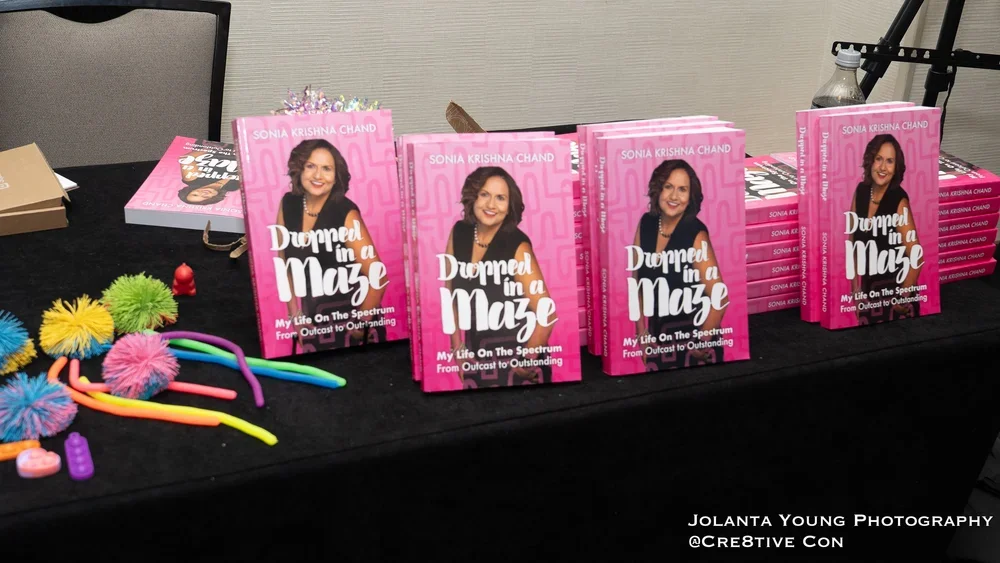
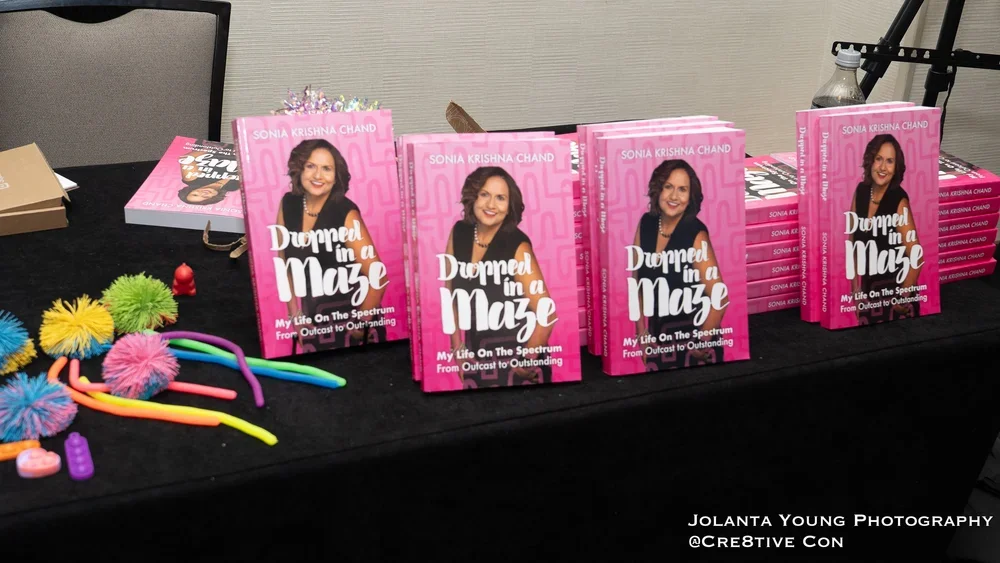
Get your copy of Dropped in a Maze: My Life On The Spectrum today.
Key Takeaways for Choosing Your Therapist
Good Therapy Challenges You to Grow
The therapist who told me "perhaps this is not your assignment" was challenging me to admit an uncomfortable truth. That's good therapy—not comfortable, but necessary.
Dismissive Language Reveals Underlying Attitudes
When a therapist says "you aren't meant to have friends right now," they're revealing they don't believe in your capacity for change in that area. That's a problem.
Specialization Matters for Complex Needs
Autism plus trauma plus social struggles plus career crisis requires more than general counseling. Seek specialists who understand your specific constellation of challenges.
You Can Switch Therapists
Just because you started with someone doesn't mean you're obligated to stay. If it's not working, find someone better suited to your needs.
Trust Takes Time, But Dismissiveness Happens Fast
Give a new therapist a few sessions to build trust and understand your situation. But if they're dismissive or harmful from the start, that's unlikely to improve.
The Right Therapist Sees Your Potential
Not just your problems, not just your diagnosis, not just your current struggles—but who you could become with the right support.
Moving Forward
Finding the right therapist transformed my trajectory. The wrong therapists provided surface support, made dismissive comments, or lacked the specific expertise I needed. But the practitioners who understood autism, could deliver hard truths with compassion, and taught practical skills made real change possible.
If you're currently in therapy that isn't helping, know that it's not that therapy doesn't work—it's that you haven't yet found the right therapeutic approach or practitioner for your specific needs.
Ready to learn the complete story of navigating therapy as an autistic person in crisis, my book provides everything you need to make informed choices about your own therapeutic journey.
Get your copy of Dropped in a Maze: My Life On The Spectrum today.
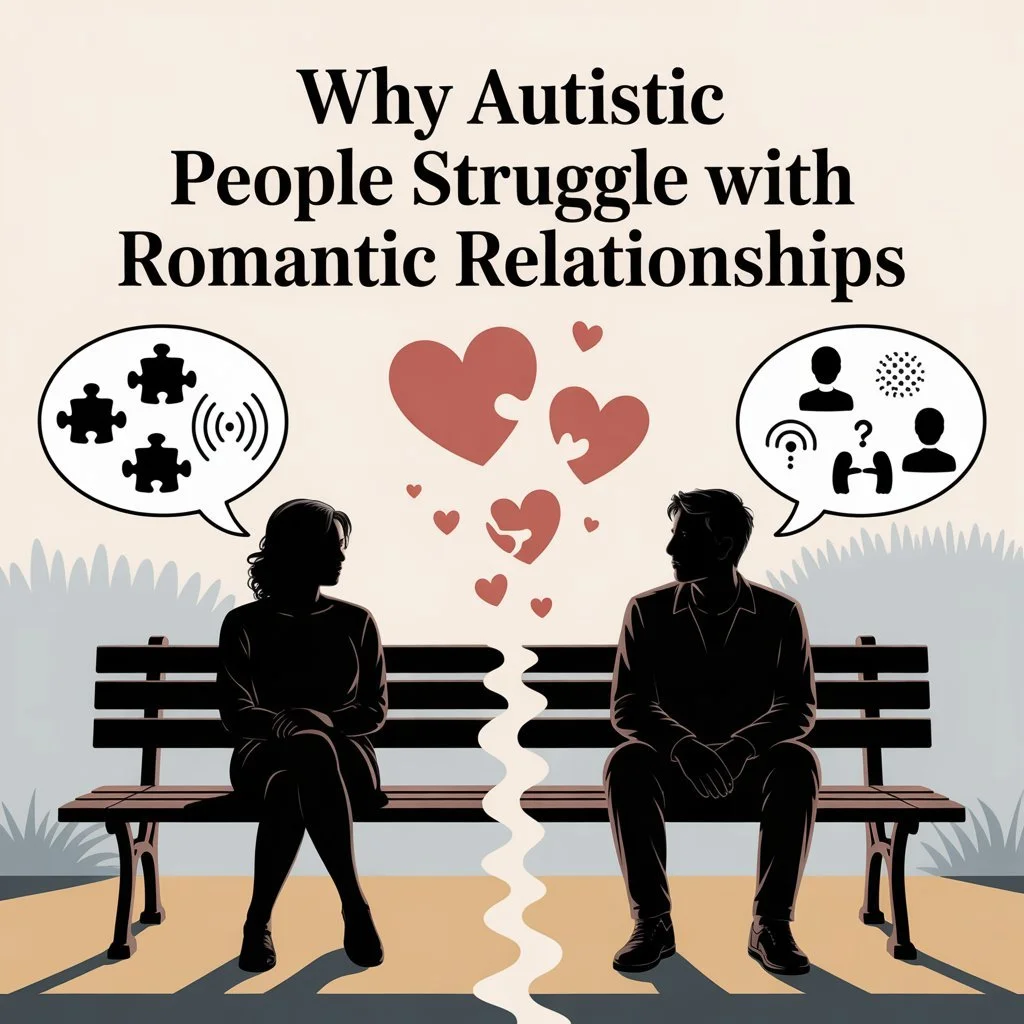
Why Autistic People Struggle With Romantic Relationships
Everyone around you seems to be dating. Getting into relationships. Moving on from breakups and finding someone new within weeks. And there you are, wondering why something that appears so effortless for others feels completely out of reach for you.
For autistic people, romantic relationships aren't just emotionally complicated—they involve a layer of confusion, missed signals, and unprocessed pain that neurotypical people rarely have to navigate. The social rules of dating are already complex. For someone who struggles to read between the lines, misses subtle cues, and has spent years being rejected and mistreated, romantic connection can feel like climbing Mount Everest while everyone else takes the elevator.
This blog post addresses what nobody talks about when it comes to autism and romantic relationships—the real reasons why dating is harder, what happens when that pain goes unaddressed, and what you genuinely need to hear if you're struggling right now.
If you or someone you know is struggling with self-harm or mental health crisis, please contact the 988 Suicide and Crisis Lifeline by calling or texting 988. You are not alone.
Table of Contents
Reason #1: You're Reading Flirtatious Signals as Romantic Interest
Reason #2: Past Rejection Follows You Into New Situations
Reason #3: Dating Milestones Feel Like a Report Card
Reason #4: You're Looking for Answers in the Wrong Places
Reason #5: The Pain of Unmet Needs Reaches a Breaking Point
Reason #6: Nobody Around You Truly Understands
What You Actually Need (Not What People Tell You)
Key Takeaways for Autistic People Navigating Romance
Reason #1: You're Reading Flirtatious Signals as Romantic Interest
The Mixed Signal Problem
One of the most painful experiences in romantic relationships is when someone acts flirtatious—playful physical contact, consistent eye contact, warm smiles—and then completely withdraws when you show genuine interest.
For autistic people, this is particularly devastating because we tend to take behavior at face value. If someone acts as though they like us, we believe they like us. We don't automatically factor in that some people are naturally flirtatious with everyone, or that someone can enjoy the attention of a person they have no actual romantic interest in.
Why Autistic People Miss These Cues
We process social information differently. The subtle distinction between "being friendly" and "being interested" involves reading a complex combination of context, consistency, body language, and social patterns that don't always compute the same way for autistic people.
We have less experience to draw from. Neurotypical people develop romantic intuition through years of casual dating experiences that teach them how to read signals. Without that foundation, every interaction feels like the first time.
We take behavior literally. When someone pats you on the back, shoves your chair playfully, and smiles every time they see you, the logical conclusion is that they're interested. Detecting the subtle difference between flirting for fun and genuine romantic interest requires reading invisible social rules.
We don't factor in inconsistency as rejection. When someone waits three days to respond to a dinner invitation and then declines without suggesting an alternative time, a neurotypical person recognizes this as a clear "no." An autistic person may miss this indirect signal entirely.
The Cruel Reality
What hurts most isn't just the rejection itself. It's not understanding why someone who behaved warmly and flirtatiously could turn around and express no romantic interest. This disconnect—between observed behavior and actual intention—is deeply confusing for autistic people.
The confusion keeps you stuck, trying to decode what happened instead of moving forward.
In my book, I detail the complete story of navigating this exact confusion in law school and the specific strategies that could have helped me recognize these signals earlier. Understanding this pattern can save you enormous pain.
Reason #2: Past Rejection Follows You Into New Situations
The Backpack of Past Pain
Every rejection you've experienced doesn't just disappear. It gets packed into a mental backpack you carry into every new situation.
Years of being rejected, bullied, and told you're not good enough create automatic fear responses:
Fear of asking for someone's phone number in case they laugh at you
Backing out of social situations at the last minute to avoid potential humiliation
Assuming new rejections confirm old messages about your worth
Being unable to distinguish between a new person and past people who hurt you
The Freeze Response
When you want to ask someone for their number but the memory of past humiliation kicks in, your body responds as if the past rejection is happening right now. You freeze. You avoid. You miss the opportunity entirely.
This isn't weakness or lack of confidence. It's a trauma response to repeated painful experiences. Your nervous system learned that social risk means pain, and it's trying to protect you.
Why This Is Different for Autistic People
Autistic people often have:
Longer processing times for social trauma. Neurotypical people may recover from romantic rejection more quickly. For autistic people, who tend to perseverate on difficult experiences, rejection can stay active in the mind for much longer.
Deeper sensitivity to rejection. Many autistic people experience rejection sensitive dysphoria—an intense emotional response to perceived rejection that goes beyond typical hurt feelings.
Less resilience from positive experiences. Without a history of positive romantic experiences to balance the negative ones, each rejection carries disproportionate weight.
Difficulty separating past from present. Clinging to past memories of how people treated you prevents you from recognizing that you're not the same person you were, and that new people aren't the same as the ones who hurt you.
Reason #3: Dating Milestones Feel Like a Report Card
The Comparison Trap
When everyone around you is dating, getting into relationships, and progressing through romantic milestones, not participating in any of these experiences can feel like failing a test everyone else passed.
At law school, when classmates found out I'd never had a boyfriend or been on a date, they were flabbergasted. Some said there was a big part of social life missing in not dating. Comments about singlehood—even well-meaning ones—stacked on top of each other until singlehood felt like a character flaw.
Why Milestones Hurt More for Autistic People
We're already behind on other social milestones: If you've spent your whole life feeling behind your peers socially, romantic milestones become yet another measure of how far you've fallen short.
Society treats romantic experience as a marker of worth: The messaging is everywhere: having a partner means you're likable, attractive, socially successful. Not having one means something is wrong with you.
Autistic people often have delayed development in these areas: This isn't a personal failing—it's a natural result of processing the world differently. But without that context, the gap between your experience and your peers' experience feels deeply personal.
You compare your insides to others' outsides: You see friends walking arm in arm with partners and assume their romantic lives are easy and fulfilling. You don't see the complexity behind what looks effortless from the outside.
The Arranged Match Expectation
For some autistic people—particularly those from cultures with arranged marriage traditions—there's an additional pressure that romantic connection will simply be "handled" by family. But arranged setups don't guarantee anything. People still have to genuinely like each other. And when you've spent years struggling to connect with people, the additional pressure of arranged introductions only amplifies the anxiety.
What everyone needs, above all, is to be genuinely loved for who they truly are. Not strategic matches, not arrangements, not someone tolerating them out of obligation. Genuine love.
Reason #4: You're Looking for Answers in the Wrong Places
The Decoding Obsession
After a painful rejection, it's natural to want to understand what happened. But when the search for answers becomes obsessive, it can take over your life.
Constantly asking others "What does it mean when a guy leads a woman on?" or trying to decode every text and interaction keeps you stuck in the past instead of moving forward. Every person you ask has a different opinion, which creates more confusion rather than clarity.
Why Autistic People Get Stuck Here
We're natural pattern-seekers. Autistic brains are wired to find logic and patterns. When someone's behavior doesn't make logical sense, we keep analyzing until we find an explanation.
We want a definitive answer. Uncertainty is deeply uncomfortable for many autistic people. "Maybe he just wasn't that interested" doesn't satisfy because it leaves too many unknowns.
We look externally for validation we need internally. The real question isn't "What's wrong with me that he rejected me?" The real work is building enough internal self-worth that one person's rejection doesn't define your value.
The Karaoke Coping Mechanism
During this painful period, I was drinking to excess on weekends, doing impersonations of professors at parties, and performing raunchy raps at birthday dinners—all channeling pain into performances for others' entertainment.
This was the same pattern from middle school: using performance as a way to connect, to get people to like you, to find belonging through entertainment.
It wasn't healthy connection. It was pain wearing a costume.
What You're Actually Looking For
The search for answers about why someone rejected you is really a search for:
Confirmation that you're worthy of love
An explanation that doesn't make you the problem
Permission to stop blaming yourself
Evidence that you're likable, valuable, and enough
These things cannot come from the person who rejected you. They have to come from within—which requires deep therapeutic work that goes far beyond surface-level coping.
Reason #5: Nobody Around You Truly Understands
The Isolation of Being Misunderstood
Even when surrounded by people, the autistic experience of romantic struggle can feel profoundly isolating because nobody around you truly gets it.
Friends say:
"Just ask him out"
"You need to give guys a chance"
"Brush it off and move on"
"Everybody goes through this"
These responses, however well-meaning, miss the entire context of what you're actually dealing with:
Years of accumulated rejection
Difficulty reading social and romantic signals
Unprocessed trauma from bullying and social failure
A nervous system that responds to social risk with intense fear
A brain that processes relationships differently than neurotypical people
The Disclosure Dilemma
I didn't disclose my autism diagnosis to people at law school for a long time, out of fear of hearing: "If you have autism, you shouldn't be in the legal profession."
This fear kept me from explaining behaviors that looked like flakiness or indecision to others—like backing out of plans due to sensory overload—but were actually neurological responses to overwhelm.
Not being able to explain yourself creates a painful double bind:
Don't disclose: people misread your behavior and get frustrated
Disclose: risk judgment, discrimination, and reduced expectations
When Disclosure Happens
When I finally told Khloe and Natalia about my autism diagnosis, Natalia's response was: "It makes sense why you didn't get Demetrious's number yet."
That response reduced all the complexity of living with autism to one social behavior. It missed the much bigger picture of what autistic people navigate in every interaction, every day.
Finding people who see the full picture—not just the narrow slice that affects them—is rare. But those people exist, and they're worth finding. Also, if you are finding it hard to make friends, this blogpost will help you navigate friendships as well.
What You Actually Need (Not What People Tell You)
What People Tell You
"Just put yourself out there"
"Confidence is attractive, just be confident"
"You're too picky"
"Stop overthinking it"
"Everyone gets rejected, just move on"
What You Actually Need
Trauma-informed therapeutic support Not just someone to vent to, but a therapist trained in both autism and trauma who can help you process the years of rejection and build genuine self-worth.
Social skills coaching specific to dating General social skills training is different from navigating the specific complexity of romantic interest, mixed signals, and rejection. Targeted coaching for this specific area matters.
Community with other autistic people Connecting with others who share your experience validates that your struggles are real and not personal failings.
Time to develop at your own pace Romantic development for autistic people happens on a different timeline. That's not a deficiency—it's a different path.
Self-compassion as a practice Not just hearing that you're worthy, but doing the internal work to genuinely believe it. This is the foundation everything else is built on.
Realistic expectations about what relationships require Genuine love—being loved for who you truly are—is what matters. Not arrangements, not someone tolerating you, not someone who makes you feel like you have to fight for basic acceptance.
Get your copy of Dropped in a Maze: My Life On The Spectrum today.
Key Takeaways for Autistic People Navigating Romance
Mixed Signals Are a Real Problem, Not Your Imagination
When someone's behavior doesn't match their level of romantic interest, that's genuinely confusing for anyone. For autistic people, it's especially difficult. You're not broken for missing these signals. You're working with a different social processing system in a world that doesn't explain its rules.
Past Rejection Is Not Your Future
The fear response that keeps you from asking for a phone number or accepting a dinner invitation is based on past pain, not present reality. You have grown. You are not the same person who was bullied and rejected in middle school. New people are not the same people who hurt you.
Milestones Are Not Measurements of Worth
Never having dated by your twenties does not mean something is wrong with you. It means your development followed a different timeline. The meaning you assign to it matters more than the fact itself.
Surface-Level Support Is Not Enough
If you've been in therapy and still feel stuck, it may not be that therapy doesn't work for you—it may be that you haven't yet found the right therapeutic approach. Keep looking for a practitioner who understands both autism and trauma at a deep level.
Your Pain Is Valid and Deserves Real Help
Being told to "brush it off" when you're carrying decades of accumulated pain is not support. Your pain is real. It has real roots. It deserves real, substantive help—not dismissal.
You Deserve to Be Loved for Who You Are
Not tolerated. Not accommodated. Not chosen for strategic reasons.
Loved—genuinely and authentically—for exactly who you are.
That kind of love exists. But it starts with doing the internal work to know who you are and believe you're worthy of it.
Final Thoughts
Romantic relationships are hard for everyone. But for autistic people carrying years of rejection, trauma, and social confusion, they can feel impossible.
The struggles aren't personal failings. They're the natural result of navigating a neurotypical world's unspoken rules without the social blueprint that neurotypical people receive through years of casual romantic experience.
Ready to read the complete, unfiltered story of struggling with romantic relationships, rejection, and mental health as an autistic person in law school? My book doesn't sugarcoat the pain or skip the hard parts. It tells the full truth—and offers the wisdom that came from surviving it.
Get your copy of Dropped in a Maze: My Life On The Spectrum today.
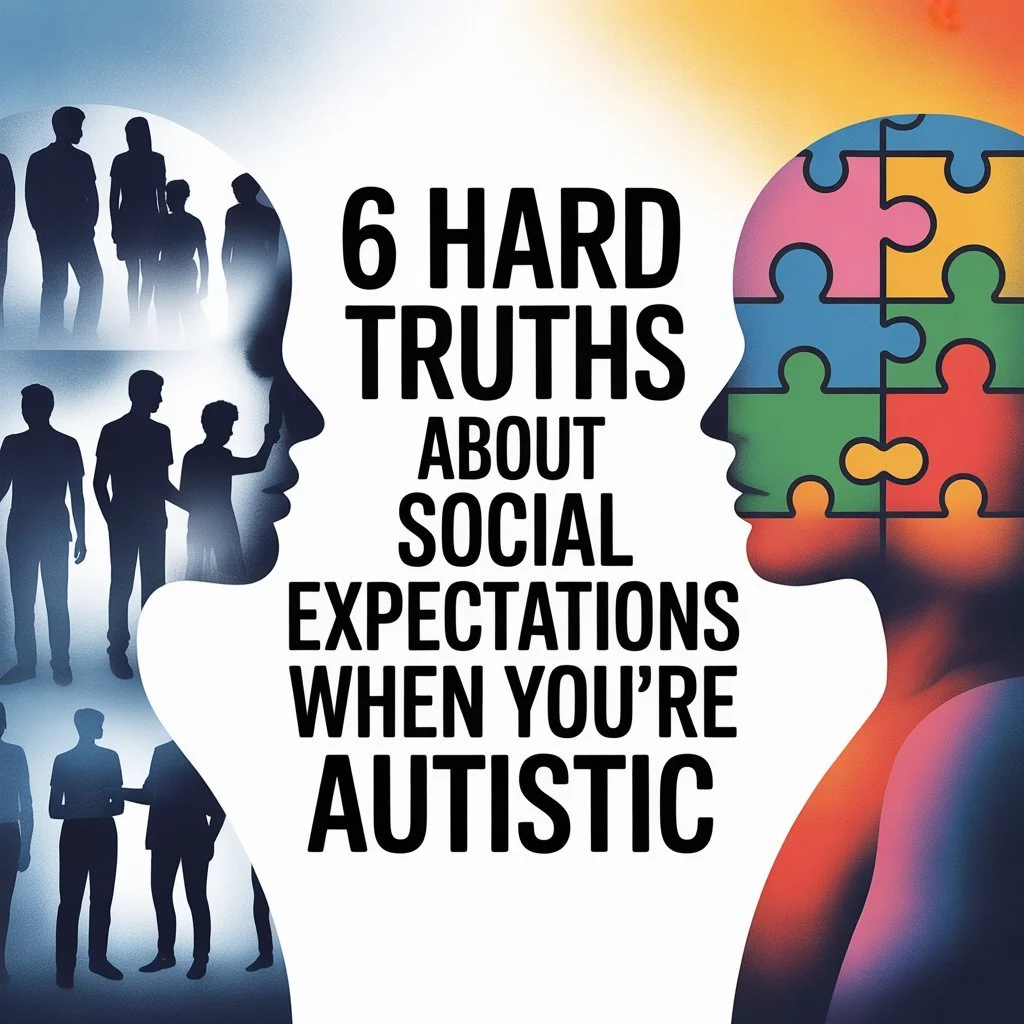
6 Hard Truths About Social Expectations When You're Autistic
You spent weeks planning it. You invited people who seemed interested. You built up this vision in your head of how it would all unfold—the perfect celebration that would finally prove you belonged, that you had friends, that you were just like everyone else.
Then reality hits. One by one, people cancel. The plans fall apart. You end up alone on what was supposed to be your big night, eating fast food by yourself while everyone else celebrates with their tight-knit friend groups.
For autistic people who struggle with social connections, this pattern is painfully familiar. We hear about how others celebrate milestones and assume we can create the same experience. We mistake polite responses for genuine commitment. We build elaborate fantasies to cope with loneliness, then crash when reality refuses to cooperate.
This is about the hard lessons I learned when my 21st birthday became one of the most humiliating experiences of my college years—and what every autistic person needs to understand about the difference between acquaintances and actual friends.
Table of Contents
Truth #1: Acquaintances Are Not Friends (No Matter How Nice They Seem)
Truth #2: "Common Courtesy" Responses Don't Mean Commitment
Truth #3: Your Fantasy Fills the Gap Where Real Friendships Should Be
Truth #4: You Can't Build a Celebration on Casual Connections
Truth #5: Oversharing With the Wrong People Damages Your Reputation
Truth #6: Desperation Pushes People Away Instead of Drawing Them In
What Actually Builds Real Friendships
Key Takeaways for Managing Expectations
Truth #1: Acquaintances Are Not Friends (No Matter How Nice They Seem)
The Fundamental Mistake
When I planned my 21st birthday celebration, I invited people I barely knew. I had:
Taken one class with Savannah over the summer
Watched TV a handful of times with Tia
Seen various floormates occasionally in the dorm
These were acquaintances at best. But because I was desperate for friends and they'd been polite to me, I convinced myself they were close enough to celebrate my birthday.
Understanding the Difference
Acquaintances:
People you see regularly in shared spaces
Classmates you chat with before or after class
Neighbors you exchange pleasantries with
Colleagues you make small talk with
Friends:
People who actively seek out your company
Individuals you've spent significant one-on-one time with
Those who share personal information reciprocally
People who reach out to you, not just respond when you reach out
Why Autistic People Confuse the Two
Autistic people often struggle to distinguish acquaintances from friends because:
Limited social experience means we lack the pattern recognition that helps neurotypical people gauge relationship depth.
Literal thinking makes us take polite responses at face value rather than reading between the lines.
Desperate for connection causes us to elevate any positive interaction into potential friendship.
Difficulty reading social cues prevents us from noticing when someone is being polite versus genuinely interested.
The Reality Check
Most of the people I invited weren't spending time with me outside of class or casual dorm encounters. They hadn't invited me to their events. They didn't text or call me to hang out.
These weren't friends. They were people who knew my name and were polite when they saw me.
Expecting them to celebrate my birthday was asking for a level of emotional investment they'd never demonstrated.
Truth #2: "Common Courtesy" Responses Don't Mean Commitment
What People Actually Mean
When I told people about my birthday plans over the summer, many said things like:
"That sounds fun!"
"I'd be up for that"
"Yeah, maybe I'll come"
"We'll see what happens"
I took these responses as commitments. They were actually polite ways of saying "maybe" or even "probably not."
The Polite Response Trap
Neurotypical people use vague, noncommittal language as social lubrication. When they say "I'd be up for celebrating," they often mean:
"That's a nice idea but I'm not committing"
"I'll come if I don't have anything better to do"
"I'm being polite but don't actually plan to attend"
"I'm leaving myself an easy out"
What Actual Commitment Sounds Like
Compare those vague responses to what actual commitment looks like:
"Yes, I'll be there! What time should I meet you?"
"I'm definitely coming. Should I invite anyone else?"
"I've marked it on my calendar. Looking forward to it!"
"I'll make sure I'm free that night"
Notice the difference? Real commitment is specific, enthusiastic, and action-oriented.
Why This Matters for Autistic People
Autistic people tend to communicate directly and honestly. When we say we'll do something, we mean it. We assume others operate the same way.
This creates painful misunderstandings when we take polite, non-committal responses as genuine promises.
Sonia's podcast is a must-listen resource for autistic individuals seeking affirming mental health care - tune in here.
Truth #3: Your Fantasy Fills the Gap Where Real Friendships Should Be
Building the Story in Your Head
Throughout the summer, I constructed an elaborate vision of my 21st birthday:
Group dinner at the Italian restaurant downtown
Everyone going to bars together afterward
Celebrating with friends who cared about me
Finally feeling like I "arrived" and belonged
This fantasy became more real to me than actual reality. I replayed it in my mind constantly, adding details, imagining conversations, picturing the whole evening.
Why We Build Fantasies
Fantasy serves important psychological functions when you're lonely:
It provides hope that things will eventually get better and you'll find your people.
It creates temporary relief from the pain of current isolation.
It offers control over an imagined scenario when real relationships feel impossible to build.
It fills the void where genuine connections should exist.
The Danger of Living in Fantasy
The problem with elaborate fantasies is they:
Set unrealistic expectations that reality can't possibly meet.
Prevent you from seeing the actual state of your relationships clearly.
Increase devastation when the fantasy inevitably crumbles.
Distract from building real connections by providing imaginary ones.
The Crash
When the fantasy bubble burst—when people canceled one after another, when Tia said "I'll only come if I feel like it," when Nadia had to work—the emotional crash was severe.
I cried every day the week of my birthday. The anxiety built to the point where I could barely eat. The cortisol in my stomach made me physically ill.
The gap between fantasy and reality was so extreme that it felt like trauma.
Truth #4: You Can't Build a Celebration on Casual Connections
The Foundation Problem
Imagine trying to build a house on sand. No matter how well you design it, the foundation won't support the structure. The same applies to celebrations built on casual acquaintanceships.
What I Did Wrong
I made several critical errors:
I invited people I barely knew to an intimate celebration that requires close friendships.
I assumed their politeness meant closeness when it just meant they had good manners.
I didn't have established patterns of hanging out with these people outside structured activities.
I expected them to prioritize my event when they had no emotional investment in me.
What Milestones Actually Require
Celebrating major milestones like 21st birthdays requires:
Close friends who genuinely care about you
Established relationships with regular contact and reciprocal investment
People who seek you out, not just respond when you reach out
Mutual emotional investment built over time through shared experiences
You can't manufacture this foundation in a few weeks or months of casual contact.
The Alternative Approach
Instead of planning an elaborate celebration with acquaintances, I could have:
Celebrated with family who genuinely cared
Done something meaningful alone or with one close person
Acknowledged I didn't yet have the friend group for the celebration I wanted
Set a goal to build those friendships before the next milestone
This would have been emotionally difficult but far less devastating than watching an elaborate fantasy crumble.
Truth #5: Oversharing With the Wrong People Damages Your Reputation
What I Shared (That I Shouldn't Have)
According to my floormate Ankita, I had damaged my reputation by sharing personal information with people who weren't close friends:
Talking about having a crush on someone who didn't like me back
Mentioning I'd never been kissed
Sharing personal struggles with people I barely knew
Why This Matters
Information you share gets used in ways you can't control:
It becomes gossip that spreads through social networks.
It gives people ammunition to mock or judge you.
It makes others uncomfortable when shared prematurely in relationships.
It signals poor social boundaries, which makes people wary of getting closer.
The Oversharing Trap for Autistic People
Autistic people often overshare because:
We struggle to gauge relationship depth and don't know what's appropriate to share at different stages.
We're honest and straightforward by nature and assume others will be too.
We're desperate to connect and use personal disclosure to create intimacy quickly.
We don't realize information spreads and gets used against us.
What Appropriate Sharing Looks Like
Information should be shared gradually as relationships deepen:
Early stage (acquaintances):
Surface-level topics: classes, weather, general interests
Safe small talk that doesn't reveal vulnerabilities
Developing friendship:
Some personal preferences and opinions
Stories about experiences that don't involve deep emotions
Interests and hobbies in more detail
Close friendship:
Personal struggles and challenges
Romantic interests and rejections
Deeper emotional experiences
Vulnerabilities and insecurities
Sharing deep personal information with acquaintances creates discomfort and damages how people perceive you.
In my book, I provide detailed guidance on what's appropriate to share at different relationship stages and how to recognize when you're oversharing before it damages your reputation further.
Truth #6: Desperation Pushes People Away Instead of Drawing Them In
The Anxiety Spiral
As my birthday approached and people started canceling, my anxiety skyrocketed. I:
Reminded people constantly about the celebration
Felt physically ill from stress and cortisol buildup
Could barely eat or concentrate on anything else
Became increasingly frantic about making the fantasy happen
Why Desperation Repels
Desperation creates discomfort in others because:
It signals neediness that feels overwhelming to people who barely know you.
It creates pressure to fulfill expectations they never agreed to.
It makes them feel guilty for not caring as much as you want them to.
It highlights the imbalance in how you view the relationship versus how they view it.
The Therapist's Warning
My therapist, Dr. Theroux, tried to warn me: "Remember, Sonia, people don't like to keep hearing about the same thing again and again. Do your best to stay in the present."
She recognized I was becoming overeager and overexcited—classic signs of desperation that turn people off.
What Confidence Looks Like Instead
Confidence in social situations means:
Having plans but not being attached to specific people showing up
Being okay if people decline without taking it personally
Not reminding people repeatedly about your event
Having backup plans that don't depend on others' participation
Maintaining emotional stability regardless of who attends
This is incredibly difficult when you're lonely and desperate for connection. But desperation has the opposite effect of what you want—it pushes people away instead of drawing them in.
The Devastating Reality
The day of my 21st birthday, the last pieces fell apart:
Leila wasn't feeling well and couldn't come
Phaedra was eating dinner earlier than I could join
Nadia had to work and was told not to encourage alcohol consumption
Savannah had a mandatory sorority meeting
I ended up alone at a fast-food restaurant eating a fish sandwich and chocolate shake for my birthday dinner.
What Actually Builds Real Friendships
The Brutal Truth I Had to Learn
You can't force friendships into existence by planning elaborate events. Real friendships develop through:
Consistent, low-key contact over extended time periods.
Reciprocal effort where both people initiate and invest equally.
Shared experiences that happen organically, not through forced celebrations.
Gradual deepening of trust and emotional intimacy.
Natural compatibility that can't be manufactured through willpower.
What I Should Have Done Instead
Rather than planning an elaborate 21st birthday with acquaintances, I should have:
Focused on building one or two deeper friendships through regular, consistent contact.
Accepted my current social reality instead of trying to force it to match others' experiences.
Celebrated modestly in ways that matched my actual relationship status.
Used the milestone as motivation to build genuine friendships over the coming year, not as a deadline to manufacture them.
Worked with my therapist on realistic relationship-building strategies instead of fantasy fulfillment.
The Skills I Lacked
Ankita pointed out important skills I needed:
How to help a friend in need - When she hurt her foot and I rushed past to my exam, I should have said: "I'm so sorry you aren't feeling well. Is there anything I can do? I have an exam I need to rush to at the moment."
Understanding boundaries - Both my own and others', recognizing what's appropriate to share and when.
Standing up for myself - Which I was learning with Janet but needed to extend to other relationships.
Reading social situations - Understanding when someone is genuinely interested versus being polite.
These skills can't be learned overnight. They require practice, feedback, and often professional guidance.
Key Takeaways for Managing Expectations
Adjust Expectations to Match Reality
The most painful part of my 21st birthday wasn't being alone—it was the enormous gap between what I expected and what happened.
If I'd recognized that I had acquaintances, not friends, I could have:
Celebrated with family instead
Had modest plans that matched my social reality
Avoided the devastating crash when fantasy met reality
Quality Matters More Than Quantity
Stop measuring social success by:
Size of celebration
Number of people who attend your events
How your milestones compare to others' experiences
Start measuring it by:
Depth of a few genuine connections
Reciprocal investment in relationships
Quality of interactions, not quantity
Build Friendships Before Planning Celebrations
Celebrations are the result of established friendships, not the catalyst for creating them.
Before planning group events, ask:
Do these people regularly spend time with me outside structured settings?
Have they invited me to their events?
Is there reciprocal effort in maintaining contact?
Would they notice if I disappeared from their lives?
If the answers are no, you're dealing with acquaintances who won't show up for celebrations.
Learn From Each Painful Experience
My 21st birthday was humiliating. Eating that fish sandwich alone while imagining others celebrating with their friend groups felt like rock bottom.
But it taught me critical lessons:
Fantasy doesn't create reality
Desperation pushes people away
You can't force friendships on your timeline
Acquaintances won't show up like friends do
These lessons, painful as they were, eventually helped me build genuine friendships by adjusting my approach.
Protect Yourself From Repeated Devastation
If you keep experiencing this pattern:
Work with a therapist on realistic relationship-building
Learn to distinguish polite responses from actual commitments
Stop building elaborate fantasies to cope with loneliness
Focus on one or two potential friends at a time
Accept that building genuine friendships takes years, not weeks
Ready to learn the complete story of my 21st birthday disaster and what I eventually learned about building real friendships instead of manufacturing fake ones? My book provides the full account, get your copy today.
Moving Forward
The night didn't end with the fish sandwich. I eventually went to the bar where my roommate was celebrating with her friends. I got lost in the sensory overload—the lights, the music, the crowds. My roommate kept telling me to drink more. I wanted to forget the harsh reality through alcohol.
I heard the DJ announce other people's birthdays over the stereo. Each announcement felt like a bee sting—a reminder that other people had the tight friend groups celebrating them that I desperately wanted but didn't have.
That night crystallized a brutal truth: you can't drink away loneliness. You can't force friendships through elaborate planning. You can't manufacture belonging through sheer determination.
What you can do is learn from the devastation, adjust your approach, and slowly build the genuine connections that eventually replace the fantasy.
For the complete journey from devastating birthday disasters to eventually building real friendships—including all the mistakes I made, lessons I learned, and strategies that actually worked—my book provides everything you need to stop repeating this painful pattern.
Get your copy today and learn how to build realistic expectations that protect you from crushing disappointment.