
6 Hard Truths About Social Expectations When You're Autistic
You spent weeks planning it. You invited people who seemed interested. You built up this vision in your head of how it would all unfold—the perfect celebration that would finally prove you belonged, that you had friends, that you were just like everyone else.
Then reality hits. One by one, people cancel. The plans fall apart. You end up alone on what was supposed to be your big night, eating fast food by yourself while everyone else celebrates with their tight-knit friend groups.
For autistic people who struggle with social connections, this pattern is painfully familiar. We hear about how others celebrate milestones and assume we can create the same experience. We mistake polite responses for genuine commitment. We build elaborate fantasies to cope with loneliness, then crash when reality refuses to cooperate.
This is about the hard lessons I learned when my 21st birthday became one of the most humiliating experiences of my college years—and what every autistic person needs to understand about the difference between acquaintances and actual friends.
Table of Contents
Truth #1: Acquaintances Are Not Friends (No Matter How Nice They Seem)
Truth #2: "Common Courtesy" Responses Don't Mean Commitment
Truth #3: Your Fantasy Fills the Gap Where Real Friendships Should Be
Truth #4: You Can't Build a Celebration on Casual Connections
Truth #5: Oversharing With the Wrong People Damages Your Reputation
Truth #6: Desperation Pushes People Away Instead of Drawing Them In
What Actually Builds Real Friendships
Key Takeaways for Managing Expectations
Truth #1: Acquaintances Are Not Friends (No Matter How Nice They Seem)
The Fundamental Mistake
When I planned my 21st birthday celebration, I invited people I barely knew. I had:
Taken one class with Savannah over the summer
Watched TV a handful of times with Tia
Seen various floormates occasionally in the dorm
These were acquaintances at best. But because I was desperate for friends and they'd been polite to me, I convinced myself they were close enough to celebrate my birthday.
Understanding the Difference
Acquaintances:
People you see regularly in shared spaces
Classmates you chat with before or after class
Neighbors you exchange pleasantries with
Colleagues you make small talk with
Friends:
People who actively seek out your company
Individuals you've spent significant one-on-one time with
Those who share personal information reciprocally
People who reach out to you, not just respond when you reach out
Why Autistic People Confuse the Two
Autistic people often struggle to distinguish acquaintances from friends because:
Limited social experience means we lack the pattern recognition that helps neurotypical people gauge relationship depth.
Literal thinking makes us take polite responses at face value rather than reading between the lines.
Desperate for connection causes us to elevate any positive interaction into potential friendship.
Difficulty reading social cues prevents us from noticing when someone is being polite versus genuinely interested.
The Reality Check
Most of the people I invited weren't spending time with me outside of class or casual dorm encounters. They hadn't invited me to their events. They didn't text or call me to hang out.
These weren't friends. They were people who knew my name and were polite when they saw me.
Expecting them to celebrate my birthday was asking for a level of emotional investment they'd never demonstrated.
Truth #2: "Common Courtesy" Responses Don't Mean Commitment
What People Actually Mean
When I told people about my birthday plans over the summer, many said things like:
"That sounds fun!"
"I'd be up for that"
"Yeah, maybe I'll come"
"We'll see what happens"
I took these responses as commitments. They were actually polite ways of saying "maybe" or even "probably not."
The Polite Response Trap
Neurotypical people use vague, noncommittal language as social lubrication. When they say "I'd be up for celebrating," they often mean:
"That's a nice idea but I'm not committing"
"I'll come if I don't have anything better to do"
"I'm being polite but don't actually plan to attend"
"I'm leaving myself an easy out"
What Actual Commitment Sounds Like
Compare those vague responses to what actual commitment looks like:
"Yes, I'll be there! What time should I meet you?"
"I'm definitely coming. Should I invite anyone else?"
"I've marked it on my calendar. Looking forward to it!"
"I'll make sure I'm free that night"
Notice the difference? Real commitment is specific, enthusiastic, and action-oriented.
Why This Matters for Autistic People
Autistic people tend to communicate directly and honestly. When we say we'll do something, we mean it. We assume others operate the same way.
This creates painful misunderstandings when we take polite, non-committal responses as genuine promises.
Sonia's podcast is a must-listen resource for autistic individuals seeking affirming mental health care - tune in here.
Truth #3: Your Fantasy Fills the Gap Where Real Friendships Should Be
Building the Story in Your Head
Throughout the summer, I constructed an elaborate vision of my 21st birthday:
Group dinner at the Italian restaurant downtown
Everyone going to bars together afterward
Celebrating with friends who cared about me
Finally feeling like I "arrived" and belonged
This fantasy became more real to me than actual reality. I replayed it in my mind constantly, adding details, imagining conversations, picturing the whole evening.
Why We Build Fantasies
Fantasy serves important psychological functions when you're lonely:
It provides hope that things will eventually get better and you'll find your people.
It creates temporary relief from the pain of current isolation.
It offers control over an imagined scenario when real relationships feel impossible to build.
It fills the void where genuine connections should exist.
The Danger of Living in Fantasy
The problem with elaborate fantasies is they:
Set unrealistic expectations that reality can't possibly meet.
Prevent you from seeing the actual state of your relationships clearly.
Increase devastation when the fantasy inevitably crumbles.
Distract from building real connections by providing imaginary ones.
The Crash
When the fantasy bubble burst—when people canceled one after another, when Tia said "I'll only come if I feel like it," when Nadia had to work—the emotional crash was severe.
I cried every day the week of my birthday. The anxiety built to the point where I could barely eat. The cortisol in my stomach made me physically ill.
The gap between fantasy and reality was so extreme that it felt like trauma.
Truth #4: You Can't Build a Celebration on Casual Connections
The Foundation Problem
Imagine trying to build a house on sand. No matter how well you design it, the foundation won't support the structure. The same applies to celebrations built on casual acquaintanceships.
What I Did Wrong
I made several critical errors:
I invited people I barely knew to an intimate celebration that requires close friendships.
I assumed their politeness meant closeness when it just meant they had good manners.
I didn't have established patterns of hanging out with these people outside structured activities.
I expected them to prioritize my event when they had no emotional investment in me.
What Milestones Actually Require
Celebrating major milestones like 21st birthdays requires:
Close friends who genuinely care about you
Established relationships with regular contact and reciprocal investment
People who seek you out, not just respond when you reach out
Mutual emotional investment built over time through shared experiences
You can't manufacture this foundation in a few weeks or months of casual contact.
The Alternative Approach
Instead of planning an elaborate celebration with acquaintances, I could have:
Celebrated with family who genuinely cared
Done something meaningful alone or with one close person
Acknowledged I didn't yet have the friend group for the celebration I wanted
Set a goal to build those friendships before the next milestone
This would have been emotionally difficult but far less devastating than watching an elaborate fantasy crumble.
Truth #5: Oversharing With the Wrong People Damages Your Reputation
What I Shared (That I Shouldn't Have)
According to my floormate Ankita, I had damaged my reputation by sharing personal information with people who weren't close friends:
Talking about having a crush on someone who didn't like me back
Mentioning I'd never been kissed
Sharing personal struggles with people I barely knew
Why This Matters
Information you share gets used in ways you can't control:
It becomes gossip that spreads through social networks.
It gives people ammunition to mock or judge you.
It makes others uncomfortable when shared prematurely in relationships.
It signals poor social boundaries, which makes people wary of getting closer.
The Oversharing Trap for Autistic People
Autistic people often overshare because:
We struggle to gauge relationship depth and don't know what's appropriate to share at different stages.
We're honest and straightforward by nature and assume others will be too.
We're desperate to connect and use personal disclosure to create intimacy quickly.
We don't realize information spreads and gets used against us.
What Appropriate Sharing Looks Like
Information should be shared gradually as relationships deepen:
Early stage (acquaintances):
Surface-level topics: classes, weather, general interests
Safe small talk that doesn't reveal vulnerabilities
Developing friendship:
Some personal preferences and opinions
Stories about experiences that don't involve deep emotions
Interests and hobbies in more detail
Close friendship:
Personal struggles and challenges
Romantic interests and rejections
Deeper emotional experiences
Vulnerabilities and insecurities
Sharing deep personal information with acquaintances creates discomfort and damages how people perceive you.
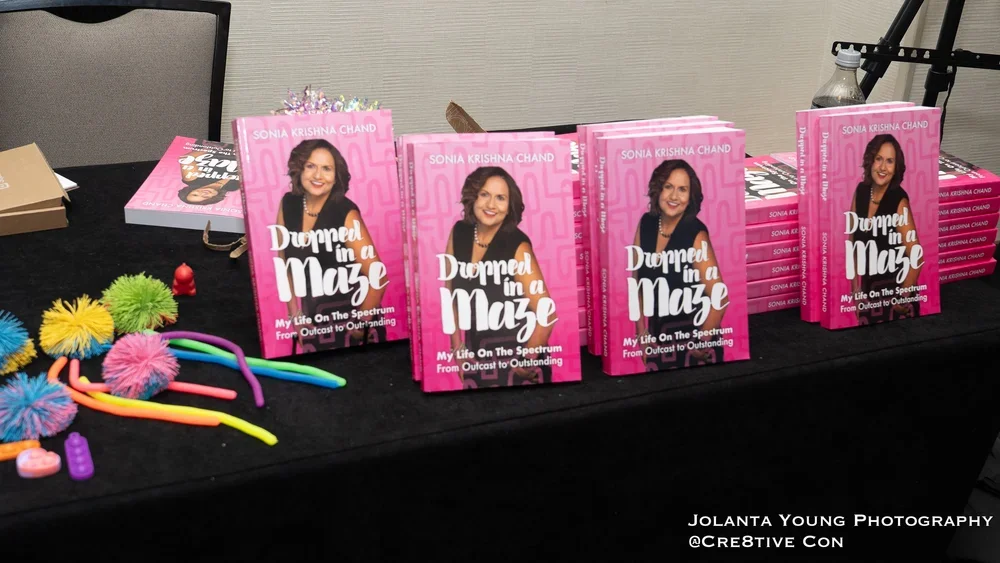
In my book, I provide detailed guidance on what's appropriate to share at different relationship stages and how to recognize when you're oversharing before it damages your reputation further.
Truth #6: Desperation Pushes People Away Instead of Drawing Them In
The Anxiety Spiral
As my birthday approached and people started canceling, my anxiety skyrocketed. I:
Reminded people constantly about the celebration
Felt physically ill from stress and cortisol buildup
Could barely eat or concentrate on anything else
Became increasingly frantic about making the fantasy happen
Why Desperation Repels
Desperation creates discomfort in others because:
It signals neediness that feels overwhelming to people who barely know you.
It creates pressure to fulfill expectations they never agreed to.
It makes them feel guilty for not caring as much as you want them to.
It highlights the imbalance in how you view the relationship versus how they view it.
The Therapist's Warning
My therapist, Dr. Theroux, tried to warn me: "Remember, Sonia, people don't like to keep hearing about the same thing again and again. Do your best to stay in the present."
She recognized I was becoming overeager and overexcited—classic signs of desperation that turn people off.
What Confidence Looks Like Instead
Confidence in social situations means:
Having plans but not being attached to specific people showing up
Being okay if people decline without taking it personally
Not reminding people repeatedly about your event
Having backup plans that don't depend on others' participation
Maintaining emotional stability regardless of who attends
This is incredibly difficult when you're lonely and desperate for connection. But desperation has the opposite effect of what you want—it pushes people away instead of drawing them in.
The Devastating Reality
The day of my 21st birthday, the last pieces fell apart:
Leila wasn't feeling well and couldn't come
Phaedra was eating dinner earlier than I could join
Nadia had to work and was told not to encourage alcohol consumption
Savannah had a mandatory sorority meeting
I ended up alone at a fast-food restaurant eating a fish sandwich and chocolate shake for my birthday dinner.
What Actually Builds Real Friendships
The Brutal Truth I Had to Learn
You can't force friendships into existence by planning elaborate events. Real friendships develop through:
Consistent, low-key contact over extended time periods.
Reciprocal effort where both people initiate and invest equally.
Shared experiences that happen organically, not through forced celebrations.
Gradual deepening of trust and emotional intimacy.
Natural compatibility that can't be manufactured through willpower.
What I Should Have Done Instead
Rather than planning an elaborate 21st birthday with acquaintances, I should have:
Focused on building one or two deeper friendships through regular, consistent contact.
Accepted my current social reality instead of trying to force it to match others' experiences.
Celebrated modestly in ways that matched my actual relationship status.
Used the milestone as motivation to build genuine friendships over the coming year, not as a deadline to manufacture them.
Worked with my therapist on realistic relationship-building strategies instead of fantasy fulfillment.
The Skills I Lacked
Ankita pointed out important skills I needed:
How to help a friend in need - When she hurt her foot and I rushed past to my exam, I should have said: "I'm so sorry you aren't feeling well. Is there anything I can do? I have an exam I need to rush to at the moment."
Understanding boundaries - Both my own and others', recognizing what's appropriate to share and when.
Standing up for myself - Which I was learning with Janet but needed to extend to other relationships.
Reading social situations - Understanding when someone is genuinely interested versus being polite.
These skills can't be learned overnight. They require practice, feedback, and often professional guidance.
Key Takeaways for Managing Expectations
Adjust Expectations to Match Reality
The most painful part of my 21st birthday wasn't being alone—it was the enormous gap between what I expected and what happened.
If I'd recognized that I had acquaintances, not friends, I could have:
Celebrated with family instead
Had modest plans that matched my social reality
Avoided the devastating crash when fantasy met reality
Quality Matters More Than Quantity
Stop measuring social success by:
Size of celebration
Number of people who attend your events
How your milestones compare to others' experiences
Start measuring it by:
Depth of a few genuine connections
Reciprocal investment in relationships
Quality of interactions, not quantity
Build Friendships Before Planning Celebrations
Celebrations are the result of established friendships, not the catalyst for creating them.
Before planning group events, ask:
Do these people regularly spend time with me outside structured settings?
Have they invited me to their events?
Is there reciprocal effort in maintaining contact?
Would they notice if I disappeared from their lives?
If the answers are no, you're dealing with acquaintances who won't show up for celebrations.
Learn From Each Painful Experience
My 21st birthday was humiliating. Eating that fish sandwich alone while imagining others celebrating with their friend groups felt like rock bottom.
But it taught me critical lessons:
Fantasy doesn't create reality
Desperation pushes people away
You can't force friendships on your timeline
Acquaintances won't show up like friends do
These lessons, painful as they were, eventually helped me build genuine friendships by adjusting my approach.
Protect Yourself From Repeated Devastation
If you keep experiencing this pattern:
Work with a therapist on realistic relationship-building
Learn to distinguish polite responses from actual commitments
Stop building elaborate fantasies to cope with loneliness
Focus on one or two potential friends at a time
Accept that building genuine friendships takes years, not weeks
Ready to learn the complete story of my 21st birthday disaster and what I eventually learned about building real friendships instead of manufacturing fake ones? My book provides the full account, get your copy today.
Moving Forward
The night didn't end with the fish sandwich. I eventually went to the bar where my roommate was celebrating with her friends. I got lost in the sensory overload—the lights, the music, the crowds. My roommate kept telling me to drink more. I wanted to forget the harsh reality through alcohol.
I heard the DJ announce other people's birthdays over the stereo. Each announcement felt like a bee sting—a reminder that other people had the tight friend groups celebrating them that I desperately wanted but didn't have.
That night crystallized a brutal truth: you can't drink away loneliness. You can't force friendships through elaborate planning. You can't manufacture belonging through sheer determination.
What you can do is learn from the devastation, adjust your approach, and slowly build the genuine connections that eventually replace the fantasy.
For the complete journey from devastating birthday disasters to eventually building real friendships—including all the mistakes I made, lessons I learned, and strategies that actually worked—my book provides everything you need to stop repeating this painful pattern.
Get your copy today and learn how to build realistic expectations that protect you from crushing disappointment.
