
From "Problem Child" to Honor Roll: The Sweetest Revenge
There's a particular kind of satisfaction that comes from proving everyone wrong. Not through words or arguments, but through undeniable results that speak louder than any comeback ever could.
When my name was called during study hall for making the honor roll, I heard the whispers ripple through the classroom: "Sonia?" The bewilderment in their voices was palpable. After all, I was the girl they'd labeled a "problem child," the one administrators said was "unfit to attend a 4-star school district," the student they predicted would be "lucky to make it to eighth grade."
Yet there I stood, receiving my certificate and pencil alongside students who'd never doubted their place in that moment. My brother summed it up perfectly later: "You just told your school 'fuck you,' right?" And he was absolutely right—though I'd done it in the classiest way possible.
This is the story of how setting boundaries, refusing to be entertainment for bullies, and focusing on what actually mattered transformed me from the girl everyone wrote off to someone they couldn't ignore. It's about the academic wins that felt like personal victories and the social skills that finally clicked into place when I stopped trying to fit in and started protecting my peace.
Table of Contents
The Birthday Party They'll Never Attend
The "You Go First" Strategy That Changed Everything
The Loneliness That Follows Liberation
The Victory Nobody Saw Coming
What This Victory Actually Meant
The Lessons That Honor Roll Taught Me
The Sweetest Kind of Victory
From Eighth Grade to Beyond
The Birthday Party They'll Never Attend
The school year started with the same girls who'd ignored me all summer suddenly becoming very interested in my plans. They remembered that last year, I'd thrown a birthday party during the first weekend of school. Suddenly, they were all smiles, asking if I'd be having another party and whether they'd be invited.
My answer was simple: "No."
Their shock was almost comical. But here's what I'd learned over that summer of loneliness and reflection: people who weren't there for you during your struggles don't deserve a spot in your celebrations. This is one of those life lessons that sounds obvious but takes real pain to truly understand.
These were the same girls who'd:
Blown me off repeatedly when I tried to connect
Set me up to act weird for their entertainment
Called me names and excluded me from their groups
Made my middle school years a living nightmare
Why would I reward that behavior with access to my home, my family, and my celebration? I wouldn't. And that boundary felt incredibly empowering to hold.
The "You Go First" Strategy That Changed Everything
At the beginning of eighth grade, Dr. Wagner gave me advice that would become a turning point in how I handled social manipulation. He noticed how other students would set me up to act out, getting me to do embarrassing things while they watched and laughed.
His strategy was brilliantly simple: "The next time someone tries to set you up to act weird, you tell them, 'I will go after you go first.' That way, you let them be the ones doing the acting."
I was confused. "What happens after they're done?"
"You tell them, 'I changed my mind. But it looks great on you, so keep on going.'"
The genius of this approach is that it flips the script entirely. Instead of being the target, you become the observer. Instead of entertaining others at your own expense, you hand them the spotlight and watch them squirm.
The Power of Refusing to Perform
It only took one more incident of being called "weird" and remembering Dr. Wagner's advice for me to completely stop the repertoire of acting out. I simply refused to be their entertainment anymore.
The reaction from my peers was telling. They kept asking, "What's wrong? What's wrong with you?" Nothing was wrong—that was the point. What had changed was that I finally got a clue and stopped letting people use me as their personal comedy show.
Here's what refusing to perform looked like:
Saying no when asked to do embarrassing things
Calling out manipulation attempts directly
Walking away from situations designed to humiliate me
Protecting my dignity even when it meant being alone
The bullying continued for a while after I stopped playing along, but once those incidents were handled, something interesting happened: people completely left me alone. They ignored me, yes, but at least they weren't actively tormenting me anymore.
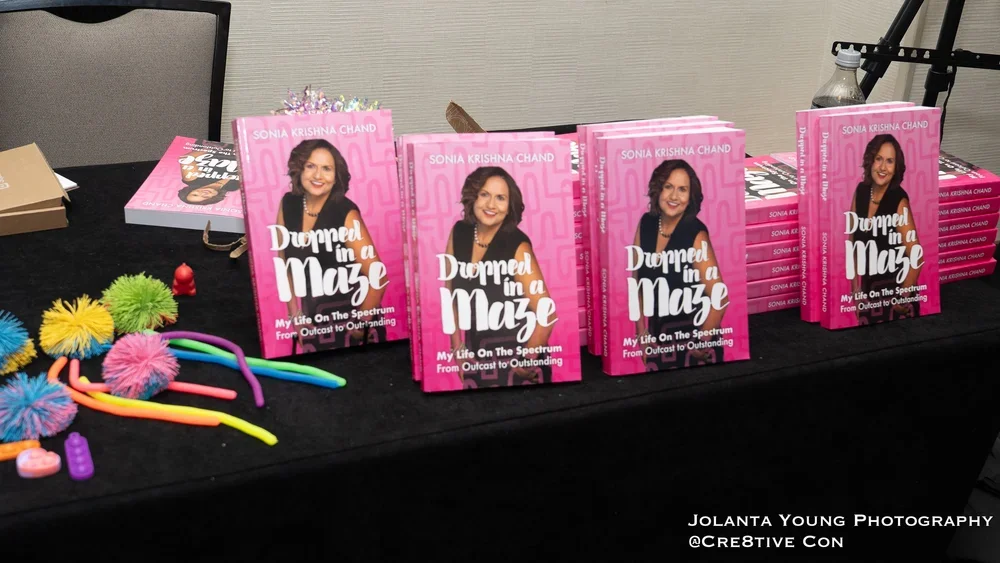
Learning to set boundaries and protect yourself from manipulation is a critical skill for neurodivergent individuals navigating hostile social environments. Discover the complete journey of building these skills and what happens when you finally stop performing for others in the full book.
The Loneliness That Follows Liberation
Stopping the act of entertaining others came with an unexpected cost: profound loneliness. While I'd been busy acting out and being bullied during previous school years, everyone else had formed strong friendship groups. By the time I realized how my behavior and others' cruelty had affected my ability to bond with anyone, it was too late. People had already formed their tight-knit circles, and they were miles ahead in the social maze.
The loneliness hit hardest during passing periods and lunch. In those moments sitting alone in the cafeteria, I found myself missing the resource room where I used to eat lunch. At least there, even without peers to sit with, I was still around people who weren't judging me. There were even times I started missing being on restrictions and being escorted to classes—at least then I had adult supervision and structure.
Where Crying Happens When You're Older
During my acting-out years, I'd cry openly at school, expressing to anyone who'd listen that I had no friends. Family members would comfort me, with one uncle simply acknowledging that kids can be very cruel. Somehow, hearing that validation was soothing.
By eighth grade, the crying had moved from school hallways to Friday nights and weekends at home. I'd stopped being a spectacle at school, but the pain of isolation hadn't disappeared—it had just found a more private stage.
Dance classes had been my outlet and source of comfort, a way to find relief from the daily throws of being in a horrible environment. But the homework in eighth grade became so overwhelming that I had to stop. Even my tutor, Mrs. Goldstein, noticed the excessive workload.
"Does everybody have this much homework every night?" she'd ask.
I didn't know about everyone else, but I was drowning in assignments every single night, plus periodic exams that seemed designed to break me.
The relationship between academic pressure, social isolation, and mental health for neurodivergent students is complex and often misunderstood. Learn how to navigate these challenges and find support systems that actually work in the complete book.
The Victory Nobody Saw Coming
Remember how school administrators told my parents I'd be "lucky to make it to eighth grade"? Not only did I make it to eighth grade, but I did something nobody expected: I made the honor roll for the very first time ever.
I didn't even know I'd achieved it until Ms. Anderson told me on the day report cards came out. The news spread quickly—Mrs. Horowitz called my mom before I even got home to tell her. We celebrated with ice cream, a simple but perfect acknowledgment of what felt like an impossible achievement.
Mrs. Goldstein's reaction was the most memorable. She couldn't contain her excitement, asking repeatedly with genuine joy, "Did you really?! Did you really?!" Her face lit up the entire room. After all the struggles, all the late nights, all the times I wanted to give up—this moment validated everything.
The Public Recognition
The next day during study hall, all students who made the honor roll were recognized in front of the class. Each recipient received a pencil and a certificate—small tokens that represented so much more.
When my name was called, I heard the whispers immediately: "Sonia?" The tone was pure bewilderment. You could feel the shock rippling through the room as students turned to their friend groups, trying to process what they'd just heard.
What made this moment so powerful:
I was the "problem child" who supposedly didn't belong
Administrators had written me off as unlikely to succeed
Peers had spent years treating me as less than
Yet here I was, being recognized for academic achievement alongside everyone else
Jessica, one of the girls who'd been particularly cruel to me over the years, witnessed the whole thing. Watching her watch me receive that award added an extra layer of satisfaction to an already sweet victory.
My brother Jay understood exactly what I'd accomplished. "Sonia, you know you just told your school 'fuck you,' right?"
He was absolutely right. And it was the classiest way to say it.
What This Victory Actually Meant
Making the honor roll wasn't just about grades or academic validation, though those things mattered. It represented something far more significant: proof that everyone who'd written me off was wrong.
The school administrators who said I was unfit for their district? Wrong.
The teachers who predicted I'd never make it to eighth grade? Wrong.
The peers who treated me like I was stupid and incapable? Wrong.
The system that punished my differences instead of accommodating them? Wrong about my potential.
The Ingredients of an Unlikely Success
Looking back, several factors contributed to this achievement:
Setting Boundaries: Refusing to be entertainment for bullies freed up mental and emotional energy I could redirect toward academics.
Professional Support: Despite some problematic therapists, having people like Dr. Wagner who gave practical advice made a real difference.
Tutoring and Structure: Mrs. Goldstein's support and the systems she helped me implement allowed me to manage the workload.
Shifting Focus: When social acceptance seemed impossible, I channeled that energy into something I could control—my academic performance.
Sheer Determination: There's something powerful about wanting to prove everyone wrong. That anger, when properly directed, becomes fuel.
Success for neurodivergent students looks different for everyone and requires understanding what specific supports each individual needs. Explore the strategies, systems, and mindset shifts that made this transformation possible in the full book.
The Lessons That Honor Roll Taught Me
Making the honor roll in eighth grade taught me lessons that extended far beyond academics:
You Don't Need Everyone's Approval
Those girls who suddenly wanted birthday party invitations when they'd ignored me all summer? They taught me that some people only show up when there's something in it for them. Learning to say no to those relationships was liberating.
Boundaries Are Protection, Not Punishment
Refusing to act weird for others' entertainment wasn't mean—it was self-preservation. Setting boundaries felt uncomfortable at first, but it was essential for my dignity and growth.
Your Worth Isn't Determined by Others' Predictions
Every adult who said I wouldn't make it, every peer who treated me as less than—they were all operating from their own limitations and biases. Their inability to see my potential didn't make it any less real.
Loneliness Can Be a Catalyst
The isolation that came with refusing to perform for others was painful, but it created space for me to focus on what actually mattered. Sometimes you have to be alone before you can find your people.
Success Is the Best Response
No amount of arguing or defending myself could have made the impact that silently achieving honor roll made. Results speak louder than any words ever could.
The Sweetest Kind of Victory
There's something particularly satisfying about achieving what everyone said was impossible. Not because it proves you're better than them, but because it proves you're capable despite them. Despite the bullying, the restrictions, the low expectations, the isolation—you still found a way.
The honor roll certificate was just a piece of paper, but what it represented was everything. It was validation that I could succeed in a system designed for neurotypical students. It was proof that labels like "problem child" didn't define my capabilities. It was evidence that the administrators and teachers who'd written me off had fundamentally misunderstood who I was and what I could achieve.
Most importantly, it was the beginning of understanding that my worth didn't depend on social acceptance or others' approval. I could define success on my own terms, achieve it through my own efforts, and feel proud regardless of whether anyone else celebrated with me.
From Eighth Grade to Beyond
That honor roll achievement in eighth grade became a turning point—not just academically, but in how I viewed myself and my place in educational environments. It didn't erase the loneliness or make friends suddenly appear. It didn't undo years of bullying or make the school system suddenly understand neurodivergence.
But it did something perhaps more important: it showed me I was capable of success despite obstacles, that I could thrive even in hostile environments, and that the people who counted me out were operating from incomplete information.
The girl who sat alone in the cafeteria, who cried on Friday nights because she had no friends, who'd been told she was lucky to make it to eighth grade—she made the honor roll. And in doing so, she discovered that sometimes the best revenge isn't getting back at people who hurt you. It's succeeding in ways they never thought possible.
For the complete story—including how high school changed everything, what strategies actually worked for building genuine friendships, and how early struggles transformed into strengths, read the full book and discover that being counted out doesn't mean you're out of the running.
