
5 Things That Happen When You Finally Get Your Autism Diagnosis
Getting an autism diagnosis as an adult is nothing like getting diagnosed as a child. There's no early intervention plan waiting for you. No teachers adjusting their approach. No parents advocating on your behalf.
Instead, you're sitting in a neuropsychologist's office at age 19, finally understanding why life has felt like navigating a maze blindfolded while everyone else seemed to have a map.
When I received my Asperger's Syndrome diagnosis (now classified as autism spectrum disorder) at the beginning of my fall semester in college, I experienced a flood of contradictory emotions. Relief mixed with grief. Validation tangled with frustration. Freedom alongside pain.
If you're pursuing a diagnosis, recently diagnosed, or supporting someone through this process, understanding what comes next can help you navigate the complex emotional landscape that follows those life-changing words: "You're autistic."
Table of Contents
The Blindfold Finally Comes Off
When Professionals Tell You What You Already Knew
The Double-Edged Sword of Vulnerability Awareness
Navigating Identity: "Why Couldn't I Be Normal?"
What Depression Couldn't Explain
Moving Forward After Diagnosis
Key Takeaways for Late-Diagnosed Adults
1. The Blindfold Finally Comes Off
You've Been Lost in a Maze Your Entire Life
Before diagnosis, you've spent years—maybe decades—knowing something was different about you but lacking the language to explain it. You've heard:
"You're too sensitive"
"You just need to try harder socially"
"Everyone struggles with this"
"You're being dramatic"
"It's just anxiety/depression"
You've blamed yourself for social failures, sensory overwhelm, and difficulties that seemed easy for everyone else. You've internalized the message that you're broken, defective, or simply not trying hard enough.
Suddenly, the Map Appears
Diagnosis provides the framework that makes everything make sense. All those puzzle pieces that never seemed to fit together suddenly form a coherent picture.
The strict routines you needed weren't "being difficult"—they were accommodations for autism.
The sensory issues that made certain clothes unbearable weren't "being picky"—they were legitimate neurological responses.
The social confusion that left you friendless wasn't "being weird"—it was the result of processing social information differently.
That realization brings grief alongside the relief.
In my book, I explore the complete emotional journey of receiving an autism diagnosis in college and how it shaped my understanding of everything that had happened in the years leading up to that moment. If you're navigating similar territory, knowing you're not alone in these contradictory feelings makes all the difference.
2. When Professionals Tell You What You Already Knew
The Testing Process Confirms Your Suspicions
By the time I sat down for my diagnosis appointment, I'd already completed extensive psychological testing. The neuropsychologist reviewed:
Test results showing developmental delays and autistic traits
My entire history from childhood through college
Feedback from the summer internship where my immature behavior had been documented
She asked pointed questions: "How do you think your behavior came off this past summer?"
"That I didn't live up," I answered honestly.
"Do you think it is typical for people your age?" she pressed.
"No," I admitted.
Hearing the Truth Out Loud Hurts
"That behavior is very much like a child," she said directly.
Even though I knew this on some level, hearing it stated so plainly was embarrassing. The gap between my chronological age and my social-emotional development was now officially documented, not just privately suspected.
You Learn About Vulnerabilities You Didn't Know You Had
The neuropsychologist didn't just confirm autism. She pointed out specific vulnerabilities:
Naivety: "You are a bit naive, as shown by the tests. You also are immature for your age, which sets you up big time."
Risk of exploitation: "You are more at risk of being taken advantage of and used."
Susceptibility in social situations: "I strongly urge you to think twice before you even think of picking up a drink. You could easily be made to laugh and be the one made to dance on a table while everyone enjoys fun at your expense."
The Warning About College Party Culture
The neuropsychologist knew my university had a significant party scene. Her stern warning wasn't meant to shame me—it was meant to protect me.
Autistic people, especially those who are naive and desperate for social acceptance, are prime targets for exploitation. People can:
Manipulate you into doing embarrassing things for their entertainment
Take advantage of your literal thinking and trust
Use your desire to fit in against you
Exploit your difficulty reading social situations
Hearing these vulnerabilities spelled out was sobering. I went from relief at having a diagnosis to fear about how exposed I'd been all along.
What Professionals See That You Don't
The testing revealed things I hadn't fully recognized about myself:
Developmental delays that put me behind my peers emotionally
Autistic traits that explained my social struggles
Naivety that made me vulnerable to manipulation
Immaturity that others had noticed but I hadn't fully acknowledged
Sometimes the hardest part of diagnosis isn't the label itself—it's confronting the specific ways your differences have made life harder and put you at risk.
Infact, many autistic people sense they're different long before diagnosis. Discover 5 reasons why your gut knows before your brain does.

3. The Double-Edged Sword of Vulnerability Awareness
You Suddenly Realize How Many Times You've Been Used
Once the neuropsychologist explained my naivety and vulnerability to exploitation, my mind immediately went to past experiences:
The "friends" who invited me to parties just to see my house, not to spend time with me.
The people who prompted me to act out in middle school for their entertainment.
The classmates who manipulated me into doing embarrassing things while everyone laughed.
The arranged friendship that turned out to be a business scheme.
Suddenly, all these experiences had context. I hadn't been paranoid or oversensitive—I had been vulnerable and exploited, exactly as the neuropsychologist described.
My book details the specific strategies I developed for protecting myself from exploitation after diagnosis, including how to recognize red flags in relationships and when to walk away from situations that feel unsafe. These skills are essential for any late-diagnosed autistic adult.
Ready to understand the autistic experience from the inside? Order 'Dropped in a Maze: My Life on the Spectrum' today."
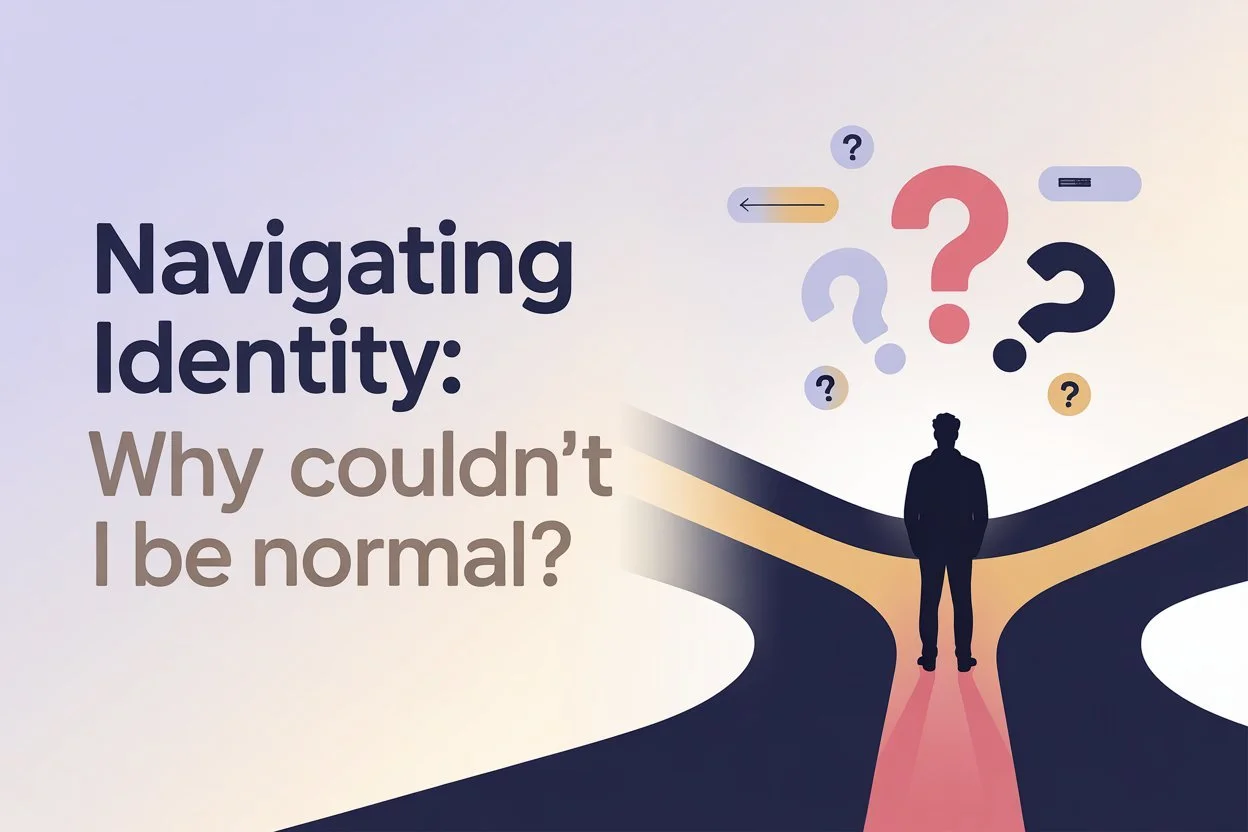
4. Navigating Identity: "Why Couldn't I Be Normal?"
The Grief That Accompanies Relief
The diagnosis brought immediate relief—finally, an explanation for everything. But it also brought profound grief.
Sitting in that neuropsychologist's office with my mother, I felt the weight of a question I'd been asking my whole life: "Why couldn't I have been born normal?"
The Painful Questions That Surface
Why does it have to be so difficult? Watching peers navigate social situations effortlessly while you struggle with basic interactions is exhausting. Diagnosis confirms that this difficulty is permanent, not something you'll eventually outgrow.
Why did I have to live in a world where people don't understand? Autism doesn't just mean you're different—it means you're different in a world designed for neurotypical people. Every system, every social norm, every expectation assumes you process information the way the majority does.
Why me? This question isn't productive, but it's inevitable. Why do I have to work ten times harder for basic social competence? Why do I have to deal with sensory overload in normal environments? Why can't I just be like everyone else?
The Conflict Between Acceptance and Resentment
Diagnosis creates internal conflict:
Relief: Finally, I understand myself. Resentment: I have to live with this forever.
Validation: My struggles are real and have a name. Frustration: Knowing the cause doesn't make it easier.
Freedom: I can stop blaming myself. Pain: I have to accept limitations I didn't choose.
The Identity Shift
Before diagnosis, you might have thought: "I'm struggling, but I can fix this if I just try harder."
After diagnosis, the narrative changes: "I'm autistic. This is who I am. The world needs to accommodate me, not the other way around."
That shift from "I need to change" to "the world needs to change" is empowering but also frightening. It requires advocating for yourself in systems that don't want to accommodate you.
Simultaneous Freedom and Pain
The neuropsychologist's words—"Sonia has Asperger's Syndrome"—were simultaneously freeing and painful.
Freeing: I could stop pretending to be something I wasn't. I could seek accommodations without guilt. I could explain my needs without shame.
Painful: I had to grieve the "normal" life I'd never have. I had to accept that some things would always be harder for me. I had to come to terms with being different in a world that values conformity.
This duality is normal. You don't have to choose between relief and grief—you can feel both simultaneously.
5. What Depression Couldn't Explain
When One Diagnosis Isn't Enough
Before my autism diagnosis, I'd been diagnosed with depression. That label explained some things:
Low mood
Difficulty finding motivation
Social withdrawal
Negative self-talk
But depression didn't explain everything. There were symptoms and struggles that didn't fit neatly into a depression diagnosis.
The Gaps Depression Left
Sensory issues: Depression doesn't cause physical pain from clothing tags or inability to tolerate certain sounds. That's sensory processing differences associated with autism.
Social confusion: Depression can make you withdraw from social situations, but it doesn't explain the fundamental confusion about unwritten social rules and inability to read nonverbal cues.
Literal thinking: Missing sarcasm, taking things at face value, and struggling with abstract concepts aren't depression symptoms—they're autistic traits.
Need for routine: Depression can disrupt routines, but autism creates a neurological need for predictability and sameness that has nothing to do with mood.
Special interests: The intense focus on specific topics that brings joy isn't explained by depression—it's a core feature of autism.
Autism as the Missing Piece
The autism diagnosis filled in the gaps that depression left. It explained:
Why social situations were confusing, not just uncomfortable
Why sensory experiences could be physically painful
Why routines weren't just comforting but necessary
Why I thought differently than my peers in fundamental ways
Why certain behaviors that seemed immature were actually neurological differences
As an autistic person, you'll find valuable insights in Sonia's podcast about navigating Autism Diagnosis.
Depression Was Real, But It Wasn't the Whole Picture
Many autistic people are diagnosed with depression or anxiety first because mental health professionals are more familiar with those conditions. The underlying autism goes unrecognized, especially in girls and women who mask their autistic traits.
In my case, depression was real and valid. The years of bullying, social rejection, and feeling fundamentally broken had absolutely caused depression.
But the depression was secondary to the autism. I was depressed because I was an undiagnosed autistic person trying to survive in a neurotypical world without support or understanding.
The Relief of Complete Understanding
Having both diagnoses—depression and autism—finally provided a complete picture.
The autism explained the fundamental differences in how I processed the world.
The depression explained my emotional response to years of struggling with those differences without support.
Together, they gave me a roadmap for what I needed: autism-informed therapy, accommodations for my neurological differences, and treatment for the depression that resulted from years of struggling alone.
Moving Forward After Diagnosis
What Comes Next
Diagnosis isn't the end of the journey—it's the beginning of a new chapter. After those words "you're autistic," you face important decisions:
Who do you tell? Coming out as autistic to family, friends, employers, and educators is a personal choice with real consequences. Not everyone will understand or be supportive.
What accommodations do you need? In college, I could now request academic accommodations through disability services. In work settings, adults can request reasonable accommodations under the ADA.
How do you process the grief? The loss of the "normal" life you thought you'd have is real and deserves to be mourned. Therapy, support groups, and connecting with other autistic adults can help.
What strengths can you lean into? Autism isn't just deficits. Many autistic people have exceptional abilities in areas of interest, pattern recognition, attention to detail, and creative thinking.
Building Your Support System
After diagnosis, you need people who understand:
Other autistic adults who share your experiences
Therapists trained in autism (not just childhood autism)
Family and friends willing to learn and accommodate
Medical professionals who take your sensory needs seriously
Educators or employers who provide necessary supports
Reframing Your Past
Diagnosis allows you to look back at your life with new understanding:
Those "behavioral problems" in school? Autistic meltdowns from sensory overload.
That "immaturity" everyone criticized? Developmental delays that are part of autism.
Those "failed friendships"? Difficulty with unwritten social rules, not personal failings.
That "sensitivity"? Sensory processing differences and emotional intensity.
Reframing your past through an autistic lens reduces shame and increases self-compassion.
Embracing Your Autistic Identity
Over time, many late-diagnosed adults shift from viewing autism as a deficit to embracing it as identity. This doesn't mean denying real challenges—it means recognizing that autism is a fundamental part of who you are, not something to be cured or hidden.
This journey from diagnosis to acceptance isn't linear. You'll have days when you wish you were neurotypical and days when you appreciate your unique perspective. Both are valid.
Key Takeaways for Late-Diagnosed Adults
Your Diagnosis Is Valid
Whether you were diagnosed at 5, 19, or 55, your autism diagnosis is legitimate. Late diagnosis doesn't mean your autism is less real—it means it was overlooked or misunderstood for years.
Contradictory Emotions Are Normal
Feeling relief and grief simultaneously isn't confusing—it's completely normal. You can be grateful for understanding while also mourning the support you should have received years ago.
You're Not Alone
Thousands of adults are diagnosed with autism every year. The autistic community includes people diagnosed at every age, and late-diagnosed adults often have unique insights and experiences that help others.
Depression and Autism Often Co-Occur
If you have both diagnoses, you're not unusual. Many autistic people develop depression or anxiety from years of struggling without support. Treating both conditions is important for overall wellbeing.
Vulnerability Awareness Is Protective
Learning about your specific vulnerabilities—naivety, difficulty reading social situations, susceptibility to manipulation—isn't meant to scare you. It's meant to help you protect yourself going forward.
You Deserved Better
You deserved to be diagnosed earlier. You deserved accommodations and support. You deserved understanding instead of criticism. Acknowledging this isn't dwelling on the past—it's validating your experience.
The Future Can Be Different
With diagnosis comes access to:
Appropriate therapeutic support
Accommodations in education and employment
Community with other autistic people
Self-understanding that reduces shame
Strategies tailored to your specific needs
Your past may have been filled with confusion and struggle, but your future can include acceptance, support, and thriving as your authentic autistic self.
Ready to explore the complete journey from diagnosis through self-acceptance? My book provides the full story of receiving an autism diagnosis in college and learning to navigate the world as an openly autistic adult.
Final Thoughts
Walking out of that neuropsychologist's office with my autism diagnosis, I carried a complex mix of emotions that would take years to fully process. The relief of finally understanding myself. The grief of all the years I'd struggled without support. The fear of future vulnerabilities. The hope that maybe, finally, things could be different.
If you're reading this as a newly diagnosed adult or someone considering evaluation, know that these feelings are valid and shared by countless others who've walked this path.
Diagnosis doesn't fix everything—but it gives you the framework to understand everything. And that understanding, painful as it sometimes is, is the foundation for building a life that works with your neurology instead of against it.
The blindfold is off. The maze is still there, but now you can see it clearly. And seeing it clearly is the first step toward finding your way through.
For the complete story of life before, during, and after autism diagnosis—including practical strategies for navigating college, relationships, and self-advocacy as an autistic adult—get my book today.
