
Most people learn basic social skills naturally throughout childhood—table manners, how to walk confidently, appropriate fidgeting management. But for autistic people, these skills often need to be explicitly taught. And by the time you reach adulthood without them, the gap becomes glaringly obvious.
The embarrassment of being in your mid-twenties and needing someone to teach you how to hold a fork properly, walk fluidly, or order appropriately at restaurants is profound.What's rarely discussed is how practical, specific coaching in these areas can transform your social experiences, when delivered constructively rather than judgmentally.
This is about the social skills autistic adults actually need, how constructive coaching differs from harmful criticism, and why learning these basics in your twenties (or thirties, or forties) isn't shameful—it's courageous.
Table of Contents
Skill #1: Table Manners and Eating Mechanics
Skill #2: Proper Posture and Fluid Movement
Skill #3: Managing Fidgeting and Stimming in Social Settings
Skill #4: Appropriate Food Choices and Healthy Eating Presentation
Skill #5: Personal Grooming and Appearance Details
Skill #6: Flexibility in Social Planning
Skill #7: Distinguishing Constructive Feedback From Harsh Judgment
The Difference Between Helpful Coaching and Harmful Criticism
Key Takeaways for Learning Social Skills as an Adult
Skill #1: Table Manners and Eating Mechanics
Why This Matters
According to the National Library of Medicine, motor planning difficulties are common in autistic people and can affect fine motor tasks like using utensils properly. When Kelly first observed me eating, she noticed several issues I was completely unaware of.
What I Needed to Learn
Eating pace: "The first thing is you need to eat slowly. Remember this rule: two bites, one sip of water, two bites, one sip of water."
Fork grip and mechanics: I was holding my fork incorrectly and using it like a spoon at times. The fork was hitting my teeth and making noise.
Proper utensil-to-mouth motion: Kelly demonstrated the correct way to bring food to my mouth and had me practice until I got it right.
Why This Is Important for Dating and Professional Life
As Kelly explained: "We are going to focus on eating because when you first start dating someone, that is what you are going to be doing."
First dates typically involve meals. Business meetings happen over lunch or dinner. Poor table manners create negative first impressions that can overshadow everything else about you.
The Embarrassment Factor
It felt profoundly embarrassing that someone in her mid-twenties needed to be taught table manners that others learn substantially younger. But the embarrassment of learning is temporary—the impact of not learning lasts forever.
How to Practice
Watch yourself eat in a mirror to see what others see
Practice the two-bite, one-sip rhythm until it becomes automatic
Record yourself eating to identify specific issues
Ask trusted people for honest feedback about your eating habits
If you missed signs of autism in your youth that could have led to earlier intervention in these skills, read our article on The Journey to Autism Diagnosis: 7 Signs You Might Have Missed in Young Adults for more context.
Skill #2: Proper Posture and Fluid Movement
The Walking Problem
Dr. Grey had previously noticed that my walk wasn't fluid motion. Kelly confirmed this after seeing me walk up stairs and around the mall.
I had a "funny gait" from early childhood—glimpses of memories of walking on my tiptoes, never being fully comfortable with my whole foot on the floor. People had called me out on my walk throughout my life, saying I walked "weird" or too fast, but nobody got into specifics until now.
What I Needed to Learn
Standing posture: Walk standing up straight with shoulders back
Heel-to-toe motion: Use the whole foot in fluid motion, not just toes or balls of feet
Pace and rhythm: Walk at a normal pace rather than rushing
Stair climbing form: Proper technique for going up and down stairs
Why This Matters
Body language communicates before you speak. How you carry yourself signals:
Confidence or insecurity
Comfort or awkwardness
Social awareness or obliviousness
An awkward gait or poor posture can make people uncomfortable around you without them consciously knowing why.
The Lifelong Impact
Poor motor skills don't just affect walking. They impact:
How you're perceived professionally
Whether people feel comfortable around you
First impressions in social and romantic situations
Your own confidence and self-image
How to Practice
Practice walking in front of a mirror to see your posture
Video yourself walking from different angles
Focus on one element at a time: first shoulders back, then heel-to-toe, then pace
Ask for feedback from people who will be honest and constructive
Skill #3: Managing Fidgeting and Stimming in Social Settings
The Hair-Playing Problem
Kelly noticed I played with my hair during meals. She taught me to keep my hands together on my lap when I felt the urge to fidget.
This remains a work in progress, as I have a tendency to fidget with my hair for sensory regulation.
The Balancing Act
For autistic people, stimming serves important regulatory functions. But in professional or dating contexts, obvious stimming can distract others or signal anxiety and discomfort.
Finding Middle Ground
The goal isn't to eliminate stimming entirely—it's to:
Develop less noticeable stims that still provide sensory input (hands on lap, subtle foot tapping)
Save more obvious stims for private moments (hair playing, hand flapping when alone)
Recognize when stimming is increasing and what triggers it (anxiety, overstimulation)
Communicate needs when necessary ("I need a moment to step away and regulate")
Practical Strategies
Identify your most common stims and when they occur
Practice replacement behaviors that are less noticeable
Use discrete fidget tools (smooth stones in pocket, textured jewelry)
Take strategic breaks to stim freely in private
For more on finding therapists and coaches who understand these balance between autistic needs and social expectations, read our article on 5 Signs You've Found the Right Therapist.
Skill #4: Appropriate Food Choices and Healthy Eating Presentation
The Appetizer Incident
During one dinner, Kelly noticed I ordered only an appetizer that wasn't nutritionally valuable. She taught me about ordering healthy foods when eating out.
Her reasoning: "Eating healthy shows people you care about yourself and take care of yourself."
Why This Matters
Food choices signal to others:
Whether you value your health
Your level of self-care
Whether you can make adult decisions
How you'll approach other life areas
The Broader Lesson
This wasn't about restriction or diet culture. It was about demonstrating self-care through choices that show you value yourself.
Ordering appropriately also includes:
Matching the formality of the setting (don't order appetizers only at a formal dinner)
Being adventurous without being inappropriate (don't order the messiest item on a first date)
Considering portion sizes (don't order so much you can't finish or so little you seem restrictive)
Reading the situation (casual lunch versus important business dinner)
How to Develop This Skill
Research menus ahead of time so you're not deciding under pressure
Observe what others order in similar settings
Ask trusted friends for feedback on your food choices
Practice ordering at different types of restaurants
Skill #5: Personal Grooming and Appearance Details
The Constructive Difference
Kelly never commented on my weight—a stark contrast to Dr. Grey's obsessive focus on thinness. Instead, she addressed specific, actionable grooming issues:
Hair appearing disheveled
Bra fit being incorrect
Needing to pay more attention to these aspects before leaving the house
Why This Approach Works
Constructive feedback on grooming:
Focuses on specific, fixable issues
Doesn't shame your body or natural appearance
Provides actionable steps
Addresses presentation, not inherent worth
Common Grooming Gaps for Autistic Adults
Many autistic adults struggle with:
Knowing when hair needs washing or styling
Understanding proper undergarment fit
Recognizing when clothes need replacing
Applying makeup appropriately (if choosing to wear it)
Maintaining consistent hygiene routines
How to Address These Gaps
Create checklists for daily grooming routines
Get professional fittings for undergarments
Ask trusted friends for honest appearance feedback
Set up systems (hair washing schedule, clothing replacement timeline)
Take photos to see how you actually look versus how you think you look
Skill #6: Flexibility in Social Planning
The Restaurant Change Incident
When Kelly set us to meet at a restaurant whose menu didn't appeal to me, I reluctantly asked if we could go somewhere else. She agreed, but her unhappiness showed.
Her response: "Don't do this again! What would've happened if you had done this on a date? Your date would've probably been pissed off and annoyed."
The Social Rule I Violated
Once plans are set, changing them is generally inappropriate unless there's a significant reason (allergies, dietary restrictions, genuine emergency).
Changing plans because you don't like the menu signals:
Inflexibility
Difficulty compromising
Prioritizing your preferences over others'
Poor planning (you should have checked the menu before agreeing)
The Competing Needs
My suspicion was that Kelly may have been bothered because she genuinely wanted to eat at the original restaurant. This highlights the complexity:
Sometimes what's labeled "teaching you social skills" is actually about the other person's preferences.
Learning Flexibility
For autistic people who struggle with food texture, routine, or unexpected changes:
Communicate dietary restrictions upfront: "I have sensory issues with certain foods. Can we choose a restaurant together?"
Review menus before agreeing to plans: Check that there's at least one item you can eat
Bring backup foods if necessary: Keep safe foods available for difficult situations
Practice tolerating imperfect situations: Not every meal needs to be ideal
Skill #7: Distinguishing Constructive Feedback From Harsh Judgment
Constructive Coaching (Kelly's Approach)
Kelly's feedback was:
Specific: "You're making noise with your fork hitting your teeth"
Actionable: "Here's how to hold your fork properly. Watch me, then follow."
Focused on teachable skills: Table manners, walking mechanics, grooming details
Free of body shaming: Never commented on weight, only on specific presentation issues
Harsh Judgment (Dr. Grey's Approach)
Dr. Grey's feedback was:
General and demoralizing: "Something isn't working if you've been going to the gym"
Focused on unchangeable aspects: Body size, facial attractiveness ratings
Lacking specific guidance: "Everything has to be perfect" without defining what that means
Undermining confidence: "Girls are just being nice when they compliment you"
The Breaking Point
Eventually, I had enough of Dr. Grey's weight obsession. When he continued his "serenade about how some of his clients wouldn't go out with women five pounds overweight," I finally pushed back:
"Don't you think it's possible that these clients who are fussing about women being five pounds overweight are just being shallow? Women can pick up on men who are shallow and will keep their distance."
Why This Distinction Matters
Constructive coaching:
Builds skills and confidence
Provides specific, actionable steps
Respects your inherent worth
Focuses on what you can control
Harsh judgment:
Tears down self-esteem
Creates impossible standards
Ties worth to appearance or others' opinions
Focuses on what you can't easily change
Ready to hear more about navigating the difference between helpful support and harmful criticism? Listen to the On the Spectrum Empowerment Stories podcast for real conversations about what actually helps autistic adults build genuine confidence.
Helpful Coaching and Harmful Criticism
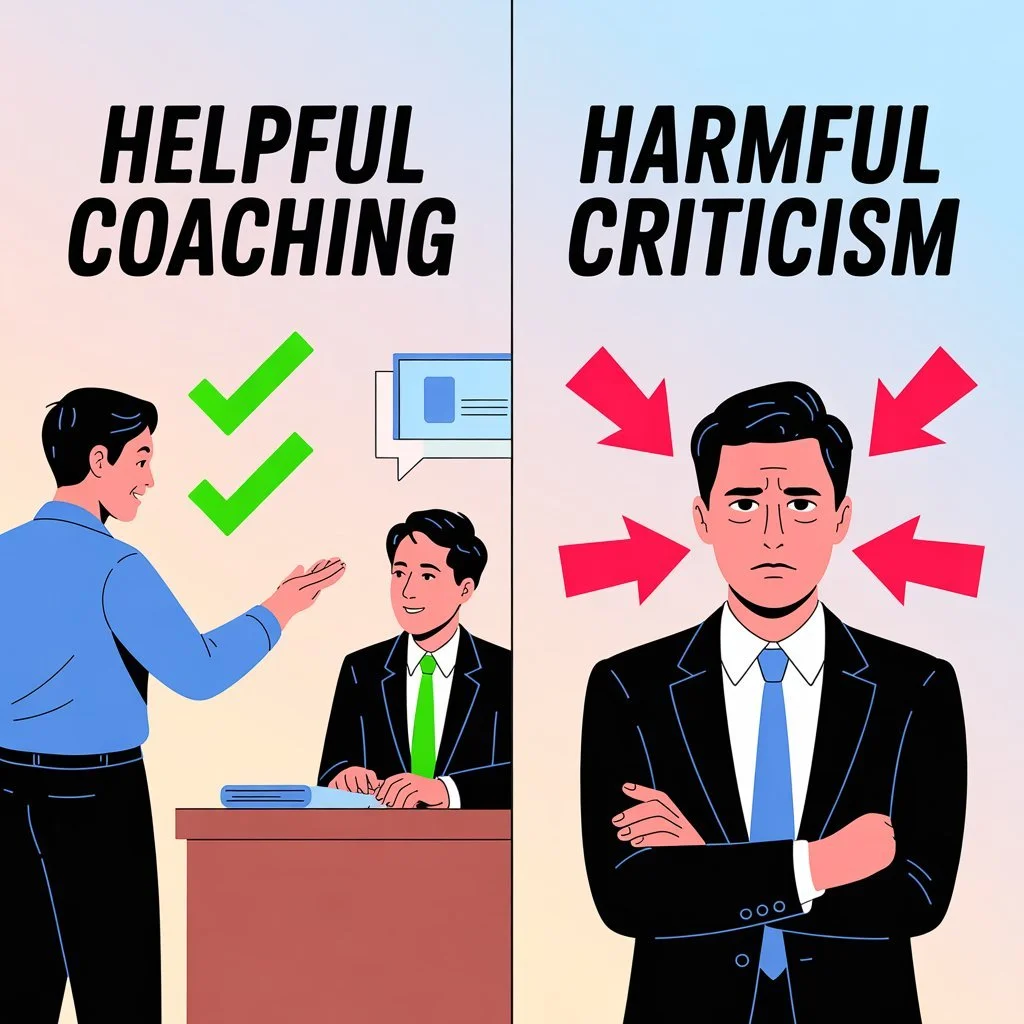
The Difference Between Helpful Coaching and Harmful Criticism
What Made Kelly's Approach Effective
She focused on skills, not worth: Table manners and walking mechanics are learnable skills, not indicators of value as a person.
She demonstrated and practiced: "Watch me, then follow" is effective teaching methodology.
She acknowledged progress: Kelly noticed improvement and commented on it, reinforcing positive changes.
She explained the 'why': Understanding that first dates involve eating helps you prioritize learning table manners.
She addressed specific, fixable issues: Disheveled hair and poor bra fit are concrete problems with concrete solutions.
What Made Dr. Grey's Approach Harmful
He focused on unchangeable aspects: Body size, facial structure, inherent attractiveness.
He provided contradictory messages: Be thin, but also treat yourself to ice cream.
He reinforced perfectionism: "Everything has to be perfect" creates impossible standards.
He undermined confidence: Dismissing genuine compliments as "just being nice."
He projected his clients' shallowness: Treating five-pound weight concerns as legitimate rather than problematic.
The Key Question
After any coaching or feedback session, ask yourself:
Do I feel empowered with specific things I can practice and improve, or do I feel inadequate and hopeless about unchangeable aspects of myself?
If it's the latter, you're receiving harmful criticism, not helpful coaching.
Key Takeaways for Learning Social Skills as an Adult
It's Not Too Late to Learn
Being in your twenties, thirties, or beyond when you finally learn basic social skills doesn't mean you're broken. It means:
You didn't receive the explicit instruction autistic people need
You're brave enough to address gaps now
You're investing in your future social success
Many autistic adults have these same gaps. You're not alone.
Embarrassment Is Temporary, Impact Is Permanent
Yes, it's embarrassing to need table manners coaching as an adult. But:
The embarrassment of learning lasts weeks or months
The benefit of knowing these skills lasts your entire life
People won't remember you needed to learn; they'll just notice you have good manners now
Focus on Specific, Actionable Skills
Effective social skills coaching addresses:
Table manners and eating mechanics
Posture and movement
Grooming and presentation details
Social conventions and flexibility
Ineffective coaching focuses on:
Body size and weight
Inherent attractiveness
Impossible perfectionism
What others think of you
Find Coaches Who Build You Up
The right coach or therapist:
Provides specific, actionable feedback
Acknowledges your progress
Explains why skills matter
Respects your inherent worth
Focuses on what you can control
The wrong coach:
Makes you feel worse about yourself
Provides vague or contradictory advice
Focuses on unchangeable aspects
Ties your worth to others' shallow judgments
Progress Takes Practice
Kelly noticed improvement in my fork grip and eating pace after just a couple of sessions because I practiced the specific techniques she taught.
Social skills improve through:
Conscious practice of specific techniques
Immediate feedback on what's working
Repetition until skills become automatic
Patience with yourself during the learning process
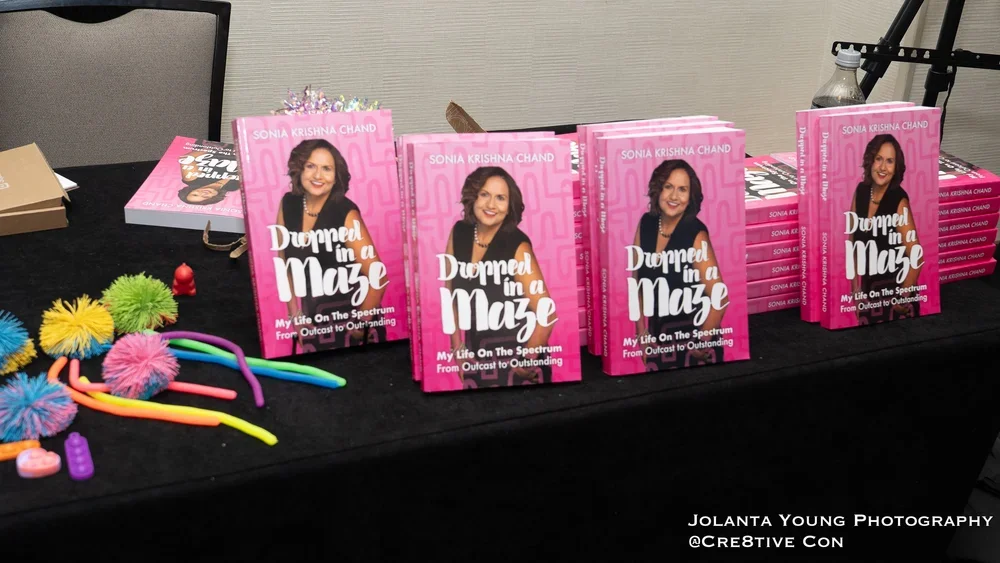
For the complete story of learning these social skills as an adult—including every embarrassing moment, every breakthrough, and what actually worked versus what wasted my time—my book provides all the details you need.
Moving Forward
If you're an autistic adult who knows something is "off" about your social presentation but can't pinpoint what, you're not alone. Most autistic people need explicit coaching in skills neurotypical people absorb through observation.
The key is finding coaches and therapists who can provide that explicit guidance constructively, building your skills and confidence simultaneously.
Ready to learn the complete story of navigating social skills coaching, distinguishing helpful feedback from harmful criticism, and eventually developing genuine confidence? My book details every session with both Kelly and Dr. Grey, showing you exactly what works and what doesn't.
