
What Is High Functioning Autism?
What is high functioning autism is one of the most searched questions about autism in the United States, and it is also one of the most poorly answered. Parents type it into search engines after a diagnosis, after a school meeting, after a conversation with a professional who used the term without explaining it. They want a clear, honest answer that helps them understand their child.
What is high functioning autism is a question that deserves a real answer, not a clinical definition that leaves you more confused than when you started. This post gives you that answer, explains why the term is both widely used and widely criticized, and tells you what actually matters for your child beyond the label.
Table of Contents
What Is High Functioning Autism
Where the Term High Functioning Autism Comes From
What High Functioning Autism Looks Like in Children
What High Functioning Autism Looks Like in Girls
Why High Functioning Autism Is Often Missed
The Problem With the Term High Functioning Autism
High Functioning Autism vs Asperger Syndrome
High Functioning Autism and Mental Health
High Functioning Autism at School
How High Functioning Autism Connects to Autism Regression
FAQs
Final Thoughts
What Is High Functioning Autism
High functioning autism is an informal term used to describe autistic individuals who have average or above average intelligence and functional spoken language. It is not a formal diagnosis in the DSM-5. There is no clinical definition that all professionals agree on. It is a descriptive term that has been widely used in both clinical and everyday settings to distinguish autistic people who appear to manage daily life independently from those who require more visible support.
When people ask what is high functioning autism, they are usually trying to understand how autism can look so different from one person to the next. How can two people both be autistic when one is nonverbal and requires round the clock support while the other holds a job, maintains relationships, and moves through the world in ways that most people around them never identify as autistic?
The answer is that autism is a spectrum with enormous variability. High functioning autism sits at one end of that variability, describing autistic people whose cognitive and language abilities allow them to navigate many everyday demands independently even while their autistic neurology continues to shape every aspect of how they experience the world.
What is high functioning autism in practical terms: it is autism that is often invisible to the people around the autistic person, which creates its own very specific set of challenges.
Where the Term High Functioning Autism Comes From
The term high functioning autism emerged in the clinical literature in the 1980s as researchers and clinicians began to recognize that autism presented very differently across individuals. Before that time, autism was largely associated with significant intellectual disability and limited or absent spoken language.
As understanding of the spectrum expanded, it became clear that many people who were not intellectually disabled and who had functional language were also autistic. The term high functioning autism was used informally to describe this population, distinguishing them from the more severe presentations that had previously dominated the clinical picture.
The term became more widely used after the inclusion of Asperger Syndrome in the DSM-4 in 1994, which gave a formal diagnostic home to many people who would previously have been described informally as having high functioning autism.
When the DSM-5 replaced all previous autism diagnoses with the single category of Autism Spectrum Disorder in 2013, Asperger Syndrome was removed as a separate diagnosis and high functioning autism lost its closest formal equivalent. Today the term continues to be widely used in everyday conversation despite having no official diagnostic status.

What High Functioning Autism Looks Like in Children
Understanding what high functioning autism looks like in children helps parents recognize it, particularly when their child does not fit the stereotypical image of autism that is still prevalent in public understanding.
Language and communication:
Typically develops spoken language on time or close to it
May have advanced vocabulary and speak in a formal or unusually precise way
Struggles with the social use of language including conversation, turn taking, and understanding implied meaning
May talk extensively about specific interests without noticing the listener's engagement level
Literal interpretation of language causing confusion with jokes, sarcasm, and idioms
Social interaction:
Wants social connection but struggles to navigate social rules
May have one or two close friendships but difficulty with broader peer groups
Can appear socially awkward or out of step with peers
May not understand unwritten social rules that other children pick up naturally
Often more comfortable with adults or younger children than same-age peers
Sensory processing:
Sensory sensitivities that may not be immediately visible but significantly affect daily functioning
Strong reactions to specific textures, sounds, lights, or smells
Sensory overload that builds throughout the day and releases at home
Behavior and interests:
Intense focus on specific areas of interest
Deep knowledge in areas of interest that exceeds what is typical for their age
Strong preference for routine and predictability
Significant distress when routines are disrupted
Repetitive behaviors that may be subtle such as finger tapping, rocking, or specific verbal scripts
Academic functioning:
Often academically strong in areas of interest
May struggle significantly with subjects outside areas of interest
Executive functioning challenges including organization, planning, and task initiation
Strong performance in structured academic tasks but difficulty with open-ended or creative assignments
Why High Functioning Autism Is Often Missed
High functioning autism is one of the most commonly missed autism diagnoses for several reasons that are worth understanding as a parent:
The comparison problem: When most people picture autism they picture a more significantly impaired presentation. A child who is verbal, academically capable, and socially engaged, however imperfectly, does not match that image. Professionals and parents alike may overlook high functioning autism because the child does not look autistic enough by the standards of a definition that was developed around more visible presentations.
The compensation effect: Children with high functioning autism are often highly intelligent and work hard to compensate for their challenges. They figure out workarounds. They develop scripts. They observe and imitate. The compensation can be so effective that the underlying difficulty is invisible until the demand level exceeds the child's capacity to compensate.
The late manifestation: High functioning autism sometimes does not become clearly visible until demands increase significantly. Primary school may be manageable. Secondary school, with its increased social complexity and academic independence requirements, is often where high functioning autism becomes undeniable.
The wrong referral pathway: Children with high functioning autism frequently receive referrals for anxiety, ADHD, depression, or social skills difficulties before the underlying autism is recognized. These diagnoses are not wrong but they are incomplete if the autism driving them is not identified.
If you are an adult with High functioning autism, Sonia’s coaching class is what you need.
The Problem With the Term High Functioning Autism
This is one of the most important parts of this post and one that parents often find genuinely helpful to understand.
The term high functioning autism has significant problems that affect how autistic people with this profile are understood and supported.
It implies functioning is fixed: High functioning autism suggests a stable level of functioning. In reality, functioning in autistic individuals is highly variable and context dependent. A child who functions well in a structured, familiar, low demand environment may be completely unable to function in a novel, high demand, or socially complex one. The label does not capture this variability.
It creates an expectation that masks real needs: When a child is labeled high functioning, the implication is that they do not need as much support. Schools, services, and sometimes families use the label to justify reduced support. But high functioning autism does not mean low support needs. It means the support needs are less visible, not absent.
It dismisses genuine struggle: Autistic people with high functioning autism frequently report that their label was used to dismiss their difficulties. You are too high functioning to need help. You are too high functioning for that support. The label that was meant to describe their relative ability became a barrier to the support they genuinely needed.
It is based on neurotypical standards: The high in high functioning is defined by how closely the autistic person's outward presentation resembles neurotypical functioning. This centers neurotypical behavior as the standard against which autistic people are measured, which is a framework most autistic advocates and researchers now reject.
It is not an official diagnosis: Because high functioning autism is not in the DSM-5, it is used inconsistently across professionals, schools, and services. Two children described as having high functioning autism may have very different presentations, support needs, and experiences.
High Functioning Autism vs Asperger Syndrome
Before 2013, many people who would now be described informally as having high functioning autism received a formal diagnosis of Asperger Syndrome. The two terms are closely related but not identical.
Asperger Syndrome was defined in the DSM-4 as autism without significant language delay or intellectual disability. It was characterized by significant social difficulties, restricted interests, and repetitive behaviors in the presence of typical language development and average or above average intelligence.
High functioning autism was used more broadly and did not require the absence of early language delay. Some researchers used it to describe people who had shown early language delay but whose language had caught up to typical levels by school age.
High Functioning Autism and Mental Health
Mental health is one of the most significant concerns for autistic individuals with high functioning autism and it is one that is frequently underaddressed because the outward functioning masks the internal struggle.
Research consistently shows that autistic individuals with high functioning autism have significantly higher rates of:
Anxiety disorders, with estimates suggesting 40 to 60 percent of this population meets diagnostic criteria
Depression, which often develops secondary to the social isolation and masking demands of high functioning autism
Autistic burnout, which can present as sudden and dramatic loss of functioning in someone who appeared to be managing well
Suicidal ideation, which occurs at significantly higher rates in autistic individuals than in the neurotypical population
The mental health risks associated with high functioning autism are directly related to the demands of masking. Autistic people who are expected to function like neurotypical people because their autism is not visibly obvious are carrying a hidden cognitive and emotional load that accumulates over time.
Recognizing this and responding with genuine support rather than the assumption that high functioning means fine is one of the most important things parents and professionals can do for autistic individuals with this profile.

High Functioning Autism at School
School is often where high functioning autism is both most challenging and most invisible. The combination of academic demands, social complexity, and sensory environment creates conditions that are particularly difficult for children with high functioning autism.
Common school challenges for children with high functioning autism:
Social isolation and peer relationship difficulties despite wanting connection
Executive functioning challenges with organization, homework, and project management
Sensory overload in busy, loud, or visually complex school environments
Difficulty with unstructured time including lunch, recess, and free periods
Strong performance in areas of interest and significant underperformance elsewhere
Anxiety that builds throughout the school day and releases at home
What to advocate for in school:
Children with high functioning autism are entitled to support under Section 504 or through an IEP depending on how significantly their autism affects their educational functioning. The fact that a child is academically capable does not mean they do not need support. It means their support needs look different from those of a child with more visible challenges.
Specific accommodations worth requesting include extended time on assessments, a quiet workspace option, explicit social skills support, flexibility around sensory needs, and clear written instructions for assignments and expectations.
How High Functioning Autism Connects to Autism Regression
High functioning autism and autism regression have a specific and important relationship that parents need to understand.
Because children with high functioning autism are often expected to function at a high level, their regression can be more dramatic and more alarming than regression in children whose support needs were already more visible. A child who was managing school, maintaining friendships, and developing skills who suddenly appears to lose all of that functioning is experiencing autism regression, and the high functioning label is one of the factors that makes this regression more likely rather than less.
The sustained masking demands placed on children with high functioning autism, the expectation that they will manage because they appear to be managing, creates exactly the conditions in which autism regression is most likely to occur.
For a full understanding of what autism regression is, why it happens, and what to do when it occurs, the post on autism regression covers the topic comprehensively and is essential reading for any parent of a child with high functioning autism.
FAQs
What is high functioning autism?
High functioning autism is an informal term for autistic individuals with average or above average intelligence and functional spoken language who can manage many daily tasks independently.
Is high functioning autism an official diagnosis?
No. It is not in the DSM-5. The closest official diagnosis is Autism Spectrum Disorder Level 1.
What is the difference between high functioning autism and Asperger Syndrome? Asperger Syndrome was a formal diagnosis discontinued in 2013. High functioning autism is an informal term. Both describe a similar population but with some differences in historical definition.
Can a child with high functioning autism need significant support?
Yes. High functioning describes outward presentation not internal experience or support needs. Many children with high functioning autism have significant support needs that are not visible from the outside.
Will my child with high functioning autism be able to live independently as an adult?
Many autistic adults with high functioning autism live independently or semi-independently. The right support during childhood and adolescence significantly improves adult outcomes.
Final Thoughts
What is high functioning autism is a question that deserves a real, honest answer and the real honest answer is this: high functioning autism is autism that is harder to see, which makes it both easier to miss and easier to dismiss.
The children and adults living with high functioning autism are carrying a hidden load. They are working harder than most people around them realize to navigate a world that was not designed for their neurology. They are masking, compensating, performing, and exhausting themselves in the process.
What they need is not the assumption that high functioning means fine. They need the recognition that invisible struggles are still struggles, that hidden support needs are still support needs, and that the effort required to appear to function is itself something that deserves acknowledgment and support.
Understanding what is high functioning autism, really understanding it, beyond the label and into the lived experience it describes, is the first step toward giving autistic people with this profile the genuine support they deserve.
References:
Roybal B. High-Functioning Autism: What Is It and How Is It Diagnosed? [Internet]. WebMD. Medically reviewed August 2025. https://www.webmd.com/brain/autism/high-functioning-autism
Cleveland Clinic. Asperger's Syndrome [Internet]. Last updated May 2026. https://my.clevelandclinic.org/health/articles/asperger-syndrome
Sullivan R. Neurodiversity: High Functioning Autism (Asperger's Syndrome) [Internet]. Metis Center for Psychological Services. 2020 Jan 3. https://www.metiscenter.net/news/neurodiversity-high-functioning-autism-aspergers-syndrome/
Lindenblatt A. IEP vs 504 Plan for Autism: Which Does Your Child Actually Need? [Internet]. Achievement Behavior Services. 2026 Apr 7. https://abcachieve.com/iep-vs-504-plan-for-autism/
What Is Profound Autism?
If your child has recently been diagnosed with autism, or if you are somewhere in the middle of trying to understand what their diagnosis actually means for their daily life and future, you may have come across the term profound autism and wondered what it means, how it differs from other autism diagnoses, and whether it applies to your child.
This post answers those questions directly, in plain language, without the clinical jargon that makes most medical literature so difficult to read when you are already carrying a lot.
Profound autism is a relatively new term in the diagnostic landscape. It is also one of the most debated. Understanding what it means, why it was introduced, and what the research actually says about it will help you have better conversations with the professionals supporting your child and make more informed decisions about the care and support you pursue.
Table of Contents
What Is Profound Autism
How Profound Autism Differs From Other Autism Diagnoses
Why the Term Was Introduced
What the Research Says
The Debate Around Profound Autism as a Separate Category
Signs and Characteristics Parents Should Know
How Profound Autism Is Diagnosed
What Support Looks Like for Profound Autism
What Profound Autism Does Not Mean
For Parents: What to Focus On
Final Thoughts
What Is Profound Autism
Profound autism is a term used to describe autistic individuals who have both a significant intellectual disability and little to no spoken language. It sits at the most complex end of the autism spectrum in terms of support needs and daily functioning.
The term was formally proposed in 2021 by a group of researchers including Dr. Catherine Lord, one of the most respected autism researchers in the world, and has since been the subject of significant scientific and community discussion.
In practical terms, profound autism describes autistic individuals who:
Have an IQ below 50, which places them in the range of moderate to severe intellectual disability
Have minimal or no functional spoken language, meaning they are unable to use speech to reliably communicate their needs
Require substantial support with most or all activities of daily living
Often have significant co-occurring conditions including epilepsy, gastrointestinal issues, and sleep disorders
It is important to understand from the outset that profound autism is not currently an official diagnosis in the DSM-5, the diagnostic manual used by clinicians in the United States. It is a descriptive term being used in research and advocacy contexts to draw attention to a population that many researchers and parents feel has been underserved by the broader autism conversation.
How Profound Autism Differs From Other Autism Diagnoses
Since 2013, all autism diagnoses in the United States have been given under the single umbrella of Autism Spectrum Disorder, or ASD, with support levels ranging from Level 1 to Level 3. Profound autism is not a separate diagnosis within that system. It is a way of describing a specific subset of people diagnosed at Level 3, the highest support needs level.
The key distinctions between profound autism and other autism presentations are:
Intellectual disability
Not all autistic people have intellectual disabilities. Research suggests that approximately 30 to 40 percent of autistic individuals have an intellectual disability. Profound autism specifically involves significant intellectual disability, not just learning differences or processing differences.
Spoken language
Many autistic people are fully verbal. Some are minimally verbal, meaning they have some spoken words but not enough for reliable functional communication. Profound autism specifically involves little to no functional spoken language, though this does not mean the person cannot communicate through other means.
Support needs While all autistic people have varying support needs, profound autism involves support needs that are pervasive and lifelong across nearly all areas of daily functioning, including self-care, safety, communication, and community participation.
Co-occurring conditions
People with profound autism have significantly higher rates of epilepsy, gastrointestinal disorders, sleep disorders, and other medical conditions that require ongoing medical management alongside autism-specific support.
Why the Term Was Introduced
The proposal to use the term profound autism came from a specific concern that was growing in the research and parent advocacy communities: that the autism umbrella had become so broad that the most significantly affected individuals were becoming invisible within it.
The argument, made by researchers including Dr. Lord and colleagues in a 2022 paper in The Lancet Neurology, was that policy, research funding, and public conversation about autism had become dominated by the experiences of autistic people with average or above average intelligence and functional communication skills. While that population absolutely deserves support and representation, the researchers argued that individuals with profound autism have fundamentally different support needs, different research questions that apply to them, and different policy implications that were not being adequately addressed.
In short: the term was introduced to make a population visible that had been getting lost in the broader conversation.
Whether that is the right solution to that problem is where the debate begins.
What the Research Says
The peer-reviewed research on profound autism is growing and worth understanding before forming an opinion on the debate.
A 2024 study published in PubMed examined the characteristics and prevalence of profound autism within the broader autism population. The research found that individuals meeting the criteria for profound autism represent a meaningful and distinct subgroup with specific support needs that differ significantly from the broader ASD population. The study highlighted that this group faces some of the highest rates of caregiver burden, medical complexity, and unmet service needs of any population within the autism spectrum. You can read the full study here.
Medical News Today has also covered the profound autism debate in depth, noting that proponents argue the term could lead to better targeted research, more appropriate funding allocation, and clinical guidelines that actually reflect the reality of caring for profoundly autistic individuals.Read their full coverage here.
The research broadly supports the idea that there is a meaningfully distinct population within the autism spectrum whose needs are not being fully met by current systems. Where researchers and advocates disagree is on whether a new label is the right way to address that gap.
The Debate Around Profound Autism as a Separate Category
This is the part of the conversation that gets heated, and it is worth understanding both sides clearly because both have legitimate points.
The case for using the term profound autism:
It draws attention to a population that has been underrepresented in autism research, which has historically over-indexed on higher functioning presentations
It could lead to more targeted funding for the specific support needs of this population
It helps families and clinicians communicate more precisely about support needs
It acknowledges that the experiences of profoundly autistic individuals and their families are genuinely different from other autism presentations in ways that matter for policy and practice
It may help develop clinical guidelines that are actually relevant to this population rather than applying guidelines developed for a very different group
The case against:
Many autistic self-advocates and disability rights organizations argue that creating a separate category risks stigmatizing the most vulnerable autistic people further
There are concerns that it could lead to a two-tier system where profoundly autistic individuals are seen as less capable of growth, communication, and participation than they actually are
Some advocates argue it echoes historical patterns of separating and institutionalizing people with significant disabilities under the guise of better serving them
The boundaries of the category are not universally agreed upon and diagnostic criteria could be applied inconsistently
Some researchers argue that better funding and support for high-need individuals can be achieved without creating a new diagnostic category
Both sides of this debate are motivated by genuine concern for the wellbeing of autistic people. Understanding the tension helps parents engage more critically with the information they encounter about their child's diagnosis and care.
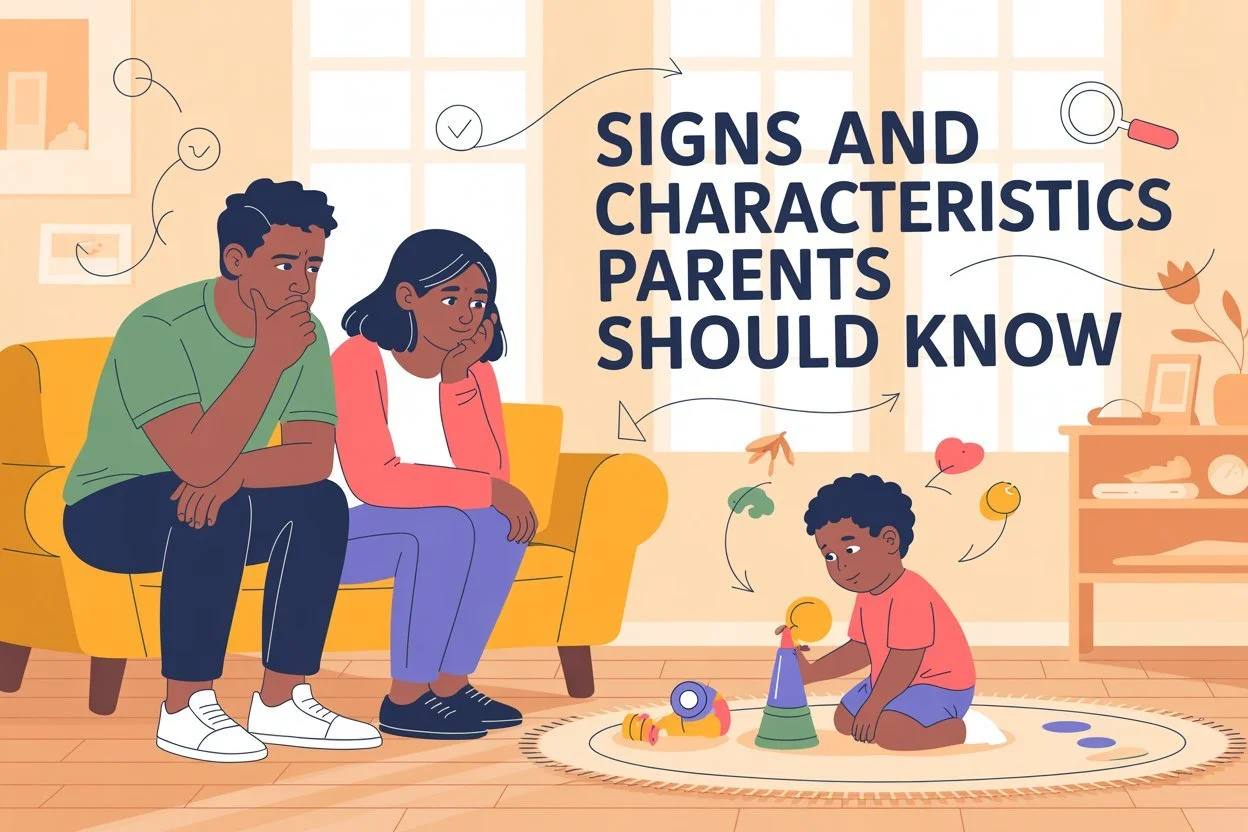
Signs and Characteristics Parents Should Know
For parents trying to understand whether the term profound autism applies to their child's situation, here are the characteristics that researchers and clinicians typically associate with it:
Communication:
Little to no functional spoken language
May use some words or sounds but not in a way that reliably communicates needs
May communicate through behavior, gestures, facial expression, or alternative communication methods
Often benefits significantly from Augmentative and Alternative Communication, known as AAC
Cognitive:
Significant intellectual disability, typically an IQ below 50
Difficulty with abstract thinking and complex problem solving
Learning happens but often at a different pace and through different modalities than neurotypical development
Daily living:
Requires support with most self-care tasks including dressing, hygiene, and eating
May have difficulty understanding safety risks
Needs structured, supported environments to function safely
Behavioral:
May engage in repetitive behaviors that are intense and difficult to redirect
Sensory sensitivities are often significant and affect daily functioning
Emotional regulation challenges may be significant and expressed through behavior
Medical:
Higher rates of epilepsy than the general autism population
Gastrointestinal issues are common
Sleep disorders affect a significant proportion of this population
Regular medical monitoring is an important part of overall care
How Profound Autism Is Diagnosed
Profound autism is not diagnosed separately from ASD in the current US diagnostic system. A child will receive a diagnosis of Autism Spectrum Disorder, Level 3, with additional notations about intellectual disability and language level.
The diagnostic process for a child who may have profound autism typically involves:
A comprehensive developmental evaluation by a developmental pediatrician or child psychiatrist
Cognitive and intellectual assessment by a psychologist
Speech and language evaluation to assess current communication level and needs
Occupational therapy assessment for sensory and daily living skills
Medical evaluation for co-occurring conditions including epilepsy screening
Input from parents, caregivers, and teachers who know the child well
The process is thorough and involves multiple professionals. It takes time. And it often begins long before parents have language for what they are observing, which is why knowing what to look for and how to advocate effectively in the early stages matters so much.
For parents who are in the early stages of this journey and need a clear roadmap for what to do after a diagnosis, the newly diagnosed autism parent guide covers the practical first steps in detail.
What Support Looks Like for Profound Autism
The support needs for profoundly autistic individuals are significant, lifelong, and span multiple domains. Here is an overview of what comprehensive support typically involves:
Communication support: AAC devices and systems are often transformative for nonverbal and minimally verbal autistic individuals. These range from simple picture exchange systems to high-tech speech generating devices. Speech and language therapy focused on AAC implementation is one of the most impactful interventions available.
Educational support: Children with profound autism are entitled to a Free Appropriate Public Education under IDEA, with an IEP that addresses their specific communication, cognitive, behavioral, and daily living needs. Specialized classrooms, one-to-one support, and highly structured learning environments are often necessary.
Behavioral support: Positive behavior support approaches that focus on understanding the function of behavior and meeting underlying needs are more effective and more ethical than punitive approaches. A good behavioral support plan starts with the question: what is this behavior communicating?
Medical management: Regular monitoring for epilepsy, gastrointestinal health, sleep, and other common co-occurring conditions is an important part of overall care. Building a medical team that understands the intersection of autism and these conditions matters.
Family support: The caregiving demands for families of profoundly autistic individuals are significant. Respite care, family therapy, caregiver support groups, and access to coaching and counseling are not luxuries. They are necessities for sustainable family functioning.
What Profound Autism Does Not Mean
This section matters as much as everything above, because some of the most harmful assumptions about profoundly autistic individuals come from what people believe the diagnosis implies.
Profound autism does not mean:
That the person has no inner life, preferences, or experiences worth attending to
That communication is impossible, only that spoken language may not be the right channel
That the person cannot learn, develop, or make meaningful progress with the right support
That relationships, connection, and joy are not available to this person
That their life has less value than the life of an autistic person with more functional independence
That families should lower their expectations for their child's quality of life
Research on AAC and alternative communication has shown repeatedly that many nonverbal autistic individuals have far more to communicate than their verbal output suggests. When the right communication tools are found and supported, the results can be profound in the truest sense of the word.
The person is always there. What changes with the right support is how clearly they can be seen and heard.
For Parents: What to Focus On
If you are parenting a child who has been diagnosed at the more complex end of the autism spectrum, or if you are wondering whether profound autism is a useful framework for understanding your child's needs, here is what matters most:
Focus on communication above everything else
Whatever form it takes, supporting your child's ability to communicate their needs, preferences, and experiences is the highest leverage intervention available. Pursue AAC evaluation early and persistently.
Build your team deliberately
You need professionals who have specific experience with significantly autistic individuals, not just general autism experience. The difference in quality of support is substantial.
Know your legal rights
Your child is entitled to a free and appropriate public education with the supports they need. Budget constraints are not a legal reason to deny services. The post onautism and the legal system rights and protections covers what you are entitled to and how to advocate for it.
Take care of yourself
Caring for a profoundly autistic child is one of the most demanding things a human being can do. Your wellbeing is not separate from your child's wellbeing. It is the foundation of it.
Connect with other families
The families who are thriving are almost never doing it alone. Find your community, whether online or in person, of families who understand the specific reality you are living.
Final Thoughts
Profound autism is a term that is generating significant debate in the autism research and advocacy community. That debate is worth following because it has real implications for how support, funding, and policy are organized around the most significantly affected autistic individuals and their families.
What is not debatable is this: the families and individuals at the most complex end of the autism spectrum deserve fully resourced, genuinely informed, deeply compassionate support. Whether that support is organized under the label of profound autism or under the existing Level 3 framework matters less than whether it actually arrives, in the right form, at the right time, for the right child.
Your child's diagnosis is a starting point. It is not a ceiling. And the support you build around them, the team, the tools, the community, and the belief that they deserve every resource available to help them thrive, is the thing that actually shapes what their life looks like.
That work is worth everything. And you do not have to do it alone.
References:
Autism Science Foundation. ASF Launches First-of-Its-Kind 'Profound Autism' Funding Mechanism [Internet]. 2022 Jul 18. Available from: https://autismsciencefoundation.org/press_releases/asf-launches-profound-autism-funding-mechanism/
Autism Science Foundation. CDC Reports Profound Autism Statistics For The First Time [Internet]. 2023 Apr 19. Available from: https://autismsciencefoundation.org/press_releases/cdc-profound-autism-statistics/
Child Mind Institute. What Is Profound Autism? [Internet]. Available from: https://childmind.org/article/what-is-profound-autism/
Waizbard-Bartov E, Fein D, Lord C, Amaral DG. Autism Severity and Its Relationship to Disability. Autism Res. 2023 Apr;16(4):685-696. Available from: https://pmc.ncbi.nlm.nih.gov/articles/PMC10500663/
Wachtel LE, Escher J, Halladay A, Lutz A, Satriale GM, Westover A, Lopez-Arvizu C. Profound Autism: An Imperative Diagnosis. Pediatr Clin North Am. 2024 Apr;71(2):301-313. Available from: https://pubmed.ncbi.nlm.nih.gov/38423722/
Kripke-Ludwig R. "Profound Autism" Label Does Not Predict Strengths or Help Plan Supports. Public Health Rep. 2023 Nov-Dec;138(6):849-850. Available from: https://pmc.ncbi.nlm.nih.gov/articles/PMC10576471/
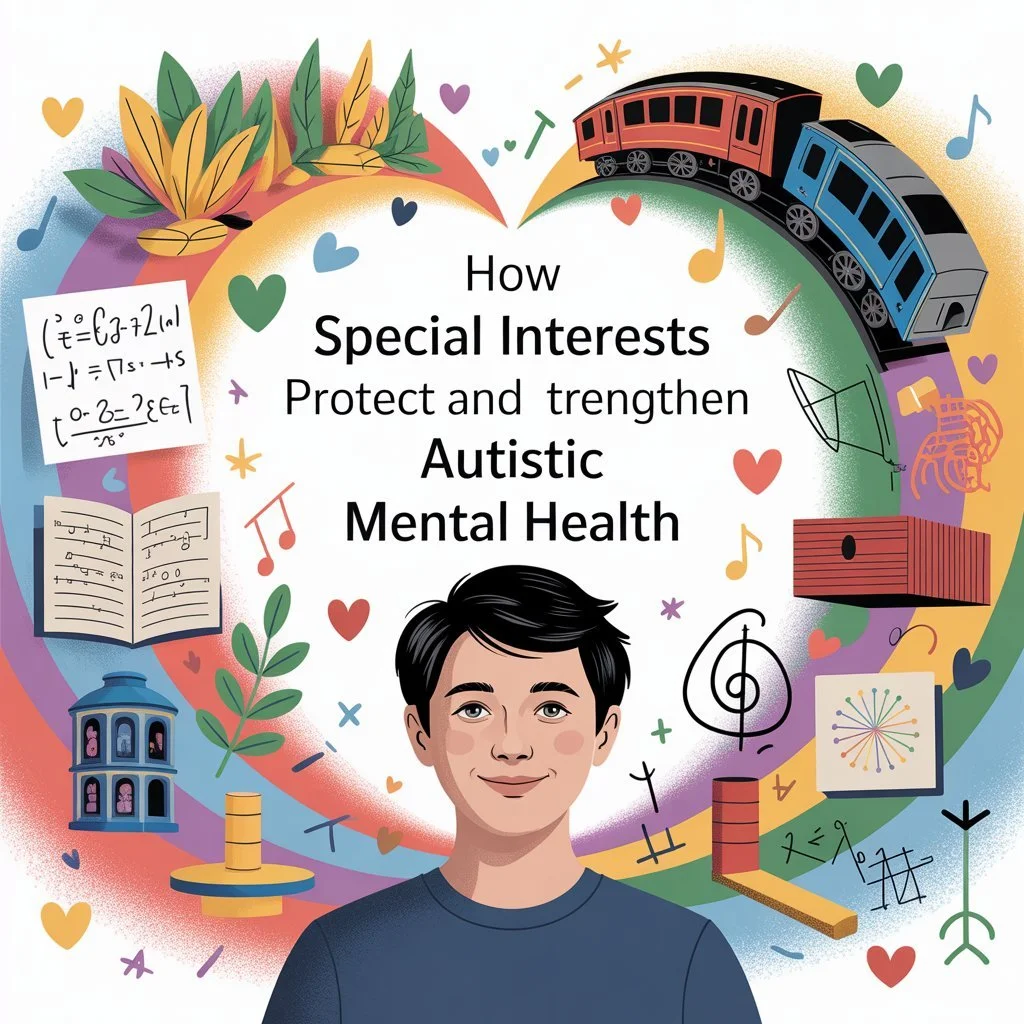
How Special Interests Protect and Strengthen Autistic Mental Health
For decades, the professional world treated special interests as symptoms to be managed. The research now tells a completely different story. Special interests are not quirks. They are not obsessions in the clinical sense.
They are not signs that something has gone wrong in an autistic brain. They are sophisticated, powerful mental health tools that many autistic people are using, often without knowing it, to regulate their nervous systems, manage anxiety, build identity, and connect with the world around them.
This post is about what the science says, what the lived experience says, and why the way we think about special interests in the autism community needs to change completely.
Table of Contents
What Special Interests Actually Are
Why the Brain Lights Up Around Special Interests
Special Interests as Anxiety Regulation
Special Interests and Identity
Special Interests as Social Bridges
What Happens When Special Interests Are Suppressed
How Parents Can Support Rather Than Limit
Special Interests in Adults: The Workplace and Beyond
When Special Interests Become Careers
What This Means for Therapy and Coaching
Final Thoughts
What Special Interests Actually Are
Special interests, sometimes called circumscribed interests or hyperfixations, are areas of intense, focused engagement that are characteristic of many autistic people. They are different from hobbies in both degree and kind.
A hobby is something you enjoy. A special interest is something you inhabit.
What makes a special interest distinct:
The depth of engagement goes far beyond what is typical for that topic or age group
The interest generates a level of joy, energy, and focus that is qualitatively different from general enjoyment
Knowledge accumulates rapidly and becomes remarkably detailed
The interest provides a reliable source of comfort and regulation
Time spent in the interest feels restorative rather than draining
Special interests can be narrow or broad. They can last a lifetime or shift over time. They can look like an encyclopedic knowledge of train schedules, a total immersion in the history of a specific country, an ability to identify every species of insect in a region, or a deep engagement with a fictional universe that most people around the autistic person barely know exists.
What they share is intensity. And that intensity, it turns out, is not a problem. It is information.
Why the Brain Lights Up Around Special Interests
The neuroscience behind special interests is genuinely fascinating and it explains a great deal about why they are so important to autistic wellbeing.
When an autistic person engages with their special interest, the brain's reward system activates in a significant way. Dopamine, the neurotransmitter associated with motivation, pleasure, and reward, is released in ways that feel qualitatively different from general activities.
This matters because research consistently shows that many autistic individuals have differences in how their dopamine systems function. The reward circuitry can be less responsive to the kinds of social and environmental rewards that neurotypical people find motivating. But around special interests, that system comes alive.
What this means practically:
Special interests are not just fun. They are neurologically regulatory
The pleasure autistic people experience in their special interest is not excessive. It is the brain accessing a reliable reward pathway
Restricting special interests does not just reduce enjoyment. It removes a primary neurological regulation tool
Special Interests as Anxiety Regulation
This is one of the most important and least understood functions of special interests, and it is the one that has the most direct implications for mental health.
Anxiety affects the majority of autistic people. Estimates suggest that between 40 and 60 percent of autistic individuals meet diagnostic criteria for an anxiety disorder, and that is before accounting for the chronic background anxiety that many autistic people live with as a result of navigating a world that was not designed for their nervous system.
Special interests serve as one of the most effective anxiety regulation tools many autistic people have access to, often without ever having been taught that this is what they are doing.
How special interests regulate anxiety:
Engaging with a known, predictable, deeply familiar subject reduces cognitive load and uncertainty
The focused attention required by a special interest interrupts anxious rumination
The dopamine release associated with the interest actively counteracts the stress response
The sense of mastery and expertise that comes from deep knowledge builds a stable internal anchor
The physical experience of being absorbed in something pleasant regulates the nervous system directly
Many autistic people describe returning to their special interest after a difficult day the way other people describe exercise or meditation. It is not escapism. It is recovery.
When this tool is removed, restricted, or repeatedly interrupted, the autistic person loses one of their primary coping mechanisms. The anxiety does not disappear. It simply has nowhere to go.
If you are an autistic adult working to understand your own regulation patterns, or a parent trying to support your child's emotional wellbeing, this is the conversation that Sonia's socio-emotional coaching is built around.
Book a session here and start understanding your own nervous system with the depth it deserves.
Special Interests and Identity
Beyond regulation, special interests play a critical role in autistic identity formation, and this is a dimension of their importance that is almost never discussed in clinical literature.
For many autistic people, particularly those who spent years masking, suppressing their natural responses, and performing neurotypicality for the benefit of the people around them, special interests are one of the few places where they are fully and unambiguously themselves.
The interest does not ask them to be different. It does not require social performance. It does not have unwritten rules that they have to decode. It is simply there, consistent and welcoming, responding to their engagement in predictable and satisfying ways.
What special interests provide for autistic identity:
A domain where competence and mastery are real and felt, not performed
A consistent sense of self that persists across different social environments
A source of genuine pride that does not depend on external validation
A private inner world that belongs entirely to the autistic person
This is particularly significant for autistic people who have been told, implicitly or explicitly, that the way they naturally engage with the world is wrong. The special interest is often the clearest evidence they have that there is nothing wrong with them. Their brain works. It works exceptionally well in this domain. That knowledge matters.
The connection between special interests and self-esteem is direct. When autistic people are supported in their interests, their sense of self stabilizes. When their interests are repeatedly dismissed or redirected, their self-concept takes a hit that accumulates over time into something much harder to address.
This is exactly the territory that Sonia's self-esteem coaching works in. The intersection of identity, autistic experience, and the narratives people carry about themselves.
Special Interests as Social Bridges
One of the most persistent myths about autism is that autistic people do not want social connection. The research and the lived experience of autistic people consistently contradict this.
Most autistic people want connection deeply. What they often struggle with is the neurotypical social format, the small talk, the implicit rules, the performance of interest in topics they find genuinely unstimulating, the requirement to meet in the middle of a conversational landscape that was designed by and for a different kind of brain.
Special interests change this equation entirely.
When autistic people connect around shared interests, the social anxiety that characterizes so many of their neurotypical interactions drops significantly. The rules of engagement are clearer. The subject matter is genuinely engaging. The depth of conversation that the interest allows is exactly the depth that autistic people prefer.
What shared special interests provide socially:
A natural entry point into conversation that does not require small talk
A context in which autistic social strengths, depth, knowledge, enthusiasm, directness, become assets rather than liabilities
Communities of people who share the same level of engagement and do not find it excessive
Friendships built on genuine mutual interest rather than social obligation
Online communities have been particularly significant here. The internet has allowed autistic people with highly specific interests to find each other across geographic boundaries and build real, meaningful relationships around shared passions that no one in their immediate environment might share.
This is not a lesser form of social connection. For many autistic people, it is the most genuine social connection they have ever experienced.
For more on what genuine connection and social navigation looks like for autistic individuals, the post on online therapy for autism and whether it is as effective as in person covers how autistic adults can access support in formats that actually work for their social and sensory needs.
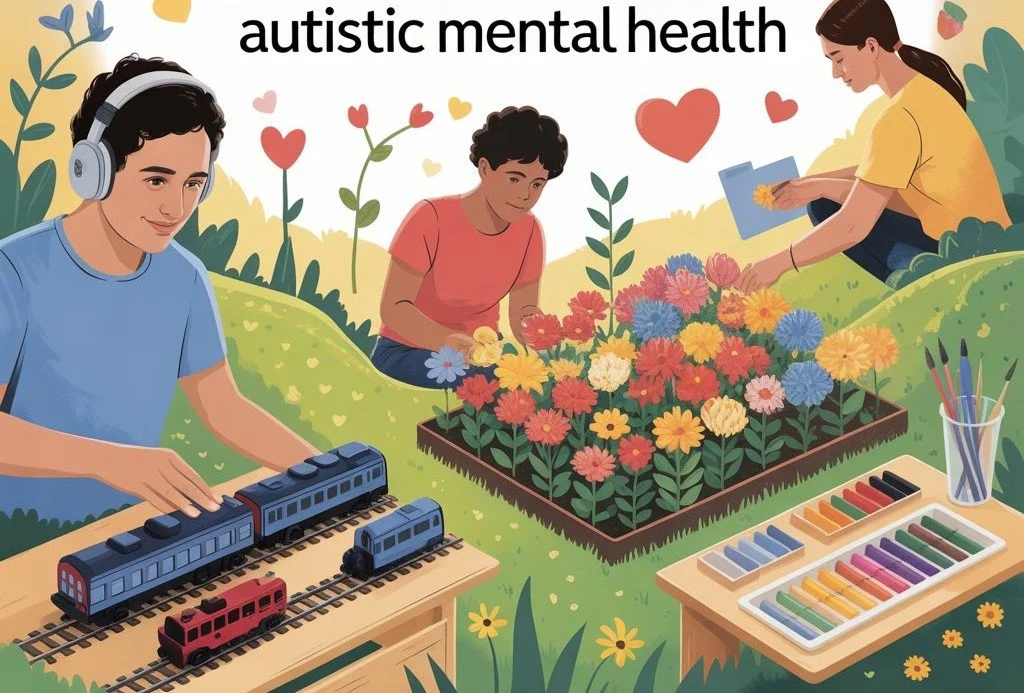
What Happens When Special Interests Are Suppressed
This section matters and it is worth being direct about what the evidence shows.
When special interests are consistently restricted, redirected, or dismissed, the consequences for autistic mental health are real and significant.
What the research and lived experience show:
Anxiety increases when a primary regulation tool is removed
Self-esteem erodes when something central to identity is treated as a problem
Masking intensifies as autistic people learn to hide their genuine engagement
Autistic burnout becomes more likely when regulatory resources are chronically depleted
Depression rates increase in autistic individuals who feel unable to express their authentic interests
The autistic adults who report the most significant mental health struggles are often those who spent the most years having their special interests treated as symptoms. The connection is not coincidental.
There is also a subtler cost that is harder to measure but deeply real. When an autistic person learns that their most genuine, most engaged, most alive self is unwelcome, they do not just suppress the interest. They suppress the version of themselves that exists within it. That is a profound and lasting loss.
Listen to the On the Spectrum podcast with Sonia here for more conversations about what it really means to thrive as an autistic or neurodivergent person
How Parents Can Support Rather Than Limit
For parents reading this, the practical question is: what does support actually look like?
Things that genuinely help:
Engaging with the interest yourself, even at a surface level. Asking questions, listening to what your child shares, showing genuine curiosity
Using the interest as a teaching bridge. Math through train schedules, reading through books about dinosaurs, social skills through role-playing favorite characters
Connecting your child with communities of people who share their interest, online and in person
Allowing the interest to take up real time in the day rather than treating it as a reward to be earned
Celebrating the expertise your child is building rather than managing the intensity
Things to move away from:
Treating the interest as a behavior to be limited to specific time slots
Using access to the interest as a behavior management tool to be taken away as punishment
Redirecting conversations about the interest repeatedly
Expressing impatience or disinterest when the topic comes up
Assuming the intensity means something is wrong
The special interest is not competing with your child's development. In most cases, it is actively supporting it.
For a deeper understanding of what acceptance looks like in everyday parenting, the post on autism awareness vs autism acceptance covers why the framework we use to see our children shapes every interaction we have with them.

Special Interests in Adults: The Workplace and Beyond
The conversation about special interests does not end at childhood. For autistic adults, special interests continue to serve the same regulatory and identity functions, and the workplace presents its own set of challenges and opportunities around them.
Challenges autistic adults face around special interests at work:
Masking the interest to appear professional or appropriately engaged in general conversation
Being in roles that have no connection to their area of deep interest, which can contribute to burnout
Navigating colleagues who find their depth of knowledge or enthusiasm excessive
Feeling unable to disclose their autism or their interests in ways that would help their colleagues understand them better
Opportunities that special interests create at work:
Deep expertise that can become a professional differentiator
The ability to sustain focus and motivation on complex problems within the interest domain
Pattern recognition and knowledge synthesis that exceeds what most generalists can offer
A clear signal about what kind of work environments and roles will be most sustainable
The autistic adults who thrive in the workplace are often those whose role has some meaningful connection to their special interest. That is not a coincidence. It is the nervous system doing what it does best when given the right conditions.
When Special Interests Become Careers
This is worth naming directly because it happens more often than most people expect.
The history of human innovation is full of people who went unreasonably deep into something that fascinated them and changed the world as a result. Many of those people, diagnosed or not, show the hallmarks of autistic cognition. The depth. The pattern recognition. The ability to sustain focus far beyond what is comfortable for most people. The refusal to stay at the surface of a topic when there is so much more to understand.
Special interests become careers when:
The interest aligns with a genuine market need
The depth of knowledge creates real expertise that others value
The autistic person finds an environment that accommodates their working style
They have support in translating their expertise into a professional context
None of this is guaranteed. But the starting point is recognizing that the interest is an asset, not a liability, and that building a professional life around something that naturally generates focus and passion is not indulgence. It is strategy.
For more on what autistic individuals can read to understand their strengths and build on them, browse the best selling autism books recommended on this site. Several are written by autistic authors about exactly this kind of strength-based navigation.
What This Means for Therapy and Coaching
The implications of everything above for therapeutic and coaching practice are significant.
Good autism-informed support does not treat special interests as behaviors to manage. It treats them as windows into how the autistic person is wired, what regulates them, what gives them joy, where their strengths live, and how they are most likely to thrive.
In practice this means:
Using the special interest as a starting point for understanding the person
Building therapeutic goals that work with the interest rather than around it
Recognizing the interest as a legitimate coping resource to be supported
Helping autistic individuals articulate the value of their interests to themselves and others
Supporting the development of identity that includes rather than minimizes the interest
This is the approach Sonia brings to both her socio-emotional coaching and self-esteem coaching work. The goal is never to make an autistic person more neurotypical. The goal is to help them understand their own wiring deeply enough to build a life that genuinely works for them.
Final Thoughts
Special interests are not the part of autism that needs to be managed. They are often the part that is doing the most important work.
They are regulating anxious nervous systems. They are building stable identities in people who have been told in a hundred subtle ways that their authentic self is too much. They are creating pathways to connection for people who struggle with the neurotypical social format. They are generating expertise that, in the right context, changes lives and careers and sometimes the world.
The question has never been how do we limit this. The question has always been how do we make room for it.
This April and every month beyond it, one of the most meaningful things the autism community can do is stop treating special interests as symptoms and start treating them as the sophisticated, essential, deeply human capacities that they actually are.
Because the autistic person who is deep in their special interest is not escaping from their life. They are living it most fully.
Listen to the On the Spectrum podcast with Sonia here for more conversations about what it really means to thrive as an autistic or neurodivergent person.