
What Is Profound Autism?
If your child has recently been diagnosed with autism, or if you are somewhere in the middle of trying to understand what their diagnosis actually means for their daily life and future, you may have come across the term profound autism and wondered what it means, how it differs from other autism diagnoses, and whether it applies to your child.
This post answers those questions directly, in plain language, without the clinical jargon that makes most medical literature so difficult to read when you are already carrying a lot.
Profound autism is a relatively new term in the diagnostic landscape. It is also one of the most debated. Understanding what it means, why it was introduced, and what the research actually says about it will help you have better conversations with the professionals supporting your child and make more informed decisions about the care and support you pursue.
Table of Contents
What Is Profound Autism
How Profound Autism Differs From Other Autism Diagnoses
Why the Term Was Introduced
What the Research Says
The Debate Around Profound Autism as a Separate Category
Signs and Characteristics Parents Should Know
How Profound Autism Is Diagnosed
What Support Looks Like for Profound Autism
What Profound Autism Does Not Mean
For Parents: What to Focus On
Final Thoughts
What Is Profound Autism
Profound autism is a term used to describe autistic individuals who have both a significant intellectual disability and little to no spoken language. It sits at the most complex end of the autism spectrum in terms of support needs and daily functioning.
The term was formally proposed in 2021 by a group of researchers including Dr. Catherine Lord, one of the most respected autism researchers in the world, and has since been the subject of significant scientific and community discussion.
In practical terms, profound autism describes autistic individuals who:
Have an IQ below 50, which places them in the range of moderate to severe intellectual disability
Have minimal or no functional spoken language, meaning they are unable to use speech to reliably communicate their needs
Require substantial support with most or all activities of daily living
Often have significant co-occurring conditions including epilepsy, gastrointestinal issues, and sleep disorders
It is important to understand from the outset that profound autism is not currently an official diagnosis in the DSM-5, the diagnostic manual used by clinicians in the United States. It is a descriptive term being used in research and advocacy contexts to draw attention to a population that many researchers and parents feel has been underserved by the broader autism conversation.
How Profound Autism Differs From Other Autism Diagnoses
Since 2013, all autism diagnoses in the United States have been given under the single umbrella of Autism Spectrum Disorder, or ASD, with support levels ranging from Level 1 to Level 3. Profound autism is not a separate diagnosis within that system. It is a way of describing a specific subset of people diagnosed at Level 3, the highest support needs level.
The key distinctions between profound autism and other autism presentations are:
Intellectual disability
Not all autistic people have intellectual disabilities. Research suggests that approximately 30 to 40 percent of autistic individuals have an intellectual disability. Profound autism specifically involves significant intellectual disability, not just learning differences or processing differences.
Spoken language
Many autistic people are fully verbal. Some are minimally verbal, meaning they have some spoken words but not enough for reliable functional communication. Profound autism specifically involves little to no functional spoken language, though this does not mean the person cannot communicate through other means.
Support needs While all autistic people have varying support needs, profound autism involves support needs that are pervasive and lifelong across nearly all areas of daily functioning, including self-care, safety, communication, and community participation.
Co-occurring conditions
People with profound autism have significantly higher rates of epilepsy, gastrointestinal disorders, sleep disorders, and other medical conditions that require ongoing medical management alongside autism-specific support.
Why the Term Was Introduced
The proposal to use the term profound autism came from a specific concern that was growing in the research and parent advocacy communities: that the autism umbrella had become so broad that the most significantly affected individuals were becoming invisible within it.
The argument, made by researchers including Dr. Lord and colleagues in a 2022 paper in The Lancet Neurology, was that policy, research funding, and public conversation about autism had become dominated by the experiences of autistic people with average or above average intelligence and functional communication skills. While that population absolutely deserves support and representation, the researchers argued that individuals with profound autism have fundamentally different support needs, different research questions that apply to them, and different policy implications that were not being adequately addressed.
In short: the term was introduced to make a population visible that had been getting lost in the broader conversation.
Whether that is the right solution to that problem is where the debate begins.
What the Research Says
The peer-reviewed research on profound autism is growing and worth understanding before forming an opinion on the debate.
A 2024 study published in PubMed examined the characteristics and prevalence of profound autism within the broader autism population. The research found that individuals meeting the criteria for profound autism represent a meaningful and distinct subgroup with specific support needs that differ significantly from the broader ASD population. The study highlighted that this group faces some of the highest rates of caregiver burden, medical complexity, and unmet service needs of any population within the autism spectrum. You can read the full study here.
Medical News Today has also covered the profound autism debate in depth, noting that proponents argue the term could lead to better targeted research, more appropriate funding allocation, and clinical guidelines that actually reflect the reality of caring for profoundly autistic individuals.Read their full coverage here.
The research broadly supports the idea that there is a meaningfully distinct population within the autism spectrum whose needs are not being fully met by current systems. Where researchers and advocates disagree is on whether a new label is the right way to address that gap.
The Debate Around Profound Autism as a Separate Category
This is the part of the conversation that gets heated, and it is worth understanding both sides clearly because both have legitimate points.
The case for using the term profound autism:
It draws attention to a population that has been underrepresented in autism research, which has historically over-indexed on higher functioning presentations
It could lead to more targeted funding for the specific support needs of this population
It helps families and clinicians communicate more precisely about support needs
It acknowledges that the experiences of profoundly autistic individuals and their families are genuinely different from other autism presentations in ways that matter for policy and practice
It may help develop clinical guidelines that are actually relevant to this population rather than applying guidelines developed for a very different group
The case against:
Many autistic self-advocates and disability rights organizations argue that creating a separate category risks stigmatizing the most vulnerable autistic people further
There are concerns that it could lead to a two-tier system where profoundly autistic individuals are seen as less capable of growth, communication, and participation than they actually are
Some advocates argue it echoes historical patterns of separating and institutionalizing people with significant disabilities under the guise of better serving them
The boundaries of the category are not universally agreed upon and diagnostic criteria could be applied inconsistently
Some researchers argue that better funding and support for high-need individuals can be achieved without creating a new diagnostic category
Both sides of this debate are motivated by genuine concern for the wellbeing of autistic people. Understanding the tension helps parents engage more critically with the information they encounter about their child's diagnosis and care.
Signs and Characteristics Parents Should Know
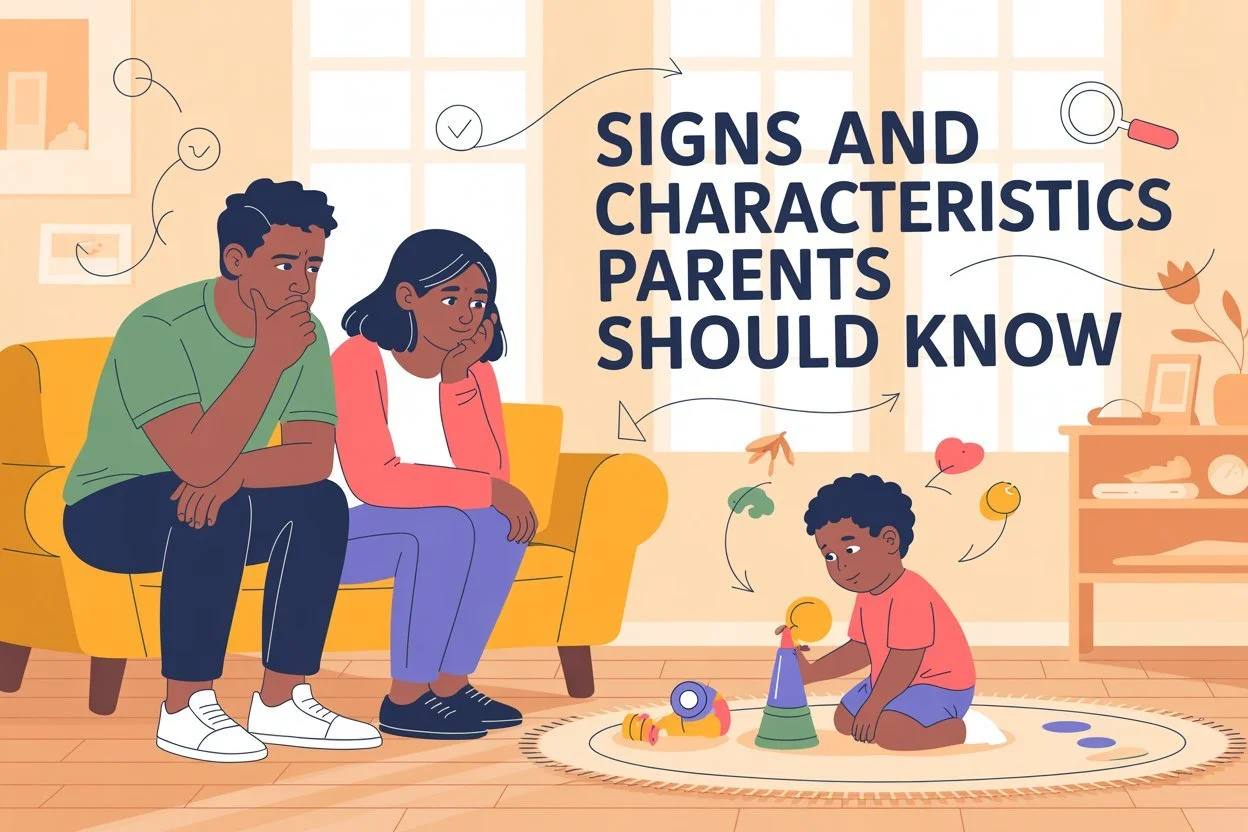
For parents trying to understand whether the term profound autism applies to their child's situation, here are the characteristics that researchers and clinicians typically associate with it:
Communication:
Little to no functional spoken language
May use some words or sounds but not in a way that reliably communicates needs
May communicate through behavior, gestures, facial expression, or alternative communication methods
Often benefits significantly from Augmentative and Alternative Communication, known as AAC
Cognitive:
Significant intellectual disability, typically an IQ below 50
Difficulty with abstract thinking and complex problem solving
Learning happens but often at a different pace and through different modalities than neurotypical development
Daily living:
Requires support with most self-care tasks including dressing, hygiene, and eating
May have difficulty understanding safety risks
Needs structured, supported environments to function safely
Behavioral:
May engage in repetitive behaviors that are intense and difficult to redirect
Sensory sensitivities are often significant and affect daily functioning
Emotional regulation challenges may be significant and expressed through behavior
Medical:
Higher rates of epilepsy than the general autism population
Gastrointestinal issues are common
Sleep disorders affect a significant proportion of this population
Regular medical monitoring is an important part of overall care
How Profound Autism Is Diagnosed
Profound autism is not diagnosed separately from ASD in the current US diagnostic system. A child will receive a diagnosis of Autism Spectrum Disorder, Level 3, with additional notations about intellectual disability and language level.
The diagnostic process for a child who may have profound autism typically involves:
A comprehensive developmental evaluation by a developmental pediatrician or child psychiatrist
Cognitive and intellectual assessment by a psychologist
Speech and language evaluation to assess current communication level and needs
Occupational therapy assessment for sensory and daily living skills
Medical evaluation for co-occurring conditions including epilepsy screening
Input from parents, caregivers, and teachers who know the child well
The process is thorough and involves multiple professionals. It takes time. And it often begins long before parents have language for what they are observing, which is why knowing what to look for and how to advocate effectively in the early stages matters so much.
For parents who are in the early stages of this journey and need a clear roadmap for what to do after a diagnosis, the newly diagnosed autism parent guide covers the practical first steps in detail.
What Support Looks Like for Profound Autism
The support needs for profoundly autistic individuals are significant, lifelong, and span multiple domains. Here is an overview of what comprehensive support typically involves:
Communication support: AAC devices and systems are often transformative for nonverbal and minimally verbal autistic individuals. These range from simple picture exchange systems to high-tech speech generating devices. Speech and language therapy focused on AAC implementation is one of the most impactful interventions available.
Educational support: Children with profound autism are entitled to a Free Appropriate Public Education under IDEA, with an IEP that addresses their specific communication, cognitive, behavioral, and daily living needs. Specialized classrooms, one-to-one support, and highly structured learning environments are often necessary.
Behavioral support: Positive behavior support approaches that focus on understanding the function of behavior and meeting underlying needs are more effective and more ethical than punitive approaches. A good behavioral support plan starts with the question: what is this behavior communicating?
Medical management: Regular monitoring for epilepsy, gastrointestinal health, sleep, and other common co-occurring conditions is an important part of overall care. Building a medical team that understands the intersection of autism and these conditions matters.
Family support: The caregiving demands for families of profoundly autistic individuals are significant. Respite care, family therapy, caregiver support groups, and access to coaching and counseling are not luxuries. They are necessities for sustainable family functioning.
What Profound Autism Does Not Mean
This section matters as much as everything above, because some of the most harmful assumptions about profoundly autistic individuals come from what people believe the diagnosis implies.
Profound autism does not mean:
That the person has no inner life, preferences, or experiences worth attending to
That communication is impossible, only that spoken language may not be the right channel
That the person cannot learn, develop, or make meaningful progress with the right support
That relationships, connection, and joy are not available to this person
That their life has less value than the life of an autistic person with more functional independence
That families should lower their expectations for their child's quality of life
Research on AAC and alternative communication has shown repeatedly that many nonverbal autistic individuals have far more to communicate than their verbal output suggests. When the right communication tools are found and supported, the results can be profound in the truest sense of the word.
The person is always there. What changes with the right support is how clearly they can be seen and heard.
For Parents: What to Focus On
If you are parenting a child who has been diagnosed at the more complex end of the autism spectrum, or if you are wondering whether profound autism is a useful framework for understanding your child's needs, here is what matters most:
Focus on communication above everything else
Whatever form it takes, supporting your child's ability to communicate their needs, preferences, and experiences is the highest leverage intervention available. Pursue AAC evaluation early and persistently.
Build your team deliberately
You need professionals who have specific experience with significantly autistic individuals, not just general autism experience. The difference in quality of support is substantial.
Know your legal rights
Your child is entitled to a free and appropriate public education with the supports they need. Budget constraints are not a legal reason to deny services. The post onautism and the legal system rights and protections covers what you are entitled to and how to advocate for it.
Take care of yourself
Caring for a profoundly autistic child is one of the most demanding things a human being can do. Your wellbeing is not separate from your child's wellbeing. It is the foundation of it.
Connect with other families
The families who are thriving are almost never doing it alone. Find your community, whether online or in person, of families who understand the specific reality you are living.
Final Thoughts
Profound autism is a term that is generating significant debate in the autism research and advocacy community. That debate is worth following because it has real implications for how support, funding, and policy are organized around the most significantly affected autistic individuals and their families.
What is not debatable is this: the families and individuals at the most complex end of the autism spectrum deserve fully resourced, genuinely informed, deeply compassionate support. Whether that support is organized under the label of profound autism or under the existing Level 3 framework matters less than whether it actually arrives, in the right form, at the right time, for the right child.
Your child's diagnosis is a starting point. It is not a ceiling. And the support you build around them, the team, the tools, the community, and the belief that they deserve every resource available to help them thrive, is the thing that actually shapes what their life looks like.
That work is worth everything. And you do not have to do it alone.
References:
Autism Science Foundation. ASF Launches First-of-Its-Kind 'Profound Autism' Funding Mechanism [Internet]. 2022 Jul 18. Available from: https://autismsciencefoundation.org/press_releases/asf-launches-profound-autism-funding-mechanism/
Autism Science Foundation. CDC Reports Profound Autism Statistics For The First Time [Internet]. 2023 Apr 19. Available from: https://autismsciencefoundation.org/press_releases/cdc-profound-autism-statistics/
Child Mind Institute. What Is Profound Autism? [Internet]. Available from: https://childmind.org/article/what-is-profound-autism/
Waizbard-Bartov E, Fein D, Lord C, Amaral DG. Autism Severity and Its Relationship to Disability. Autism Res. 2023 Apr;16(4):685-696. Available from: https://pmc.ncbi.nlm.nih.gov/articles/PMC10500663/
Wachtel LE, Escher J, Halladay A, Lutz A, Satriale GM, Westover A, Lopez-Arvizu C. Profound Autism: An Imperative Diagnosis. Pediatr Clin North Am. 2024 Apr;71(2):301-313. Available from: https://pubmed.ncbi.nlm.nih.gov/38423722/
Kripke-Ludwig R. "Profound Autism" Label Does Not Predict Strengths or Help Plan Supports. Public Health Rep. 2023 Nov-Dec;138(6):849-850. Available from: https://pmc.ncbi.nlm.nih.gov/articles/PMC10576471/
