
If Autism Runs in Your Family: What You Need to Know
If autism runs in your family, you have probably already started asking yourself questions that feel hard to say out loud. Will my next child be autistic too? Does this mean I am autistic and never knew it? What does it mean for my nieces, my nephews, my grandchildren someday? If autism runs in your family, those questions are not anxious overthinking. They are reasonable questions with real, research-backed answers.
This post is for anyone who has looked around their family tree and started noticing a pattern. A sibling who was diagnosed. A cousin who was always a bit different. A parent who, looking back, almost certainly was on the spectrum and never knew it. If autism runs in your family, understanding what that actually means, genetically and practically, can replace anxious guessing with real clarity.
Table of Contents
If Autism Runs in Your Family: What You Need to Know
What the Genetics Actually Say
What Are the Actual Odds
Recognizing Autism Across Generations
If Autism Runs in Your Family and You Are Planning a Family
If Autism Runs in Your Family and You Suspect It Is You
What to Watch for in Your Children Early
Talking to Family Members About a Possible Pattern
What a Family History of Autism Does Not Mean
FAQs
Final Thoughts
If Autism Runs in Your Family: What You Need to Know
If autism runs in your family, the first thing worth knowing is that you are far from alone in noticing this. Autism is one of the most heritable neurodevelopmental conditions known to science, and family clustering of autism traits is a well-documented and well-researched phenomenon, not a coincidence or a pattern you are imagining.
If autism runs in your family, it usually shows up in one of a few recognizable ways. Sometimes it is a sibling pattern, where one child is diagnosed and a younger or older sibling is later identified as autistic too. Sometimes it is a generational pattern, where a parent recognizes their own traits clearly for the first time only after their child's diagnosis. And sometimes it is a wider pattern across cousins, aunts, uncles, and grandparents that becomes visible only once someone starts actively looking for it.
Whatever shape it takes in your specific family, if autism runs in your family it means there is a genuine genetic and neurological thread running through your relatives, and understanding that thread helps you make better decisions, ask better questions, and worry less about the unknown.
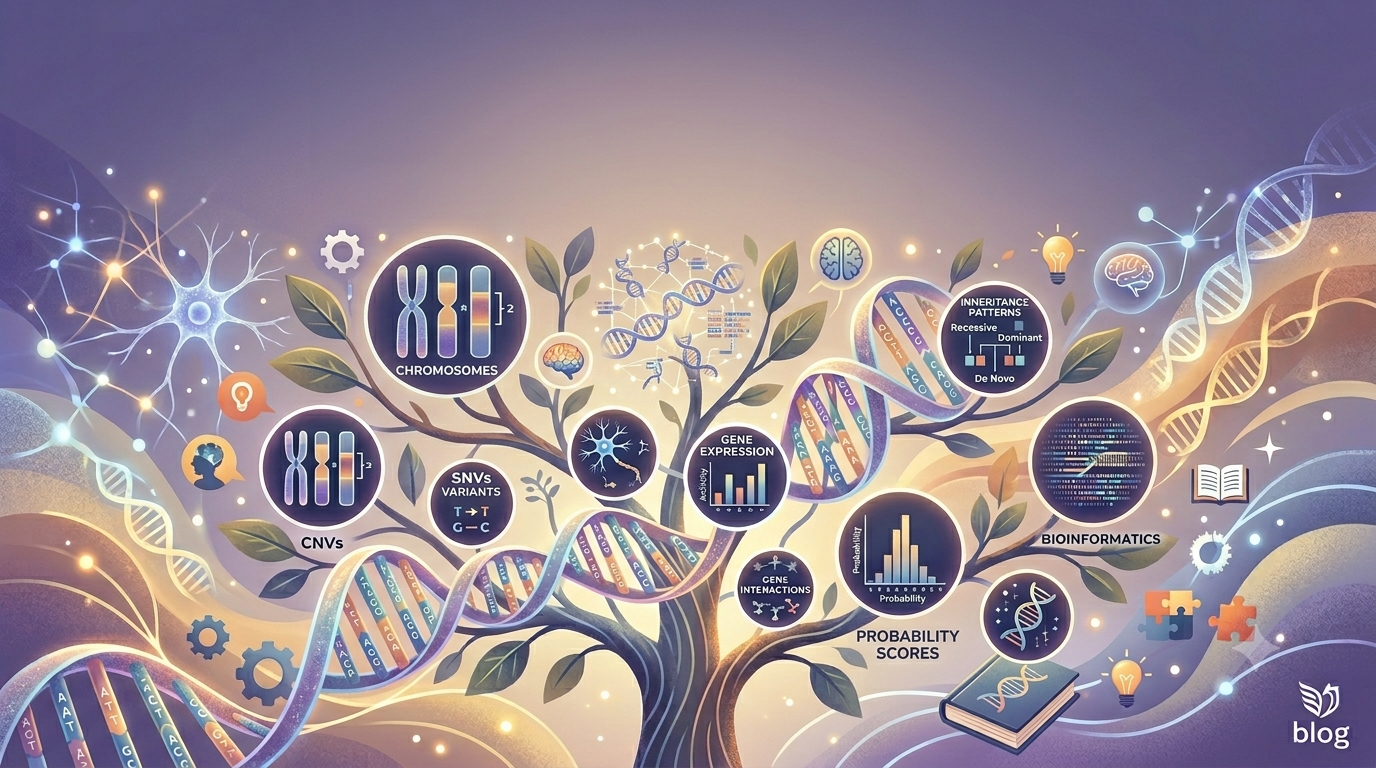
What the Genetics Actually Say
What the Genetics Actually Say
The scientific research on autism heritability is some of the most robust in all of neurodevelopmental research, and it consistently points to one clear conclusion: genetics play the dominant role in autism risk.
Twin studies, which are considered the gold standard for understanding the genetic contribution to any condition, have found that when one identical twin is autistic, the other twin has a significantly elevated chance of also being autistic, far higher than the rate seen in non-identical twins or in the general population. Current estimates suggest that genetic factors account for approximately 80 percent of autism risk.
What makes autism genetics complex is that there is no single autism gene. Instead, researchers have identified hundreds of genetic variants that each contribute a small amount of risk. Some of these variants are inherited from parents. Others arise spontaneously as new mutations in the affected individual. Most cases of autism likely involve a combination of many inherited common variants interacting with each other, rather than one single inherited mutation causing the condition outright.
This is part of why if autism runs in your family, the pattern is not always neat or predictable. You might have one autistic child and one who shows no autistic traits at all, even though both share the same parents and largely the same genetic background. The combination of variants each child inherits is different enough to produce very different outcomes.
What Are the Actual Odds
If autism runs in your family, you are likely wondering about actual numbers rather than general statements about heritability. Here is what the research shows.
If you already have one autistic child: Research suggests that the chance of a younger sibling also being autistic is significantly elevated compared to the general population, with studies estimating recurrence rates between 10 and 20 percent depending on the specific study and the sex of the children involved. Families with two or more autistic children have an even higher chance of additional children being autistic.
If you are autistic yourself: Children of autistic parents have a notably higher chance of being autistic themselves compared to children of non-autistic parents, reflecting the strong heritable component of the condition.
If a sibling, cousin, or more distant relative is autistic: The closer the genetic relationship, the higher the elevated risk. A sibling relationship carries more weight than a cousin relationship, which carries more weight than a more distant relative.
Sex differences matter: Research consistently shows that male children have a higher likelihood of being diagnosed with autism than female children, even within the same family, which is part of why if autism runs in your family the pattern can look different depending on which children are boys and which are girls.
These numbers are population averages and not predictions for any individual family. They are useful for understanding general risk levels, not for telling you with certainty what will happen with your own children.
For families who are in the process of getting a formal answer for a specific child, understanding the testing and diagnostic process is the next practical step. The post on how to test for autism walks through exactly how that process works from first screening to full diagnosis.
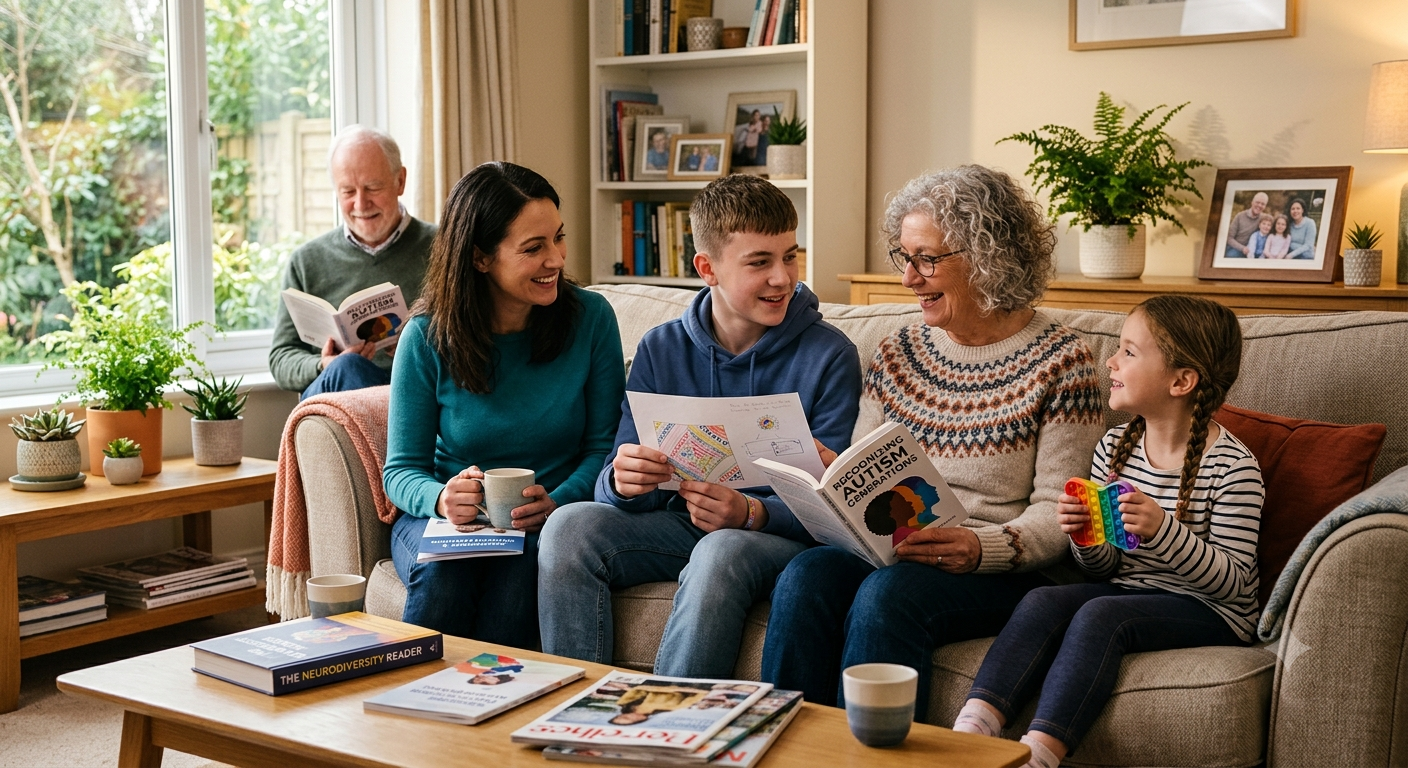
How to recognize Autism across generations
Recognizing Autism Across Generations
If autism runs in your family, one of the most common experiences is realizing that the pattern did not start with your child. It started further back, with relatives who were never diagnosed because the diagnostic criteria, the cultural awareness, and the available language for autism simply did not exist in the way it does now.
Older generations often described autistic relatives using language that had nothing to do with autism at all. He was just quirky. She was always in her own world. He never talked much but he was brilliant with numbers. She was painfully shy but knew everything about birds. These descriptions, looked at through a modern lens, often describe autistic traits that went entirely unrecognized and unsupported throughout that person's life.
If autism runs in your family across multiple generations, it is worth having open conversations with older relatives, where possible and appropriate, about what their own childhood and adulthood actually felt like. Many adults in their fifties, sixties, and seventies are recognizing themselves as autistic for the first time only after a grandchild's diagnosis prompts them to look honestly at their own life.
This generational recognition is not about assigning a label retroactively for its own sake. It is about understanding the fuller picture of what runs in your family and using that understanding to support every generation more effectively, including the ones who are still here to benefit from it.
If you’re ready to stop figuring this out alone? Sonia works with individuals and families navigating neurodivergent journeys through personalized one-on-one coaching sessions. Spots are limited. Book your session here.
If Autism Runs in Your Family and You Are Planning a Family
If autism runs in your family and you are currently planning to have children or to have more children, the genetic information above is likely sitting somewhere in the back of your mind as you make that decision.
It is worth being honest about a few things here. First, there is currently no reliable prenatal genetic test that can predict whether a child will be autistic. Autism involves too many genetic variants interacting in too many combinations for any single test to provide a clear answer. Anyone offering you a definitive predictive test for autism risk in an unborn child is overstating what the science can currently do.
Second, the elevated statistical risk that comes with having autism in your family is real, but it describes a probability, not a certainty. The vast majority of children born into families with a strong autism history are not autistic. And many children who are autistic go on to live full, connected, meaningful lives with the right support.
Third, if autism runs in your family, the most useful thing you can do while planning a family is not to try to predict or prevent an autism diagnosis. It is to prepare yourself with knowledge, build relationships with pediatricians and specialists who take developmental concerns seriously, and commit to early observation and early action if signs do appear. The post on early autism detection covers exactly why early identification and early support make such a significant difference to outcomes, and it is worth reading well before you need it.
What to Watch for in Your Children Early
If autism runs in your family, you are in an unusually strong position compared to most parents, because you already know what to watch for rather than discovering it through trial and error.
Key early signs worth monitoring closely given your family history include:
Limited response to their name being called by 12 months
Limited eye contact during everyday interaction and play
Delayed or absent babbling, words, or phrases at expected milestones
Loss of previously acquired language or social skills at any age
Strong preference for routine with significant distress at small changes
Repetitive movements such as hand flapping, rocking, or spinning
Intense, narrow interests that go well beyond typical childhood enthusiasm
Unusual responses to sounds, textures, lights, or other sensory input
Because if autism runs in your family you are already primed to notice these signs earlier than a parent with no family history might, use that advantage. Raise concerns with your pediatrician early and confidently, and do not let a single negative screening result fully settle your concerns if your gut is still telling you something is there.
Reading widely during this period also makes a real difference. Dropped in a Maze by Sonia Chand is one of the most honest accounts available of navigating the autism journey from the inside, written specifically for families who are finding their way through a system that does not always make it easy. If autism runs in your family and you are trying to build your understanding before you need it, or in the middle of needing it right now, this is the book to start with.
Get your copy of Dropped in a Maze
Talking to Family Members About a Possible Pattern
If autism runs in your family, conversations about it within the family are not always easy, particularly with older relatives who may have grown up in a generation where autism was poorly understood, heavily stigmatized, or simply never discussed.
A few things tend to help these conversations go better:
Lead with curiosity rather than diagnosis. Asking what was your childhood actually like opens doors that telling someone I think you were autistic tends to close.
Frame the conversation around understanding rather than labeling, particularly with relatives who may feel defensive about a retrospective diagnosis.
Share what you have learned about the genetics in a way that reduces shame rather than assigning blame. Nobody caused this. It is simply how genetics work.
Be patient. Some relatives will find this conversation freeing. Others will need time, or may never fully embrace it, and that is their right.
If autism runs in your family, these conversations, however they go, tend to build a richer and more compassionate understanding of your whole family across generations, not just the most recently diagnosed member.
What a Family History of Autism Does Not Mean
If autism runs in your family, it is worth being equally clear about what this does not mean, because misunderstanding the genetics can create unnecessary fear.
A family history of autism does not mean:
Every child you have will be autistic
Autism was caused by anything you did during pregnancy or in early parenting
Your family is somehow flawed or carries something to be ashamed of
Your child's life will be defined by limitation rather than possibility
You are guaranteed to recognize autism easily just because you have seen it before in your family
If autism runs in your family, what it actually means is that you have more genetic information than most families do, and that information is a tool for preparedness, not a sentence or a guarantee.
FAQs
If autism runs in your family, what are the chances your next child will be autistic?
Research estimates the recurrence rate for younger siblings at around 10 to 20 percent, significantly higher than the general population rate.
Can autism skip a generation?
Yes. Because autism involves many genetic variants rather than a single gene, it can appear to skip generations while still being present in the family's genetic background.
Can two non-autistic parents have an autistic child?
Yes. Autism can arise from spontaneous genetic mutations or from combinations of inherited variants that were not apparent in either parent individually.
Does having one autistic child mean future children will definitely be autistic?
No. The risk is elevated but not guaranteed. Most siblings of autistic children are not autistic themselves.
Final Thoughts
If autism runs in your family, you are looking at a genuine genetic pattern backed by decades of solid research, not a coincidence or an overreaction. Understanding what that pattern actually means, the real odds, the generational threads, and what to watch for, puts you in a stronger position than most families ever get to start from.
If autism runs in your family, let that knowledge work for you. Use it to advocate early. Use it to understand relatives, past and present, with more compassion. Use it to prepare rather than to fear. The thread running through your family is not something to be ashamed of. It is simply part of who your family is, and understanding it fully is the first step toward supporting every generation it touches.
References:
Wikipedia contributors. Heritability of autism [Internet]. Wikipedia, The Free Encyclopedia. Available from: https://en.wikipedia.org/wiki/Heritability_of_autism
Eunice Kennedy Shriver National Institute of Child Health and Human Development (NICHD). Science Update: Risk for autism spectrum disorder mainly influenced by genetics, suggests NICHD-funded study [Internet]. Available from: https://www.nichd.nih.gov/newsroom/news/080119-autism
Ozonoff S, Young GS, Bradshaw J, Charman T, Chawarska K, Iverson JM, Klaiman C, Landa RJ, McDonald N, Messinger D, Schmidt RJ, Wilkinson CL, Zwaigenbaum L. Familial Recurrence of Autism: Updates From the Baby
Siblings Research Consortium. Pediatrics. 2024;154(2):e2023065297. Available from: https://pmc.ncbi.nlm.nih.gov/articles/PMC11291960/
Talukdar M, Page DC. The inactive X chromosome as a female protector in autism and beyond. Res Sq [Preprint]. 2025 Sep 8:rs.3.rs-7539254. Available from: https://pmc.ncbi.nlm.nih.gov/articles/PMC12440103/
