
Navigating Autism in the Classroom
Table of Contents
Intro
The Awakening: When School Becomes a Maze
The Problem Child Label: A Self-Fulfilling Prophecy
The Invisible Rules Everyone Else Knows
When Crushes Become Intense Interests
The Candid Truth From an Unexpected Friend
The Critical Takeaways
Conclusion
Navigating Autism in the Classroom
The moment a teacher dumps your desk contents onto the floor in front of your entire class, forcing you to clean it up on your knees while classmates watch—that's when you realize something is deeply wrong. Not with you, but with a system that punishes what it doesn't understand.
This isn't a hypothetical scenario. It happened to me in second grade, and it's just one story from my journey navigating autism in a world that wasn't built for neurodivergent minds. The education system often fails children on the autism spectrum, not because these children are incapable, but because adults mistake confusion for defiance, sensory overwhelm for drama, and the need for clear systems as an inability to follow basic instructions. What I needed wasn't punishment—it was understanding, accommodation, and someone willing to teach me the "invisible rules" that everyone else seemed to know instinctively.
This is my story of navigating those early school years, the painful lessons learned, and why early intervention and proper support can mean the difference between a child who mentions suicide at age ten and one who thrives.
The Awakening: When School Becomes a Maze
First grade at St. Margaret's Academy hit me like a tidal wave. While other children seemed to intuitively understand the unwritten rules of classroom behavior, I was drowning in confusion. The way information was presented, the sensory assault of fire alarms, the social choreography everyone else seemed born knowing, it all felt like navigating a maze without a map.
I remember being shocked when classmates helped me pick up crayons I'd dropped. This simple act of kindness wasn't something I'd anticipated or understood as normal social behavior. For neurotypical students, these courtesies come naturally. For someone on the autism spectrum, they need to be learned, observed, and consciously practiced.
The challenge wasn't laziness or defiance, it was that my brain processed information differently. I needed systems, step-by-step processes, clearly mapped-out instructions. When teachers showed us exactly how to organize—"homework goes in this folder, reading materials in that one"—I could follow. Without that structure, I floundered.
The Power of Early Intervention
Looking back, what I desperately needed was early intervention that understood how I learned, not just what I was supposed to learn. Instead, I received punishment for forgetting to bring a baby picture for show-and-tell—excluded from sitting with my classmates during the activity.
Key insight: What could have helped? A simple written reminder placed in a folder, with a system to check my backpack each night. Instead of punishment, I needed accommodation and understanding.
The danger of ignorance runs deep in our education system. We're too quick to punish students we don't understand, assuming malice or laziness when the reality is a child who desperately needs help but doesn't have the skills to ask for it. After all, what can you expect from a six-year-old who doesn't understand her own mind yet?
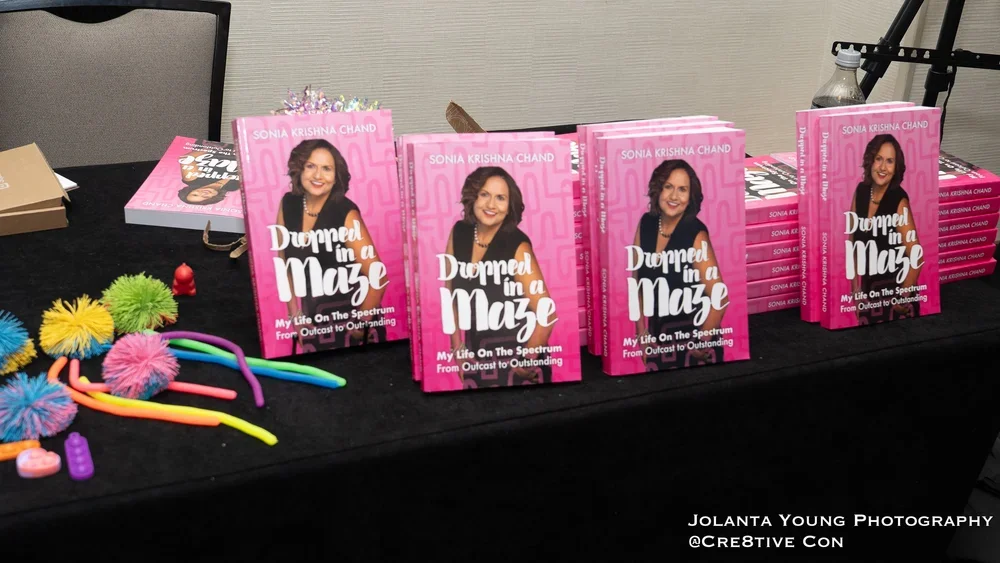
This is just the beginning of understanding how autism shows up in schools. For the complete story of navigating diagnosis, social challenges, and finding your voice, explore the full journey in my book.
The Problem Child Label: A Self-Fulfilling Prophecy
By second grade, my reputation was solidified. Mrs. Schmidt, my teacher, held students to rigid standards with zero tolerance for anything outside her narrow expectations. When she asked us to pull out a worksheet and discovered my disorganized desk, she didn't teach me organization—she humiliated me.
She dumped my entire desk onto the floor. In front of everyone. Three times in one day.
I knelt on the classroom floor, picking up papers and supplies while fighting back tears, my classmates' stunned faces burning into my memory. To escape the shame, I retreated into daydreams where my father reassured me: "The same things happened to me. Teachers were rude to me too, and I was bullied. But I became a success story, and I know you can too."
When Students Mirror Teachers
The power teachers hold over classroom culture cannot be overstated. When Mrs. Schmidt constantly criticized and humiliated me, it gave other students permission—even encouragement—to do the same.
A group of girls cornered me in the bathroom, lecturing me about being a "bad student" who couldn't keep up. They told me I would be a failure. One girl, attempting kindness, said "Sorry to break your heart, Sonia" after the verbal assault.
Here's the critical lesson: If a teacher consistently treats a student as "no good," how can we expect other students to show that child respect? Teachers set the behavioral example for their entire classroom. Their influence ripples through every social interaction.
The impact of teacher attitudes on student wellbeing goes even deeper than you might imagine. Discover the long-term effects and how to advocate for neurodivergent children in the complete book.
The Invisible Rules Everyone Else Knows
Remember that rule Mrs. Schmidt announced? If you invite one person to your birthday party, you must invite the whole class. Simple, clear, everyone would follow it—right?
Wrong.
People on the autism spectrum tend to take rules literally and expect others to do the same. When Julia distributed birthday party invitations, I waited for mine. It never came. When I asked why, she explained her mother made her "cut one person," and that person was me.
I went around the room, asking every single student if they'd been invited. Every single one said yes—except me.
The excuse "I had to cut one person" was code I'd hear repeatedly throughout my childhood. It really meant "I didn't want to invite you," dressed up in nicer language. But at that age, I took words at face value, unable to read between the lines.
Standing Out for All the Wrong Reasons
Being different on the autism spectrum isn't just about learning differences—it's about missing the unwritten social codes that govern childhood interactions.
Ways I unknowingly stood out:
Stimming behaviors: Rocking and leg jitters that I didn't realize I was doing, but peers immediately noticed
Fashion blindness: Wearing the same clothes repeatedly, not understanding the importance of variety in a community that valued "keeping up with the Joneses"
Hygiene gaps: Not knowing what deodorant was until a classmate had to explain why people said I smelled bad
Emotional regulation: Crying far more than peers found acceptable, unable to "shake things off"
Social timing: Not understanding when to exit conversations or when playful teasing crossed into bullying
These weren't choices. They were gaps in my social education—skills that neurotypical children absorb naturally but neurodivergent children must be explicitly taught.
The Desperation to Belong
My solution to social rejection? Throw bigger birthday parties. Surely if I invited people to my house, showed them I had a nice home and fun activities, they'd finally accept me.
The reality was heartbreaking.
Guests treated our home like an amusement park. Girls broke our treadmill by running on it like a toy. Kids made prank calls on our phone until someone threatened to call the police. They behaved in ways they'd never dare at their own homes or at the parties of popular peers.
My mom and brother observed the same thing: these weren't real friends. They were people using me for access to a big house and entertainment.
The painful truth: No amount of birthday parties can buy genuine friendship. If people don't accept you for who you are, a party won't change their minds. It only creates another opportunity for manipulation.
The journey from desperate attempts at belonging to genuine self-acceptance is transformative. Learn how this story evolves and what finally breaks the cycle in the full book.
When Crushes Become Intense Interests
One bedrock feature of autism spectrum disorder is intense interests that occupy significant mental space. For me, these interests centered on people—particularly romantic crushes and the elusive goal of maintaining friendships.
At my fifth-grade slumber party, we played the classic game of sharing crushes. I confessed I liked Jacob, begging everyone to keep it secret. They all promised.
By Monday morning, Blossom pulled me aside. "All your friends told me who you like," she said with a knowing smile. Despite my denials and eventual confession paired with another plea for secrecy, she immediately told Jacob in front of everyone.
"Sonia, you like me?! Ewww! I would never go out with someone like you!" His words were followed by erupting laughter.
Finding Refuge in Imagination
The swing sets became my sanctuary. The back-and-forth sensation felt like flying, offering escape into an imaginary world where I was finally accepted, even celebrated. I fantasized about being famous, having fans, receiving the attention and acceptance I craved.
I wrote letters in my diary addressed to Jacob, searching for answers: "Why don't you like me?" Deep down, I was seeking validation that something was inherently wrong with me. I felt abnormal and thought if someone could just tell me what was wrong, I could fix it and become normal.
The Candid Truth From an Unexpected Friend
Patricia, a classmate from my past who returned to Forest Ridge, became an unlikely source of honest feedback. Unlike others who talked behind my back, she told me directly:
"Sonia, you stick out a little. You cry a lot. You need to learn to shake things off."
She tried to help, teaching me comebacks and social strategies. But she also delivered harsh truths:
"You need to start figuring stuff out for yourself. Everyone thinks you're such a baby! You never can do anything yourself."
It was painful to hear, but there was truth in it. My struggles were visible to everyone. The excessive crying, the need for extra academic support, the social missteps—they all painted a picture of someone who seemed younger and less capable than peers.
When Frustration Boils Over
During our fifth-grade camping trip, walking alone while everyone else enjoyed their friend groups, my accumulated frustrations exploded. Under a beautiful starlit sky with a full moon, I screamed: "I hate myself! I want to kill myself!"
Jacob asked if I wanted to kill myself. Without thinking it through, I said yes.
The backlash was immediate. Classmates badgered me with questions: "Did you mean it? Are you suicidal? Do you have a plan?" The teacher found out, my mom was called in, and I was soon introduced to a psychiatrist.
The warning signs were everywhere:
Social isolation despite desperate attempts to connect
Never being invited to peers' homes or birthday parties
Visible struggles with daily social interactions
Emotional dysregulation and expressions of self-hatred
What Could Have Changed the Outcome
Early social skills training could have made all the difference. An hour a day working on specific skills:
How to make and keep friends
Reading social cues and non-verbal communication
Knowing when to stop pursuing someone's friendship
Handling conflict appropriately
Regulating emotions in peer-appropriate ways
Understanding the difference between playful teasing and bullying
Parents and educators: pay attention to what happens outside school. How often is your child invited to social events? Do you see them socializing in real-time? Quick access to appropriate help can prevent a child from ever reaching the point of mentioning suicide.
The path from social struggles to finding community and purpose is possible. See how professional intervention, self-advocacy, and understanding change everything in the complete story.
The Critical Takeaways
For Teachers: You hold immense power. Your treatment of struggling students sets the tone for how peers treat them. Build strong partnerships with parents. Address emerging issues early as a team. Implement systems that help neurodivergent students succeed rather than punishing them for thinking differently.
For Parents: Early intervention is everything. Understanding how your child on the autism spectrum learns and helping them develop organizational and social systems sets them up for success. Don't wait for crisis—act on early warning signs. Social skills training isn't optional; it's essential.
For Students: No matter how bad life feels, how lonely and empty you are, the world is better with you IN IT. You're here for a reason. People look up to you and need you more than you realize. All the rejection, bullying, and ostracism you're experiencing will one day transform into gifts, even though it's impossible to see that in the moment.
Conclusion
The label "problem child" followed me through elementary school, but it never defined my potential—only the system's failure to understand neurodivergence. My story doesn't end with camping trip confessions and classroom humiliation.
The journey from being the kid whose desk gets dumped out to becoming someone who advocates for others like her—that's where transformation happens. Understanding autism, receiving proper support, developing social skills, and learning self-advocacy changes everything.
The maze has an exit. The storm eventually calms. And the differences that made you a target become the strengths that make you remarkable.
This excerpt only scratches the surface of navigating autism, building resilience, and finding your voice. For the complete journey, read the full book and discover how being different becomes being empowered.
