
Will Autism Get Worse With Age?
Table of Contents
Intro
What We Mean by “Getting Worse”: Symptoms, Functioning, Quality of Life
Factors That Influence Change in Autism Across the Lifespan
What Worsening Often Looks Like and Why It Happens
What This Means for People on the Spectrum, Families, and Support Systems
Conclusion
Sources
Will Autism Get Worse With Age?
Many people ask whether Autism Spectrum Disorder, often called ASD, gets worse as a person grows older. It is a common concern for parents, caregivers, autistic adults, and anyone who wants to understand long term development. The question matters because understanding how autism changes over time helps with early diagnosis, long term planning, and setting up the right support at each stage of life.
Autism is a spectrum, which means every autistic person has a unique way of experiencing the world. Some children grow into adults who need less support than they did earlier. Others may find that life becomes more challenging as demands increase. There is no single pattern for how autism evolves with age. The experience varies widely, and this can make it difficult to know what to expect.
This blog post explores what research tells us about autism across the lifespan. We will look at what tends to change, what usually stays the same, and the factors that can influence whether life becomes easier or harder for an autistic person. We will also discuss what people often mean when they ask if autism gets worse, since this can refer to many different parts of a person’s life and wellbeing.
What We Mean by “Getting Worse”: Symptoms, Functioning, Quality of Life
Before we can answer the question of whether autism gets worse with age, we need to understand what “worse” really means. For some families, it means a child who becomes more withdrawn. For others, it means an adult who once managed well but is now struggling with daily responsibilities. The idea of “worsening” is not simple, because autism can show up in many different ways.
Imagine a boy when he is eight, his biggest challenges are social play and understanding jokes. He prefers routines, loves lining up his toy cars, and gets overwhelmed by noise. These are his core autism traits. Now imagine when he is twenty five. He may not line up cars anymore, but he might struggle to keep a job because sudden changes stress him. He might find social expectations confusing in ways that were not obvious when he was younger. Has his autism become worse, or has life simply become more demanding?
This is why understanding “worse” is so important. It can refer to many things, such as:
stronger or more visible traits, like difficulty with social communication or increased repetitive behaviors
a decline in adaptive skills, such as managing money, building relationships, or handling daily tasks
new challenges with mental health, such as anxiety, depression, or stress
physical health issues that appear with age and make coping harder
losing skills that were once solid because support systems changed or life became more stressful
Changes can also be subtle. A teenager might seem more anxious during puberty. An adult might feel exhausted by social demands at work. An older autistic adult might find sensory sensitivities increasing again after years of improvement. These shifts are not always dramatic, but they still affect a person’s quality of life.
So the idea of autism “getting worse” is not about a single symptom or a fixed pattern. It is about how someone is coping with the world around them as that world changes. Sometimes the world becomes harder. Sometimes support decreases. Sometimes a person’s strengths grow. Understanding these layers helps us move away from fear and toward a more compassionate, informed view of autistic development across the lifespan.
Factors That Influence Change in Autism Across the Lifespan
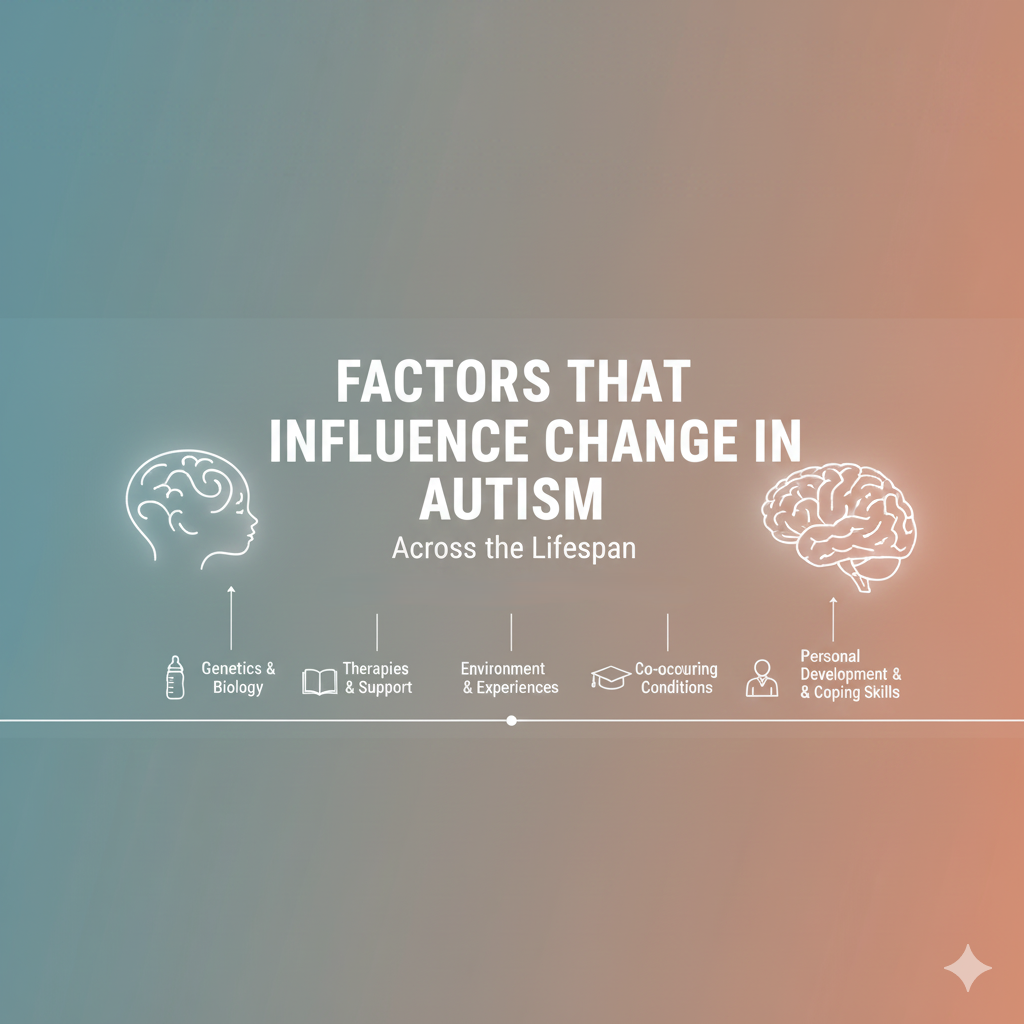
Individual Differences
Cognitive ability and IQ
Research consistently shows that individuals with average or higher cognitive functioning often experience more positive developmental trajectories. Studies found that autistic people without intellectual disability are more likely to show reductions in symptom severity over time. However, cognitive aging may affect them differently as they grow older, since higher functioning individuals often face greater social demands that can increase stress.
Presence or absence of intellectual disability (ID)
Individuals with co-occurring ID tend to have more stable symptom patterns across the lifespan. Improvement may occur, but it often progresses more slowly.
Sex and Gender Differences
Several longitudinal studies report that girls often show a reduction in symptom severity or slower increases during childhood compared to boys.
Girls may also present differently because of social masking or coping strategies, which can influence how symptoms appear over time.
Environmental and Support Factors
Early intervention: Early access to speech therapy, behavioral therapy, and structured support can lead to significant improvement in communication, adaptive skills, and social functioning.
Family and community support: Children and adults who receive consistent support from parents, caregivers, teachers, and therapists tend to show better long-term outcomes.
Socio-demographic factors: Factors like parental education, access to resources, and socioeconomic stability strongly influence progress. Studies show that consistent access to services predicts better developmental change.
Life Stage Transitions and External Pressures
Major life transitions often increase environmental demands. For many autistic individuals, these transitions can temporarily make symptoms or difficulties more noticeable.
Common pressure points include:
Starting school
Puberty and hormonal changes
Moving from adolescence to adulthood
Entering the workforce
Navigating independence and relationships
These transitions can heighten anxiety or stress, which can give the impression of symptoms getting worse even when core autism traits remain stable.
Co-occurring Conditions and Physical or Mental Health
Many autistic individuals experience anxiety, depression, ADHD, or sensory processing differences. These conditions can intensify at different life stages.
Some studies suggest that even when core autism symptoms improve, physical health may decline with age, especially in areas like sleep, motor skills, and chronic health conditions.
Stress sensitivity and burnout can also affect functioning in adulthood.
What Worsening Often Looks Like and Why It Happens
Increase in Certain Behaviors in Midlife or Older Age
Long term studies following autistic adults into midlife show that some individuals experience increases in repetitive behaviors, sensory distress, or difficulty managing daily tasks as they get older.
Research from the Journal of Autism and Developmental Disorders has noted that aging can bring added pressure on executive functioning. This can make routines, planning, or flexibility harder to maintain.
Decline in Adaptive Functioning
Adaptive functioning refers to independent living skills, communication in everyday life, problem solving, and social functioning.
Some studies, including work by Smith et al. and Taylor et al., found that autistic adults can experience a decline in adaptive functioning over time.
A major reason is the reduction in structured support. Many autistic individuals receive strong intervention during childhood, but after adolescence and early adulthood, support often becomes inconsistent. When support decreases but demands increase, functioning can drop.
New Challenges Connected to Aging
As autistic adults age, new health related issues can appear. These may include chronic fatigue, joint pain, sleep disturbances, sensory changes, or increased anxiety and depression. Aging can heighten existing sensory differences, making noise, light, or touch more overwhelming.
Reduced social networks and limited access to autism informed healthcare can also make older age more difficult to navigate.
Stress Created by Societal Expectations
As people grow older, life becomes more demanding. Work responsibilities, relationships, family roles, and social expectations become more complex.
For autistic adults, these pressures can cause stress that makes traits more noticeable. Executive functioning demands increase in adulthood, and if coping skills are limited or support is low, daily life becomes harder.
This does not mean autism itself is getting worse. Instead, the environment becomes more challenging.
What This Means for People on the Spectrum, Families, and Support Systems
When we look at the research as a whole, one message becomes clear. Autism is a lifelong condition, and every stage of life brings its own kind of growth, change, and challenge. This means support must grow and change too.
Tailored Support Across the Lifespan
Many families focus heavily on early intervention, and while that foundation is valuable, it is only the beginning. Adolescence brings new social pressures. Adulthood brings expectations about work, independence, and relationships.
Older age brings health changes that may affect sensory processing or daily functioning. Each stage calls for its own type of guidance, therapy, and community support.
Recognizing Changing Needs
A child may need help with communication or play skills. An adult might need support with job coaching, independent living, or managing anxiety. An older adult may need help maintaining physical health or adjusting to changes in routine.
The point is not to assume that what worked at age 10 will still work at 30, 50, or 70. Needs shift, and support should shift with them.
Avoiding the Idea of a Fixed Level
It is easy for families or professionals to label someone as a certain level of autistic and expect that to stay the same forever. But research shows that people can grow in areas where they once struggled. They can also face setbacks when demands increase or when support drops. Instead of holding on to labels, it helps to see autism as something that evolves with life circumstances.
The Need for Continuous Mental Health and Community Support
Anxiety, depression, burnout, and isolation are common in autistic adults, especially when they feel misunderstood or unsupported. Regular mental health care, supportive friendships, understanding coworkers, and autism informed professionals can make a powerful difference. Community matters at every age.
Acceptance and Accommodation for Every Life Stage
As autistic individuals age, their traits might look different, but this does not mean they have failed or become less capable. It simply means life has changed. Acceptance from family, schools, employers, and society is essential. When people feel understood, they cope better. When environments are flexible, daily life becomes easier.
Compassion and accommodation are not acts of pity. They are acts of respect, allowing autistic individuals to live well and be themselves at every age.
Conclusion
There is no single path that autism follows throughout a person’s life. For many individuals, certain traits improve as they grow older. For others, things remain mostly stable. And for some, challenges may increase, often because of stress, major life transitions, or the natural changes that come with aging.
The idea that autism automatically gets worse with age is not supported by research. What we do see is that change is common. Sometimes the change is positive, sometimes it reflects new pressure points or unmet needs. What matters most is the quality of support and understanding that surrounds each person.
When we view autism as a lifelong and evolving condition, we open the door to better planning, better advocacy, and better care. Families, caregivers, and autistic individuals themselves can prepare for shifts at different stages of life and seek out the resources that make those stages easier to navigate.
In the end, the goal is simple. Embrace neurodiversity. Support each developmental journey with patience and respect. Stay attentive to changing needs and continue creating environments where autistic people can grow, adapt, and thrive at every age.
Sources
Hong, J., Smith DaWalt, L., Lounds‑Taylor, J., Haider, A., & Mailick, M. (2023). Autism through midlife: trajectories of symptoms, behavioral functioning, and health. Journal of Neurodevelopmental Disorders, 15(1), 36. https://doi.org/10.1186/s11689-023-09505-w PubMed
Davis, J., et al. (2016). Trajectories of autism symptom severity change during early childhood. Journal of Autism and Developmental Disorders. [PDF].
