

A Parent's Guide to Supporting Neurodiverse Children
Parenting is challenging. Parenting a neurodiverse child brings unique complexities that many parents feel unprepared to handle. From sensory meltdowns in public places to navigating school systems that don't always understand your child's needs, the journey can feel overwhelming.
But what if we shifted our perspective from fixing deficits to celebrating strengths? What if sensory sensitivities weren't just challenges to overcome, but signals helping us understand how our children experience the world?
Sarah Hartley, author of the Purposefully Me book series and creator of the ALIGN parenting method, has walked this path with both of her sons who have ADHD and sensory processing disorder. In a recent episode of On the Spectrum Empowerment Stories, she shared practical strategies that transformed her family's approach to neurodiversity.
Whether you're a parent of a neurodiverse child, an educator, or someone navigating your own late diagnosis, these insights will help you move from survival mode to thriving together.
Table of Contents
Early Warning Signs: What to Watch For
The Pandemic's Impact on Sensory-Seeking Children
Building a Sensory Gym at Home
The ALIGN Method: Staying Calm When It Matters Most
Shifting to a Strengths-Based Approach
Getting Support Into Schools
Key Takeaways for Parents and Educators
Early Warning Signs: What to Watch For
Walking on Tippy Toes
One of the first signs Sarah noticed in her oldest son was toe walking around age two. Her sister-in-law, whose own children had sensory sensitivities, pointed this out as something to watch for.
Toe walking is a common indicator of sensory processing differences, particularly in children who are vestibular avoiders—meaning they feel like they're constantly in motion and struggle with balance-related activities.
Other Early Indicators of Sensory Processing Disorder
Tactile sensitivities:
Refusing to touch certain textures like play-doh or slime
Discomfort with food textures or messy hands
Sensitivity to clothing tags or seams
Auditory sensitivities:
Covering ears at sudden or loud noises
Being startled by sounds like door slams or fire alarms
Tolerating only self-created noise versus external sounds
Temperature regulation:
Extreme resistance to getting in the bath or shower
Once in, refusing to get out due to temperature changes
Difficulty with transitions between warm and cold environments
Seeking behaviors:
Craving deep pressure through strong hugs
Deliberately crashing into things or falling
Constantly moving or fidgeting
The Mixed Profile Challenge
Sarah's oldest son presented as both a vestibular avoider and a proprioceptive seeker—avoiding swinging and bike riding while simultaneously seeking deep pressure and crashing activities.
This mixed profile is common in sensory processing disorder. Children aren't simply "sensory seeking" or "sensory avoiding." They often display both patterns across different sensory systems, making intervention more complex.
Understanding your child's specific sensory profile is the first step toward providing appropriate support.
The Pandemic's Impact on Sensory-Seeking Children
When Early Intervention Stopped
For many families with neurodiverse children, the pandemic created devastating setbacks. Sarah's oldest son was just starting to make progress with occupational therapy when everything shut down in March 2020.
The anxiety from losing structure and routine became so severe that her then-three-year-old stopped sleeping. His four-month-old brother was waking throughout the night, and the entire household was in crisis.
Creative Problem-Solving During Lockdown
Sarah made a difficult decision: she kept her newborn home but sent her older son to daycare for structure and routine. She also enlisted family members to help build an entire sensory gym in their garage.
The gym included:
A climbing wall with chalkboard paint and magnetic backing
A large crash pad
A jungle gym
A ball pit for proprioceptive input
This dedicated sensory space became crucial for managing her son's sensory needs when professional therapy wasn't available.
The Lasting Impact
Children who were certain ages during the pandemic experienced unique challenges. Sarah notes that while her oldest barely remembers wearing masks to preschool graduation, the developmental impact of missing crucial therapy and social experiences during formative years cannot be understated.
For parents still dealing with pandemic-related setbacks in their children's development, know that you're not alone. Many children are still catching up from that lost time.
Want to hear Sarah's complete story about navigating the pandemic with two neurodiverse children? Listen to the full episode of On the Spectrum Empowerment Stories for more insights on creative problem-solving during impossible circumstances.
Building a Sensory Gym at Home
Beyond Equipment: Organization of Sensory Input
Sarah discovered something crucial: it's not just about providing sensory input, but about organizing that sensory input in meaningful ways.
Instead of just letting her son climb the wall or play in the ball pit, she created activities that combined sensory input with cognitive tasks:
Climbing wall activities:
Place magnetic letters at the top in a jumbled order
Have your child climb to retrieve letters one at a time
Bring letters down to spell a specific word
Ball pit activities:
Ask for specific colored balls one at a time
Request a certain number of one color
Create patterns or sequences
This approach provides sensory input while simultaneously teaching organization, sequencing, and following multi-step directions.
The Long-Term Investment
Most of the sensory gym equipment has been retired as Sarah's children aged, but the crash pad remains. Both boys, now ages 9 and 6, still use it regularly.
Her youngest has also discovered gymnastics, which provides structured sensory input similar to what the home gym offered. He's constantly doing flips on furniture and cartwheels on any patch of grass—reminiscent of Sarah's own childhood behavior that she now recognizes as her undiagnosed ADHD.
Sound Therapy at Home
Sarah's occupational therapist provided a classical music soundtrack with intentionally scratchy sounds as part of sound therapy. While her son wouldn't wear headphones, they played it every time they were in the car.
This is similar to auditory integration therapy, which helps desensitize the auditory system to certain frequencies. Consistency matters more than duration—daily exposure in the car was more effective than occasional sessions with headphones.

The ALIGN Method: Staying Calm When It Matters Most
When Traditional Strategies Aren't Enough
Sarah developed the ALIGN method out of necessity. She had tried various calming strategies—morning walks, meditation, journaling—but struggled most in the moment when her children were dysregulated.
As a parent with ADHD herself, she found that noises that never bothered her before (like coming home from school) became overwhelming triggers. She needed a quick, actionable framework for regulating herself so her children could mirror her calm.
The ALIGN Framework Explained
A - Awareness Become aware of your own physical sensations. Notice your heart racing, sweating, tight fists, or shallow breathing. Metacognition—thinking about your thinking—is the first step.
L - Listen and Label Listen to what your child is saying and label the emotions. "You're feeling overwhelmed. I'm feeling overwhelmed too." Naming emotions reduces their intensity.
I - Identify Triggers Become a detective. What's causing the dysregulation? Is it sensory overload? Hunger? Fatigue? Transitions? Identifying the trigger helps you address the root cause.
G - Grounding Use a quick grounding technique to reset the nervous system:
Take a sip of water
Find three things of a specific color
Use the 5-4-3-2-1 technique (five things you see, four you can touch, etc.)
Play I Spy
N - Nurture Show empathy and give grace. "I totally understand why you're feeling this way. I get it." You cannot hold empathy and anger simultaneously—empathy dissolves anger.
Real-World Application: The Baseball Game
At a Savannah Bananas game, Sarah's son became overwhelmed waiting in a long line in the heat with crowds, smells, and sounds everywhere. He started complaining: "This is boring. This is awful. I thought you said this would be fun."
Sarah's immediate instinct was frustration—they'd spent money on tickets, and here he was being "ungrateful."
Instead, she used ALIGN:
Awareness: She noticed her own heart racing, sweating, tight fists.
Listen and Label: "It's really hot outside. I'm feeling overwhelmed. I think you're feeling overwhelmed too."
Identify: "There are so many smells, sounds, and people. This is sensory overload."
Grounding: "Let's both take a sip of water and find three things that are purple."
Nurture: "I totally understand why you're feeling this way. I'm also feeling really overwhelmed. The line's moving—do you want to go in and visit the gift shop, or would you rather go home?"
Within 60 seconds, her son decided he wanted to go in and get a ball signed by players. Crisis averted, connection maintained.
This is just one example of the ALIGN method in action. For more detailed strategies and Sarah's complete parenting workbook, listen to the full podcast episode where she walks through additional scenarios and provides free holiday-specific resources.
Shifting to a Strengths-Based Approach
The Deficit Model vs. Strengths Model
Traditional approaches to neurodiversity focus on what's "wrong" and what needs to be "fixed." Children are defined by their deficits: attention problems, social difficulties, sensory issues.
Sarah's Purposefully Me book series takes a different approach. Each of the 14 books features a fourth-grade character with different neurodivergent traits—autism, ADHD, dyslexia, Down syndrome, sensory processing disorder—but focuses on their strengths, interests, and unique perspectives.
Why Fourth Grade?
Sarah chose fourth-graders as her characters intentionally. Third grade is when hormones start changing, conflict increases, and many ADHD diagnoses happen as academic demands increase. By fourth grade, these challenges are in full swing.
Fourth-graders are old enough for third-graders to look up to but young enough for fifth-graders to still relate to. This age range captures most of elementary school.
Celebrities Who Prove the Point
When Sarah's basketball-obsessed son learned that Michael Jordan has ADHD, it transformed his self-perception. Suddenly, ADHD wasn't just a limitation—it was something he shared with his hero.
Other successful people with ADHD include:
Simone Biles (gymnastics)
Adam Levine (musician)
Justin Timberlake (entertainer)
Will Smith (actor)
When children see successful people "just like them," they develop confidence in who they are rather than shame about being different.
The Creativity Connection
Recent research presented at psychological conferences highlights how ADHD supports creativity. The same brain that struggles with sustained attention excels at:
Seeing connections others miss
Thinking outside conventional frameworks
Hyperfocusing on passion projects
Generating novel ideas rapidly
This applies across neurodiversity. Autistic individuals often have exceptional pattern recognition, attention to detail, and deep expertise in areas of interest. Sensory sensitivities can translate into heightened awareness and appreciation for art, music, or nature.
Getting Support Into Schools
The Ultimate Goal
Sarah's mission extends beyond individual families. She's working to get the Purposefully Me books into school systems through foundation partnerships.
Her proposal targets foundations focused on:
Dyslexia support
Children's literacy programs
Educational equity
Special education resources
The idea is for foundations to gift box sets of these books to schools, making them available to all students—not just those identified as neurodiverse.
Why Every Child Benefits
Even neurotypical children benefit from understanding neurodiversity. These books help them:
Recognize why a classmate might behave differently
Develop empathy and compassion
See characteristics as superpowers rather than disabilities
Understand that everyone's dealing with something
When schools embrace comprehensive neurodiversity education, bullying decreases and inclusion increases. Children who understand why a peer stims, needs movement breaks, or processes information differently are less likely to mock and more likely to support.
The Slow Rollout
Sarah is releasing one book per month to ensure high-quality illustrations that evoke appropriate emotions. Books currently available or coming soon:
Purposefully Brave (available now)
Purposefully Calm - sensory processing disorder (available this week)
Purposefully Enough - ADHD (printing now)
Additional titles will address autism, dyslexia, Down syndrome, bullying, social anxiety, school drills, and more aspects of the neurodivergent experience.
How Parents Can Advocate
While Sarah works on getting her books into school systems, parents can advocate by:
Requesting neurodiversity education for all students, not just special education classes
Donating inclusive books to classroom libraries
Asking for professional development on strengths-based approaches
Partnering with teachers to provide resources
Joining or forming parent advocacy groups
Change happens when parents collectively push for better understanding and support.
Key Takeaways for Parents and Educators
Early Identification Matters
The earlier you identify sensory sensitivities and neurodivergent traits, the sooner you can provide appropriate support. Don't dismiss early warning signs—trust your instincts and seek evaluation if something feels off.
You're Parenting Yourself Too
If you're a neurodiverse parent raising neurodiverse children, you're on a parallel journey. Many strategies you implement for your children will benefit you as well. Sarah describes it as "parenting myself as much as I'm parenting them."
Regulate Yourself First
Children mirror the emotional state of their caregivers. When you remain calm, they can access calm. When you're dysregulated, they become dysregulated. The ALIGN method helps you manage your own nervous system so you can be the regulating presence your child needs.
Mixed Profiles Are Normal
Don't expect your child to fit neatly into one category. Sensory avoiders can also be sensory seekers in different domains. ADHD often co-occurs with sensory processing disorder, autism, dyslexia, or giftedness. Embrace the complexity rather than trying to simplify.
Strengths Over Deficits
Yes, your child has challenges. But they also have incredible strengths. The ADHD brain that struggles with boring tasks hyperfocuses intensely on passions. The autistic mind that finds social situations confusing sees patterns and details others miss. The sensory-sensitive child has heightened awareness that can translate into artistic gifts.
Focus on developing strengths rather than only remediating weaknesses.
Late Diagnosis Brings Relief
Sarah wasn't diagnosed with ADHD until age 25, and it didn't fully click until she had children and started understanding her own neurodiversity in her 30s and 40s. Late diagnosis isn't a failure—it's an opportunity to finally understand yourself and access appropriate support.
Connection Over Perfection
You won't always stay calm. You'll sometimes yell and fly off the handle. What matters is repair—explaining what happened, showing empathy, and modeling that everyone struggles sometimes. This builds trust that carries into the teenage years.
Sarah shares many more practical strategies, personal stories, and resources in the full podcast episode. Listen now to hear her discuss everything from sound therapy protocols to navigating school IEPs to managing decision fatigue as a neurodiverse parent.
Moving Forward with Confidence
Parenting neurodiverse children requires creativity, flexibility, and endless patience. But it also offers unique gifts: deeper empathy, appreciation for differences, creative problem-solving skills, and the joy of celebrating progress that others might take for granted.
Sarah's journey from building sensory gyms during a pandemic to developing comprehensive parenting frameworks and children's books demonstrates what's possible when we shift from deficit-focused to strengths-based approaches.
Whether you're just beginning to notice sensory sensitivities in your toddler or you're years into supporting a neurodiverse child, remember:
You're not alone in this journey
Your child's differences are not deficiencies
Regulating yourself is the foundation for regulating them
Strengths-based approaches work better than deficit-focused interventions
Small shifts in perspective create massive changes in outcomes
The ALIGN method provides a practical framework for those overwhelming moments when everything feels like too much. Sarah's books give children language to understand themselves and others. And shifting from "what's wrong" to "what's strong" transforms how your child sees themselves.
Ready to dive deeper into strengths-based parenting strategies and learn more about Sarah's journey with her neurodiverse sons?
Listen to the complete On the Spectrum Empowerment Stories podcast episode featuring Sarah Hartley.

How Caregivers of Neurodivergent Loved Ones Can Reclaim Their Well-Being
Table of Contents
Intro
The Missing Piece in Support Systems: Caring for the Caregiver
Meeting Caregivers Where They Are: The Power of Emotional Check-Ins
Naming Burnout: Recognizing the Warning Signs Before Crisis
What Sensory Self-Care Is and Why It Works
The Power of Community
Inclusi: A Caregiver Support Space Created by Eleonora
Humility in Care: What Professionals Need to Understand
Grief, Guilt, and Emotional Space: Allowing Caregivers to Feel
The Caregiver Balance Sheet: A Practical Tool for Rebuilding Stability
Conclusion
How Caregivers of Neurodivergent Loved Ones Can Reclaim Their Well-Being
There's an invisible weight that caregivers carry. It sits on their shoulders quietly, growing heavier with each passing day. For those caring for neurodivergent children or adults, this weight includes not just the practical tasks of daily life but also the emotional labor that nobody sees.
Eleonora Magri understands this weight intimately. Through her work with Inclusi, she's made it her mission to support caregivers who are often forgotten in the conversation about neurodivergent care. And here's the uncomfortable truth: burnout among caregivers is incredibly common, yet it's rarely talked about until someone reaches a breaking point.
This matters because when caregivers crash, entire families feel the impact. The good news? There are practical, accessible ways to prevent that crash and reclaim your well-being.
The Missing Piece in Support Systems: Caring for the Caregiver
Why Caregiver Support Is Often Neglected
When a family has a neurodivergent member, most of the attention naturally flows toward that person. Therapy appointments, educational plans, medical visits, behavioral strategies. The calendar fills up. The mental load grows. And somewhere in all of this, the caregiver's needs quietly slip into the background.
It's not intentional. Nobody wakes up thinking, "Let's ignore what the caregiver needs today." But it happens anyway. The system is designed to focus on the person receiving care, which makes sense on the surface. But this approach misses something crucial.
Eleonora's Argument: Caregiver Well-Being Must Come First
Eleonora flips the script entirely. She argues that caregiver well-being isn't just important. It's foundational. Think about it like the safety demonstration on an airplane. You put on your own oxygen mask first, then help others. The same principle applies here.
When caregivers are running on empty, physically exhausted, emotionally drained, and mentally overwhelmed, they can't provide the quality of care their loved ones need. It's not a moral failing. It's basic human biology. You cannot pour from an empty cup.
Here's what Eleonora makes clear: caregiver health directly impacts outcomes for the entire family. A caregiver who has space to breathe, rest, and recharge brings more patience, creativity, and resilience to their caregiving role. When we support caregivers, we support everyone in the family system.
Meeting Caregivers Where They Are: The Power of Emotional Check-Ins
This seems like such a simple question, but it's rarely asked with genuine intention. Professionals working with families often jump straight into problem-solving mode. What's the behavior we need to address? What strategies should we try? What's the next goal?
But Eleonora encourages a different starting point: pause and check in with the caregiver first. Not a surface-level "How are you?" that invites an automatic "I'm fine." A real check-in. How are you sleeping? When did you last do something just for yourself? What does your stress level feel like right now?
Caregivers also need to regularly take their own emotional temperature. It's easy to push through day after day without stopping to notice that you're running on fumes. Regular check-ins help you catch problems before they become crises.
No One-Size-Fits-All Approach
Here's something important that Eleonora emphasizes: your capacity changes. What you could handle last week might feel impossible today. You might have energy for a challenging therapy session on Tuesday but need to reschedule by Thursday. That's not weakness. That's being human.
Emotional readiness, mental capacity, and stress levels fluctuate. They're influenced by sleep, physical health, other life stressors, and a hundred other factors. When professionals and caregivers alike respect this natural variability, care plans become more realistic and sustainable. Compassion replaces rigid expectations.
Magri breaks down how to approach check-ins with compassion. Hear her explain it on the podcast.
Naming Burnout: Recognizing the Warning Signs Before Crisis
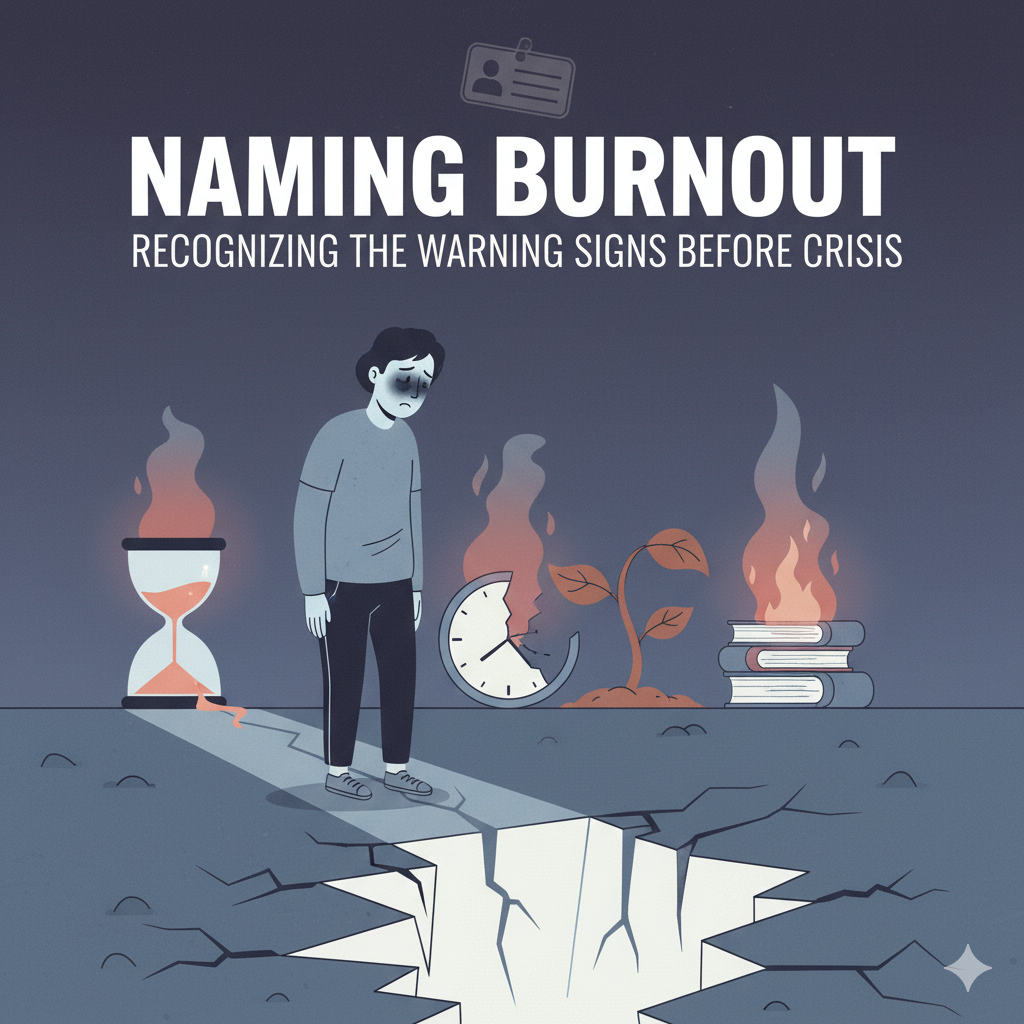
Burnout doesn't announce itself with a dramatic entrance. It creeps in quietly through small changes that are easy to dismiss. Eleonora points to several warning signs that caregivers commonly overlook:
Your sleep becomes disrupted. Maybe you can't fall asleep because your mind won't stop racing through tomorrow's to-do list. Or you wake up multiple times during the night. Or you sleep but wake up exhausted.
You stop taking care of your own health. Skipping meals becomes normal. You can't remember the last time you went to the doctor for yourself. That nagging pain? You'll deal with it later.
Hobbies disappear. Activities you used to enjoy feel like too much effort. Your social life shrinks to nothing because you don't have the energy to maintain friendships.
Everything feels overwhelming. Small tasks feel monumental. Decision fatigue is constant. Even choosing what to make for dinner feels exhausting.
And perhaps most tellingly, you feel guilty whenever you rest. Taking time for yourself feels selfish. You tell yourself your needs can wait.
Why Caregivers Downplay Their Own Exhaustion
There's a deep conditioning at play here. Many caregivers have internalized the belief that their needs are less urgent, less important, less worthy of attention. After all, their loved one has significant challenges. Who are they to complain about being tired?
This thinking is understandable but dangerous. It creates a hierarchy of suffering where caregivers consistently place themselves at the bottom. They're trained to prioritize others at all costs, even when that cost is their own health and well-being.
Why Naming Burnout Is the First Step to Preventing Collapse
When you can name something, you can address it. Burnout thrives in the shadows, in the space of "I'm just tired" or "Everyone feels this way." But when you look at the signs clearly and say, "This is burnout," you give yourself permission to take action.
Naming it isn't about being dramatic or seeking attention. It's about being honest. And that honesty creates the foundation for change. You can't solve a problem you won't acknowledge exists.
If you suspect you're burning out, this episode is a must-listen. Eleonora walks through the signs you should never ignore.
What Sensory Self-Care Is and Why It Works
Eleonora introduces a concept that many caregivers haven't considered: sensory self-care. This isn't about bubble baths and spa days, though those are nice if you have access to them. It's about understanding how your nervous system responds to sensory input and using that knowledge to help yourself regulate.
When you're constantly in fight-or-flight mode, responding to crisis after crisis, your nervous system gets stuck in a state of high alert. Sensory self-care helps bring you back down. It signals to your body that you're safe, that you can relax, that the emergency is over.
The beauty of this approach is that it doesn't require expensive products or hours of free time. It's about intentionally creating moments that soothe your nervous system.
Practical Sensory Strategies
What does this look like in practice? Eleonora offers several accessible options:
Sitting in a dim, quiet room for even just five minutes. Lowering visual and auditory stimulation gives your brain a break from processing constant input.
Listening to soft, calming sounds. This could be nature sounds, gentle music, or even white noise. Whatever your nervous system finds soothing.
Using weighted items. A heavy blanket, a weighted lap pad, or even just a heavy pillow across your legs can provide grounding pressure that many people find calming.
Gentle movement. Not intense exercise, but slow, mindful movement like stretching, walking, or swaying.
Breathing exercises. Deep, slow breathing directly impacts your nervous system, moving you from a stressed state to a calmer one.
Making Self-Care Accessible
Notice what all these strategies have in common. They're low-cost or free. They don't require special equipment. They can fit into tiny pockets of time. You don't need to overhaul your entire life or find an extra two hours in your day.
This accessibility matters tremendously. Self-care shouldn't be something that only people with money and time can access. It should be available to everyone, especially those who need it most.
Building Sustainable Self-Care Habits
Here's where many people get stuck with self-care. They think about it as adding entirely new tasks to an already overwhelming schedule. No wonder it feels impossible.
Eleonora teaches a different approach called habit stacking. Instead of creating new time in your day, you attach self-care practices to routines you're already doing. This makes consistency dramatically easier because you're not relying purely on motivation or remembering to do something new.
The existing habit acts as a trigger for the new one. Your brain already knows the pattern, so you're just adding one more link to the chain.
Consistency Over Duration
Another common misconception about self-care is that it needs to be lengthy to be effective. People think they need an hour-long routine or it doesn't count. This all-or-nothing thinking keeps people from doing anything at all.
Eleonora flips this narrative. Small, repeatable actions create long-term impact. Five minutes of breathwork every day does more for you than a two-hour spa visit once every six months. Consistency beats duration every time.
You don't need to clear your schedule. You need to find tiny moments and use them intentionally.
Examples of Simple Habit Stacks
What does this look like practically?
Take three deep breaths before you brush your teeth in the morning. You're already at the sink twice a day. Use that time.
Do a quick stretch routine before you get in the shower. You're already taking off your clothes. Add thirty seconds of movement.
Sit in your car for five minutes of silence after you arrive home but before you go inside. The transition is already happening. Make it intentional.
Notice how none of these require finding new time or buying anything. They simply make existing moments do double duty.
Eleonora explains how she teaches caregivers to build micro-habits. Listen to the interview here.
The Power of Community

Caregiving for a neurodivergent loved one can feel profoundly lonely. Even when surrounded by people, many caregivers feel isolated. Why? Because their daily reality is hard for others to understand.
Friends who don't have similar experiences often don't know what to say. Well-meaning relatives might offer advice that completely misses the mark. People stop inviting you to things because you've had to cancel so many times. Slowly, your world gets smaller.
The challenges you face daily are things most people can't relate to. They don't understand the complexity, the constant vigilance, the emotional load that comes with anticipating needs and preventing crises.
Creating Your Village
The old saying is true: it takes a village. But in modern life, villages don't just appear. You have to build them intentionally. Eleonora emphasizes that community isn't optional. It's essential for sustainable caregiving.
Your village might include peer support groups where other caregivers truly understand what you're going through. These connections provide both emotional support and practical advice from people who've been there.
Online communities can be lifesavers, especially for those with limited local resources or mobility challenges. The internet has created spaces where caregivers can connect at midnight when they can't sleep, ask questions at 3 AM, and find support without leaving home.
Local organizations focused on neurodivergent support often have resources for families and opportunities to connect with others in your area.
And don't underestimate the power of practical help. Trading childcare with another family, sharing meal prep duties, or coordinating grocery runs might sound simple, but these small acts of mutual support can significantly lighten the load.
Inclusi: A Caregiver Support Space Created by Eleonora
This is why Eleonora founded Inclusi. She saw a gap in support and decided to fill it. Inclusi creates space for caregivers to feel seen, heard, and supported. It's built on the understanding that caregiver well-being isn't a luxury or an afterthought. It's central to everything.
Through Inclusi, caregivers gain access to resources, community, and the reminder that they're not alone in this journey.
Discover how Inclusi helps caregivers feel supported. Eleonora talks about it deeply in the podcast episode.
Humility in Care: What Professionals Need to Understand
Eleonora has an important message for professionals working with families of neurodivergent individuals. No matter how much training you have or how many families you've worked with, you cannot assume you understand what any individual caregiver is experiencing internally.
Each family is different. Each caregiver brings their own history, trauma, strengths, and limitations. Approaching families with humility, with a genuine not-knowing stance, builds trust in ways that expertise alone cannot.
This means starting sessions by checking in with the caregiver's emotional state before diving into the work. It means asking questions instead of making assumptions. It means respecting when a caregiver says they're at capacity, even if you think the intervention is important.
Practitioners Must Care for Themselves Too
Here's another truth Eleonora emphasizes: burnt-out professionals cannot provide quality care. If you're working in this field and ignoring your own needs, pushing through exhaustion, and telling yourself you'll rest later, you're not just hurting yourself. You're limiting what you can offer the families you serve.
Healthy professionals bring more presence, creativity, and compassion to their work. They have the capacity to truly see the families in front of them rather than just going through the motions.
Self-care for professionals isn't selfish. It's a professional responsibility.
Grief, Guilt, and Emotional Space: Allowing Caregivers to Feel
Caregiving brings up complicated feelings that people don't always know how to process. Eleonora talks about the importance of acknowledging these emotions without judgment.
There's grief. Grief for the life you imagined before diagnosis. Grief for the experiences your child might not have. Grief for your own lost opportunities. This grief is real and valid, and it can coexist with deep love for your family member.
There's guilt. Guilt for feeling tired. Guilt for wanting time alone. Guilt for occasionally resenting your caregiving role. Guilt for not being enough, even when you're giving everything you have.
There's shame. Shame for needing help. Shame for struggling when you think you should be stronger. Shame for the complicated emotions you can't control.
Creating Space to Feel Without Judgment
What if you could feel all of these things without it meaning you're a bad caregiver? What if grief, guilt, and frustration were simply part of the human experience of caregiving, not evidence of failure?
Eleonora emphasizes that emotional honesty makes caregiving more sustainable. When you allow yourself to feel what you feel without piling judgment on top, you create space for those emotions to move through you rather than getting stuck and festering.
Feeling your emotions isn't the problem. Feeling them doesn't make you selfish or ungrateful. It makes you human.
The way Eleonora explains caregiver guilt is eye-opening. Listen to the podcast for her full breakdown.
The Caregiver Balance Sheet: A Practical Tool for Rebuilding Stability
Eleonora introduces a practical tool called the Caregiver Balance Sheet. It's beautifully simple in concept but powerful in impact.
The balance sheet helps you track the energy and time you spend on yourself versus what you spend on others. Most caregivers, when they first do this exercise, are shocked by the imbalance. They might see that 95% of their energy goes outward and only 5% comes back to them.
Making this visible is the first step toward changing it. You can't rebalance something if you don't know it's out of balance in the first place.
Why It Works
The balance sheet moves self-care from an abstract concept to something measurable and concrete. Instead of vaguely knowing you should take care of yourself, you can see exactly where you need to make changes.
It helps you reclaim a sense of control. When caregiving feels overwhelming and endless, having a tool that shows you concrete information about where your energy goes can feel empowering. You can make informed decisions about what to adjust.
How to Access It
The Caregiver Balance Sheet is available through Inclusi. It's designed to be simple and intuitive, something you can start using immediately without a learning curve.
Tools like this work because they meet caregivers where they are. They don't require you to figure everything out on your own or completely restructure your life before you can begin.
Conclusion
If you're a caregiver reading this, here's what I want you to know: you deserve rest. You deserve support. You deserve compassion, especially from yourself.
The path from burnout to balance isn't about making dramatic changes overnight. It's about small, sustainable steps. It's about acknowledging your needs instead of dismissing them. It's about building tiny habits that support your nervous system. It's about finding your people and letting them help carry the load.
Eleonora's work reminds us that caring for yourself isn't selfish and you're not alone in this. There are tools, communities, and people who understand. You don't have to figure it all out by yourself.
Ready to Hear the Full Conversation and Start Your Journey from Burnout to Balance?

Navigating the World as a Neurodivergent Woman
Table of Contents
Intro
Navigating the World as a Neurodivergent Woman
The Hidden Cost of Masking
The Journey to Diagnosis and Self-Understanding
Embracing Neurodivergence as a Strength
Managing the Challenges
Leading and Supporting Others
Academic and Advocacy Work
Why You Should Listen to This Episode
Conclusion
Navigating the World as a Neurodivergent Woman
Many women with ADHD or autism spend years hiding their true selves, putting on a mask to fit into workplaces, schools, and social circles. This constant performance can be exhausting and disorienting. But what happens when a woman stops masking and begins to lead with authenticity?
This conversation goes beyond the struggles of masking. It highlights the hidden strengths of neurodivergence, the importance of diagnosis and self-understanding, and how embracing differences can lead to more inclusive and effective leadership.
Let’s get started
The Hidden Cost of Masking
What Is Masking?
Masking is often described as a form of social camouflage. For many neurodivergent women, especially those with autism or ADHD, it becomes a daily survival strategy to fit into environments that expect “typical” behavior. Masking can take many forms. Some women learn to copy the tone of voice, gestures, or facial expressions of their peers in order to blend in. Others suppress natural behaviors like stimming, which might help them regulate emotions or stay focused. Many spend hours over-preparing for conversations or rehearsing responses so that they appear socially fluent.
While these strategies may allow neurodivergent women to pass unnoticed in classrooms or workplaces, they come at a heavy cost. Masking does not remove differences. It only hides them, often leaving the woman feeling disconnected from her true self.
Why It’s Exhausting
The effort required to constantly self-monitor is overwhelming. Imagine going through every interaction while silently calculating how to move, speak, or react in a way that will not draw attention. Over time, this creates deep exhaustion and can lead to what many describe as autistic or ADHD burnout. The toll is not just physical but also emotional.
Masking can leave women struggling with identity confusion. They may wonder, “Who am I really, beneath all the layers of performance?” This often comes with feelings of shame or inadequacy, as though their authentic selves are not enough. For some, the exhaustion builds until they can no longer maintain the facade, leading to breakdowns, withdrawal, or severe anxiety.
Rita reflected in the podcast on how years of masking left her drained and disconnected. She shared that while masking helped her “fit in” on the surface, it also meant living behind a wall where her true personality and needs were hidden. It was only when she began unmasking that she discovered her real strengths and started leading in a way that felt genuine.
The Journey to Diagnosis and Self-Understanding

The Turning Point
For Rita, the turning point came during her time at university. After years of confusion about why she struggled with certain tasks, she finally received a diagnosis of ADHD. That moment brought a wave of clarity. Behaviors and challenges that once seemed like personal shortcomings suddenly made sense. The late nights spent overcompensating, the difficulties staying focused, and the constant effort to appear “together” were not signs of laziness or weakness. They were part of how her brain was wired.
This diagnosis was more than a medical label. It became a mirror that helped Rita understand herself more deeply. She could now look back at her past struggles with compassion rather than blame. What once felt like an endless cycle of frustration began to feel like a story that finally had context.
Why Diagnosis Matters
For many neurodivergent women, diagnosis is life-changing because it shifts the narrative. Instead of internalizing years of criticism and believing they are “too much” or “not enough,” they can begin to see their differences for what they are: neurological variations. Diagnosis reframes challenges as part of a broader picture rather than as evidence of personal failure.
This new understanding opens the door to embracing strengths and building supportive environments. With self-knowledge comes the ability to advocate for accommodations, seek communities of understanding, and let go of the heavy burden of self-blame. Diagnosis also allows women to recognize the resilience they have built over years of surviving without answers.
For Rita, her diagnosis became the foundation of her leadership journey. It empowered her to stop hiding, to value her own perspective, and to use her lived experience as a source of strength rather than shame.
Embracing Neurodivergence as a Strength
A New Perspective on Leadership
For much of her life, Rita felt pressure to minimize or hide the traits connected to her autism and ADHD. Yet as she stepped into leadership roles, she began to see these very traits as assets rather than liabilities. Instead of apologizing for how her mind worked, she leaned into it.
Her natural curiosity became a powerful tool for innovation. Where others might accept the status quo, Rita asked questions, explored alternatives, and imagined possibilities that had not yet been considered. This constant drive to learn and improve opened doors to creative solutions and inspired those around her.
Her directness in communication, once misunderstood as bluntness, became a strength in leadership settings. People valued her honesty and clarity because it removed confusion and built trust. Rather than wasting energy on unnecessary social layers, Rita’s straightforward style allowed her team to focus on what truly mattered.
Her attention to detail, another hallmark of her neurodivergence, gave her a strong edge in problem-solving. By noticing patterns and details that others often overlooked, Rita could anticipate challenges early and maintain high standards of quality. This meticulousness ensured that her work and the work of those she led reached a higher level of precision.
Together, these traits positioned Rita as a leader who could innovate, communicate with clarity, and drive excellence in ways that were both unique and impactful.
Shifting from Deficit to Strengths-Based Thinking
Rita’s journey also highlights a critical shift in perspective. For years, society viewed neurodivergence primarily through the lens of deficits. The focus was on what was “wrong” or “missing.” But Rita demonstrates the power of moving from deficit-based thinking to strengths-based thinking.
When workplaces and communities embrace neurodivergence, they tap into a rich source of talent and creativity. What some see as challenges can, in the right environment, become exactly the qualities that push teams forward. Curiosity leads to innovation, directness fosters integrity, and attention to detail ensures resilience and quality.
This shift is not only empowering for neurodivergent individuals but transformative for organizations. By valuing differences instead of suppressing them, workplaces create cultures where diverse perspectives thrive. Such cultures are better equipped to solve complex problems, adapt to change, and foster belonging for everyone.
For Rita, embracing her neurodivergence has been both a personal victory and a professional advantage. Her story serves as a reminder that true leadership does not come from fitting into a mold. It comes from owning your identity and using your uniqueness to strengthen the whole.
Managing the Challenges
Overwhelm and Sensory Input
While embracing strengths is essential, Rita is also candid about the challenges that come with being neurodivergent. One of the most significant is sensory overwhelm. Neurodivergent brains often process sights, sounds, and other forms of input more intensely than neurotypical brains. What may feel like background noise to one person can be unbearable to another.
For Rita, this heightened sensitivity sometimes leads to moments of exhaustion or even shutdown. A crowded space filled with bright lights, constant chatter, and competing sounds can quickly drain her energy and focus. Over time, repeated exposure to overwhelming environments can contribute to burnout.
Acknowledging these challenges is not about focusing on limitations but about recognizing the reality of how neurodivergent individuals experience the world. By naming these struggles openly, Rita helps reduce stigma and builds understanding for why self-care and workplace accommodations matter.
Self-Regulation Practices
To navigate these challenges, Rita has developed self-regulation practices that allow her to protect her energy and maintain balance. Boundaries are one of the most important. This might mean limiting time in overstimulating settings, communicating needs to colleagues, or carving out quiet spaces to recharge.
Rest and recovery strategies also play a vital role. Rita highlights the importance of scheduling downtime, whether through meditation, spending time in nature, or engaging in low-stimulation activities that help her reset. These practices are not luxuries but essential tools for sustaining her well-being and productivity.
Equally important is knowing when to slow down. For many neurodivergent people, the pressure to constantly keep up with fast-paced environments can be overwhelming. Rita has learned that intentionally pausing, pacing herself, and respecting her body’s signals are crucial steps toward long-term thriving.
By managing challenges in this way, Rita not only protects her own health but also models a healthier approach to leadership. Her story shows that thriving as a neurodivergent woman is not about avoiding difficulties but about developing strategies that make resilience possible.
Leading and Supporting Others
Rita’s Leadership Philosophy
Rita’s leadership style is deeply rooted in authenticity and self-awareness. After years of masking to fit societal expectations, she has embraced a new way of leading that prioritizes honesty, empathy, and clarity. Instead of hiding her neurodivergence, she openly shares her journey and uses it as a guide to support others.
For Rita, leadership is not about perfection or presenting a flawless image. It is about showing up as her true self and encouraging others to do the same. This authenticity allows her to build stronger trust with her team and community. By acknowledging both her strengths and her struggles, Rita models a leadership approach that feels real and attainable rather than intimidating. Her philosophy is that true leaders are those who bring their whole selves into the spaces they lead, creating environments where others feel safe to do the same.
Empowering Other Neurodivergent Women
A central part of Rita’s work is empowering other neurodivergent women who may still be navigating the exhausting cycle of masking. She understands from personal experience how isolating it can feel to constantly hide one’s differences in order to fit in. Through mentorship and peer support, she helps women step into their authentic selves and discover the strengths that come with being neurodivergent.
Rita also emphasizes the importance of community. Having safe spaces to connect with others who share similar experiences reduces shame and builds confidence. In these spaces, women can exchange strategies for managing challenges, celebrate wins together, and remind each other that neurodivergence is not a weakness but a different way of moving through the world.
Representation plays a powerful role in this process. When neurodivergent women see leaders like Rita thriving and embracing their differences, it opens up new possibilities. It sends a clear message that leadership is not limited to a single mold. Instead, it can look diverse, creative, and deeply human. Rita’s presence in leadership positions helps dismantle stereotypes and creates visibility that inspires others to pursue their own paths with courage.
By mentoring, supporting, and representing, Rita is not only leading in the present moment but also paving the way for future generations of neurodivergent women to step into leadership with confidence and pride.
Academic and Advocacy Work
Neurodivergent Leadership Studies
Rita’s personal journey has not only shaped her leadership style but also inspired her academic path. She is currently pursuing a master’s degree focused on neurodivergent leadership, a growing area of study that explores how diverse ways of thinking can transform organizations.
Her research centers on the idea that cognitive diversity is not just a social issue but also a strategic advantage. Traditional leadership models often reward conformity and standard approaches to problem-solving. In contrast, neurodivergent leaders bring fresh perspectives, creative solutions, and unique approaches to challenges. By studying these contributions through a formal academic lens, Rita is helping to build a body of knowledge that validates the strengths of neurodivergence and demonstrates their tangible impact in professional and organizational settings.
This academic work has ripple effects. It challenges old assumptions about who can and should be in leadership positions and it equips businesses, schools, and communities with evidence-based insights that show why embracing different brains benefits everyone. Rita’s studies are not just about her own growth but about creating a framework that others can follow.
Broader Movement
Rita’s advocacy goes beyond her personal achievements and into a larger movement. Around the world, more people are beginning to recognize that neurodivergence should not be viewed purely as a challenge to be managed but as an asset that can enrich teams, organizations, and communities.
The push is growing for workplaces and institutions to adopt more inclusive models of leadership and collaboration. These models move away from trying to force neurodivergent individuals to “fit in” to systems that were never designed with them in mind. Instead, they emphasize flexibility, creativity, and the redesign of environments to support all types of thinkers.
Rita’s work, both academic and personal, feeds into this broader shift. By sharing her story, contributing to research, and advocating for structural change, she is helping to reshape the narrative around neurodivergence. The goal is not just acceptance, but celebration. Inclusion is no longer about making room at the table, it is about recognizing that diverse voices are essential to building stronger, more innovative, and more compassionate institutions.
Her role in this movement shows how personal advocacy and academic pursuit can work hand in hand. She is both living the reality of neurodivergent leadership and contributing to the research that will help more people understand its value. This combination makes her a powerful voice in the ongoing conversation about what leadership in the modern world should look like.
Why You Should Listen to This Episode

There is something powerful about hearing a story directly from the person who lived it. Rita’s journey as a neurodivergent woman is inspiring not just because of what she has accomplished, but because she shares it with openness and honesty. When you hear her voice, the challenges and triumphs take on a new dimension that cannot be captured fully on paper.
This episode of On the Spectrum Empowerment Stories does more than tell a personal narrative. It weaves together lived experience, academic insight, and practical strategies that anyone can apply. Whether you are neurodivergent yourself, a parent, an educator, or an employer, you will walk away with tools to better understand and support cognitive diversity.
Listening also gives you the chance to hear directly how Rita has reframed traits that once felt like barriers into leadership strengths. Her reflections can spark new ways of thinking about your own work, your community, and how you engage with others.
If you want to go beyond theory and see how empowerment and leadership unfold in real life, this is an episode you cannot skip.
Conclusion
The conversation with Rita is a reminder that neurodivergence is not something to hide or correct. It is a strength that can be embraced and celebrated. For years, masking allowed many neurodivergent women to survive in systems that were not designed for them, but survival is not the same as thriving. Rita shows us that authenticity is the key to unlocking both personal fulfillment and meaningful leadership.
Her story offers a new vision for what leadership can look like: one rooted in curiosity, honesty, and resilience. It is not about fitting into old molds but about shaping new spaces where diverse minds can flourish.
If you want to understand how neurodivergent women are reshaping leadership and challenging outdated ideas, this is an episode you do not want to miss. Listen, share, and take part in building a world where authenticity and diversity are at the heart of leadership.
Listen to the podcast here and dive into Rita’s inspiring story