
Does Autism Come From the Father? What the Research Actually Says
After an autism diagnosis, parents start looking back.
They scan family histories. They replay conversations. They try to make sense of where this came from and why it happened in their family.
One of the most searched questions in that process is a simple one: does autism come from the father?
It is a fair question. And the honest answer is that genetics and autism have a relationship that science is still working to fully understand.
What is clear is this. Autism does not have a single cause. It is not something one parent did or did not do. It is not caused by parenting style, vaccines, or any of the myths that keep circulating online.
What the research does show is that genetics play a significant role. That the father's contribution is part of that picture. And that new areas of science are adding layers of understanding that were not available even a decade ago.
This post walks through what the current science actually says, what it means for families, and what to do with that information once you have it.
Table of Contents
What Causes Autism? The Short Answer
The Role of Genetics in Autism
Does Autism Come From the Father Specifically?
What Is Epigenetics and Why Does It Matter?
The Johns Hopkins Sperm Study Explained
What About the Mother's Genetic Contribution?
Advanced Paternal Age and Autism Risk
Does This Mean Autism Is Inherited?
What This Research Means for Families
Helpful Resources
Final Thoughts
What Causes Autism? The Short Answer
Autism does not have one cause.
That is the starting point for any honest conversation about this topic and it is worth saying clearly before going any further.
According toAutism Speaks, research tells us that autism tends to run in families. A meta-analysis of seven twin studies found that 60 to 90% of the risk of autism comes from your genome.
That is a significant genetic contribution. But it still leaves room for environmental factors, developmental influences, and complex gene-environment interactions that researchers are only beginning to map.
No single gene causes autism. No single parent causes autism. No single decision or exposure causes autism.
It is the result of a combination of factors, many inherited, some not, all interacting in ways that vary from person to person.
According todata from the Centers for Disease Control and Prevention, about 1 in 31 children aged 8 years has been identified with autism spectrum disorder. This number reflects how common autism is. They also reflect how much genetic variation is involved.
Autism is not one thing happening for one reason. It is a spectrum of neurological differences with a complex and still unfolding genetic story.
The Role of Genetics in Autism
Autism is highly heritable. Studies of twins consistently show that if one identical twin is autistic, the other has a significantly higher chance of also being autistic compared to non-identical twins or siblings.
That points strongly to genetics.
Hundreds of genes have been associated with autism risk. These are not single mutations that cause autism in a direct, simple way. They are variations that increase or decrease the likelihood of autism developing, often in combination with other factors.
Some of these variations are inherited from parents. Others arise spontaneously. These are called de novo mutations and they are a significant part of the autism genetics picture.
What this means practically:
Two autistic siblings can have different genetic pathways to the same diagnosis
An autistic child can have parents with no diagnosis who still carry contributing variations
Having one autistic child increases statistical likelihood for future children but does not guarantee it
The complexity here matters. It is what makes autism genetics a field of ongoing research rather than a settled science.
Understanding genetic factors in Autism
Does Autism Come From the Father Specifically?
The research suggests that paternal genetics do play a meaningful role. But not in a simple or exclusive way.
Several studies have found that certain genetic variations associated with autism are more likely to be inherited from the father than the mother.
Part of the reason is biological. The cells that produce sperm divide continuously throughout a man's life. Each division carries a small risk of copying errors. The older a father is, the more divisions have occurred and the higher the accumulation of potential mutations.
This does not mean autism comes only from the father. It means paternal genetics are one significant part of a much larger picture.
There is also emerging research in epigenetics that adds another dimension entirely. That is where things get particularly interesting.
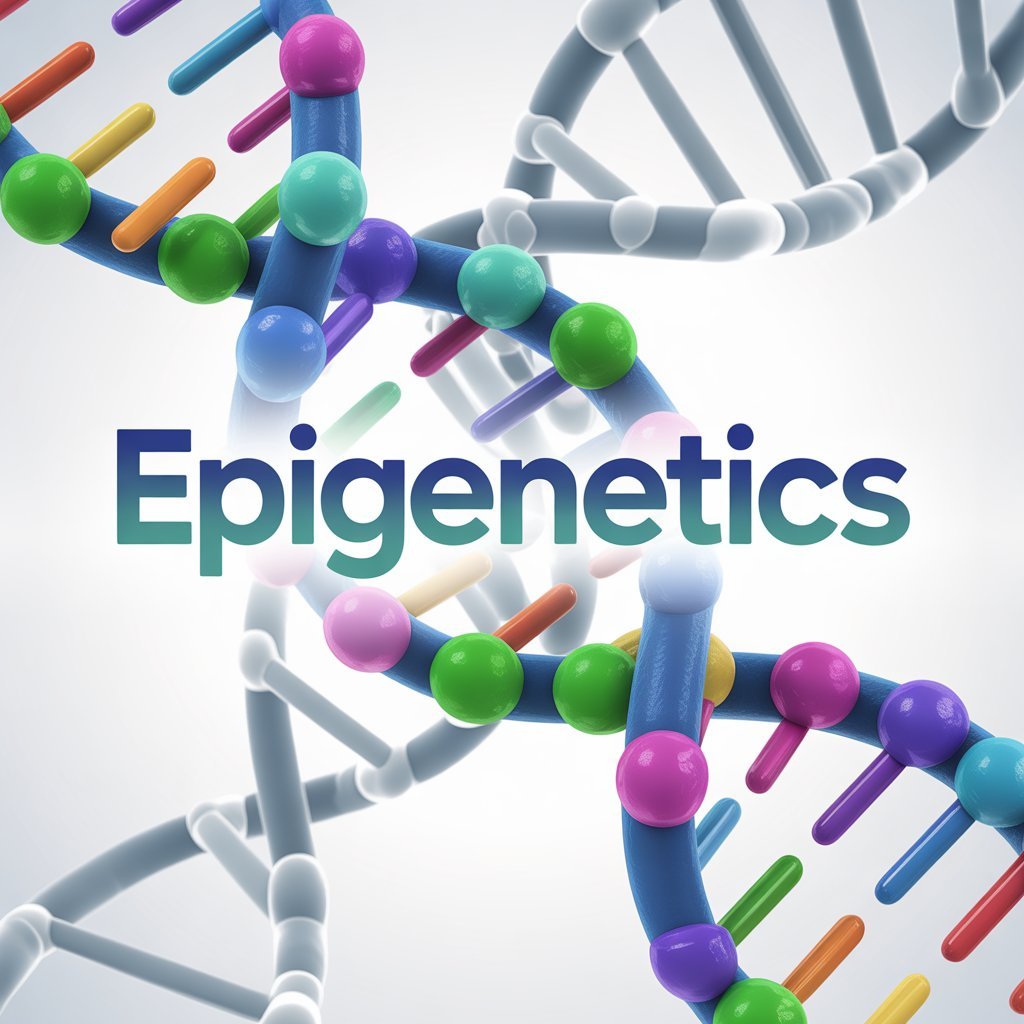
What Is Epigenetics?
What Is Epigenetics and Why Does It Matter?
Epigenetics is the study of changes in how genes are expressed without changes to the underlying DNA sequence itself.
Think of it this way. Your DNA is the script. Epigenetics is about which parts of the script get read, when, and how loudly.
Epigenetic changes can be influenced by environment, lifestyle, and age. And some epigenetic changes can be passed from parent to child.
This means that a father's biological environment can potentially influence how his genes are expressed in his children, without any change to the DNA code itself.
The research here is still developing. But it opens up important questions about how autism risk is transmitted across generations and what role paternal biology plays beyond DNA sequence alone.
The Johns Hopkins Sperm Study Explained
In April 2023, researchers at Johns Hopkins University published findings that added a significant new piece to the autism genetics puzzle.
The study, reported in the journal Molecular Psychiatry, examined families with children diagnosed with autism spectrum disorder. Researchers found a link between chemical marks on DNA in the sperm of fathers and autistic traits in their three-year-old children.
These chemical marks are epigenetic changes. They do not alter the genetic code itself. But they affect how that code is read and used by the body.
The study looked at 45 fathers and 31 children. The researchers are clear that the sample is small and the findings may not hold in the general population.
But the implications are significant.
Co-lead investigator Heather Volk, an associate professor of mental health at the Johns Hopkins Bloomberg School of Public Health, noted that if further research confirms these findings, the epigenetic signs identified could become potential markers for autism risk. They may also help families secure earlier intervention for children showing autistic traits.
Volk also pointed out something important. This research could reveal genetic contributions to autism that are currently being missed by gene sequencing that only looks at direct DNA code.
In other words, the code alone does not tell the whole story. How that code is expressed matters too.
What this study does not say is that autism is caused by fathers. What it suggests is that paternal biology is part of a complex picture that science is only beginning to understand fully.
Dropped in a Maze by Sonia Chand is an honest account of navigating autism from the inside. The questions, the research rabbit holes, the moments of clarity, and the ones that took much longer to come.
What About the Mother's Genetic Contribution?
It would be incomplete to talk about paternal genetics without acknowledging that maternal genetics are equally part of the picture.
Research has suggested that in some cases, genetic variants associated with autism are more likely to be inherited from mothers. This connects to what is sometimes called the female protective effect.
The theory proposes that females require a higher genetic load to develop autism. This means women can carry more autism-associated variants without being autistic themselves, and pass those variants on to their children.
This may partly explain why autism is diagnosed more frequently in males. Though it is increasingly recognised that autism in females is significantly underdiagnosed because of how differently it presents and how effectively girls learn to mask autistic traits.
Both parents contribute genetically. Asking whether autism comes from the father or the mother is a bit like asking which parent is responsible for a child's eye colour.
Both contribute. The outcome depends on the combination.
Advanced Paternal Age and Autism Risk
One of the more consistently replicated findings in autism genetics is the link between advanced paternal age and increased autism risk.
Children born to older fathers have a statistically higher risk of autism compared to children born to younger fathers. This is thought to relate to the accumulation of de novo mutations in sperm over time, as well as epigenetic changes that build up with age.
To be clear, the increased risk is real but modest in absolute terms.
The vast majority of children born to older fathers are not autistic. Many autistic children are born to young fathers. Age is one factor among many and it does not determine outcome.
What this research suggests is that paternal age is worth including in conversations about autism risk factors, alongside the many other contributors that researchers continue to study.
The podcast explores exactly these kinds of conversations regularly. The research, what it means in real life, and how families can make sense of it without spiralling into anxiety.
Listen to the podcast here and join a community navigating these questions together.
Does This Mean Autism Is Inherited?
In a general sense, yes.
Autism has a strong hereditary component. If you have an autistic child, there is a higher likelihood that other family members are also autistic or carry related traits, even without a formal diagnosis.
This is why many parents receive their own autism diagnosis after their child is diagnosed. They recognise themselves in what they are learning. Traits they always thought of as quirks suddenly have a framework.
That recognition can be profound. It can also be complicated.
Autism inheritance does not follow a simple dominant or recessive pattern. It is polygenic, meaning many genes contribute. And multifactorial, meaning non-genetic factors also play a role.
This makes predicting inheritance difficult. Genetic counselling, rather than internet research, is the right tool for families wanting personalised information about their specific situation.
For more on what autism means at a broader level and why the language used around it shapes the support that gets built, the post on autism awareness vs autism acceptance is worth reading alongside this one.
What This Research Means for Families
If you came to this post because your child was recently diagnosed and you are trying to understand where autism came from, here is what matters most.
Knowing the genetic contribution does not change what your child needs right now.
It does not change the support strategies. It does not change the therapy options. It does not change the love and advocacy your child deserves.
What it does is add context. And context can be genuinely helpful.
Understanding that autism has a strong genetic basis can help reduce guilt. No parent caused their child's autism by something they did or did not do.
It can also prompt families to look at older relatives with fresh eyes. To recognise autism traits in parents or grandparents who were never diagnosed. And to approach those family members with new understanding.
For practical support on what communication looks like for autistic children and how to build the right environment, the post on nonverbal autism communication strategies and support is a detailed and useful next read.
If you are ready for personalised support in navigating your family's autism journey, coaching is available for parents who want more than information. They want direction.
Book a coaching session here and get the support that actually moves things forward.
Final Thoughts
Does autism come from the father? Partly. Sometimes. In ways science is still mapping.
Does it come from the mother? Also partly. Also sometimes. In different ways.
Does it come from a combination of genetic, epigenetic, and environmental factors that interact uniquely in each family? Yes. That is the most accurate answer available right now.
What matters more than the origin is what comes next.
The diagnosis is the beginning of understanding. The genetics are context. The work is building a life that genuinely works for your autistic child and for your whole family.
That work is hard. It is also one of the most meaningful things a parent can do. And it does not have to be done without support.
Dropped in a Maze is the book for families in the thick of that work. Honest about the hard parts. Clear-eyed about the way through.