
Nonverbal Autism: Communication Strategies and Support
When a child does not speak, the world tends to assume they have nothing to say.
That assumption is one of the most damaging myths in the autism conversation, and it is one that families navigating nonverbal autism come up against constantly. In waiting rooms, in classrooms, in family gatherings, the absence of spoken words is too often read as an absence of thought, feeling, or understanding.
It is not.
Nonverbal and minimally verbal autistic people have rich inner lives. They have preferences, opinions, humour, and deep emotional awareness. What they need is not a voice. What they need is a way to be heard, and the people around them to be willing to learn a different kind of listening.
This post is for parents, caregivers, educators, and anyone supporting a nonverbal or minimally verbal autistic person. It covers what nonverbal autism actually means, the communication strategies that genuinely work, and how to build an environment where a person can express themselves fully even without spoken words.
Table of Contents
What Does Nonverbal Autism Actually Mean?
How Common Is Nonverbal Autism?
Why Some Autistic People Are Nonverbal
Augmentative and Alternative Communication (AAC)
Picture Exchange Communication System (PECS)
Sign Language and Gesture-Based Communication
Technology and Communication Apps
Building Communication Through Play and Routine
What Not to Do When Supporting a Nonverbal Child
How to Advocate for Your Nonverbal Child
Final Thoughts
What Does Nonverbal Autism Actually Mean?
Nonverbal autism refers to autistic individuals who do not use spoken language as their primary or functional means of communication. Some nonverbal autistic people produce no speech at all. Others are minimally verbal, meaning they may use some words or sounds but not in a way that reliably communicates their needs, thoughts, or feelings.
It is important to understand that nonverbal does not mean non-communicating. Every human being communicates. Body language, facial expression, behaviour, gesture, written word, typing, drawing, and countless other forms of expression are all communication. The goal for nonverbal autistic individuals is not always to develop speech. The goal is always to develop reliable, functional communication in whatever form works best for that person.
It is also worth knowing that the boundary between nonverbal and verbal is not always fixed. Some autistic children who are nonverbal in early childhood develop speech later. Others find their most effective voice through typing or assistive technology rather than through spoken words. Neither outcome is better or worse. Both are valid paths toward communication and connection.
Nonverbal Autism
How Common Is Nonverbal Autism?
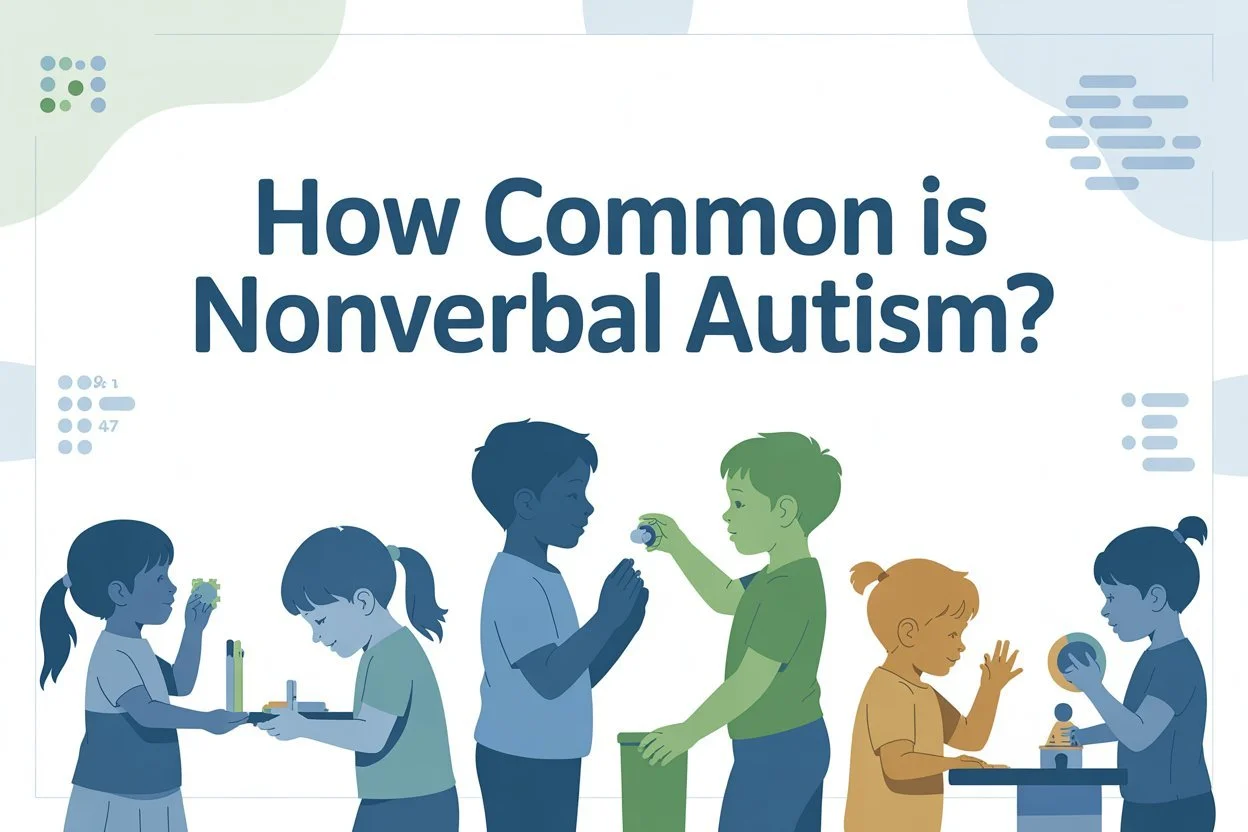
Nonverbal and minimally verbal autism is more common than many people realise. According to research published onPubMed via the National Institutes of Health, estimates of the proportion of children with autism spectrum disorder who are minimally verbal range from 25% to 35%.
And according toAutism Speaks, 1 in 45 adults in the United States has autism, with boys nearly four times more likely to be diagnosed than girls. That said, growing awareness of how autism presents differently in girls and women means that female autism is significantly underdiagnosed, a conversation worth having separately.
The point is this: nonverbal autism is not rare. It is not an extreme edge case. Millions of families around the world are navigating exactly what you are navigating, and there is a growing body of research, tools, and community knowledge to draw from.
Why Some Autistic People Are Nonverbal
There is no single explanation for why some autistic people do not develop spoken language. The reasons are neurological, and they vary from person to person. According todata published by the Centers for Disease Control and Prevention, about 1 in 31 children aged 8 years, which is 3.2% of children, has been identified with autism spectrum disorder. When you apply those minimally verbal estimates to that number, the scale of families navigating nonverbal autism becomes very clear.
For some, the motor planning required for speech, a process called apraxia of speech, is genuinely difficult. The brain struggles to coordinate the sequence of muscle movements needed to produce words, even when the person understands language fully and has things they want to say.
For others, the sensory experience of producing and hearing speech is overwhelming. The act of speaking may cause sensory distress that makes it inaccessible in most environments even if it is possible in some.
For others still, spoken language simply did not develop in the typical window and alternative communication pathways were not put in place early enough to build on.
What matters most is not the reason but the response. Understanding that a nonverbal child is not choosing silence, is not being stubborn, and is not less intelligent than a verbal child is the foundation of every strategy that actually works.
If you are still in the early stages of recognising signs in your child, the post on 7 common early signs of autism in infants and toddlers covers the communication red flags worth watching for and what to do when you spot them.
Augmentative and Alternative Communication (AAC)
AAC is the umbrella term for all the tools and strategies that support or replace spoken language. It includes everything from low-tech picture boards to high-tech speech generating devices, and it is one of the most evidence-based areas of autism support available.
AAC does not prevent speech from developing. This is one of the most persistent and damaging myths in this space, and it stops many families from pursuing AAC early enough. The research is clear: AAC supports communication development across the board, including for children who go on to develop spoken language.
AAC tools broadly fall into two categories:
Unaided AAC which uses the body without any external tools:
Sign language
Facial expression
Gesture
Body language
Aided AAC which uses external tools or technology:
Picture boards and communication books
PECS systems
Speech generating devices
Communication apps on tablets or phones
The right AAC system depends entirely on the individual. A good speech and language therapist with AAC experience is the best starting point for finding the right fit for your child.
Dropped in a Maze by Sonia Chand walks through the reality of finding the right communication tools and support for an autistic child, including the dead ends, the breakthroughs, and everything in between.
Picture Exchange Communication System (PECS)
PECS is one of the most widely used AAC approaches for nonverbal and minimally verbal autistic children. It teaches children to communicate by exchanging picture cards with a communication partner.
The system works in phases, starting with teaching the child to physically hand over a picture card to request a desired item, then gradually building toward more complex communication including sentence structure, commenting, and responding to questions.
PECS is typically implemented by a trained speech and language therapist but the strategies are designed to be used consistently across all environments, at home, at school, and in the community. Consistency is key. The more a child can use their communication system in all settings, the more quickly it becomes genuinely functional.
What makes PECS effective is that it starts with motivation. The child learns to communicate about things they actually want, which creates a genuine reason to communicate. That intrinsic motivation is the engine of progress.
Sign Language
Sign Language and Gesture-Based Communication
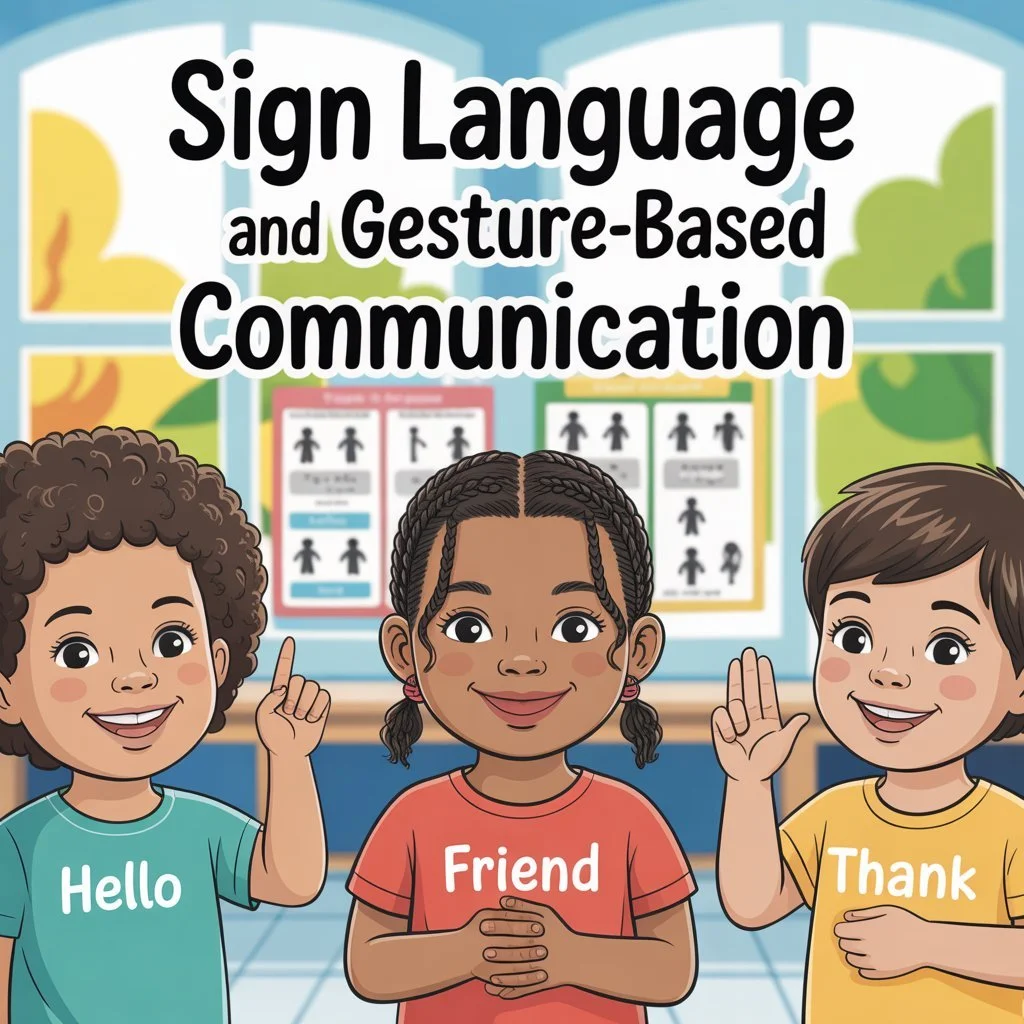
Sign language is another highly effective communication tool for nonverbal autistic children, particularly in the early years. It has the advantage of always being available, no device needed, no cards to find, just hands.
Many families use a simplified sign system rather than full British Sign Language or American Sign Language, borrowing the most functional signs for everyday communication. Common starting points include signs for:
More
Finished
Help
Eat
Drink
Yes and no
Please and thank you
The research on sign language and autism is positive. Even children who go on to develop spoken language often benefit from having signs as a bridge during the period when speech is developing.
One important note: sign language works best when everyone in the child's environment learns and uses it consistently. A child who signs at school but comes home to a family that does not know the signs loses half their communication environment immediately.
Technology and Communication Apps
Technology has transformed the landscape of AAC in the past decade. There are now sophisticated communication apps available on standard tablets and smartphones that give nonverbal autistic people access to a vast vocabulary and the ability to construct complex sentences.
Some of the most widely used communication apps include Proloquo2Go, Snap Core First, and TouchChat. These are robust, research-backed systems that are customisable to the individual's needs, vocabulary level, and communication goals.
For families who cannot access these through therapy services or funding, there are also free and lower-cost alternatives worth exploring with a speech and language therapist.
A few things worth knowing about technology-based AAC:
Children need to be taught to use these systems. Access alone is not enough
The device should be treated like a vital piece of equipment, always charged, always within reach
The goal is communication, not performance. A child using their device to request a snack is communicating successfully
Autistic people who use AAC devices have the same right to privacy as anyone else. Do not read through their device without permission
Building Communication Through Play and Routine
Formal AAC systems are important, but communication is also built in the small, repeated moments of daily life. Play and routine are two of the most powerful contexts for building communication with a nonverbal child.
In play:
Follow the child's lead. Whatever they are interested in, join them there. Narrate what they are doing without demanding a response. Offer choices using their communication system. Celebrate any communicative act, a look, a gesture, a reach, not just the ones that look like conventional communication.
Avoid over-questioning. A stream of questions puts a child in a constant position of being tested and creates pressure that shuts communication down rather than opening it up.
In routine:
Predictable routines create natural communication opportunities. The same sequence of events at the same time each day gives a nonverbal child the ability to anticipate what comes next and to communicate about it. Pause and wait within routines, giving the child a moment to initiate communication before you fill the silence.
Understanding how to build these environments well is one of the things the podcast covers in depth, with honest conversations about what actually works in real family life rather than just in therapy rooms.
Listen to the podcast here and get practical support for every stage of the communication journey.
What Not to Do When Supporting a Nonverbal Child
Knowing what to avoid is just as important as knowing what to do. Some well-intentioned approaches actively work against communication development:
Do not assume understanding is absent: Many nonverbal autistic people understand far more than they can express. Always speak to and about a nonverbal person with the same respect you would give anyone else.
Do not speak for them constantly: It is natural to want to fill in the gaps but doing so removes the need and opportunity for the child to communicate. Leave space.
Do not withhold AAC tools as a reward: Communication is a right, not a privilege. Restricting access to a communication device as a consequence for behaviour is harmful and counterproductive.
Do not make eye contact a requirement for communication: Many autistic people communicate better when they are not required to make eye contact simultaneously. Allow the child to look away while they communicate.
Do not compare progress to other children: Every nonverbal autistic person is on their own trajectory. Comparison creates anxiety and obscures the real gains being made.
How to Advocate for Your Nonverbal Child
Nonverbal autistic children are among the most vulnerable to having their needs overlooked or their intelligence underestimated. Advocacy is not optional. It is one of the most important things a parent or caregiver can do.
In schools, advocate for:
A communication system that is used consistently by all staff
Staff training in AAC and nonverbal communication
An environment where the child's communication attempts are recognised and responded to
Access to a qualified speech and language therapist with AAC expertise
In medical settings, advocate for:
The child being addressed directly, not talked over
Time and tools being made available for the child to communicate
Pain and discomfort being taken seriously even when it cannot be verbally reported
In the community, advocate for:
Patience from the people around your child
Awareness that silence is not the same as absence
Respect for your child's communication system whatever form it takes
The broader context of what genuine autism acceptance looks like and why it matters so much for nonverbal autistic people is covered in the post on autism awareness vs autism acceptance. It is worth reading and sharing widely.
If you are at the point where you need more than resources and reading, one-on-one coaching is available for parents who want personalised support navigating the communication journey and everything that comes alongside it.
Book a coaching session here and get the clarity and direction you need.
Final Thoughts
Nonverbal autism is not a barrier to a full, connected, meaningful life. It is a different path to communication, and like every path, it becomes clearer the more you walk it with the right tools and the right people beside you.
The families who find their way through this are not the ones who had it figured out from the beginning. They are the ones who stayed curious about their child, who kept learning, who refused to let the absence of speech be the end of the conversation.
Your child has something to say. The work is building the bridge that lets them say it.
Dropped in a Maze is the story of navigating exactly that, the uncertainty, the searching, and the moments when everything finally begins to make sense. It is the book to read when you need to know that someone else has been where you are and found their way through.
Order your copy of Dropped in a Maze here. You do not have to find the way alone.
