
If Autism Is Left Untreated: What Actually Happens and Why It Matters
If autism is left untreated is one of the most searched questions about autism, and it carries a weight that most other search queries do not. Behind it is usually a parent who is scared, or an adult who is starting to wonder whether years of struggling without a diagnosis has quietly cost them more than they realized.
The honest answer to what happens if autism is left untreated is not simple, because autism is not a single condition with a single trajectory. What happens depends enormously on the individual, their specific profile, their environment, and what kind of support was or was not available to them. But the research is clear enough on several key points that it is worth addressing directly and honestly, without either minimizing the real consequences or catastrophizing in ways that help nobody.
This post covers what the research actually says about what happens if autism is left untreated, what untreated really means in this context, and what genuinely changes when the right support finally arrives.
Table of Contents
What Does Untreated Actually Mean in Autism
If Autism Is Left Untreated: Mental Health Consequences
If Autism Is Left Untreated: Communication and Social Development
If Autism Is Left Untreated: Education and Employment
If Autism Is Left Untreated: Relationships and Isolation
If Autism Is Left Untreated: Physical Health
The Difference the Right Support Makes
It Is Never Too Late
FAQs
Final Thoughts
What Does Untreated Actually Mean in Autism
Before going further it is worth being clear about what untreated actually means in the context of autism, because the word treatment carries different implications here than it does in the context of a disease or infection.
Autism is not a disease. It cannot be cured and it does not need to be. When people ask what happens if autism is left untreated, what they are really asking is: what happens when an autistic person goes without the understanding, accommodation, support, and tools they need to navigate a world that was not designed for their neurology.
Untreated in autism means unidentified, unsupported, and unaccommodated. It means a child growing up without anyone around them understanding why things are hard, without the right educational support, without the communication tools they need, and without the framework to make sense of their own experience. It means an adult spending decades wondering why they are different, why relationships are so hard, and why they are so exhausted by things that seem effortless for everyone else.
When framed that way, the question of what happens if autism is left untreated becomes both clearer and more urgent.
If Autism Is Left Untreated: Mental Health Consequences
The most consistently documented consequence of autism being left untreated is significant mental health impact.
Research published in the journal Autism in Research found that autistic individuals who are undiagnosed or who receive a late diagnosis report significantly higher rates of anxiety and depression than those identified and supported earlier..
This is not a coincidence. If autism is left untreated, the autistic person spends years, sometimes decades, trying to function in an environment that does not accommodate them, masking their natural responses, absorbing repeated messages that they are too much, too sensitive, too rigid, or simply not trying hard enough. That accumulated experience has a real and measurable cost.
Anxiety and depression in unidentified autism are not separate conditions that happen to occur alongside autism. They are frequently the direct result of what happens when autism is left untreated and the gap between what the autistic person needs and what they receive goes unaddressed year after year.
If Autism Is Left Untreated: Communication and Social Development
For children in particular, if autism is left untreated during the critical early developmental window, communication and social development are among the most significantly affected areas.
The brain is most neuroplastic in the earliest years of life. When autism is identified early and the right communication support is put in place during that window, children develop stronger functional communication skills than they would develop without it. When autism is left untreated during that same window, the gaps between the autistic child and their neurotypical peers in both communication and social skill development tend to widen rather than close on their own.
This does not mean that communication development stops or that social skills cannot be built later. Many autistic individuals make significant gains in both areas throughout childhood, adolescence, and adulthood. But the research is consistent that earlier support produces better outcomes, and the absence of early support leaves gaps that take more effort to address later.
For children who are nonverbal or minimally verbal, if autism is left untreated the consequences for communication are particularly significant because the window for establishing an alternative communication channel, such as AAC, is also most effective in the early years.
The post on early autism detection covers in detail why early identification and early support make such a measurable difference, and is worth reading alongside this one.
If Autism Is Left Untreated: Education and Employment
If autism is left untreated, the consequences ripple through education and into adult employment in ways that compound over time.
In school, an autistic child without identification or support is typically expected to meet the same academic and behavioral standards as neurotypical peers, without the accommodations that would allow them to actually demonstrate what they know. Sensory overload goes unaddressed. Executive functioning difficulties go unsupported. Social misunderstandings accumulate and affect both peer relationships and teacher relationships. Many autistic children without identification are labeled as lazy, difficult, disruptive, or underachieving, when the reality is that they are working significantly harder than anyone around them realizes just to get through the day.
In employment, the picture for adults if autism is left untreated is similarly challenging. Research from Drexel University's Autism Institute found that autistic adults have among the lowest employment rates of any disability group, with many struggling to maintain employment not because of lack of ability but because of the absence of accommodations, the demands of masking, and the social complexity of workplace environments that were not designed for autistic brains.
Dropped in a Maze by Sonia Chand is one of the most honest accounts of what it looks like to navigate the autism journey without a clear map, and it is exactly the kind of reading that helps families and autistic individuals understand not just what support is needed but how to find their way through a system that does not always make it easy.
Get your copy of Dropped in a Maze here
If Autism Is Left Untreated: Relationships and Isolation
If autism is left untreated, relationships are one of the areas where the impact accumulates most quietly and most painfully.
Without a framework for understanding their own social communication differences, autistic people often experience repeated relationship failures that they cannot explain or prevent. Friendships that start well and then inexplicably fall apart. Romantic relationships that struggle under the weight of unmet communication needs. Family relationships strained by years of being misunderstood. The absence of a diagnosis means the absence of a shared language for understanding what is actually happening in these relationships and what would genuinely help.
Social isolation is one of the most consistent findings in research on untreated autism across the lifespan. And social isolation, in turn, significantly worsens the mental health consequences already described above.
If you are navigating these relationship and communication challenges and looking for practical, personalised support built around your actual neurology, coaching with Sonia is exactly the kind of help that makes a real difference.
Book a coaching session with Sonia here and start building the communication tools and social confidence that change how relationships actually feel.
If Autism Is Left Untreated: Physical Health
Physical health is an often overlooked area of what happens if autism is left untreated, but the research here is worth taking seriously.
Autistic individuals have higher rates of several physical health conditions including gastrointestinal disorders, sleep disorders, and epilepsy. When autism is left untreated and unidentified, these co-occurring conditions are frequently also missed, misattributed, or managed inadequately because the underlying autism context that would help clinicians understand them is not recognized.
Sleep disorders in particular have a significant downstream impact on every other area of functioning including mental health, cognitive performance, emotional regulation, and daily functioning. When autism is left untreated, sleep issues are often attributed to behavioral causes rather than the neurological differences driving them, leading to interventions that do not address the actual problem.
Research published in the journal Sleep Medicine Reviews has found that sleep disturbances affect between 40 and 80 percent of autistic individuals and that addressing them has significant positive effects on daytime functioning, behavior, and quality of life.
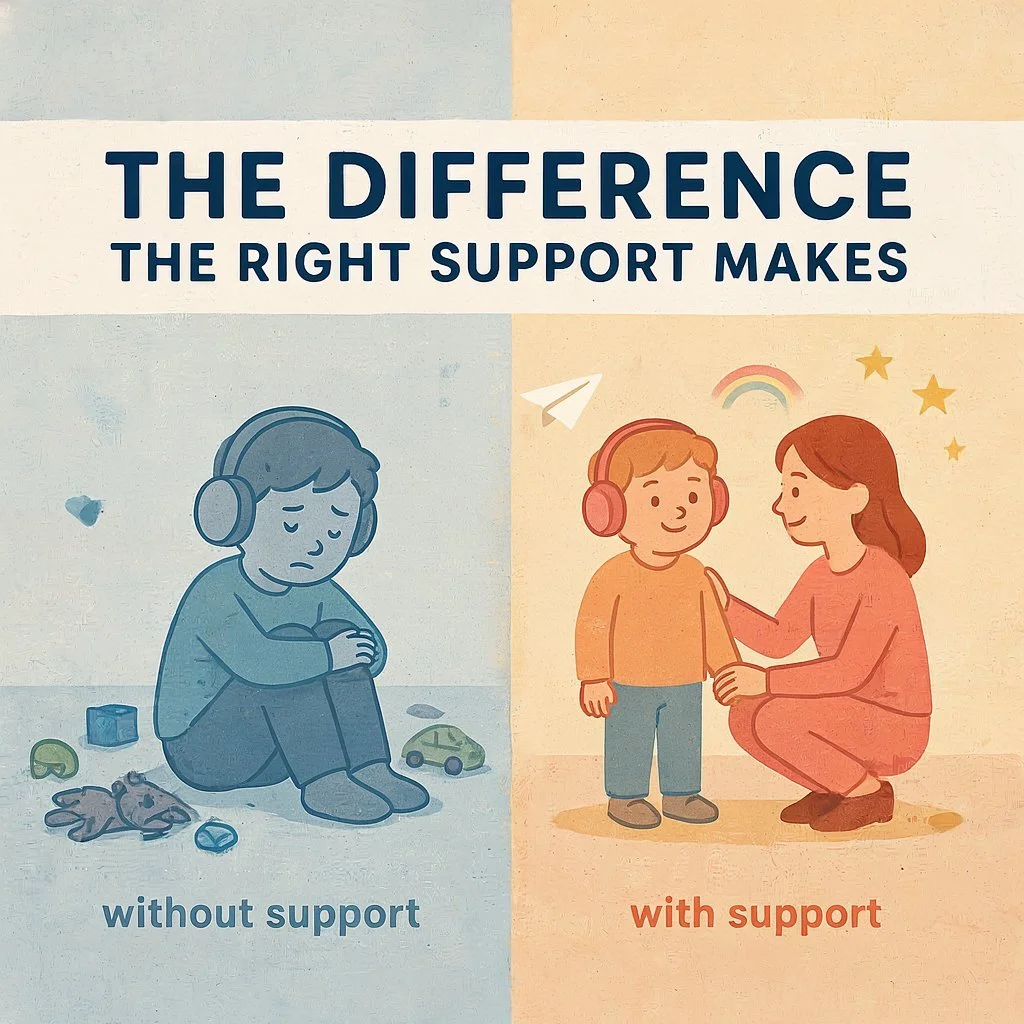
The Difference the Right Support Makes
Understanding what happens if autism is left untreated is most useful when paired with an equally clear picture of what changes when the right support is finally in place.
When autism is identified and supported appropriately, anxiety decreases because the autistic person finally has a framework for understanding their own experience. Communication improves because the right tools and strategies are available. Relationships become easier to navigate because there is shared language for what is actually happening. Employment becomes more sustainable because accommodations can be requested and implemented. And the years of accumulated self-blame, shame, and confusion begin to give way to something more accurate and more compassionate.
The On the Spectrum podcast with Sonia Chand covers exactly these kinds of real, honest conversations about what the journey from untreated to genuinely supported looks like, with guests who have navigated it themselves and with the kind of practical insight that makes a real difference.
Listen to the On the Spectrum podcast here and find the conversations that make the journey feel less impossible.
The right support does not undo the years that passed without it. But it can genuinely change what the years ahead look like, and that is worth everything.
It Is Never Too Late
One of the most important things to say about if autism is left untreated is that the damage is not permanent and it is never too late for the right support to make a genuine difference.
Adults who are diagnosed later in life consistently report that the diagnosis, even when it comes decades after it should have, changes things. The framework it provides for understanding a lifetime of experiences has real and lasting value. The support it opens access to, whether that is workplace accommodations, appropriate therapy, or coaching built around actual autistic neurology, makes a measurable difference to quality of life regardless of when it arrives.
For autistic adults who are recognising themselves in this post and wondering where to start, coaching with Sonia offers exactly the kind of personalised, neurodivergent-affirming support that meets you exactly where you are right now.
FAQs
What happens if autism is left untreated?
Without identification and support, autistic individuals face significantly higher rates of anxiety, depression, social isolation, educational underachievement, and employment difficulties.
Can autism get worse if left untreated?
Autism itself does not worsen, but the secondary consequences including mental health, relationships, and life opportunities are significantly worse without appropriate support.
Is it too late to get support for autism as an adult?
No. Support at any age makes a meaningful difference to quality of life, and adult diagnosis opens access to accommodations and understanding that were previously unavailable.
What is the most important thing to do if autism has gone unidentified?
Pursue formal assessment, access appropriate support as soon as possible, and connect with community. The clarity that comes from identification, even late, changes things meaningfully.
Can the effects of untreated autism be reversed?
Many of the secondary consequences can be significantly improved with the right support. The earlier the support arrives the better, but meaningful improvement is possible at any age.
Final Thoughts
If autism is left untreated, the consequences are real, they are documented, and they compound over time. But they are not inevitable, and they are not permanent.
The difference between an autistic person who goes without support and one who receives the right support at the right time is not a difference in the autism itself. It is a difference in whether the world around them made room for who they actually are.
That room can be made at any point. And making it, however late it comes, matters.
References:
Autism Research Institute. Treating Sleep Disorders [Internet]. Last updated September 2024. https://autism.org/treating-sleep-disorders/
Belenguer LM, Cabrera TDLC, Arboledas GP. Sleep Characteristics in Children and Adolescents With Autism Spectrum Disorder. J Sleep Med. 2025 Aug;22(2):49-62.https://www.e-jsm.org/journal/view.php?number=415
Roux AM, Shattuck PT, Rast JE, Rava JA, Anderson KA. National Autism Indicators Report: Transition into Young Adulthood. Philadelphia, PA: Life Course Outcomes Research Program, A.J. Drexel Autism Institute, Drexel University; 2015.https://drexel.edu/~/media/Files/autismoutcomes/publications/LCO%20Fact%20Sheet%20Employment.ashx
