

Why Autistic Adults May Avoid Phone Calls
If the person you love goes to extraordinary lengths to avoid making a phone call, you have probably wondered more than once whether it is something they could push through if they really needed to, or whether something genuinely different is happening for them.
The answer is that something genuinely different is happening. Phone call avoidance in autistic adults is not stubbornness, social laziness, or a preference that could be overridden with enough motivation. It is a neurological response to a specific set of demands that the phone call format places on an autistic brain, and understanding what those demands actually are changes everything about how you interpret the avoidance and how you respond to it.
This post is for the partners, family members, and friends who want to understand, because understanding is where everything helpful begins.
Table of Contents
What Phone Calls Actually Demand From an Autistic Brain
The Sensory Dimension of Phone Call Avoidance
The Unpredictability Problem
Processing Speed and Real Time Communication
The Anxiety That Builds Before the Call
When Phone Calls Involve Masking
How Phone Call Avoidance Connects to Autistic Burnout
What Does Not Help
What Actually Helps
When Phone Calls Cannot Be Avoided
FAQs
Final Thoughts
What Phone Calls Actually Demand From an Autistic Brain
To understand why autistic adults avoid phone calls, you need to understand what a phone call is asking of a brain that processes the world differently.
A phone call strips away almost every communication channel except the voice. There is no facial expression to read. No body language. No visual context. No time to think before responding. No ability to reread what was just said. No pause button. No processing time between turns.
For neurotypical people, the voice carries enough information to make conversation work comfortably without all of those other channels. For many autistic adults, voice alone is not enough. The missing visual and contextual information creates a gap that the autistic brain has to work very hard to fill in real time, drawing on cognitive resources that get depleted quickly and leave the person exhausted in a way that feels completely disproportionate to what just happened.
A ten minute phone call can feel, neurologically, like an hour of concentrated effort. And the harder the call, the worse the recovery time afterward.
This is not dramatic. It is not exaggerated. It is the actual neurological cost of a communication format that was never designed for autistic processing, and understanding that cost is the starting point for everything else.
Book a discovery call with Sonia here to find out how coaching can help you.
The Sensory Dimension of Phone Call Avoidance
Sensory processing differences are a core feature of autistic neurology, and they contribute to phone call avoidance in specific ways that are worth understanding clearly.
Many autistic adults experience auditory processing differences that affect how clearly and how accurately they can process spoken language, particularly when other variables are introduced. Background noise on either end of the call, poor audio quality, an unfamiliar accent, or a caller who speaks quickly all compound the processing demand significantly.
Unlike an in-person conversation where visual cues help fill in the gaps when auditory processing struggles, a phone call offers nothing to compensate. The autistic adult is processing speech under genuinely difficult conditions and doing it entirely in real time without any support channel.
For some autistic adults, the sensory experience of a phone pressed against the ear is also a genuine physical discomfort. The pressure, the sound quality, and the unnatural intimacy of a disembodied voice played directly into the ear can all contribute to a sensory experience that makes the call harder to tolerate from the first moment.
The Unpredictability Problem
One of the most consistent and most underappreciated reasons autistic adults avoid phone calls is the unpredictability of the format itself.
Autistic brains generally function more efficiently in predictable environments. When what is coming next can be anticipated, the nervous system does not have to stay on high alert for unexpected input. When the environment is unpredictable, the threat detection system stays activated, consuming cognitive and emotional resources and making calm, efficient functioning significantly harder.
A phone call is inherently unpredictable. You do not know what the other person is going to say, how long the call will last, what tone they will take, whether they will ask something you are not prepared for, or when it will end. For an autistic adult, the entire duration of the call involves sustained vigilance against these unknowns, which is exhausting in a way that is genuinely neurological rather than simply psychological.
This is also why the prospect of a call that has not happened yet can feel overwhelming before it begins. The anticipatory anxiety of an unpredictable event that is coming is, for many autistic adults, as draining as the event itself.
The On the Spectrum podcast with Sonia Chand covers the real experiences of autistic adults navigating exactly these kinds of daily challenges in honest, accessible conversations that help families and partners understand what they are witnessing.

Photo by Priscilla Du Preez 🇨🇦 on Unsplash
Processing Speed and Real Time Communication
One of the most significant neurological contributors to phone call avoidance is the difference in processing speed that many autistic adults experience.
Many autistic adults need more time than the typical phone call allows to process what has been said, formulate a response, translate that response into spoken words, and deliver it in a way that is coherent and socially appropriate. In a written conversation, that processing time is invisible. Nobody sees the gap between reading a message and composing a reply. The autistic adult can take the time they genuinely need without the social awkwardness of silence.
In a phone call, that gap is immediately visible and socially uncomfortable. The silence feels like incompetence or disengagement to the person on the other end, even when the autistic adult is simply doing the neurological work that the question requires. The awareness of that discomfort adds a layer of social anxiety on top of the processing demand itself, making the whole experience significantly harder.
This is why many autistic adults express themselves much more clearly and confidently in writing than they do on the phone. It is not that they communicate better in one medium because they have practiced more. It is that one medium accommodates their processing speed and the other does not.
The Anxiety That Builds Before the Call
For many autistic adults, the hardest part of a phone call is not the call itself. It is the hours, or sometimes days, before it.
Anticipatory anxiety around phone calls is one of the most consistent features of the experience that autistic adults describe, and it is worth taking seriously rather than dismissing as overthinking or catastrophizing.
The anxiety builds because the call represents a known upcoming experience with unknown specific content. The autistic brain, which functions best with predictability, knows a call is coming and cannot fully prepare for it because the specific demands of the call are unknown until it happens. This combination of the known and the unknown is one of the most reliable triggers for autistic anxiety.
The result is that a single scheduled phone call can meaningfully affect the quality of an autistic adult's entire day in the hours leading up to it, which means the cost of the call is significantly higher than the duration of the call itself suggests.
Dropped in a Maze by Sonia Chand gives this experience the honest, grounded account it deserves, writing from the inside of autistic daily life in a way that helps families and partners genuinely understand what the person they love is navigating.
Get your copy of Dropped in a Maze here
When Phone Calls Involve Masking
Phone calls require a specific kind of masking that is worth understanding as a distinct contributor to the avoidance.
Masking is the process of suppressing natural autistic responses to appear more neurotypical. In a phone call, this means managing the pace and tone of speech to sound appropriately engaged and natural, monitoring for the subtle cues that indicate when it is your turn to speak, producing appropriate verbal feedback sounds like mm and yes and right at the right moments, and maintaining the social performance of ease while doing all of the processing work described above simultaneously.
This is cognitively expensive in a way that is very hard to convey to someone who does not experience it. For neurotypical people, most of this is automatic. For autistic adults, much of it is conscious, deliberate, and effortful. The phone call is not just a conversation. It is a performance of a conversation running on top of a conversation, requiring significantly more cognitive resources than the duration of the call would suggest.
When a person is already in a period of autistic burnout, or approaching one, the additional masking demand of a phone call can be genuinely impossible rather than simply difficult. This is worth knowing for the partners and family members who sometimes interpret the avoidance as a choice when it is genuinely a neurological limitation in the moment.
For a fuller understanding of what autistic burnout looks like and how it relates to daily life demands like phone calls, the post on what does autistic burnout feel like in adults covers this connection in depth.
How Phone Call Avoidance Connects to Autistic Burnout
Phone call avoidance often becomes more severe during or approaching autistic burnout, and understanding that connection helps family members recognize when the avoidance is a signal of something that needs attention beyond the phone call itself.
During burnout, the cognitive and emotional resources that would ordinarily make a hard thing manageable are significantly depleted. The already considerable demands of a phone call become genuinely impossible for a nervous system that is running on empty. The avoidance intensifies not because the person is being less cooperative but because the available resources have dropped below what the task requires.
If you have noticed that the person you love is avoiding phone calls more than usual, and that this increased avoidance is accompanied by other signs of withdrawal, exhaustion, or reduced functioning, it is worth gently opening a conversation about how they are doing overall rather than focusing on the phone call specifically.
The phone call avoidance is rarely the problem. It is a symptom of the problem, and the problem is usually a nervous system that is carrying more than it can sustainably hold.
What Does Not Help
Before covering what helps, it is worth being direct about the responses that consistently make phone call avoidance worse.
Telling them to just push through it
Willpower does not resolve a neurological processing demand. Suggesting that they simply try harder communicates that you do not understand the nature of the difficulty, which adds shame to the existing anxiety.
Making it a character assessment
Phone call avoidance is not laziness, social selfishness, or a sign that the autistic adult does not care enough about the person they are avoiding calling. Framing it that way misattributes the cause and damages the relationship without addressing anything.
Repeatedly pushing during a period of burnout
When someone is in burnout, pushing them to do things that require significant masking effort does not build resilience. It depletes what little resource is left and extends the recovery period.
Making them feel guilty about the accommodation
Needing written communication rather than phone calls is a genuine neurological accommodation, not a preference or a convenience. Treating it as an imposition rather than a need communicates that their neurological reality is less important than your comfort with the format.
What Actually Helps
What helps is genuinely practical and, in most cases, genuinely simple once the underlying reason for the avoidance is understood.
Default to written communication where possible.
Text messages, emails, and messaging apps give the autistic adult the processing time they need, remove the performance demand of real-time speech, and produce clearer, more considered communication from both parties. This is not lowering the bar. It is choosing the right tool for the brain you are communicating with.
Give advance notice when a call is necessary
When a phone call genuinely cannot be avoided, giving as much advance notice as possible, along with a clear indication of what the call will cover, reduces the anticipatory anxiety significantly. Knowing what is coming allows some preparation, and preparation is one of the most effective anxiety management tools available.
Keep necessary calls short and structured
A call with a clear beginning, middle, and end, covering a defined list of topics, is significantly more manageable than an open-ended call with no defined scope or duration. Agree on the agenda before the call if possible.
Offer alternatives for medical and administrative calls
Many of the phone calls that feel unavoidable because they involve medical providers, insurance companies, or official bodies actually do have written alternatives. Online portals, secure messaging, and email options exist for many of these calls. Helping the autistic adult find and use these alternatives is a genuinely supportive act.
Do not interpret the avoidance personally
Phone call avoidance is almost never about the relationship. It is about the format. The autistic adult who struggles to call their partner about something practical is not struggling because they do not care about their partner. They are struggling because the phone call format is genuinely hard, regardless of who is on the other end.
For autistic adults who are working with a coach to build practical daily life strategies including communication management, Sonia's socio-emotional coaching addresses exactly these kinds of real-world challenges with personalized, autism-informed guidance.
Book a discovery call with Sonia here to find out how coaching can help you.
When Phone Calls Cannot Be Avoided
There are situations where a phone call genuinely cannot be replaced with written communication, and it is worth having a plan for those rather than hoping they will not arise.
Useful strategies for unavoidable phone calls include:
Scripting in advance
Writing out what needs to be said and keeping the script nearby during the call reduces the real-time processing demand significantly. The script does not need to be followed word for word. It provides a fallback when processing becomes difficult.
Choosing the right time
Making a call during a period of genuine regulation, not during a high anxiety period, not immediately after a draining activity, and not during sensory overload, produces significantly better outcomes than making the call when the nervous system is already stretched.
Using speakerphone or headphones
Removing the physical pressure of a handset pressed against the ear reduces one layer of the sensory demand and allows some physical movement during the call, which can support regulation.
Having someone else present
A trusted person in the room during a difficult call provides co-regulatory support and can step in to help if processing becomes too difficult.
Debriefing afterward
Having a low-demand, comfortable decompression period after a difficult phone call is not an indulgence. It is a genuine neurological necessity that should be planned for rather than apologized for.
FAQs
Why do autistic adults avoid phone calls?
Phone calls remove visual and contextual communication channels, require real-time processing under time pressure, involve unpredictability, and demand a specific kind of masking that is neurologically expensive for autistic adults.
Is phone call avoidance a choice?
No. It is a neurological response to a demanding communication format. It is not something that can be resolved through willpower or motivation.
What should I do if my autistic partner avoids calling me?
Default to written communication where possible, give advance notice when calls are necessary, and avoid interpreting the avoidance as a reflection of the relationship rather than a response to the format.
Does phone call avoidance mean they do not care?
No. The avoidance is about the format, not the relationship. Autistic adults who avoid calling the people they love most are responding to the neurological demands of the format, not communicating disinterest.
Can autistic adults learn to handle phone calls more easily?
With the right support and strategies, the experience of phone calls can become more manageable. But the goal is management rather than elimination of the underlying neurological reality, which does not change.
What is the most helpful thing I can do?
Stop requiring phone calls where written alternatives exist, and stop interpreting the avoidance as something that reflects on the relationship or the person's character.
Final Thoughts
Phone call avoidance in autistic adults is not a quirk, a preference, or a habit that could be changed with enough effort. It is a neurological response to a communication format that places specific and genuinely difficult demands on an autistic brain, and those demands do not become less real because the phone call seems like a normal everyday thing to the person making the request.
Understanding this does not mean phone calls never happen. It means when they do, they happen with genuine awareness of the cost, adequate preparation, and the kind of compassion that comes from knowing what you are asking.
That understanding, built through honest information rather than assumption or frustration, is one of the most genuinely supportive things a partner, family member, or friend can offer an autistic adult who is navigating a world full of communication formats that were not designed for their brain.
Dropped in a Maze by Sonia Chand gives this understanding its fullest human context, the honest account of daily autistic life in all its complexity, written for everyone in the autistic person's world who wants to understand rather than simply manage.
References:
Howard PL, Sedgewick F. 'Anything but the phone!': Communication mode preferences in the autism community. Autism. 2021;25(8):2265-2278. https://doi.org/10.1177/13623613211014995
Cacchiotti N. Individuals with ASD rate phone calls as worst communication mode [Internet]. Autism Research Review International; 2024 Feb 29. https://arrionline.org/individuals-with-asd-rate-phone-calls-as-worst-communication-mode/
de Marchena A, Cuneo N, Gurbuz E, Brown M, Trujillo J, Bergstrom J. Communication in Autistic Adults: An Action-Focused Review. Curr Psychiatry Rep. 2025;27(8):471-481. https://pmc.ncbi.nlm.nih.gov/articles/PMC12271282/
How to Support an Autistic Partner in a Relationship
How to support an autistic partner in a relationship is a question that comes up in two very different ways. Sometimes it is asked by the neurotypical partner trying to bridge a gap they cannot quite name. And sometimes it is asked by the autistic partner themselves, trying to understand why connection feels so complicated even when the love is completely genuine.
How to support an autistic partner in a relationship is not really one question. It is several layered ones. How do we communicate in ways that work for both of us? How do we navigate sensory differences, social exhaustion, and the aftermath of a lifetime of masking? How do we build something real and sustainable when one or both partners are working with a neurology the relationship world was not designed for?
This post answers those questions honestly, with research where it exists and with the kind of practical, human clarity that most relationship advice never quite gets to when autism is involved.
Table of Contents
How to Support an Autistic Partner: Starting With Understanding
The Double Empathy Problem: Why Communication Breaks Down
Communication Strategies That Actually Work
Sensory Needs in an Intimate Relationship
Social Exhaustion and What It Means for Couples
Masking in Relationships and the Cost of Dropping It
Conflict and Repair in Autistic Relationships
How to Support an Autistic Partner Through Burnout
Intimacy and Connection in Autistic Relationships
When to Seek Support
Helpful Resources
FAQs
Final Thoughts
How to Support an Autistic Partner: Starting With Understanding
How to support an autistic partner in a relationship starts before any specific strategy or communication technique. It starts with genuinely understanding what autism means for that specific person in that specific relationship, not the clinical definition, not the stereotype, but the real, lived experience of your partner navigating a world that was not designed for their neurology.
Autism in relationships does not look one way. An autistic partner might be the most loyal, most attentive, most deeply committed person you have ever been with, and simultaneously struggle profoundly with reading social cues, managing sensory input during intimacy, or recovering from a difficult social event quickly enough to be emotionally present that same evening.
Both of those things are true at the same time. And holding both of them, without resolving them into a simpler story, is the starting point for how to support an autistic partner in a relationship genuinely rather than performatively.
The Double Empathy Problem: Why Communication Breaks Down
One of the most important research findings for understanding how to support an autistic partner in a relationship is the double empathy problem, a concept developed by autistic researcher Dr. Damian Milton.
For decades, the autism narrative assumed that autistic people lacked empathy and that this was the primary source of relationship difficulties. The double empathy problem turns this on its head.Research by Milton published in Disability and Society found that the communication difficulties between autistic and neurotypical people are bidirectional. Neurotypical people struggle to understand autistic communication just as much as autistic people struggle to understand neurotypical communication. The difference is that only one group has been pathologized for it.
In a relationship, this means that communication breakdown is not one partner's fault. It is the result of two different neurological operating systems trying to interface without a shared manual. The solution is not for the autistic partner to communicate more neurotypically. It is for both partners to develop a shared language that works for both of them.
Understanding the double empathy problem reframes how to support an autistic partner in a relationship entirely. It replaces the narrative of one partner needing to try harder with a more accurate and more equitable story of two people building a bridge from both sides.
Intimacy and Connection in Autistic Relationships
How to support an autistic partner in a relationship around intimacy requires dropping assumptions about what intimacy should look like and replacing them with genuine curiosity about what it looks like for your specific partner.
Autistic people often experience and express love, connection, and intimacy differently from neurotypical norms. They may show love through acts of service, through sharing their special interests, through problem-solving for their partner, or through consistent presence rather than through physical affection or verbal expressions of emotion.
Research on attachment in autism has found that autistic individuals form genuine and deep attachments to their partners, but that the expression of those attachments often does not match neurotypical expectations. Learning to recognize the specific ways your partner expresses love and connection, rather than measuring them against neurotypical standards, fundamentally changes the experience of the relationship for both of you.
For autistic adults working to understand their own patterns of connection and build relationships that work with their neurology rather than against it, coaching with Sonia offers exactly the kind of personalised, neurodivergent-affirming support that makes that work possible.
Book a socio-emotional coaching session with Sonia here and start building the relationship skills and self-understanding that change how connection actually feels.
Self-Esteem Coaching
Many autistic adults carry years of accumulated experiences of being misunderstood, corrected, left out, or made to feel that something is fundamentally wrong with them. That history leaves marks. It shows up as chronic self-doubt, difficulty advocating for your own needs, a tendency to minimize your own experience, and a deep seated sense that you are somehow less than the people around you.
Self-esteem coaching works on rebuilding that foundation. It helps autistic adults reconnect with their genuine strengths, challenge the stories they have been telling themselves for years, and develop a stable, grounded sense of identity that does not depend on external validation or neurotypical approval.
This is not motivational coaching. It is deep, practical work that draws on Sonia's background as a licensed psychotherapist and her firsthand understanding of the autistic experience.
Book a self-esteem coaching session with Sonia here and start reclaiming the narrative about who you are.
How to Know if Online Support Is Right for You
Online therapy or coaching is likely a good fit if:
You find in-person appointments draining before they even begin
You have struggled to find a local therapist or coach who genuinely understands autism
You do better in your own environment than in unfamiliar spaces
You value consistency and predictability in the structure of your support
You are ready to do focused, intentional work on a specific area of your life
It may be worth reconsidering if:
You are currently in crisis and need immediate in-person support
You find video calls significantly more draining than in-person conversation
You do not have access to a private, quiet space for sessions
If you are unsure, the best approach is simply to try one session and pay attention to how you feel during and after it. The format should reduce your load, not add to it.
Final Thoughts
Online therapy and coaching are not a compromise. For many autistic adults, they are simply the better option, more accessible, more comfortable, more consistent, and just as effective as anything a traditional therapy room can offer.
The question is not really whether online support works. The evidence says it does. The question is whether you have found the right person to work with online, someone who understands the autistic experience, who communicates in a way that works for you, and who is genuinely invested in helping you build a life that feels like yours.
That person exists. And for many autistic adults who have found their way to the right support, the only regret is not starting sooner.
You deserve support that works for your brain, on your terms, in an environment where you can actually show up fully.
That is what good online coaching looks like. And it is what every session with Sonia is built around.
Does Autism Disqualify You From the Military? What You Need to Know
Does autism disqualify you from the military? It is one of those questions that deserves a straight answer before anything else.
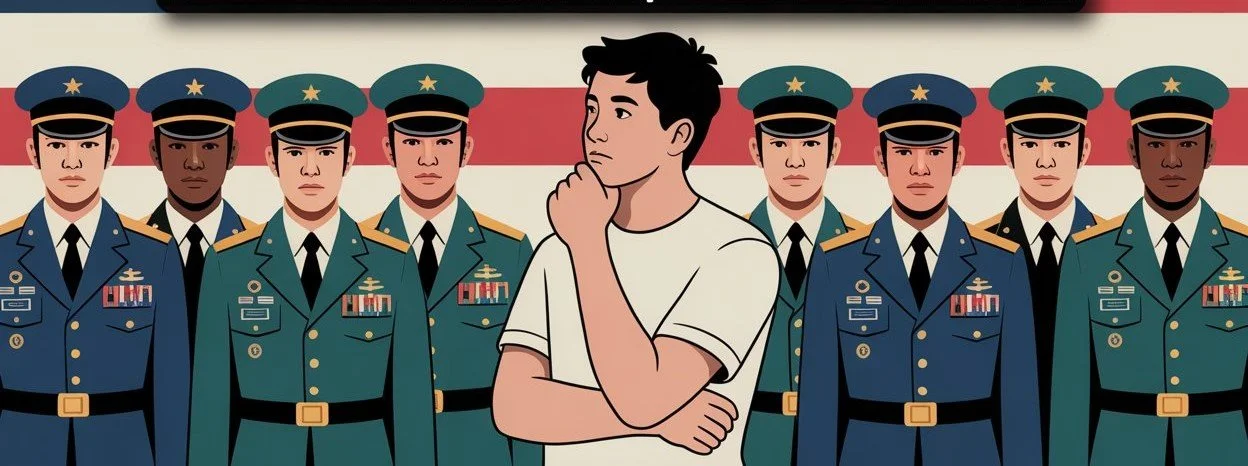
And the straight answer is: in most cases, yes. A diagnosis of autism spectrum disorder is currently listed as a disqualifying condition for military enlistment in the United States and in many other countries around the world.
But the full picture is more layered than a simple yes or no. Because buried inside this question about military eligibility is a much bigger conversation about how society continues to treat autistic people when it comes to opportunity, access, and the right to be assessed on actual capability rather than a diagnostic label.
This post is for all of them. It answers the practical question of whether autism and military service can coexist under current policy. It explains the waiver process honestly. And it goes deeper into what military disqualification reveals about the systemic exclusion of autistic people across society, not just in uniform.
Table of Contents
The Short Answer
What the Current Military Policy Actually Says
Can You Get a Waiver?
The Concealment Problem
What Military Disqualification Reveals About Society
Autistic People Are Being Excluded From More Than the Military
The Systemic Pattern Worth Naming
What Autistic Young Adults and Families Can Do
Final Thoughts
The Short Answer
Does autism disqualify you from military service? Under current Department of Defense policy in the United States, yes.
Autism spectrum disorder is listed as a disqualifying medical condition during the enlistment process. An autistic person who discloses their diagnosis will typically be found medically ineligible for service without a waiver.
That is the baseline. But the baseline is not the whole story.
Waivers exist. Individual assessments happen. And the policy, while still largely restrictive, is not as absolute as it first appears.
What it is, however, is blunt. It applies the same standard to every autistic person regardless of their actual support needs, capabilities, or day-to-day functioning. And that bluntness is worth examining carefully.
What the Current Military Policy Actually Says
The Department of Defense medical standards for military service list autism spectrum disorder as a disqualifying condition.
The reasoning behind this policy centres on several concerns:
The unpredictability of deployment and combat environments
Limited access to support services or medications in the field
Sensory and communication demands specific to military service
Concerns about performance under extreme and sustained stress
These concerns are not entirely without basis. Military service involves genuinely demanding conditions that would challenge many people regardless of neurology.
But here is the problem with how the policy is currently written.
It makes no meaningful distinction between autistic individuals with vastly different profiles, needs, and capabilities. Whether autism disqualifies you from the military under this policy has nothing to do with who you actually are or what you can actually do. It has to do with the presence of a diagnosis on your medical record.
The World Health Organization is clear that the abilities and needs of autistic people vary enormously and can evolve over time. While some autistic people require lifelong support, others live and work completely independently in high-demand environments.
A policy that treats those two people identically is not a nuanced policy. It is a blunt instrument applied to a spectrum it was never designed to understand.
Can You Get a Waiver?
Yes. And this is where the answer to whether autism disqualifies you from military service becomes more complicated.
Waivers exist for many disqualifying medical conditions including autism. A waiver is a formal request for an exception to standard medical policy. It requires thorough documentation, medical evaluation, and approval from military medical authorities.
The likelihood of a waiver being approved depends on several factors:
The nature and severity of the diagnosis and current support needs
Whether the individual is currently on any medication related to autism
Their documented history of functioning in demanding environments
The specific branch of the military being applied to
The role being sought within that branch
Waivers are more commonly granted for technical, intelligence, and support roles than for frontline combat positions. The demand for skilled individuals in areas like cybersecurity, data analysis, and signals intelligence has led some branches to look more carefully at autistic candidates whose skills in those areas are genuinely exceptional.
The waiver process is not quick or simple. It requires persistence, detailed medical documentation, and ideally the support of professionals who can speak specifically to the individual's capabilities rather than the diagnosis in general terms.
It is also worth knowing that waiver approval rates vary significantly between branches and change over time depending on recruitment needs and policy shifts. Researching the current position of the specific branch being considered is essential before beginning the process.
Book a coaching session here and get personalised support for navigating the decisions and systems that matter most to your family.
The Concealment Problem
This section matters and it is worth reading carefully.
According toAutism Speaks, enlisting and knowingly concealing an autism diagnosis is considered fraudulent enlistment, which is a violation of federal law.
The consequences of fraudulent enlistment are serious. They can include discharge, criminal charges, and a permanent mark on a person's record that follows them long after their military ambitions have ended.
This puts some autistic people in a genuinely difficult position. Particularly those who were diagnosed later in life, those who have masked their autism so effectively that they may not consider it relevant, or those who are simply desperate for a path into service and willing to take risks they should not have to take.
The existence of this problem is itself a policy failure.
When the formal route to service is effectively closed and the only apparent alternative carries federal criminal risk, the policy has created a situation that punishes autistic people for wanting to serve. That is not a fair or reasonable outcome.
Full disclosure is always the right path. Not just legally but practically. Serving while concealing a diagnosis means serving without any of the accommodations or understanding that might make the experience sustainable. It means building a career on a foundation that could collapse at any moment.
Whatever the outcome of the enlistment process, honesty is the only viable starting point.
What Military Disqualification Reveals About Society
Here is where the conversation needs to go deeper than policy.
Whether autism disqualifies you from military service is a practical question. But what autism disqualification from military service reveals about how society views autistic people is a more important one.
It reveals a default assumption that autism means incompatibility. That a diagnosis, regardless of individual profile, is sufficient reason to exclude someone from a demanding environment without further assessment.
That assumption does not live only in military recruitment offices. It lives in boardrooms that do not hire autistic candidates. In schools that exclude rather than accommodate. In systems across society that treat autism as a ceiling rather than a characteristic.
The military policy is one expression of a much wider cultural default. And that default is what the shift from autism awareness to autism acceptance is directly challenging.
Understanding why that shift matters and what it looks like in practice is exactly what the post on autism awareness vs autism acceptance covers. It is worth reading alongside this one because the two conversations are deeply connected.
Dropped in a Maze by Sonia Chand is the honest account of navigating systems that were never built with autistic people in mind. The military is one of those systems. Employment is another. Education is another.
Order your copy here and read the story of finding a way through all of them.
Autistic People Are Being Excluded From More Than the Military
Autism and military disqualification is one chapter in a much longer story.
The exclusion of autistic people from full participation in society shows up across almost every major system.
In employment, the figures are stark. The post on why 40% of autistic adults are unemployed and how to change that breaks down exactly how and why that exclusion happens and what needs to change. The pattern is the same as in military recruitment. Systems designed without autistic people in mind producing outcomes that exclude them by default.
In education, autistic students are more likely to be excluded, suspended, or placed in restrictive settings than their neurotypical peers.
In healthcare, autistic people report being dismissed, misunderstood, and underserved at significantly higher rates than the general population.
In housing, in civic participation, in leadership, the pattern repeats.
Military disqualification is not an isolated policy failure. It is part of a cultural default that treats autism as disqualifying for full participation in society across the board.
The Systemic Pattern Worth Naming
There is a particular kind of exclusion that is especially difficult to challenge.
It is the kind that comes dressed as practicality.
The military does not say autistic people are less valuable. It says the environment makes service impractical. Employers do not say autistic people are less capable. They say the role requires certain social skills. Schools do not say autistic students do not belong. They say the curriculum requires certain kinds of engagement.
Practical. Reasonable. Nothing personal.
But the cumulative effect of all those practical, reasonable, nothing personal exclusions is a life lived on the outside of the opportunities that shape financial security, social belonging, and personal identity.
That is personal. Very personal.
And it is exactly why the conversation about autism cannot stay at the level of awareness. Awareness sees the exclusion and nods sympathetically. Acceptance asks what needs to change so the exclusion stops happening.
The question of whether autism disqualifies you from the military will eventually be answered differently as policy catches up with understanding. But the cultural shift that makes that happen starts long before any policy is rewritten.
It starts in families who decide to frame autism differently from the beginning. In advocates who refuse to accept that a diagnosis is the ceiling of what a person can achieve. In organisations that choose individual assessment over blanket exclusion.
What Autistic Young Adults and Families Can Do
If you or someone you love is autistic and considering military service, here is practical guidance for navigating the current landscape:
Get clear on your specific profile: Not all autism diagnoses carry the same weight in a medical evaluation. Being able to articulate your capabilities, your current support needs, and your history of functioning in demanding environments clearly and specifically is essential before beginning any enlistment process.
Research the waiver process for your specific branch: Each branch of the military has different waiver procedures and different track records on approvals. The Army, Navy, Air Force, Marines, and Coast Guard each approach this differently. Research the specific branch and role before making any decisions.
Work with a recruiter experienced in medical waivers: Not all recruiters are equally knowledgeable about the waiver process. Finding one who has successfully navigated medical waivers before makes a significant practical difference.
Never conceal a diagnosis: The legal risk is serious and the consequences of fraudulent enlistment can follow a person for the rest of their life. Whatever the outcome of the process, full disclosure is the only responsible and sustainable path.
Explore alternative service paths: Many of the values that draw autistic people to military service, structure, purpose, clear hierarchy, contribution to something larger than yourself, are available through other routes. Civil service, emergency services, healthcare, engineering, and community organisations offer many of the same things without the same barriers.
Connect with advocacy organisations: Groups working on neurodiversity inclusion are increasingly engaging with military policy specifically. Adding your voice to those efforts is both meaningful and practical for long-term change.
Book support for the journey: Navigating this decision, whether it leads into military service or toward an alternative path, is not something that needs to be done alone. Having someone who understands autism and the systems autistic people navigate in their corner makes a real difference.
Final Thoughts
Does autism disqualify you from the military? Under current policy, in most cases, yes.
But the more important question is what that disqualification reveals.
It reveals a system that still defaults to exclusion over individual assessment. That still treats a diagnostic label as sufficient reason to close a door without looking at who is standing behind it.
Autistic people deserve to be assessed on their actual capabilities. Not on a label. Not on assumptions. On who they actually are and what they can actually do.
Why 40% of Autistic Adults Are Unemployed and How to Change That
Every April, the world pauses for autism.
Campaigns go up. Lights turn blue. Social media fills with statistics and stories. And then April ends and most of those conversations go quiet again.
But one statistic deserves to stay in the room long after the awareness month wraps up.
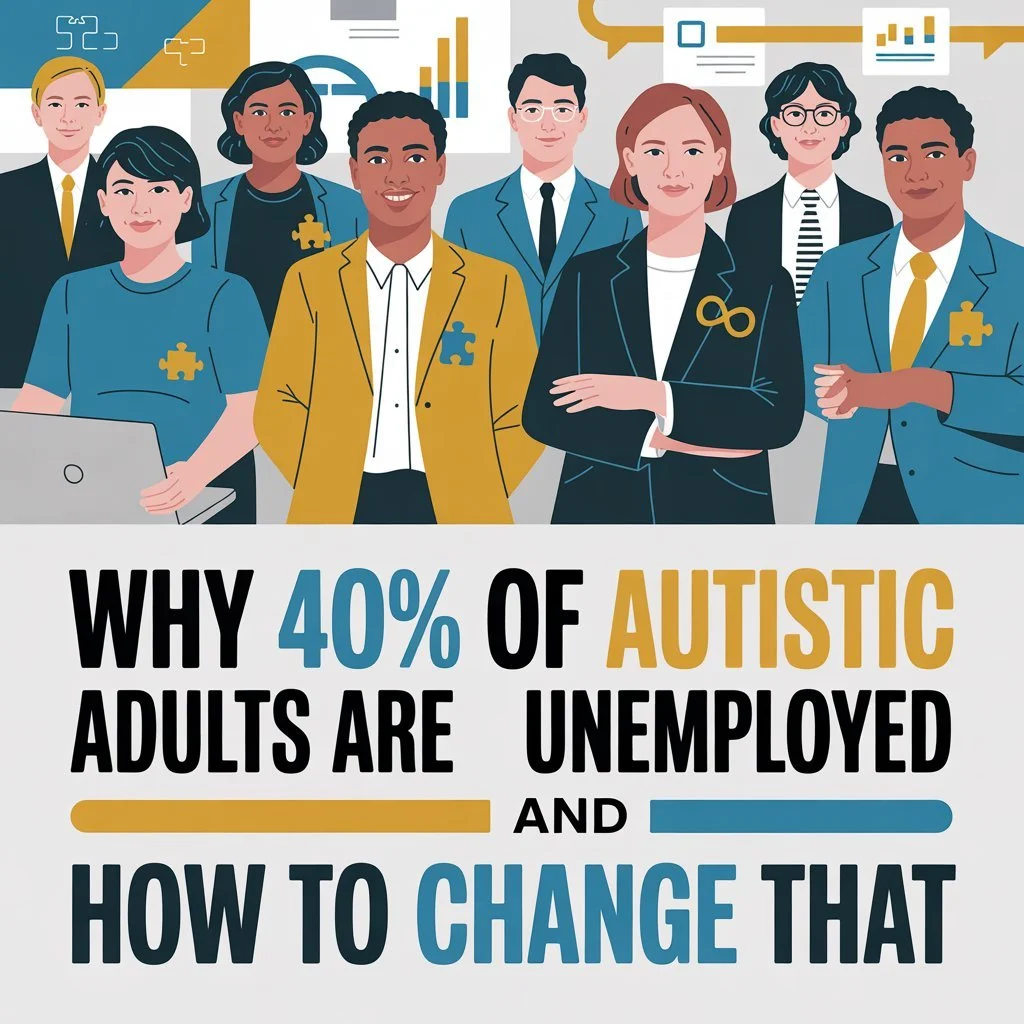
Forty percent of autistic adults are unemployed.
Not because they lack skills. Not because they do not want to work. But because the systems designed to get people into employment were never built with them in mind.
That means millions of people with skills, intelligence, and the genuine desire to work are sitting outside an employment system that was not built with them in mind.
This post is about why that is happening. And more importantly, what can actually be done about it.
Table of Contents
The Scale of the Problem
Why Autistic Adults Struggle to Find Work
The Hiring Process Is Broken for Autistic Candidates
What Happens After They Get the Job
The Cost of Masking at Work
What Autistic Adults Actually Bring to the Workplace
What Employers Can Do Differently
What Autistic Adults and Their Families Can Do
What Needs to Change at a Systemic Level
Final Thoughts
The Scale of the Problem
The unemployment figure alone does not tell the full story.
Many autistic adults who are technically employed are underemployed. They are working jobs that sit far below their skill level. Not because they lack ability. But because they could not get past the hiring process for roles that matched their actual capabilities.
Others are working in environments so poorly suited to their needs that they burn out repeatedly. Cycling in and out of employment without ever finding something stable.
According toAdvanced Autism Services, the unemployment rate for autistic adults is approximately 40%, based on a 2021 study published in the National Library of Medicine.
According toAutism Speaks, 1 in 45 adults in the United States has autism. Boys are nearly four times more likely to be diagnosed than girls, though female autism remains significantly underdiagnosed.
And according todata from the Centers for Disease Control and Prevention, about 1 in 31 children aged 8 years has been identified with autism spectrum disorder. Those children grow up. They become autistic adults who need and deserve meaningful work.
This is not a small problem at the edges of society. It is a widespread failure affecting millions of people and their families.
Why Autistic Adults Struggle to Find Work
The reasons are not what most people assume.
It is not that autistic adults lack skills or work ethic. Most autistic adults who are unemployed want to work. They have skills. Many have qualifications.
What they do not have is a system designed to recognise and accommodate how they operate.
Here is what actually gets in the way:
The social performance of job seeking: Finding work requires networking, small talk, selling yourself in interviews, and reading unspoken social cues. These are areas where many autistic people face genuine challenges. Not because they are not capable workers. But because the process of getting a job rewards a very specific kind of social fluency.
Sensory environments: Many workplaces are open plan, loud, bright, and unpredictable. For autistic people with sensory sensitivities, these environments are not just uncomfortable. They are actively disabling.
Unspoken rules: Every workplace has an invisible social rulebook. Autistic adults often have to learn these rules explicitly rather than absorbing them intuitively. When nobody explains them, the consequences can be career-limiting.
Lack of disclosure support: Disclosing an autism diagnosis at work is a deeply personal decision with real professional risks. Many autistic people choose not to disclose, which means they do not access the adjustments they need, which means they struggle more than they should.
The Hiring Process Is Broken for Autistic Candidates
The standard hiring process was designed by neurotypical people for neurotypical candidates.
Think about what a typical interview involves:
Making strong eye contact
Projecting confidence through body language
Answering open-ended questions fluently under pressure
Reading the interviewer's reactions and adjusting in real time
Selling yourself through storytelling and self-promotion
Every single one of those things is harder for many autistic people. Not impossible. Just harder in ways that have nothing to do with whether they can actually do the job.
The result is that talented autistic candidates are screened out before anyone has seen what they can actually do.
Some companies are beginning to change their approach. They are offering written interviews, work trials, and task-based assessments. They are giving candidates questions in advance. They are being explicit about what the process involves so there are no unexpected surprises.
These are not special favours. They are reasonable adjustments that create a fairer process for everyone.
Understanding what genuine inclusion looks like beyond the hiring process is something the post on autism awareness vs autism acceptance covers in depth. Because hiring practices are one of the clearest places where the difference between those two things shows up.
Dropped in a Maze by Sonia Chand is the honest account of navigating systems that were not built for you. It is the book for every autistic adult, parent, and advocate who has ever felt like the maze has no exit.
What Happens After They Get the Job
Getting hired is only the first hurdle.
Many autistic adults who successfully navigate the hiring process then find themselves in workplace environments deeply unsuited to their needs.
Without adjustments, without understanding managers, and without a culture that values different ways of working, even the most capable autistic employee will struggle.
Common workplace challenges for autistic adults:
Sensory overload in open plan offices
Difficulty with ambiguous instructions or unclear expectations
Struggles with unplanned changes to routine or schedule
Communication differences that are misread as rudeness or disengagement
Social exhaustion from navigating neurotypical workplace culture all day
These are not character flaws. They are the predictable result of putting someone in an environment that was not designed for how their brain works.
Most of these challenges have straightforward solutions. Quiet spaces. Written instructions. Clear expectations. Regular check-ins. Flexible working arrangements.
None of these are expensive or complicated. They just require employers willing to think differently.
The Cost of Masking at Work
Masking is the process of suppressing or hiding autistic traits in order to fit into neurotypical social environments.
Many autistic adults mask extensively at work.
They force eye contact. They suppress stimming. They perform small talk they find exhausting. They spend enormous cognitive energy monitoring themselves rather than focusing on the actual work.
Masking works in the short term. It allows autistic people to pass as neurotypical. It protects them from discrimination and misunderstanding.
But the cost is significant.
Sustained masking is associated with higher rates of anxiety, depression, and autistic burnout. Burnout in this context is not ordinary tiredness. It is a deep, prolonged exhaustion that can take months or years to recover from. It often results in autistic people leaving employment entirely.
The cruel irony is that many autistic people are so good at masking that their employers never realise they are autistic. Never offer adjustments. And then are confused when a capable employee suddenly cannot function.
Preventing burnout is not just good for autistic employees. It is good for businesses. Losing a skilled employee to burnout that could have been prevented with simple adjustments is expensive and avoidable.
The podcast goes deep on masking and burnout in the workplace. Real conversations about what actually helps rather than what sounds good in a diversity policy.
What Autistic Adults Actually Bring to the Workplace
The conversation about autism and employment spends too much time on challenges and not nearly enough on strengths.
Autistic employees, when working in environments suited to their needs, consistently bring:
Exceptional attention to detail
Strong pattern recognition and analytical thinking
Deep focus and expertise in areas of genuine interest
Honesty and directness in communication
High standards and consistency in output
Innovative thinking that comes from processing the world differently
These are not consolation prizes. They are genuinely valuable professional qualities that many organisations are actively searching for.
Some of the world's most successful companies have launched neurodiversity hiring programmes specifically because they recognise what autistic employees bring to teams that is difficult to find elsewhere.
The problem is not that autistic adults lack what employers need.
The problem is that too many employers are still screening for social performance instead of actual capability.
What Employers Can Do Differently
Change here does not require a complete overhaul of how businesses operate. It requires a willingness to question what actually predicts good performance versus what has simply always been done.
Practical steps employers can take right now:
Review the hiring process: Offer written questions in advance. Allow work trials. Use task-based assessments alongside or instead of traditional interviews. Be explicit about what each stage involves.
Provide clear onboarding: Write things down. Be specific about expectations. Do not assume new employees will absorb unspoken rules by osmosis.
Create sensory-friendly options: Quiet spaces, flexible seating, reduced lighting options, and noise-cancelling headphones are low-cost accommodations that make a real difference.
Train managers: Understanding autism at a basic level should be standard management training. Most managers who fail autistic employees do so out of ignorance, not malice.
Normalise disclosure: Build a workplace culture where disclosing a diagnosis is genuinely safe. That means following through when adjustments are requested and not penalising people for being honest about their needs.
Be flexible: Remote work, flexible hours, and asynchronous communication benefit autistic employees enormously. Many businesses now know they can offer these. The question is whether they will.
What Autistic Adults and Their Families Can Do
Systemic change is slow. In the meantime there are things autistic adults and their supporters can do to navigate the current landscape more effectively.
Know your rights: In most countries, autism qualifies as a disability under employment law. Employers are legally required to make reasonable adjustments. Understanding those rights is the starting point.
Consider disclosure carefully: There is no single right answer. The decision depends on the workplace culture, the relationship with the manager, and the specific adjustments needed. It is worth thinking through with support rather than making the decision alone.
Build on strengths: Seek out roles and industries that align with genuine strengths and interests. Autistic people who work in areas they are deeply interested in tend to thrive in ways that are remarkable.
Get support: Navigating employment as an autistic adult is genuinely hard. Having a coach, advocate, or mentor who understands autism can make an enormous practical difference.
For parents of autistic children thinking about the road ahead, understanding communication foundations early creates options later including in employment. The post on nonverbal autism communication strategies and support is a useful and practical read.
For the full picture of what autism acceptance looks like across all areas of life including work, the World Autism Awareness Day guide covers the global conversation happening right now.
If you are navigating the employment piece of this journey and need more than general advice, coaching is available for autistic adults and families who want a clear, personalised plan rather than generic information.
Book a coaching session here and start building the path forward with someone who understands this journey from the inside.
What Needs to Change at a Systemic Level
Individual employers making better choices matters. But the scale of the problem requires systemic change too.
What needs to happen:
Policy change: Governments need employment policies that specifically address the barriers autistic adults face. Including funding for workplace adjustments and incentives for neurodiversity hiring.
Education system reform: The transition from school to work is one of the most critical and most poorly supported periods for autistic young people. Better transition planning and vocational support during school years would change outcomes significantly.
Autistic-led solutions: The most effective employment programmes for autistic adults are the ones designed with meaningful input from autistic people themselves. Nothing about us without us applies in employment just as much as everywhere else.
Cultural shift: Ultimately the 40% unemployment figure will not change until the broader culture stops treating autism as a problem to manage and starts treating autistic people as a genuine asset.
That is what Autism Acceptance Month is asking for. Not just awareness that the problem exists. Action to change it.
Final Thoughts
Forty percent unemployment is not inevitable.
It is the result of systems that were not designed with autistic people in mind and have not yet been changed to include them properly.
That can change. It is changing, slowly, in the companies and communities that have decided awareness is not enough.
Every employer who redesigns their hiring process is part of that change. Every manager who learns what autism actually looks like at work is part of that change. Every autistic adult who finds work that fits them is part of that change.
And every family that understands this journey deeply enough to advocate loudly is part of that change too.
Dropped in a Maze is for those families. The honest, clear-eyed account of navigating a world that was not built for you and finding your way through anyway.
Order your copy of Dropped in a Maze here. Because understanding the maze is the first step to finding the exit.