
Kelly Tuttle's Guide to Brain Injury Recovery
Some stories do not start with a plan. They start with a thunderous clap of metal, shattering glass, and traffic stopping on a rural road.
That is exactly where Kelly Tuttle's story begins. A cardiology nurse practitioner, a mother, a high performer who kept every plate spinning, Kelly was driving home from work to get to karate class when another driver pulled out in front of her. She T-boned the car. And in the seconds that followed, everything about her life began to quietly shift in ways she would not fully understand for months.
Kelly joined Sonia on the On the Spectrum podcast to talk about what happened next. Not just the medical side, though there is plenty of that, but the emotional reckoning, the identity shift, the tools she built from scratch, and the unexpected gifts that came from one of the hardest seasons of her life.
This post walks through the key moments and lessons from that conversation. If you want to hear it in full, and it is absolutely worth your time, [listen to the full episode of On the Spectrum with Sonia here.]
Table of Contents
The Crash and the Push to Keep Going
When the Brain Scan Comes Back Normal But You Are Not
The Specialists Nobody Told Her About
Neurofatigue and the Energy Budget
The Journal Exercise That Changed Everything
The Tools She Built to Get Through the Workday
Writing the Book and Finding the Next Chapter
What Kelly Wants Every Caregiver to Know
Brain Injury Is Not an Acute Event
What This Conversation Teaches Us About Worth and Identity
Final Thoughts
The Crash and the Push to Keep Going
The day of the accident, Kelly thought she could shake it off. She went to work the very next day. Her colleagues noticed immediately that something was wrong. Her speech was off. Her responses were slower than usual.
They pushed her to see a doctor. She was diagnosed with a concussion and taken off work for two weeks.
Two weeks, she thought. Then back to normal.
It did not go that way.
About two to three months into recovery, Kelly fell asleep at the wheel. She woke up just before her car hit a tree. And in a telling sign of how much the concussion had affected her judgment, her solution was to start taking naps on the side of the road between work and home.
It took a neurology nurse practitioner colleague who asked the right questions over lunch to stop her. That colleague said clearly: this is not okay, and you need to see a physiatrist right away.
That one conversation changed the course of everything.
What to take from this:
Concussion symptoms are not always obvious immediately after the accident
The drive to return to normal can actively slow recovery
The right person asking the right question at the right time can save you
When the Brain Scan Comes Back Normal But You Are Not
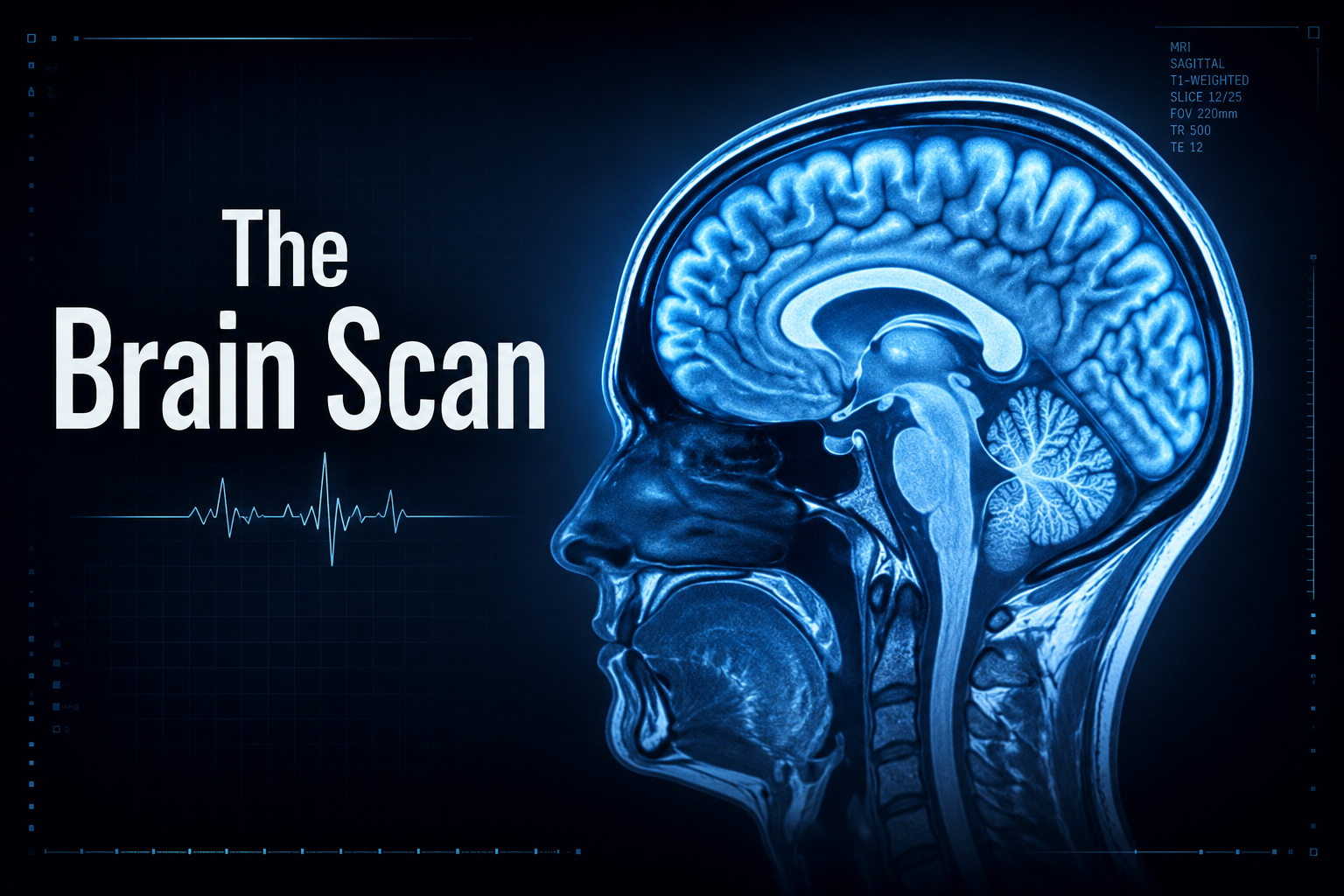
Kelly eventually got a brain scan. The result came back normal.
This confused her. She was not functioning normally. How could the scan show nothing?
Here is what she learned and what anyone recovering from a head injury needs to know:
Standard brain CTs and MRIs are designed to find large structural problems like skull fractures, bleeds, and tumors
They are not designed to show how individual neurons are actually functioning
Concussion symptoms come from how neurons function, not from visible structural damage
A normal brain scan does not mean symptoms are not real or impactful
As Kelly said in the episode, being told your scan is normal and being sent on your way is one of the most disorienting experiences of concussion recovery. You look fine. The scan looks fine. But you are very far from fine.
If this resonates with where you or someone you love is right now, the full episode with Kelly on the On the Spectrum podcast is essential listening. She speaks to this experience with a clarity that is hard to find anywhere else.
The Specialists Nobody Told Her About
Once she was off work and able to focus entirely on recovery, Kelly started finding the specialists who genuinely moved the needle. Almost none of them were covered by standard healthcare insurance.
1. A Behavioral Neurologist
This specialist, based in Detroit, worked primarily with hockey players and football players recovering from brain injuries. He was able to perform a functional MRI, which is more detailed and intensive than a standard MRI and can show changes in how the brain is actually working rather than just what it looks like structurally.
The functional MRI showed changes that the standard scan had completely missed.
2. A Behavioral Optometrist
This is different from a regular eye exam. A behavioral optometrist assesses how the eyes work together and how the brain processes visual information.
Kelly was diagnosed with binocular vision dysfunction, a slight misalignment in her vision. She had been unconsciously compensating by tilting her head to the right. She could not walk without stumbling or watching the ground constantly.
Once she got the right corrective glasses, here is what changed:
Her light sensitivity improved significantly
Her neurofatigue decreased
Her screen tolerance increased
Her focus and attention came back in meaningful ways
She was able to walk more steadily
3. Sound Sensitivity Specialists
Kelly was also screened for sound sensitivity and fitted with noise counseling technology, an external filter that supported her brain while it was healing and did not have the energy to maintain its own internal filters. The result was more energy, less irritability, better focus, and more stable daily functioning.
Both the behavioral neurologist and the behavioral optometrist were in Detroit. Kelly was in Sacramento. She traveled out of state and paid out of pocket for both.
The lesson: the specialists who make the biggest difference are often the ones the standard system does not point you toward. Persistence and willingness to look outside conventional pathways matters enormously in brain injury recovery.
Neurofatigue and the Energy Budget
This is one of the most important concepts Kelly introduced in the conversation, and one of the most misunderstood aspects of brain injury recovery.
What neurofatigue is:
Fatigue that is triggered by minimal activity
Fatigue that is not resolved by rest or sleep
Different in kind, not just degree, from regular tiredness
Kelly used an image that makes it immediately real: imagine waking up after a full night of sleep and finding your internal battery charged to only 25 percent. That is your entire budget for the day. Every task, every conversation, every decision spends from that budget. Once it is gone, it is gone.
What Kelly's daily life looked like during the worst of it:
Get up and use every compensatory tool available to get to work
Use her lunch break, previously spent with colleagues, entirely for napping
Get through the afternoon
Drive home and sleep for two hours
Wake up for one hour to prepare for the next day
Go back to sleep
Repeat five days a week
Sleep 12 to 14 hours on weekends, sometimes with an additional two-hour nap
Nobody at work saw this. They saw a colleague who appeared to be managing. What they did not see was that the moment she walked out of the building, she was done.
She missed years of her children growing up. She missed time with friends and family. She made those sacrifices quietly because her income and her family's health insurance depended on her staying employed.
This is the reality of brain injury that almost nobody talks about publicly. It is one of the central reasons Kelly felt compelled to share her story.
The Journal Exercise That Changed Everything
About a year into her recovery, Kelly sat outside with her journal and did something that shifted everything.
She drew a line down the middle of the page.
On the left side, she wrote who she was before the accident:
Driven and goal-oriented
Planning to go to law school
Constantly traveling
Always out of the house
Actively volunteering in her community
On the right side, she wrote what she had gained from the experience:
A slower, more intentional pace of life
Greater empathy and compassion
Deeper understanding of others
A more grounded sense of what actually mattered
The ability to be still
When she looked at both sides, her response surprised her. She liked the person she was becoming.
That exercise became her north star. Not about letting go of who she was before, but about taking the old Kelly forward into the new chapter and letting her values, not her productivity, guide what came next.
As Sonia reflected in the conversation, this is something she sees in her own therapeutic work, the way self-worth becomes untethered from productivity when the external markers fall away, and how that can actually be the beginning of a more grounded identity. If questions of identity, self-worth, and what it means to be enough resonate with you, the autism awareness vs autism acceptance post explores similar themes around identity and how the world measures human value.
The Tools She Built to Get Through the Workday
Kelly could not find a single resource that brought together the practical tools for returning to work after a brain injury. So she built her own, painstakingly, over years of trial and error.
Here is what made the biggest difference for her:
Managing sensory input:
Noise counseling headphones to filter sound at work
Dark glasses to reduce the impact of fluorescent lighting, which exacerbates migraines and sensory overload
Managing speech difficulties:
Writing down words she struggled to say before conversations
Practicing difficult words out loud at her desk before using them with others
Using a visual reference during conversations to help her brain retrieve the word
Slowing down her speech deliberately to avoid blending or slurring words
Using humor to deflect in moments when a word would not come, without drawing attention to the difficulty
Managing energy:
Taking naps on lunch breaks instead of socializing or running errands
Protecting all breaks as genuine rest, no phone, no social media, no screens
Minimizing decision making wherever possible to preserve cognitive energy for essential tasks
Managing the workday structure:
Working from home when possible, which made a significant difference to both productivity and energy management
Focusing only on work while at work and doing nothing else during that time
These tools formed the foundation of her award-winning book, which was written specifically to give other people the roadmap she had to build herself from scratch.
Writing the Book and Finding the Next Chapter
Five years after the accident, Kelly's headaches had finally resolved. For the first time since the crash, she had enough cognitive capacity to write.
Her book was a deliberate choice. She did not want to write a memoir about what happened to her. She wanted to write a practical resource, organized around five pillars of recovery, that gave other people the strategies and tools she had spent years figuring out on her own.
The book covers:
Practical tools and compensatory strategies for returning to work
Information on FMLA and the Americans with Disabilities Act
Guidance on when to hire a lawyer or use a union for workplace accommodations
Financial planning for the possibility of early retirement
She also recorded it for Audible because after her concussion she could not read for more than five to ten minutes without fatigue, headaches, and losing track of what she had just read. Audiobooks were her primary learning tool for three years, and she wanted her resource to be accessible in the same way.
From there came TikTok videos, then a YouTube channel, then Substack, and finally her podcast, The Mindful Return from Brain Injury Back to Work, launched to celebrate the third anniversary of the book's publication.
Her mission across all of it is the same: make sure no one who is struggling with brain injury recovery has to feel alone or without direction.
You can find Kelly at kellytuttle.com and listen to her podcast, The Mindful Return, wherever you get your podcasts.
What Kelly Wants Every Caregiver to Know
This section of the conversation was one of the most powerful. Kelly spoke directly to the people supporting someone with a brain injury, from the perspective of someone who later became a neurology nurse practitioner and saw the caregiver experience up close.
When your loved one says something hurtful or acts out:
It is not them. It is their brain signaling that it has had too much
Behavioral changes are a sign of overload, not intention
Do not take it personally. Take it as information that they need rest or a change in environment
What caregivers most need to hear:
Your loved one loves you
They do not want to hurt you
Their brain is simply telling you it has reached its limit
Kelly extended this compassion outward too. She shared that since her recovery, she no longer quickly judges strangers who seem angry, erratic, or difficult in public. A driver being aggressive. Someone snapping in a store. Someone who seems unreasonable. Any of those people might be living with an invisible condition, a brain injury, a neurological condition, sensory overload, grief. The experience changed not just how she sees herself but how she sees the entire world.
For more on the topic of invisible conditions and how the way we perceive and respond to difference shapes lives, the post on how to find an autism specialist touches on similar themes around invisible disabilities and the assumptions people make.
Brain Injury Is Not an Acute Event
This is the message Kelly returned to throughout the conversation, and it is the one she most wants the medical community and the general public to absorb.
Brain injury is not something that happens and then resolves. For a significant percentage of people, it is a chronic condition that requires lifelong monitoring and support.
Key facts worth understanding:
Research has found neuroinflammation activity even 17 years after a brain injury
Once you have had a brain injury, your risk of mental health conditions increases
Brain injury can increase the risk of neurodegenerative diseases including dementia and Parkinson's
Brain health needs to be monitored throughout life, not just in the immediate aftermath of injury
Many of the things that are good for heart health are also good for brain health, and providers need to be having that conversation proactively
Kelly's own career change reflects how deeply this understanding changed her. Two years after the accident, she moved from cardiology to neurology and spent years working with patients living with Parkinson's, multiple sclerosis, epilepsy, and chronic headaches. She saw firsthand how much energy those patients expended simply to appear functional, and how invisible that effort was to the world around them.
What This Conversation Teaches Us About Worth and Identity
One of the threads running through the entire episode is something Sonia speaks to regularly in her work as a therapist: the way people, particularly high achievers, tie their sense of worth entirely to their productivity.
Kelly named it directly. She had been raised in a culture that told her value was defined by output. When the accident took away her capacity to produce at the level she always had, she was left with a question she had never had to ask before: am I enough if I am not doing?
The answer she arrived at, slowly and painfully, was yes.
As Sonia reflected in the conversation, self-worth that depends entirely on external markers, productivity, status, social activity, income, is always fragile. The European crystal metaphor she shared with Kelly captures it well: the facets of a crystal catch the light differently, but they do not create the core. The core was always there. It does not disappear when the facets change.
This theme of identity, self-worth, and what it means to be enough sits at the heart of a lot of the work done in coaching and therapy with neurodivergent individuals too. If this is something you find yourself thinking about, the post on online therapy for autism and whether it is as effective as in person explores how that kind of support works and what it can help with.
And if you are ready to do that work directly, coaching sessions with Sonia are available for individuals who want to build a more grounded, stable sense of self that does not depend on productivity or external validation.
Book a self-esteem coaching session with Sonia here and start building the foundation that does not move when life does.
Final Thoughts
Kelly Tuttle drove home from work one afternoon and T-boned a car on a rural road. What followed was five years of the hardest work of her life, not the dramatic visible kind, but the quiet, exhausting, invisible kind that almost nobody around her could see.
But more than any of that, she came out knowing something she did not know going in: that her worth was never in her productivity. That rest is not weakness. That uncertainty does not have to be the enemy. And that sometimes the crash is the beginning of the better story, not the end of the good one.
If Kelly's story spoke to something in you, whether you are recovering from a brain injury, supporting someone who is, or simply recognizing yourself in the way she describes the relentless push to keep going, [listen to the full episode on the On the Spectrum podcast here.] It is one of those conversations that stays with you.
