
How Autistic Adults Can Create a Sensory-Friendly Home
For most autistic adults, home is supposed to be the place where the mask comes off. Where the sensory vigilance that runs constantly in the outside world can finally quiet down. Where the nervous system gets the recovery time it genuinely needs rather than the performance of recovery while still being overstimulated.
But for many autistic adults, home is not that place yet. It is simply a different set of sensory demands in a more familiar location. The flickering overhead light nobody has replaced. The sound of the neighbor's television bleeding through the wall. The pile of things that need to be dealt with that generates its own specific low-level anxiety every time you walk past it.
Creating a genuinely sensory-friendly home is a functional project. It is the work of building an environment that actively supports your nervous system rather than adding to its load, and it is one of the most direct and most immediately impactful things an autistic adult can do for their daily wellbeing.
This post covers how to do it practically, room by room and sense by sense.
Table of Contents
Why the Home Environment Matters So Much for Autistic Adults
Start With a Sensory Audit
Lighting: The Most Impactful Change You Can Make
Sound: Creating Quiet Without Silence
Texture and Touch: Your Home Should Feel Safe
Smell: The Sensory Channel Most People Forget
Visual Clutter and the Cognitive Cost of Disorder
Creating a Dedicated Regulation Space
Sensory-Friendly Sleep Environment
The Emotional Work Underneath the Practical Work
Final Thoughts
Why the Home Environment Matters So Much for Autistic Adults
Sensory processing differences are a core feature of autistic neurology and they do not switch off when you walk through your front door. The autistic nervous system is processing the sensory environment continuously, filtering, responding, and regulating against incoming stimulation in a way that requires genuine cognitive and emotional resources.
When the home environment is sensory-friendly, those resources are freed up. The baseline anxiety that comes from continuous sensory management drops. The nervous system can enter genuine rest rather than a lighter version of the vigilance it maintains everywhere else. And the recovery time that autistic adults need after demanding days becomes actually restorative rather than simply less draining.
When the home environment is sensory-hostile, the opposite happens. The autistic adult arrives home already depleted and walks into an environment that continues to draw on the same depleted resources. The recovery never fully happens. The baseline never genuinely drops. And the cumulative effect, over months and years, is exactly the kind of chronic depletion that builds toward autistic burnout.
Research has consistently found that environmental sensory factors significantly affect the daily functioning, mood, and wellbeing of autistic individuals, supporting the practical importance of sensory-friendly environments as a genuine health intervention rather than a luxury preference.

Photo by Mieke Campbell on Unsplash
Start With a Sensory Audit
Before buying anything or changing anything, the most useful first step is a sensory audit of your current home environment.
Walk through each room slowly and ask:
What do I notice first when I enter this space?
What sounds am I aware of that I usually tune out?
What lights feel uncomfortable or cause me to squint or look away?
What textures do I avoid touching or sitting on?
What smells are present that I notice even when I am not thinking about them?
What visual information is demanding my attention without me choosing to give it?
Write it down. The things that are demanding your nervous system's resources without you consciously registering them are often the most impactful to address, precisely because they have become background noise that you no longer consciously identify as a source of load.
This audit is also an act of genuine self-knowledge, the practice of paying accurate, compassionate attention to what your specific neurology actually responds to rather than what you think you should be able to tolerate.
The On the Spectrum podcast with Sonia Chand covers exactly this kind of honest, practical self-understanding for autistic adults, with conversations that go beyond the clinical and into the real daily experience of living with autistic neurology.
Listen here and find your community.
Lighting: The Most Impactful Change You Can Make
Lighting is consistently one of the most significant sensory factors in home environments for autistic adults, and it is also one of the most changeable.
Fluorescent lighting, which is common in older rental properties and many kitchens and bathrooms, flickers at a frequency that the autistic nervous system often registers even when the conscious mind does not. The result is a sustained low-level sensory demand that contributes to fatigue, headaches, and agitation in ways that are genuinely neurological rather than psychological.
Practical changes that make a significant difference:
Replace fluorescent bulbs with warm-toned LED lighting where possible. The color temperature of lighting affects nervous system regulation more than most people realize. Cool, bright white light activates alertness and is appropriate for daytime working environments but genuinely problematic for spaces meant for rest.
Add dimmer switches or use multiple lower-wattage lamps rather than a single overhead light. The ability to control light intensity allows you to match the lighting to your regulatory needs at different times of day rather than living under a fixed level of illumination that serves the broadest average rather than your specific neurology.
Use blackout curtains or liners in the bedroom. Sleep quality in autism is significantly affected by light exposure, and the ability to create genuine darkness independently of the time of day or the season is worth the investment.
To further help, Sonia's six month self-esteem coaching program is where the inner work of genuinely accepting your own needs and building a life around them becomes structured, supported, and genuinely transformative. Over twelve to eighteen sessions across six months, the program moves from accurate self-assessment through challenging the inner critic, building self-compassion, developing identity and ownership, and finally creating the sustainable blueprint for a life that genuinely works for your specific autistic neurology.
The sensory-friendly home is one piece of that blueprint. The coaching builds the rest.
Book a discovery call with Sonia here and find out what six months of genuinely autism-informed support could change in how you live.
Sound: Creating Quiet Without Silence
Sound is the sensory channel that most autistic adults identify as one of their primary environmental challenges, and the home sound environment is both one of the most impactful and one of the most individual to address.
The first step is identifying which sounds in your home environment are most activating. Appliances, traffic, neighbors, plumbing, the hum of electronics, and the ambient sound of shared living spaces all contribute to the background acoustic load.
Practical strategies:
White noise or brown noise machines are genuinely effective for many autistic adults at creating a consistent auditory environment that masks more activating irregular sounds. The consistency of the sound is what makes it regulatory rather than just loud.
Noise-cancelling headphones are one of the most consistently helpful tools available to autistic adults in any environment including the home. Wearing them while doing tasks that do not require external sound awareness significantly reduces the sensory load of the space.
Address the specific sound sources that are most activating. Felt pads under appliances that vibrate. Rugs and soft furnishings that absorb sound rather than reflecting it. Addressing squeaking doors, loose fixtures, or other irregular sound sources that the autistic nervous system registers every time they occur.
Texture and Touch: Your Home Should Feel Safe
The tactile environment of your home, the textures of furniture, bedding, clothing, and surfaces that your body contacts throughout the day, is a dimension of sensory environment that is often overlooked because it feels like preference rather than need.
It is need.
For autistic adults with tactile sensitivities, materials that feel wrong are not mildly uncomfortable. They are a source of continuous sensory demand that draws on regulatory resources throughout the day and night.
Practical changes:
Replace bedding with materials that genuinely feel comfortable to you rather than materials that are recommended or affordable but that you notice on your body during the night. Sleep quality in autism is significantly affected by tactile comfort, and the right bedding texture is one of the most direct interventions available.
Assess seating surfaces. The sofa you spend the most time on should feel genuinely comfortable against your skin and your sensory profile, not just aesthetically appropriate.
Eliminate or relocate items with textures that you find activating. Tags, certain fabrics, rough surfaces, or any tactile element that you routinely avoid or register negatively are worth addressing directly rather than accommodating indefinitely.
Smell: The Sensory Channel Most People Forget
Smell is processed differently from other senses, going directly to the limbic system without the same cortical filtering that other sensory channels pass through. For autistic adults with smell sensitivities, strong or unexpected odors can produce immediate and significant physiological responses that are genuinely difficult to override.
The home smell environment is often a background factor that accumulates without being addressed because it does not feel like a sensory issue in the same obvious way that loud noise or bright light does.
Practical changes:
Identify and eliminate or reduce the specific smells in your home that you find activating. Cleaning products, synthetic fragrances, certain cooking smells, and the smell of certain materials are all worth assessing honestly rather than accommodating indefinitely.
Choose unscented versions of cleaning and personal care products wherever possible. The reduction in fragrance load in your home environment cumulatively reduces the olfactory demand on your nervous system throughout the day.
Also, ventilate regularly. Fresh air reduces the accumulation of indoor air compounds that contribute to smell-based sensory load even when no specific scent is consciously identified.
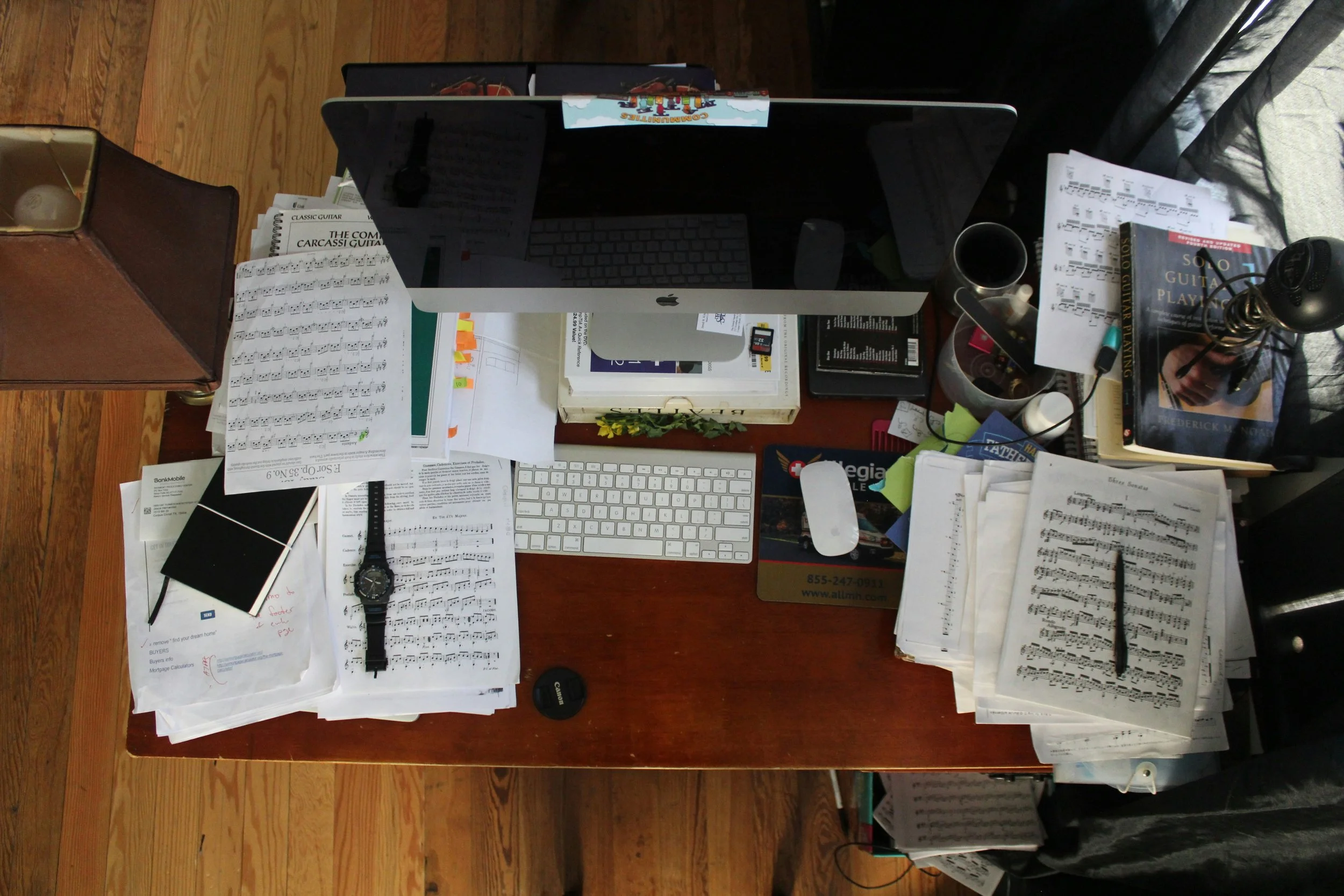
Photo by Jesus Hilario H. on Unsplash
Visual Clutter and the Cognitive Cost of Disorder
Visual clutter is one of the most consistently significant contributors to cognitive load and anxiety in autistic adults, and it operates in a way that is genuinely neurological rather than simply aesthetic.
The autistic brain processes visual information in ways that make it more difficult to filter irrelevant visual stimuli automatically. Visual clutter does not stay in the background the way it does for many neurotypical people. It continues to demand processing resources continuously, contributing to the cognitive fatigue that makes other demands harder to manage.
Practical approaches:
Reduce the number of items on visible surfaces. This is not about minimalism as an aesthetic but about reducing the number of visual stimuli competing for attention in the spaces where you spend the most time.
Use closed storage wherever possible. Objects that are stored out of sight do not demand visual processing. Baskets, cabinets, and boxes with lids reduce the visual information load of any room significantly.
Create one intentionally simple space. Even if other areas of your home are not fully decluttered, having one room or one corner that is visually simple and consistently maintained gives your visual system a genuine rest point in your daily environment.
Creating a Dedicated Regulation Space
One of the most impactful things an autistic adult can do in their home is designate a specific space whose sole purpose is sensory regulation and recovery.
This does not need to be a separate room. It can be a corner, a chair, a section of the bedroom. What makes it a regulation space is that it is:
Consistently low in sensory demand across light, sound, texture, and visual complexity
Associated only with rest and regulation rather than productivity or social demand
Accessible on demand without any preparation or setup required
Known to you as the place you go when your nervous system needs to come down
The regulation space works because it removes the decision-making that depleted nervous systems struggle most with. When you are overwhelmed, you do not have to figure out what to do. You go to the space and it does the rest.
Sensory-Friendly Sleep Environment
Sleep is foundational to every aspect of autistic adult wellbeing, and the sleep environment deserves specific attention as part of creating a sensory-friendly home.
Autistic adults experience sleep difficulties at significantly higher rates than neurotypical adults, and many of those difficulties are directly related to sensory factors in the sleep environment that have not been addressed because they were not recognized as sensory issues.
The elements of a sensory-friendly sleep environment:
Complete darkness or as close to it as possible. Light exposure during sleep disrupts the circadian regulation that autistic adults already often find more difficult to maintain.
Consistent, comfortable temperature. The autistic nervous system is often more sensitive to temperature variation than neurotypical nervous systems, and the ideal sleep temperature varies significantly between individuals.
Tactile comfort as described above. The materials in contact with your skin during sleep are among the most continuously sensory-demanding elements of your entire day.
Sound management. Whether that is silence, white noise, or a specific consistent auditory environment, the ability to control the sound environment during sleep removes one of the most common sleep disruptors for autistic adults.
Weighted blankets are worth trying for autistic adults who find deep pressure regulatory. The research on weighted blankets and autism is mixed in terms of universal effectiveness but consistently shows significant benefit for individuals who respond positively to deep pressure input.
The Emotional Work Underneath the Practical Work
Creating a sensory-friendly home is practical. But it also requires something that is harder than buying different light bulbs or switching to unscented cleaning products.
It requires genuinely believing that your sensory needs are real, that they are worth accommodating, and that building your home around them is not self-indulgent but genuinely necessary.
Many autistic adults, particularly those diagnosed later in life, carry years of accumulated messages that their sensory responses are overreactions, preferences masquerading as needs, or simply things they should be able to push through with enough willpower. Those messages do not disappear because a diagnosis arrived. They sit underneath the practical work and make it harder to do consistently.
The inner work of genuinely accepting that your needs are legitimate, that your nervous system deserves an environment that supports rather than constantly challenges it, is the foundation that the practical work stands on. And it is work that is genuinely supported by skilled, autism-informed coaching.
Dropped in a Maze by Sonia Chand speaks directly to this experience of finally understanding your own neurology and beginning to build a life around it rather than in spite of it. It is the companion reading for every autistic adult who is doing the work of creating a home environment that genuinely fits.
Get your copy of Dropped in a Maze here.
Final Thoughts
A sensory-friendly home is not a luxury. It is the infrastructure your nervous system needs to function sustainably, recover genuinely, and show up for the rest of your life with something left in reserve.
The changes do not have to be expensive or dramatic. They have to be honest. Honest about what your specific nervous system actually responds to, what genuinely helps it regulate, and what has been quietly draining it in the background of every day you have spent in your own space.
Your home is supposed to be where you can finally stop performing. Building it to support that is some of the most important work you can do.
References:
Unwin KL, Powell G, Price A. The use of multi-sensory environments with autistic children: Exploring the effect of having control of sensory changes. Autism. 2022;26(6):1379-1394. Available from: https://pmc.ncbi.nlm.nih.gov/articles/PMC9340127/
Anemone R. Creating Sensory-Friendly Health Care Environments for Autistic Patients [Internet]. Autism Spectrum News; 2024 Apr 12. Available from: https://autismspectrumnews.org/creating-sensory-friendly-health-care-environments-for-autistic-patients/
