
How Somatic Parts Work Turns Self-Sabotage Into Self-Trust
Most people know what self-sabotage looks like from the outside. The procrastination that sets in right when something important is within reach. The pattern that keeps repeating no matter how clearly you can see it. The part of you that wants to change and the part that quietly, persistently refuses to let you.
What most people do not know is what self-sabotage actually is on the inside. And that distinction changes everything about what can be done about it.
Tina Estrella joined Sonia on the On the Spectrum podcast for one of the most honest and genuinely different conversations the show has hosted about neurodivergent mental health, healing from the inside out, and what it actually looks like to stop fighting your inner world and start working with it.
Listen to the full episode here.
This post pulls together the key moments, the ideas that land differently once you hear them, and the practical understanding that makes Tina's work so striking.
Table of Contents
A Diagnosis That Did Not Quite Fit
When the Body Becomes the Only Way Out
What Hospital Actually Gave Her That Life Did Not
The Therapist Who Refused to Let Her Stay Stuck
What Existential Kink Actually Is
The Inner Critic Is Not Your Enemy
What a Session With Tina Actually Looks Like
The Client Who Laughed for the First Time in Years
What This Has to Do With Neurodivergence
Final Thoughts
A Diagnosis That Did Not Quite Fit
Tina's story starts in her early twenties, when what had been building quietly while she lived at home suddenly became impossible to manage once she was living alone.
She received diagnoses of severe depression, borderline personality disorder, and OCD. Later, in her twenties, she was diagnosed with ADHD. Looking back, she describes those early diagnoses as attempts by the clinical system to name something that was genuinely real but was not yet being understood in the right framework.
The borderline diagnosis in particular she reflects on with nuance. It was not wrong exactly, she says. There was something real happening. Her relationships were turbulent. Her sense of self was unstable. The pressure inside her was enormous. But the label described the surface without reaching what was underneath it.
What was underneath it, she now understands, was a nervous system that had never learned to regulate because it had never been in an environment where regulation was modeled. A family where her father would likely sit somewhere on the autism spectrum, her sister in OCD territory, her mother avoidant, and all of them managing their own overwhelm without the language or the tools to help each other.
She was not broken. She was uncontained. And the system she landed in did not initially know the difference.
When the Body Becomes the Only Way Out
One of the most striking and most honest parts of Tina's story is how she describes the self-harm that accompanied her worst years.
She does not describe it as a cry for help in the way that phrase is often used dismissively. She describes it as the only grounding tool she had access to at the time. When the pressure inside became unmanageable, when everything was noise and panic and she was so far inside her head that she felt she might simply disappear, the physical pain brought her back into her body. It worked, in the most immediate and most costly sense of that word.
She went to hospital multiple times, often pulling herself there voluntarily because she recognized she was at a threshold she could not manage alone. And what she found in hospital surprised even her.
She liked it there.
Not in a way that was comfortable to admit at the time, but in a way that made complete sense once she understood what had been missing. Community. Honest conversation. People who were also struggling and were not pretending otherwise. Activities with her hands. The relief of not having to perform functionality while internally collapsing.
The hospital gave her, for the first time, what her childhood home had not. And that understanding, when it finally came, changed everything about how she approached her own healing.
Dropped in a Maze by Sonia Chand speaks to exactly this kind of recognition, the moment when you finally understand why something that looked strange from the outside made complete sense from the inside. It is the companion reading for anyone navigating the kind of complex, layered healing journey Tina describes.
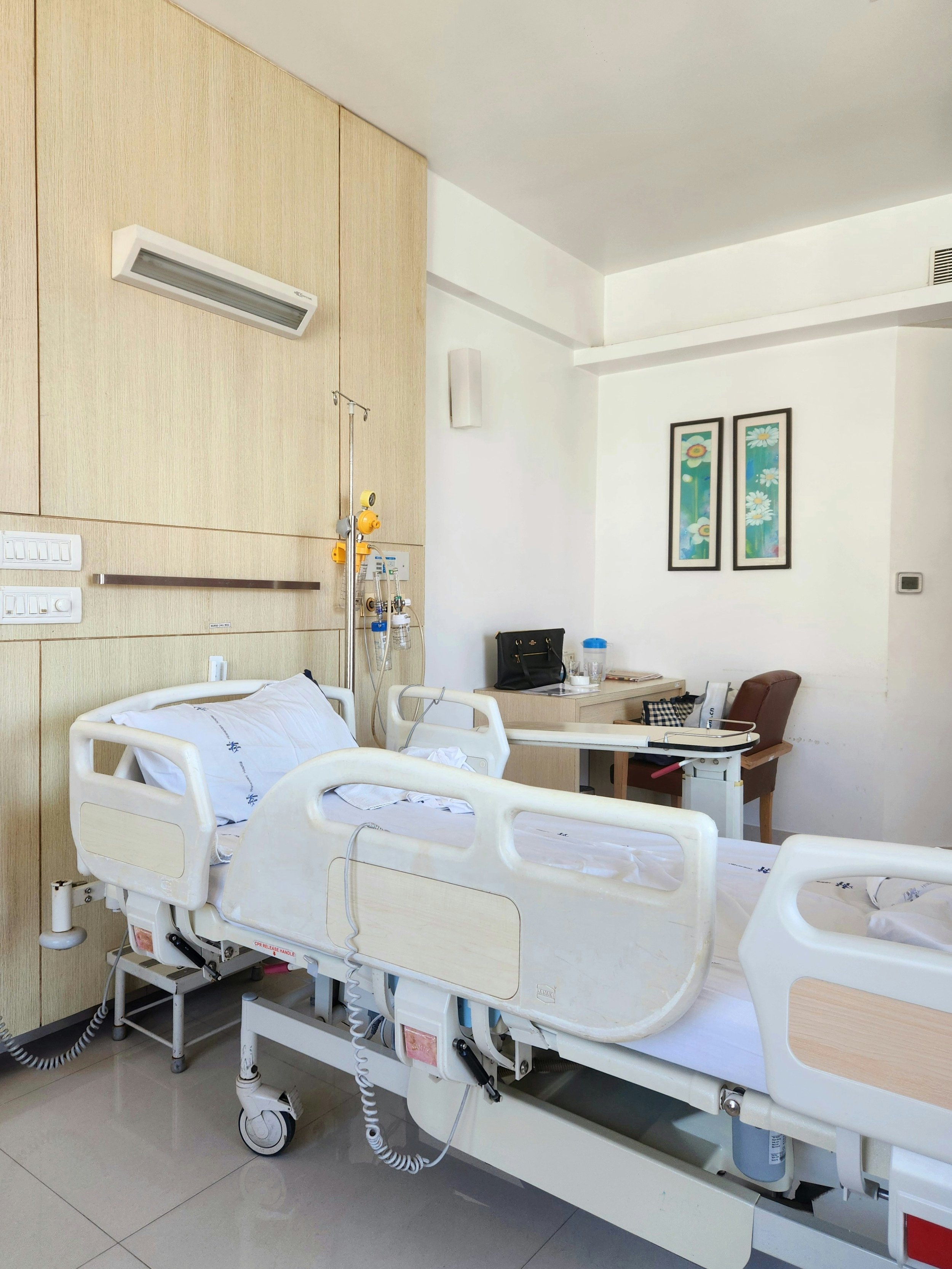
Photo by Zoshua Colah on Unsplash
What Hospital Actually Gave Her That Life Did Not
What Tina received in hospital was not primarily clinical treatment in the way we usually think of it. It was something more fundamental.
She had conversations she did not know were possible. She discovered that other people also struggled. She made things with her hands. She breathed. She stopped, for a period, having to manage the performance of being a functioning adult in a world that felt genuinely incompatible with how she was wired.
Then she would go back into her regular life and, eventually, the cycle would begin again.
It took a specific therapist to interrupt the loop. Someone who refused to be manipulated, because Tina was skilled at telling therapists what they wanted to hear without actually changing anything. This therapist noticed. And she asked, with directness that landed differently from anything Tina had encountered before: what did you change?
Not what happened to you. What did you change?
That shift, from passive sufferer to active participant in her own life, was slow and uncomfortable and took years to fully integrate. But it was the beginning of everything that followed.
The Therapist Who Refused to Let Her Stay Stuck
The pattern Tina describes of cycling through crisis, hospital, relief, private life, collapse, and back to crisis is one that many neurodivergent adults recognize in different forms. Not necessarily with the same clinical severity, but with the same underlying structure: a way of living that provides temporary relief without addressing the architecture of the problem.
What the therapist who finally shifted things offered was not warmth. It was accountability.
She helped Tina see that she had been, as Tina puts it herself, bathing in the victim position for a very long time. Not as a judgment. As an observation. And with it, the quiet but radical suggestion that the position could be changed.
That shift from what is happening to me to what am I doing about it is one of the hardest moves any person makes. It is harder for neurodivergent adults who have genuinely been let down by systems, misunderstood by people, and who carry real and valid reasons for their struggles. The accountability is not blame. It is agency. And agency, once accessed, changes what is possible.
For autistic and neurodivergent adults working through this kind of inner shift, the post on how autism coaching builds real self-advocacy skills covers how this move from managed to empowered actually happens in practice.
What Existential Kink Actually Is
The term is deliberately provocative, and Tina addresses that directly. Existential kink is a coaching framework, not a sexual practice. The word kink is used because of what it points to: the parts of ourselves that do things the logical mind cannot explain or justify.
Why do I keep procrastinating on the thing I most want to do? Why do I stay in situations that clearly do not serve me? Why does the pattern keep repeating even when I can see it clearly?
The answer existential kink offers is that there is a part of you who likes it. Not in a conscious, chosen way. In the way that something unconscious has decided this pattern is serving a function, providing protection, belonging, control, safety, in a form that is no longer appropriate but that the part does not yet know how to abandon.
The work is not to shame that part or suppress it. The work is to find it, talk to it, and help it understand that something different is now possible.
This is where the somatic dimension comes in. These parts live in the body. They show up as physical sensations, as tightening, as the resistance you feel in your chest when you are about to do something that would actually help you. Working with them requires going into the body rather than reasoning with the mind, because the mind has usually already tried to fix the problem and failed.
The full conversation with Tina goes much deeper into how this works in practice. Listen here.

The Inner Critic Is Not Your Enemy
One of the most practically useful ideas in the entire episode is Tina's reframe of the inner critic.
Most approaches to the inner critic involve fighting it, silencing it, or replacing it with positive self-talk. Tina's approach is different. The inner critic is a part. It has a function. It is trying to give you something, usually protection or belonging or safety, in a way that has become distorted or outdated.
When the inner critic shows up and the habitual response is to shame it back into silence, what actually happens is that you add self-critique to self-critique. The shame of having the inner critic becomes another layer of inner critic. The loop tightens.
What changes things is the moment when you can greet the inner critic with curiosity instead of hostility. When you can hear it getting loud and ask, what is happening here that I need to slow down for? What does this part need that it is not getting?
That shift from enemy to messenger is one of the most quietly radical things in Tina's work, and it is the shift that Sonia's coaching also moves toward in its own way, helping neurodivergent adults develop genuine self-compassion rather than performing it.
Book a discovery call with Sonia here and start building the inner foundation that makes self-compassion genuinely possible.
What a Session With Tina Actually Looks Like
Tina describes her sessions as deeply somatic and deeply guided. She begins by helping clients identify what they actually want, not what they want to stop, which is usually easy to name, but what they want instead. That question, she says, often stumps people far more than expected.
From there, she guides clients inward. Into the body. Into the sensation. Into the part that is resisting or repeating or holding on. She holds the container so the client can go fully inward and have what she describes as a conversation with the parts of themselves that have been lost or misunderstood.
Between sessions, clients engage in practices, not homework in the traditional sense, but explorations. Journaling, somatic exercises, meditative inquiries that continue the inner work between their time together.
The result, when it lands, is not always gradual. Sometimes it is sudden. Sometimes a part that has been holding something for decades releases it in a session, and the change in the person is visible on their face.
The Client Who Laughed for the First Time in Years
Tina shared one story from her practice that stopped the conversation in its tracks.
A client on the autism spectrum had been unable to engage with the outside world. She was comfortable online, in digital communities, but the real world felt genuinely dangerous. Her part that refused to go outside believed, at some deep level, that she would die if she did.
Tina did not argue with that belief. She helped the client meet it, face it, and have the internal experience of surviving what the part was most afraid of. In a meditative space, the client went toward the feared outcome and discovered she was still there. Still alive. Still intact.
The laughter that followed was not polite or nervous. It was the laughter of someone releasing a weight they had been carrying for years without knowing it had a name.
Shortly after, the client messaged Tina to say she had attended an event. She was having spontaneous conversations with strangers in supermarkets. She called it a miracle.
Tina called it the work doing what it is supposed to do.
What This Has to Do With Neurodivergence
Throughout the episode, Tina returns to the specific experience of being neurodivergent in a world built for neurotypical functioning. The hustle-build-machine model of business and productivity that simply does not work for a nervous system wired differently. The self-medication that ADHD and other neurodivergent profiles drive toward because the brain is seeking what it genuinely needs and does not know where else to find it. The misdiagnoses that describe surface behavior without reaching what is underneath.
She also talks about building her coaching business as some of the deepest shadow work she has ever done, the parts inside her that protested every expansion, every step toward visibility, every deviation from the safe and small life that felt survivable.
She had to coach herself through all of it. And she still does.
That is not a failure. That is the work. And it is work that never fully ends, but does, with the right support and the right tools, get genuinely and meaningfully easier.
The On the Spectrum podcast with Sonia Chand exists for exactly these conversations, the ones that are honest about how hard the inner work is and specific about what actually helps. Listen to the full episode with Tina here and share it with anyone who has ever wondered why they keep getting in their own way.
You can find Tina Estrella at tinaestrella.com and on Instagram, TikTok, and YouTube under Flow State Manager Tina or Tina Estrella.
Final Thoughts
Self-sabotage is not a character flaw. It is a part of you that is trying to help in the only way it currently knows how. The path through it is not suppression or shame or trying harder to be different. It is understanding, curiosity, and the willingness to meet the part that is most afraid with something more useful than judgment.
That is what Tina's work offers. And it is what Sonia's coaching offers too, from a different angle but toward the same destination: a relationship with yourself that is built on genuine self-knowledge rather than on decades of managing a version of yourself you were never fully shown how to understand.
Dropped in a Maze by Sonia Chand is the book that sits alongside both of those journeys, the honest account of navigating a life that did not come with the right instructions and finding your way through anyway.
Order your copy here and let it be part of the inner work you are already doing.