
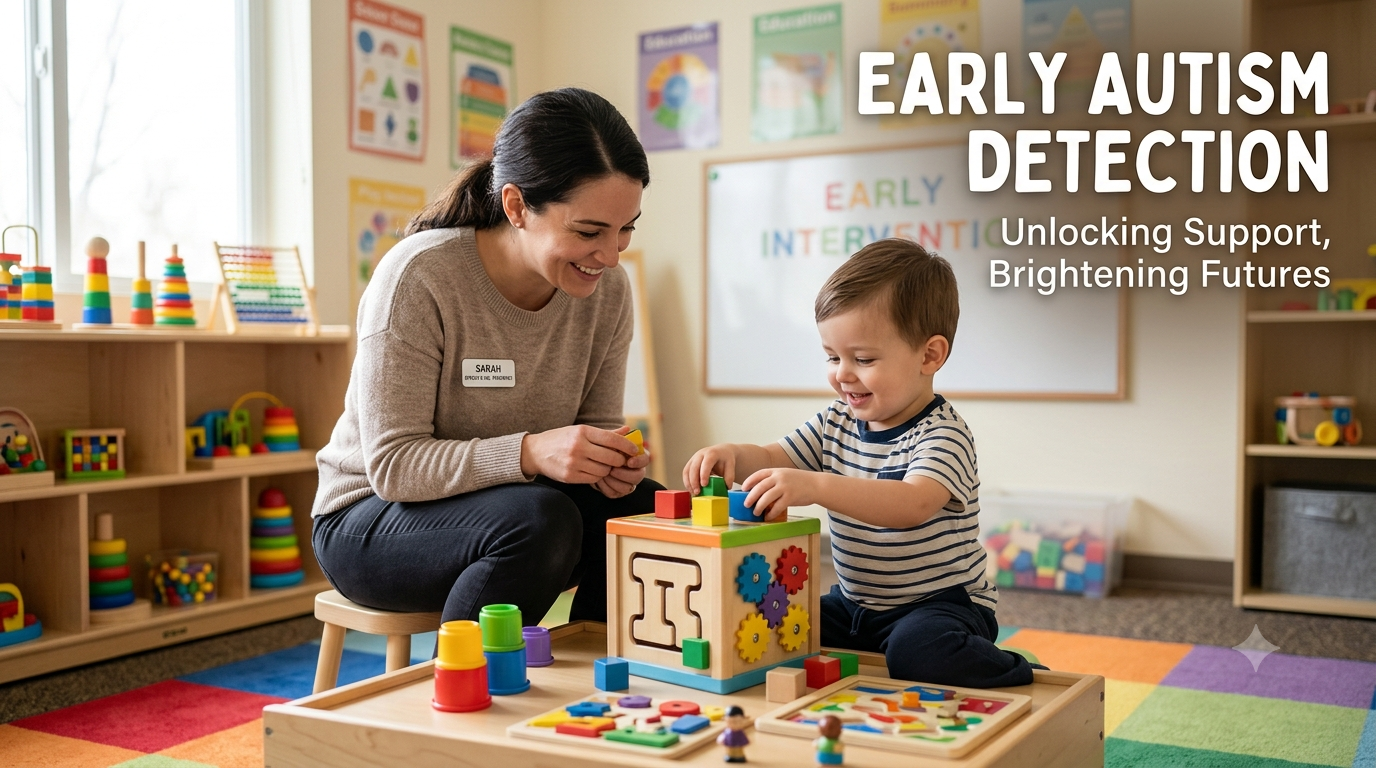
Early Autism Detection: What Happens When Autism Is Caught Early
Early autism detection is one of the most important factors in determining the quality of life an autistic child will go on to experience. When autism is caught early, the right support can be put in place during the period when the brain is most responsive to intervention, connections can be built before gaps become entrenched, and families can stop guessing and start understanding.
When autism is caught early, everything changes. Not because autism itself changes, the neurology is present from birth and it does not disappear with early identification, but because the environment around the child changes. The support arrives sooner. The misunderstandings are fewer. The years spent confused about why things feel so hard are replaced with years spent learning how to work with the brain your child has rather than against it.
This post covers what the research says about early autism detection, what early intervention actually involves, what parents should watch for, and why the question of when autism is identified matters as much as it does.
Table of Contents
What Early Autism Detection Actually Means
Why Timing Matters: What the Brain Research Says
What Happens When Autism Is Caught Early
Early Signs Parents Should Know
The Earliest Age Autism Can Be Detected
What Early Intervention Looks Like
Barriers to Early Autism Detection
What Parents Can Do Right Now
How Early Detection Connects to Acceptance
FAQs
Final Thoughts
What Early Autism Detection Actually Means
Early autism detection refers to the identification of autism during the earliest possible developmental window, ideally before the age of three and in many cases as early as 18 months. It is the process of recognizing the signs of autism, pursuing evaluation, receiving a diagnosis, and beginning appropriate support before the typical developmental period has passed.
Early autism detection does not mean catching something before it gets worse in the way that early cancer detection does. Autism is not a progressive disease. It does not get worse if it goes undetected. But the opportunities that early autism detection opens up are genuinely time-sensitive in ways that make the timing of identification practically significant.
Early autism detection matters because the brain of a young child is far more plastic and responsive to environmental input than the brain of an older child or an adult. The early years are when the neural connections that support communication, social engagement, sensory regulation, and learning are being most actively formed. When the right support is in place during that window, those connections develop in ways that serve the autistic child far better than they would without support.
Early autism detection is not about changing who an autistic child is. It is about giving their neurology the right conditions to develop as fully and as functionally as possible during the period when development is most responsive to those conditions.
Why Timing Matters: What the Brain Research Says
The neuroscience behind early autism detection is both compelling and straightforward. The brain of a child under three is undergoing a period of extraordinary development. Neural connections are being formed at a rate that will never be matched again in life. The brain is literally constructing itself based on the input it receives from the environment.
This is what neuroscientists call neuroplasticity, and it is at its most powerful in the earliest years of life. The practical implication for autism is significant: when the right support is introduced during this period, the developing brain can build more functional pathways for communication, social engagement, and sensory regulation than it would build without that support.
Research consistently demonstrates that children who receive early autism intervention, particularly before the age of three, show better outcomes across multiple domains including language development, social skills, adaptive functioning, and cognitive development compared to children who receive the same intervention later.
A study found that intensive early intervention significantly improved outcomes for autistic toddlers, with many children making gains that would not have been possible if intervention had begun at school age. Multiple subsequent studies have replicated and extended these findings.
This does not mean that intervention after the early years is ineffective. It absolutely is effective. But the window of maximum neurological responsiveness is real and early autism detection is what opens access to it.
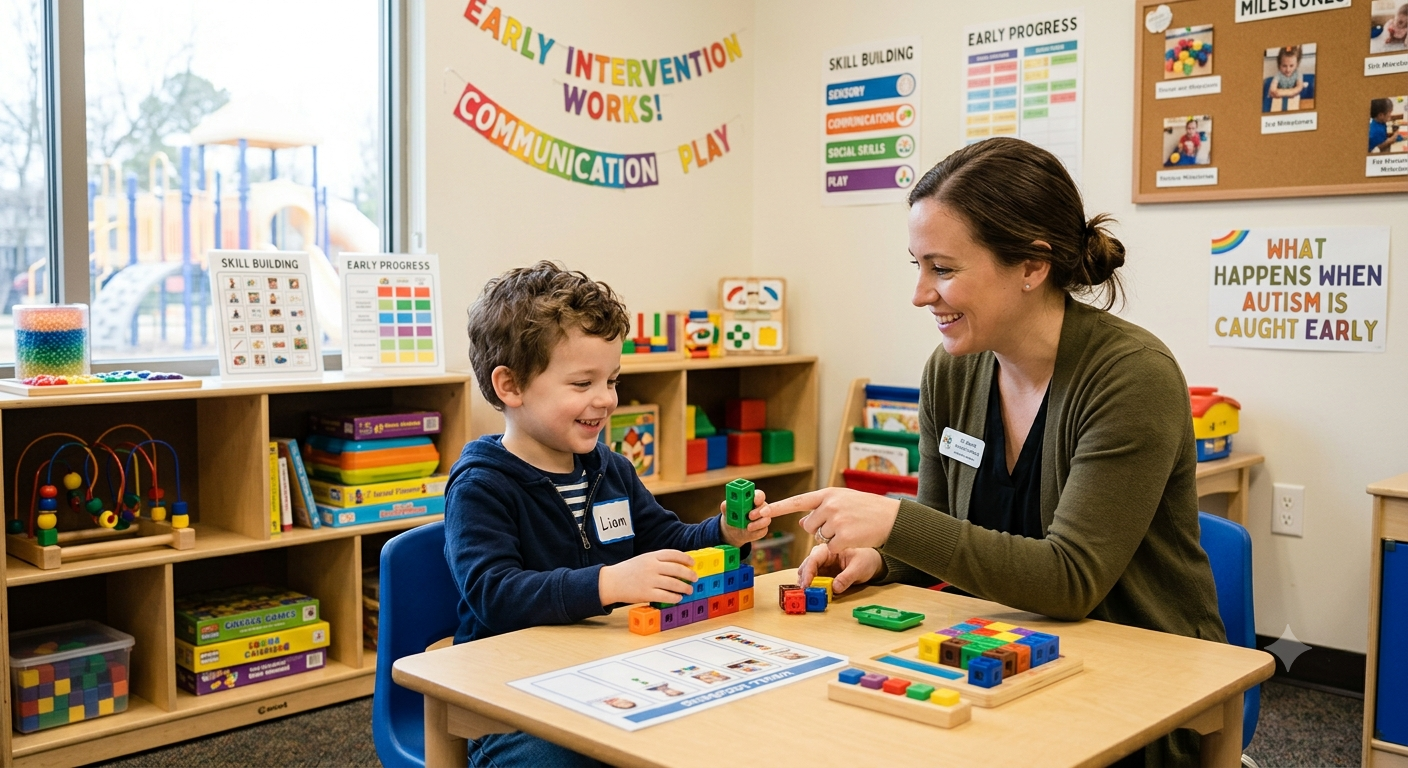
Early autism intervention works
What Happens When Autism Is Caught Early
When autism is caught early the outcomes for autistic children are measurably better across nearly every domain that matters for long-term quality of life.
Language and communication: When autism is caught early and communication support begins during the critical language development window, children develop stronger functional communication skills. This includes both verbal language and alternative communication methods for children who are nonverbal. Early speech and language therapy can make a profound difference to a child's ability to communicate their needs, preferences, and experiences.
Social development: When autism is caught early, support can be tailored to help autistic children develop social skills and build relationships during the period when the social brain is most actively developing. This does not mean making autistic children perform neurotypical social behavior. It means helping them develop authentic ways of connecting with others that work with their neurology.
Sensory regulation: When autism is caught early, occupational therapy and sensory integration support can help children develop more effective sensory regulation strategies during the period when those strategies are most readily learned. Children who develop better sensory regulation early are less likely to experience the kind of sensory overload that significantly affects functioning at school and in the community.
Academic readiness: When autism is caught early, children enter school with more of the foundational skills they need to benefit from education. Communication, self-regulation, attention, and the ability to manage transitions all contribute to school readiness and all can be meaningfully supported through early intervention.
Family functioning: When autism is caught early, families understand what they are dealing with earlier. The confusion, the self-blame, the wondering what is wrong, and the misinterpretation of autistic behavior as intentional or willful all reduce when there is a diagnosis and a framework for understanding the child. Families can access support, connect with community, and build their own knowledge and confidence much sooner.
Mental health: When autism is caught early, the years of struggling without understanding are shorter. Many autistic adults who were diagnosed late report significant mental health impacts from years of not understanding why they were different and why things that seemed easy for others felt so hard. Early autism detection reduces the duration of that confusion.
Autism Signs
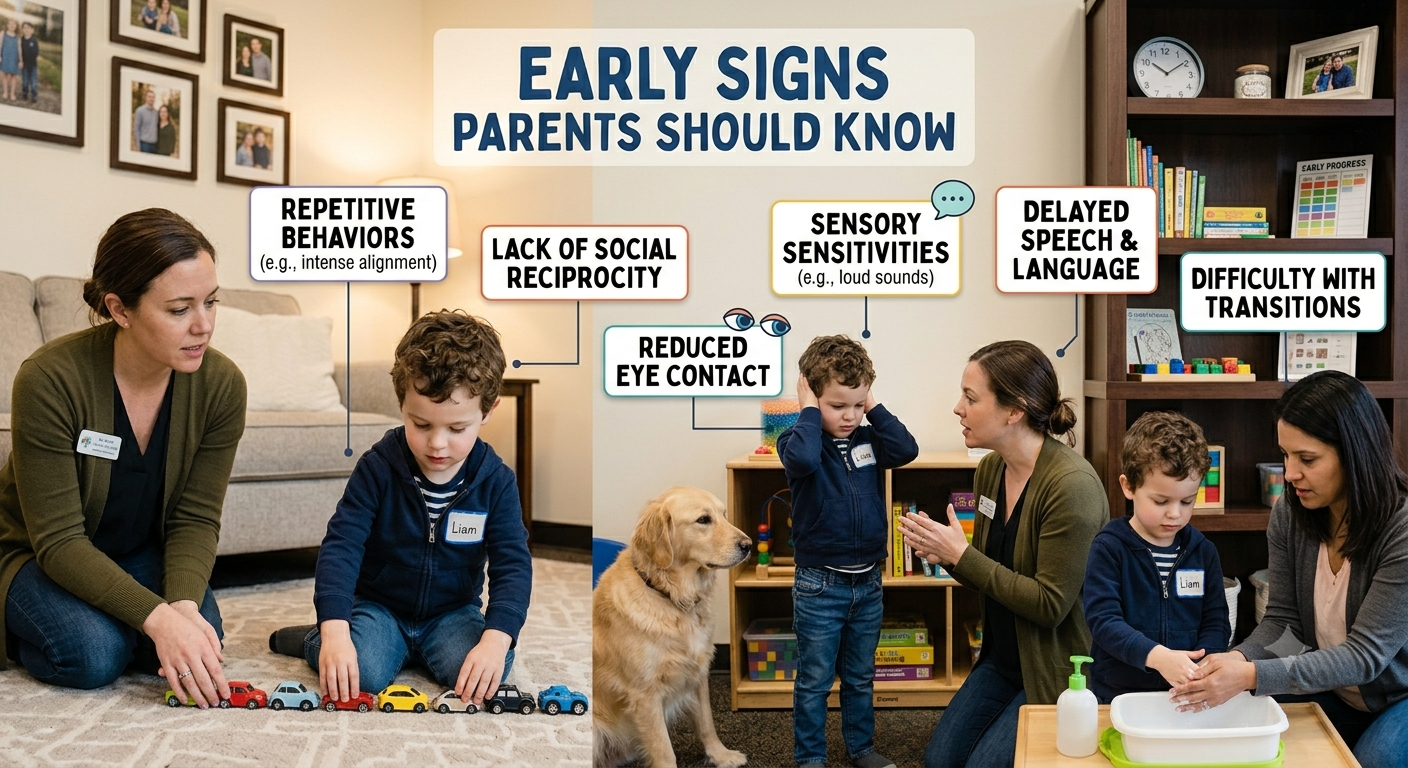
Early Signs Parents Should Know
Knowing the early signs of autism is part of early autism detection and it is something every parent benefits from understanding whether or not they currently have concerns about their child.
Signs in the first year:
Limited eye contact during feeding and social interaction
Not responding to their name by 9 to 12 months
Not showing things to parents by pointing by 12 months
Limited babbling or loss of babbling that had been developing
Not reaching toward familiar people
Unusual responses to sensory input including sounds, touch, or lights
Signs between 12 and 24 months:
Not using single words by 16 months
Not using two-word phrases by 24 months
Loss of previously acquired language at any point
Not engaging in simple pretend play by 18 months
Limited interest in other children
Strong preference for specific routines with significant distress at changes
Repetitive movements including hand flapping, spinning, or rocking
Intense focus on specific objects or aspects of objects
Signs in the preschool years:
Significant difficulty with peer interaction
Unusual language patterns including echolalia, scripted speech, or very formal language
Extreme reactions to sensory input
Intense, narrow interests that dominate play
Difficulty with transitions and unexpected changes
Limited pretend play or play that is highly repetitive
The presence of any of these signs does not confirm autism. But it does mean that seeking evaluation is the right next step. For a complete guide to the testing process once concerns have been identified, the post on how to test for autism covers every stage in detail.
Ages autism can be detected
The Earliest Age Autism Can Be Detected
Early autism detection has its limits, and those limits are worth understanding honestly.
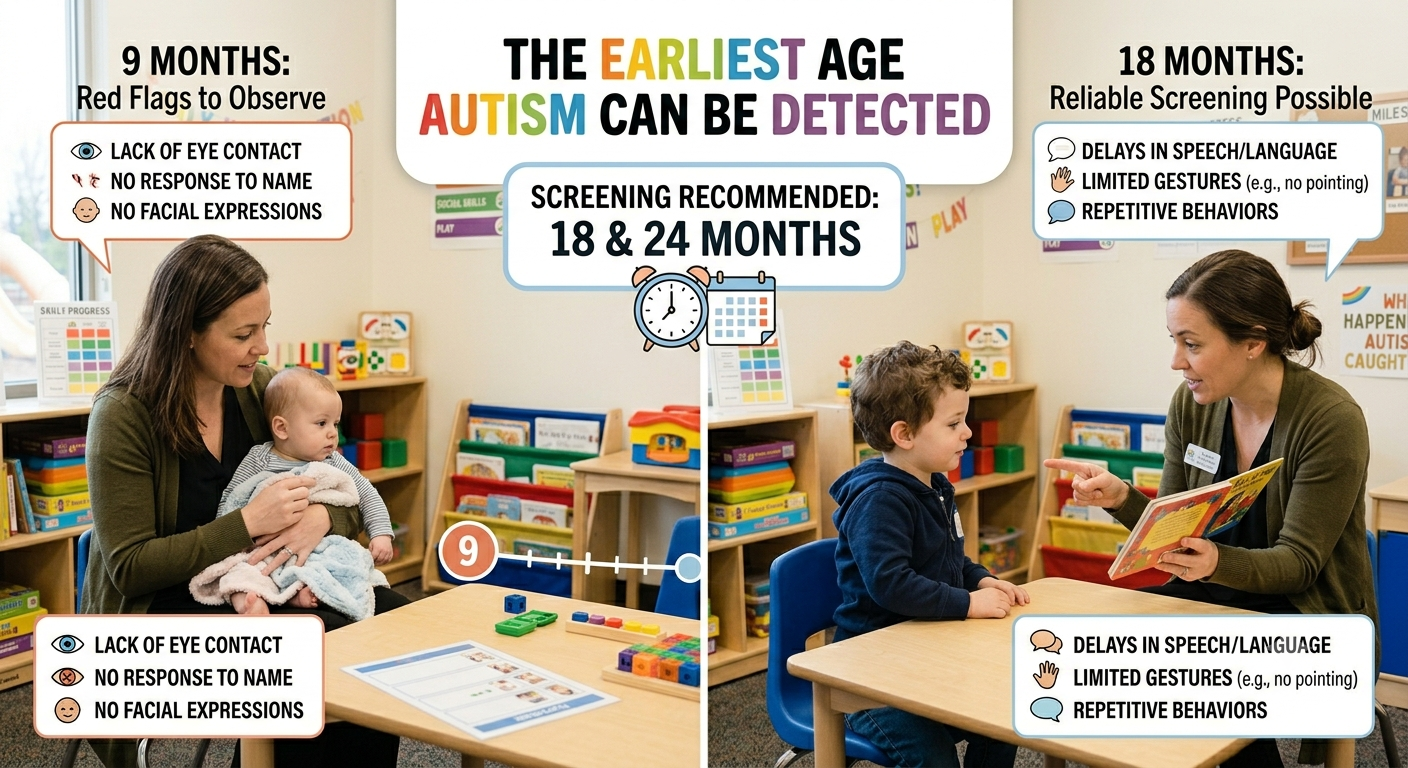
The American Academy of Pediatrics recommends autism-specific screening at 18 and 24 months. Research suggests that reliable autism identification is possible from around 18 months for children showing clear signs and from 24 months for more subtle presentations.
Some research has found that certain early markers in infant behavior, including patterns of eye contact, response to name, and social engagement, can be detectable as early as six months in infants who are later diagnosed with autism. These very early markers are currently the subject of active research but are not yet used in routine clinical screening.
For most families, the realistic window for early autism detection begins between 18 and 24 months when standard screening tools are reliable and diagnostic evaluations can be conducted with confidence.
It is worth noting that even an 18 to 24 month diagnosis, while considered early in clinical terms, still allows access to early intervention services during the most critical developmental window. Early is relative, and any diagnosis before school age opens doors that later diagnosis does not.
For parents who are carrying the emotional weight of a new diagnosis and trying to find their footing between the urgency of early intervention and the importance of acceptance, Sonia's coaching work is built for exactly that balance.
Book a coaching session with Sonia here and get the support that helps you hold both the urgency and the acceptance at the same time.
What Early Intervention Looks Like
Early autism detection is only valuable if it is followed by early intervention. Understanding what early intervention actually involves helps parents know what to pursue and what to expect.
Speech and language therapy: Communication support is almost universally recommended as part of early intervention for autistic children. This includes verbal language development for children who are developing speech and AAC implementation for children who are nonverbal or minimally verbal. Early speech therapy during the critical language development window is one of the most impactful interventions available.
Occupational therapy: Occupational therapy in early intervention addresses sensory processing, fine motor development, and the daily living skills that autistic children may need specific support to develop. Sensory integration approaches help young autistic children develop more effective regulation strategies during the period when those strategies are most readily learned.
Applied Behavior Analysis: ABA therapy is widely used in early autism intervention and has the most extensive evidence base of any autism intervention approach. It is also the most debated, with significant concerns raised by autistic advocates about historical ABA practices focused on compliance and suppression of autistic traits. Modern naturalistic ABA approaches that focus on skill development in the context of play and child-led interaction are generally considered more appropriate than older discrete trial formats.
Developmental relationship-based approaches: Approaches including DIR Floortime and the Early Start Denver Model use child-led play and relationship-based interaction to support communication, social engagement, and development. These approaches have growing evidence bases and are widely endorsed by autistic advocates as more affirming than purely behavioral approaches.
Early childhood special education: Many children with early autism detection qualify for early childhood special education services through their school district beginning at age three. These services provide structured educational support in settings designed for children with developmental needs.
Parent coaching: One of the most impactful components of early intervention is supporting parents to understand their child's communication and developmental needs and to respond in ways that promote development in everyday interactions. Parent coaching multiplies the impact of formal therapy by extending support into every interaction throughout the child's day.
Barriers to Early Autism Detection
Early autism detection is not equally available to all families and the barriers that prevent it are worth naming clearly.
Racial and ethnic disparities:Research consistently shows that Black, Hispanic, and Asian children are diagnosed with autism later on average than white children. These disparities reflect systemic inequities in access to healthcare, cultural factors that affect how autistic behavior is interpreted, and bias in the referral and diagnostic process.
Geographic barriers: Families in rural and remote areas often face significant barriers to autism evaluation including limited availability of specialist services and long travel distances to evaluation centers.
Economic barriers: Comprehensive private autism evaluations can cost several thousand dollars. Public pathways exist but have long waiting lists in many areas. Families without resources to access private evaluation may wait significantly longer for diagnosis.
Cultural barriers: In some communities, autism is stigmatized in ways that prevent families from seeking evaluation. Cultural beliefs about the cause of developmental differences, distrust of medical systems, and concerns about labeling can all delay early autism detection.
Professional barriers: Not all pediatricians are equally knowledgeable about autism. Concerns raised by parents are sometimes dismissed, minimized, or attributed to parenting anxiety. Families of girls are particularly likely to encounter this barrier.
Addressing these barriers is a systemic issue that goes beyond what individual families can solve. But knowing they exist helps parents advocate more effectively when they encounter them.
What Parents Can Do Right Now
If you are concerned about your child's development, here is what to do:
Request autism screening at your child's next pediatric appointment, or sooner if concerns are present
Document specific behaviors you have observed with dates and contexts
Request a referral for a full autism evaluation if screening raises concerns or if you have concerns regardless of screening results
Contact your local early intervention program directly if your child is under three, you do not need a referral in most states
Request a free educational evaluation through your school district if your child is three or older
Connect with other autism families who can share their experience navigating the evaluation and early intervention process
How Early Detection Connects to Acceptance
Early autism detection is most valuable when it is followed not just by early intervention but by early acceptance.
The goal of early identification is not to minimize autism or to engineer the most neurotypical version of the autistic child possible. It is to understand the child deeply enough, early enough, to build a life and an environment that genuinely supports them.
That requires acceptance alongside intervention. Acceptance of the autistic neurology as the genuine, permanent, valuable foundation of who your child is. Acceptance that the goal is flourishing as an autistic person, not passing as a neurotypical one.
The post on autism awareness vs autism acceptance covers why that distinction matters and what acceptance looks like in practice. It is worth reading early in the journey because the framework you bring to your child's diagnosis shapes every decision you make from here.
FAQs
What does it mean when autism is caught early
Early autism detection means identifying autism before age three when the brain is most responsive to intervention and support can be put in place during the critical developmental window.
What happens when autism is caught early?
When autism is caught early children show better outcomes in communication, social development, sensory regulation, school readiness, and mental health compared to children identified later.
Can autism be detected at birth?
Not reliably. Early markers may be present in the first months of life but reliable identification typically begins around 18 months using validated screening tools.
Does early detection mean early intervention always works? Early intervention significantly improves outcomes but results vary depending on the individual child, the type of intervention, and the quality of support provided.
What is the best early intervention for autism?
No single approach works for every child. Speech therapy, occupational therapy, developmental relationship-based approaches, and parent coaching all have strong evidence bases for early intervention.
Does early autism detection change the autism itself?
No. Autism is neurological and present from birth. Early detection changes the support environment, not the underlying neurology.
Does early autism detection prevent autism regression?
Early detection and appropriate support reduce the risk of autism regression by building stronger regulatory and communicative foundations before the demands that trigger regression become significant.
Final Thoughts
Early autism detection is not about fear. It is not about catching something terrible before it gets worse. It is about giving an autistic child the right conditions at the right time, during the window when those conditions make the most difference to how their brain develops and how their life unfolds.
When autism is caught early, families stop guessing and start understanding. Children stop struggling in silence and start receiving support that makes sense of their experience. The years of confusion are shorter. The foundation is stronger. The path forward is clearer.
If you have concerns about your child's development, act on them now. The evaluation process is navigable. The early intervention services are accessible. And the difference that early autism detection makes to a child's life is real, measurable, and worth every step of the process it takes to get there.
Your child's brain is working hard. Early autism detection is how you make sure the world works with it.
References:
Maksimović S, Marisavljević M, Stanojević N, Ćirović M, Punišić S, Adamović T, Đorđević J, Krgović I, Subotić M. Importance of Early Intervention in Reducing Autistic Symptoms and Speech–Language Deficits in Children with Autism Spectrum Disorder. Children (Basel). 2023 Jan 6;10(1):122. Available from: https://pmc.ncbi.nlm.nih.gov/articles/PMC9857540/
Estes A, Munson J, Rogers SJ, Greenson J, Winter J, Dawson G. Long-Term Outcomes of Early Intervention in 6-Year-Old Children With Autism Spectrum Disorder. J Am Acad Child Adolesc Psychiatry. 2015 Jul;54(7):580-7. Available from: https://pubmed.ncbi.nlm.nih.gov/26088663/
American Academy of Pediatrics. Autism Spectrum Disorder [Internet]. Last updated October 2025. Available from: https://www.aap.org/en/patient-care/autism/
Young GS, Merin N, Rogers SJ, Ozonoff S. Gaze Behavior and Affect at 6-Months: Predicting Clinical Outcomes and Language Development in Typically Developing Infants and Infants At-Risk for Autism. Dev Sci. 2009 Sep;12(5):798-814. Available from: https://pmc.ncbi.nlm.nih.gov/articles/PMC2732664/
International Council on Development and Learning (ICDL). What is DIR®? [Internet]. Available from: https://www.icdl.com/dir
Autism Speaks. What is Early Start Denver Model (ESDM)? [Internet]. Available from: https://www.autismspeaks.org/early-start-denver-model-esdm
Aylward BS, Gal-Szabo DE, Taraman S. Racial, Ethnic, and Sociodemographic Disparities in Diagnosis of Children with Autism Spectrum Disorder. J Dev Behav Pediatr. 2021 Oct-Nov;42(8):682-689. Available from: https://pmc.ncbi.nlm.nih.gov/articles/PMC8500365/

How to Test for Autism: A Complete Guide for Parents
If you are wondering how to test for autism, you are probably not reading this out of idle curiosity. You are reading it because something has shifted. A developmental checkup raised a concern. A teacher said something. A friend mentioned it. Or you have been watching your child and quietly noting things that do not quite add up, and you have finally decided to find out what is going on.
Knowing how to test for autism is the first practical step in a process that can feel overwhelming before you understand how it actually works. This post walks you through everything, from the earliest screening tools to the full diagnostic process, what to expect at each stage, how to advocate effectively, and what comes after a diagnosis.
How to test for autism is a question with a real, practical answer. And having that answer puts you in a far stronger position than most parents have when they start this process.
So, let’s get into it.
Table of Contents
How to Test for Autism: The Short Answer
The Difference Between Autism Screening and Autism Testing
Early Signs That Prompt Autism Testing
Step One: Developmental Screening at Your Pediatrician
Step Two: Formal Autism Evaluation
Who Can Diagnose Autism
What Happens During an Autism Evaluation
The Main Diagnostic Tools Used to Test for Autism
Online Autism Tests: Are They Reliable
What Happens After an Autism Diagnosis
How to Advocate for Testing When You Are Being Dismissed
Final Thoughts
How to Test for Autism: The Short Answer
How to test for autism involves a two-stage process. The first stage is screening, which identifies children who may be at risk for autism and need further evaluation. The second stage is a comprehensive diagnostic evaluation, which is a detailed, multi-professional assessment that either confirms or rules out an autism diagnosis.
There is no single test for autism. No blood test, no brain scan, no genetic test, and no quick checklist can diagnose autism on its own. Autism is diagnosed through a combination of developmental history, behavioral observation, standardized assessment tools, and clinical judgment from trained professionals.
This two-stage process is how to test for autism in the most accurate and reliable way currently available. Understanding both stages and what happens within them helps parents navigate the process with confidence rather than confusion.
The Difference Between Autism Screening and Autism Testing
Before going further, it helps to understand that screening and testing are different things and the distinction matters practically.
Autism screening: Screening is a quick, low-burden process designed to identify children who may need further evaluation. It does not diagnose autism. It flags a concern and prompts the next step. Screening tools are typically used by pediatricians at routine developmental checkups and take only a few minutes to complete.
Autism testing or evaluation: A full autism evaluation is a comprehensive, multi-session process conducted by trained specialists. It involves direct observation of the child, standardized assessment tools, detailed developmental history, and input from multiple sources including parents, teachers, and other professionals who know the child. It results in either a diagnosis or a ruling out of autism, along with a full picture of the child's strengths and support needs.
The screening identifies who needs testing. The testing provides the diagnosis.
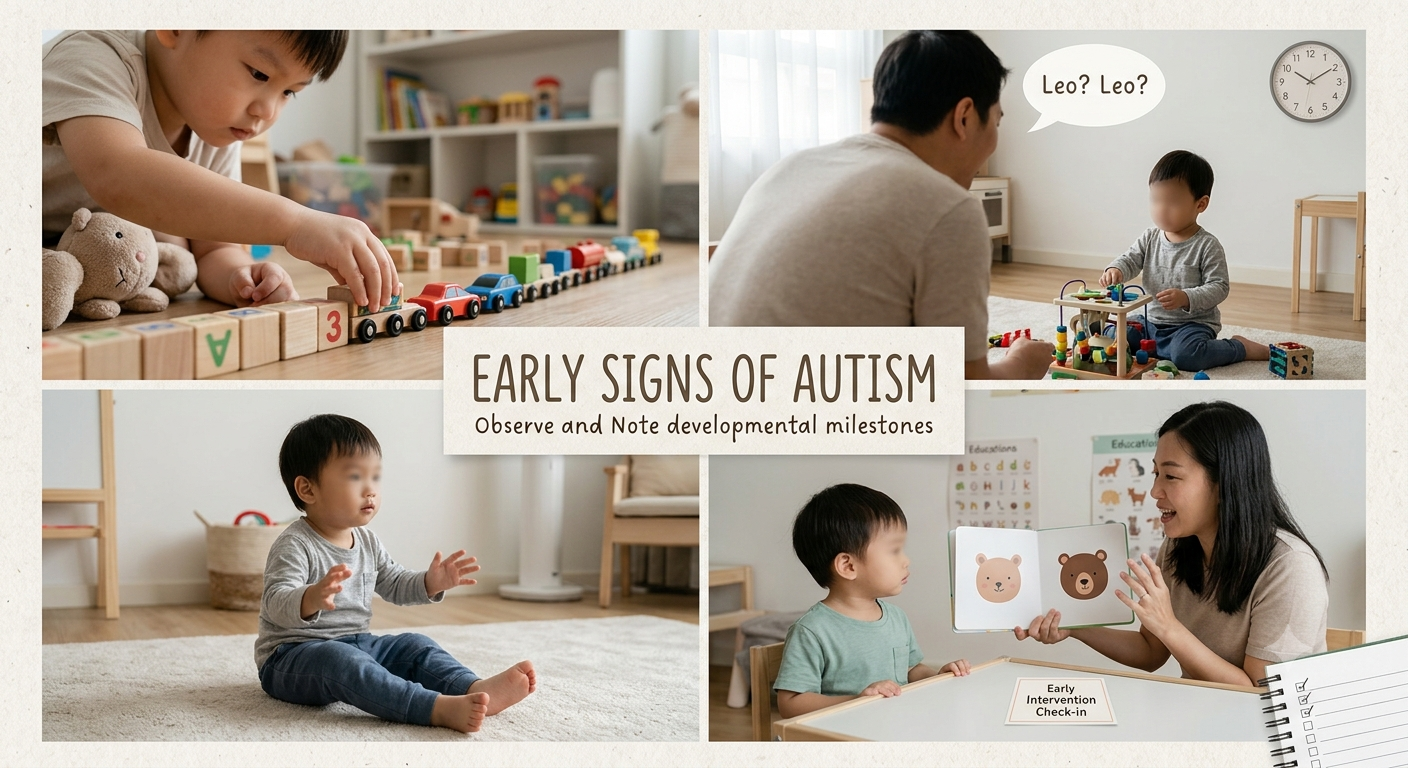
early signs of autism to know
Early Signs That Prompt Autism Testing
Most parents begin thinking about how to test for autism because they have noticed something specific about their child's development. Here are the signs that most commonly prompt parents and professionals to pursue autism testing:
In infants and toddlers:
Not responding to their name by 12 months
Not pointing or waving by 12 months
No babbling by 12 months
No two-word phrases by 24 months
Loss of previously acquired language or social skills at any age
Limited or absent eye contact
Not smiling in response to smiling faces
Appearing not to hear even though hearing tests are normal
In preschool age children:
Significant difficulty with social interaction with peers
Strong preference for routine with extreme distress at changes
Repetitive movements including hand flapping, rocking, or spinning
Intense, narrow interests that dominate play and conversation
Unusual sensory responses including strong reactions to sounds, textures, or lights
Delayed or unusual language development
Difficulty with pretend play
In school age children:
Social difficulties that are becoming more visible as peer expectations increase
Difficulty understanding unwritten social rules
Challenges with executive functioning including organization and task initiation
Sensory sensitivities that affect participation in school activities
Intense special interests that differ significantly from peers
Difficulty with transitions and unexpected changes
In teenagers:
Social isolation increasing as peer relationships become more complex
Anxiety and depression emerging alongside social difficulty
Academic performance inconsistent with cognitive ability
Fatigue and burnout from sustained social effort
Questioning their own identity and neurological difference
If you are seeing several of these signs in your child, pursuing autism testing is the right next step. Waiting to see if they grow out of it is rarely the best approach. Earlier identification means earlier support, and earlier support produces better outcomes.
Step One: Developmental Screening at Your Pediatrician
The first step in how to test for autism for most families is a conversation with their child's pediatrician.
The American Academy of Pediatrics recommends autism-specific screening for all children at their 18 and 24 month well-child visits, regardless of whether any concerns have been raised. Many pediatricians also screen at other routine visits if developmental concerns are present.
The most widely used screening tool at this stage is the M-CHAT-R, which stands for Modified Checklist for Autism in Toddlers, Revised. It is a 20-item parent-report questionnaire that takes about five minutes to complete and identifies toddlers who may need further evaluation.
What to do at this stage:
Be honest and specific when completing screening questionnaires. Describe what your child actually does, not what you hope or expect they will do
Come prepared with specific examples of the behaviors that concern you
Ask directly whether your child's screening results suggest further evaluation is needed
Request a referral for a full evaluation if the screening is positive or if you have concerns even when the screening is negative
It is worth knowing that a negative screening result does not rule out autism, particularly in children who have developed effective compensatory strategies or whose autism presents in ways that are less visible on standard screening tools. If you have concerns, advocate for further evaluation regardless of screening results.
Step Two: Formal Autism Evaluation
If screening raises concerns or if you have requested a full evaluation based on your own observations, the next step in how to test for autism is a comprehensive diagnostic evaluation.
This evaluation can be requested through several pathways:
Through your pediatrician: Ask for a referral to a developmental pediatrician, child psychologist, or autism specialist for a full evaluation.
Through your school district: Under the Individuals with Disabilities Education Act, you have the right to request a free educational evaluation through your child's school district. This evaluation is not the same as a clinical diagnosis but can identify educational support needs and sometimes contributes to the diagnostic process.
Through a specialist center: Many children's hospitals and university medical centers have dedicated autism evaluation programs. These programs typically offer the most comprehensive evaluations but often have longer waiting lists.
Privately: Private autism evaluations are available through clinical psychologists and developmental pediatricians in private practice. These can be faster than public pathways but involve out of pocket costs that vary significantly.

Professionals who can diagnose autism
Who Can Diagnose Autism
Knowing who can diagnose autism is part of understanding how to test for autism effectively.
In the United States, autism can be diagnosed by:
Developmental pediatricians: Medical doctors who specialize in child development and developmental disorders
Child psychiatrists: Medical doctors who specialize in mental health conditions in children including neurodevelopmental conditions
Clinical psychologists: Doctoral level psychologists with training in psychological assessment and neurodevelopmental conditions
Pediatric neurologists: Medical doctors specializing in neurological conditions in children, particularly relevant when epilepsy or other neurological conditions are also present
The most comprehensive autism evaluations are typically conducted by multidisciplinary teams that include several of these professionals working together. A team approach produces a more complete picture of the child's profile than a single professional assessment.
What Happens During an Autism Evaluation
Understanding what happens during an autism evaluation helps parents prepare effectively and know what to expect. Here is a typical sequence:
Developmental history interview: A detailed interview with parents covering the child's developmental history from birth, including milestones, early language development, social development, behavioral patterns, medical history, and family history. This usually takes one to two hours and is one of the most important parts of the evaluation.
Direct assessment of the child: The evaluator spends direct time with the child conducting standardized observations and assessments. The child may participate in structured play activities, respond to social prompts, complete cognitive tasks, and engage in conversation depending on their age and language level.
Cognitive and language assessment: Most comprehensive autism evaluations include assessment of cognitive ability and language development. This helps identify co-occurring conditions including intellectual disability and language disorders and provides a complete picture of the child's profile.
Behavior rating scales: Standardized questionnaires completed by parents and teachers that assess behavior across different settings. These provide information about how the child functions across environments rather than only in the assessment room.
Sensory processing assessment: Many evaluations include assessment of sensory processing, either through standardized tools or through clinical observation.
Feedback session: After the evaluation is complete, the evaluating team meets with parents to share findings, explain the diagnosis or ruling out of autism, and discuss recommendations for support.
If this section resonated with you, this is exactly what coaching sessions with Sonia are built around. Book here.
The Main Diagnostic Tools Used to Test for Autism
Several standardized tools are commonly used as part of how to test for autism in clinical practice. Knowing what these are helps parents understand the process:
ADOS-2 (Autism Diagnostic Observation Schedule, Second Edition): This is considered the gold standard observational assessment for autism. It is a structured, semi-structured interaction between the evaluator and the child that is scored according to specific criteria. It provides direct observational data on social communication and restricted or repetitive behaviors.
ADI-R (Autism Diagnostic Interview, Revised):A structured interview with parents covering developmental history and current behavior. It is often used alongside the ADOS-2 to provide a comprehensive picture combining observational and historical data.
M-CHAT-R:The screening tool used at pediatric well-child visits for toddlers aged 16 to 30 months.
CARS-2 (Childhood Autism Rating Scale, Second Edition): A rating scale used to assess autism severity across multiple behavioral domains.
Vineland Adaptive Behavior Scales:Assesses adaptive functioning including communication, daily living skills, and socialization across age groups.
Online Autism Tests: Are They Reliable
Parents searching for how to test for autism will inevitably come across online autism tests and screening tools. It is worth being clear about what these are and what they are not.
What online autism tests can do:
Provide an informal indication of whether an autism evaluation might be worthwhile
Help parents organize their observations and concerns before a professional consultation
Give autistic adults a framework for understanding their own experience before seeking formal diagnosis
What online autism tests cannot do:
Diagnose autism
Replace a comprehensive clinical evaluation
Provide a reliable ruling out of autism
The most widely used and most validated online screening tools include the Autism Spectrum Quotient, known as the AQ, developed by Simon Baron-Cohen and colleagues at Cambridge University, and the Ritvo Autism Asperger Diagnostic Scale, known as the RAADS-R. These are research-grade tools that can provide useful information but are not diagnostic instruments.
If an online screening raises concerns, the appropriate next step is a full clinical evaluation with a qualified professional. Online tools are a starting point, not an endpoint.
What Happens After an Autism Diagnosis
Understanding what comes after autism testing and diagnosis is part of knowing how to test for autism effectively because the diagnosis is only the beginning of the process.
After a diagnosis, the immediate priorities are:
Getting the right support in place: Use the diagnosis to access services including speech therapy, occupational therapy, behavioral support, and school accommodations. The diagnosis is the key that unlocks these services.
Educating yourself: Read widely from credible sources including autistic authors and advocates. The more you understand your child's specific profile, the better you can advocate for them and support them.
Connecting with community: Find other families who are navigating similar experiences. The autism parenting community is one of the most generous and knowledgeable communities you will ever encounter.
Processing the emotional response: A diagnosis brings up complex emotions for most parents. Giving yourself space to process those emotions, with support if needed, is important before diving entirely into action mode.
For a comprehensive guide to the practical steps that follow a diagnosis, the post on newly diagnosed autism parent guide covers everything in detail.
For the broader context of what acceptance looks like beyond diagnosis, the post on autism awareness vs autism acceptance is worth reading early in the journey because the framework you use to understand your child's diagnosis will shape every decision you make from here.
How to Advocate for Testing When You Are Being Dismissed
One of the most frustrating experiences parents describe in the autism testing process is being dismissed by professionals who minimize their concerns. Here is how to advocate effectively when that happens:
Document everything: Keep a written record of specific behaviors you have observed, with dates, contexts, and details. Specific documented observations are harder to dismiss than general concerns.
Request things in writing: If a professional declines to refer for evaluation, ask them to put that decision in writing with their clinical reasoning. This often prompts a more careful reconsideration.
Seek a second opinion: You are not obligated to accept a single professional's judgment. If your concerns are being dismissed, seek another opinion from a professional with specific autism expertise.
Use your school district rights: Under IDEA you have the right to request a free educational evaluation through your school district. You do not need your pediatrician's agreement to do this. Submit the request in writing and the school district has 60 days to respond.
Trust your observations: You know your child better than any professional who has spent one hour with them. Your observations are valid data. Do not let a dismissive response convince you otherwise.
Final Thoughts
Knowing how to test for autism puts you ahead of where most parents are when they start this process. The testing itself is not something to fear. It is the process of finally getting accurate information about your child that you can use to get them the support they deserve.
How to test for autism is a question with a clear practical answer. Two stages. Multiple professionals. Standardized tools combined with developmental history and direct observation. A process that takes time but produces a picture of your child that opens doors to genuine support.
If you have concerns about your child, pursue them. Document what you are seeing. Request the evaluation. Advocate when you need to. And trust that the clarity that comes from knowing is almost always better than the uncertainty of not knowing.
Your child is worth finding out.
References:
American Academy of Pediatrics. Autism Spectrum Disorder [Internet]. Last updated October 2025. Available from: https://www.aap.org/en/patient-care/autism/
Robins DL, Fein D, Barton M. M-CHAT-R/F: Modified Checklist for Autism in Toddlers, Revised with Follow-Up [Internet]. 2009. Available from: https://www.mchatscreen.com/
U.S. Department of Education. Individuals with Disabilities Education Act, Section 1414: Evaluations, Eligibility Determinations, Individualized Education Programs, and Educational Placements [Internet]. Available from: https://sites.ed.gov/idea/statute-chapter-33/subchapter-ii/1414/
Global Autism Interactive Network (GAIN), University of Kansas Life Span Institute. Autism Diagnostic Interview – Revised (ADI-R) [Internet]. Available from: https://gain.ku.edu/autism-diagnostic-interview-revised-adi-r
Massachusetts General Hospital, Lurie Center for Autism. Autism Diagnostic Observation Schedule, Second Edition (ADOS-2) [Internet]. Available from: https://www.massgeneral.org/children/autism/lurie-center/autism-diagnostic-observation-schedulesecond-edition-ados2
Ji SI, Park H, Yoon SA, Hong SB. A Validation Study of the CARS-2 Compared With the ADOS-2 in the Diagnosis of Autism Spectrum Disorder: A Suggestion for Cutoff Scores. J Korean Acad Child Adolesc Psychiatry. 2023 Jan;34(1):45-50. Available from: https://pmc.ncbi.nlm.nih.gov/articles/PMC9816003/
ScienceDirect Topics. Vineland Adaptive Behavior Scale [Internet]. Elsevier. Available from: https://www.sciencedirect.com/topics/medicine-and-dentistry/vineland-adaptive-behavior-scale
Baron-Cohen S, Wheelwright S, Skinner R, Martin J, Clubley E. The Autism-Spectrum Quotient (AQ): Evidence from Asperger Syndrome/High-Functioning Autism, Males and Females, Scientists and Mathematicians. J Autism Dev Disord. 2001;31(1):5-17. Available from: https://psychology-tools.com/test/autism-spectrum-quotient
Ritvo RA, et al. Ritvo Autism Asperger Diagnostic Scale – Revised (RAADS-R) [Internet]. NovoPsych. 2011. Available from: https://novopsych.com/assessments/diagnosis/ritvo-autism-asperger-diagnostic-scale-revised-raads-r/
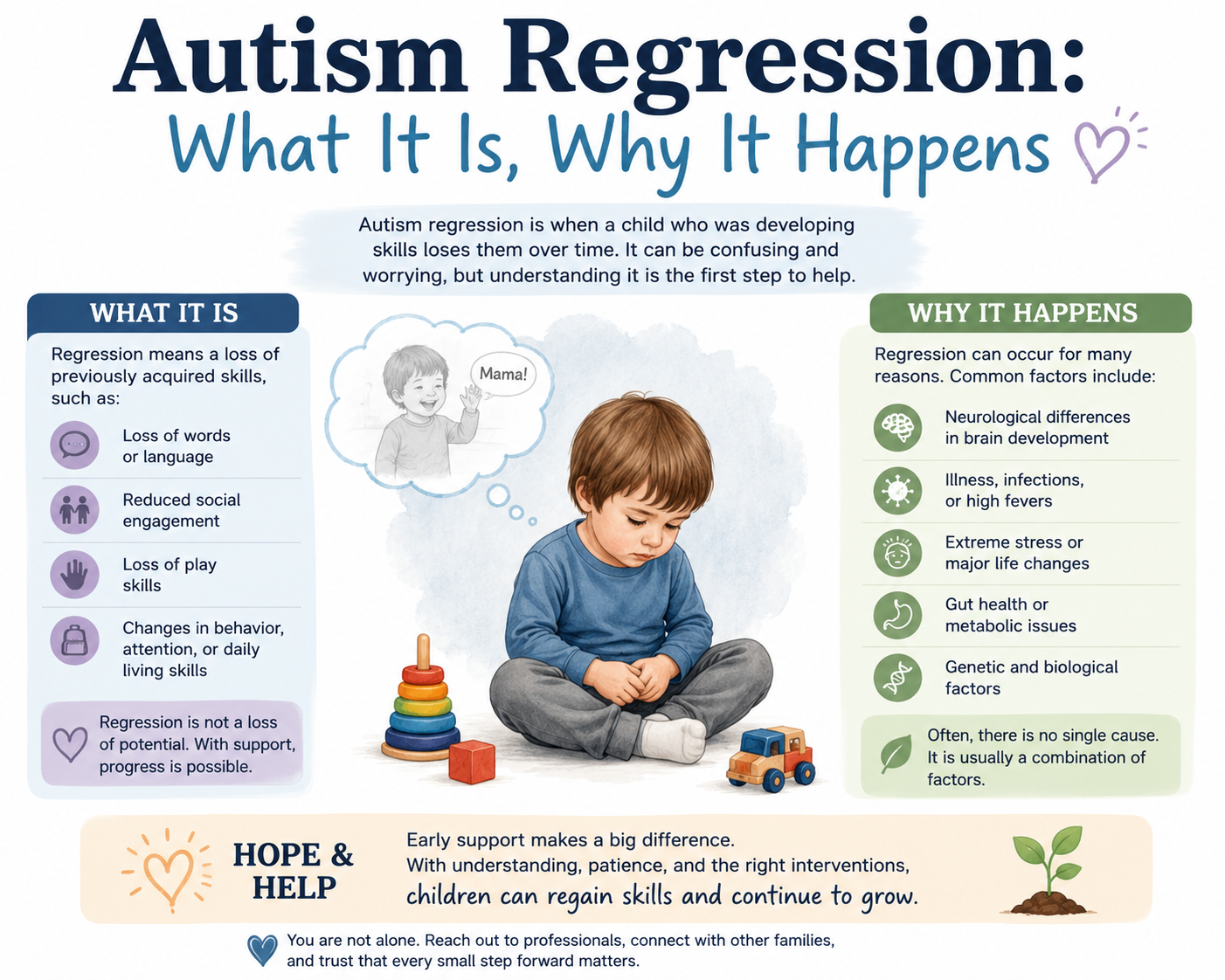
Autism Regression: What It Is, Why It Happens and What Parents Need to Know
Autism regression is one of the most frightening things a parent can witness. Your child has been making progress. Skills are developing. Communication is improving. And then, seemingly out of nowhere, those skills begin to disappear.
Autism regression is more common than most parents realize, more complex than most explanations suggest, and more manageable than it feels in the middle of it. This post covers everything parents need to know about autism regression, from what it actually is and why it happens, to what to do when it occurs and what the research says about recovery.
If your child is going through autism regression right now, the most important thing to know before reading further is this: autism regression is not a sign that your child is moving backward permanently. It is a sign that something in their environment, their body, or their circumstances needs attention.
Table of Contents
What Is Autism Regression
Types of Autism Regression
What Causes Autism Regression
Autism Regression in Toddlers and Young Children
Autism Regression in Teenagers
Autism Regression in Adults
How Autism Regression Is Different From Normal Development
What to Do When You Notice Autism Regression
What the Research Says About Autism Regression and Recovery
How Autism Regression Connects to Autistic Burnout
How Pathological Demand Avoidance Connects to Autism Regression
Supporting Your Child Through Autism Regression
FAQs
Final Thoughts
What Is Autism Regression
Autism regression is the loss of previously acquired skills in an autistic individual. It can affect communication, social skills, self-care abilities, academic functioning, emotional regulation, and daily living skills that the child or adult had previously demonstrated consistently.
Autism regression is not the same as never having developed a skill. It specifically refers to the loss of something that was already there. A child who was using five-word sentences who stops speaking. A child who was toilet trained who begins having accidents again. A teenager who was managing school independently who suddenly cannot get through a day without significant support. These are all examples of autism regression.
Autism regression can happen suddenly or gradually. It can be partial, affecting only some skills, or more pervasive, affecting functioning across multiple domains. And it can happen at any age, not just in early childhood, which is a fact that surprises many parents who assumed autism regression was something that only affected toddlers.
Understanding autism regression starts with understanding that it is not random. Autism regression is almost always telling you something. The challenge is figuring out what.
Types of Autism Regression
There are several distinct types of autism regression that researchers and clinicians recognize. Knowing which type applies to your child helps point toward the right response.
Early developmental autism regression: This is the most widely known form of autism regression. It typically occurs between 18 and 36 months of age and involves the loss of language and social skills that had been developing on track. A toddler who was saying words or short phrases stops talking. Eye contact decreases. Social engagement withdraws. This type of autism regression is one of the earliest recognizable signs of autism in children who are later diagnosed.
Setback regression: This type of autism regression occurs in response to a specific change or stressor. A new sibling, a house move, a change in school, illness, bereavement, or any significant disruption can trigger autism regression in a child who was previously functioning well. Setback regression is typically temporary but can be prolonged if the underlying cause is not addressed.
Puberty-related autism regression: Autism regression during puberty is more common than most people know. Hormonal changes, increased social complexity, and the sensory changes that come with puberty can all trigger significant autism regression in children who had been making steady progress through childhood.
Autistic burnout regression: This type of autism regression occurs when an autistic person has been masking, overcompensating, and pushing through demands beyond their capacity for a sustained period. The result is a collapse of functioning that can look dramatic and frightening. Autistic burnout regression is particularly common in autistic individuals who were previously high functioning in appearance.
Medical regression: Autism regression can be triggered or worsened by underlying medical conditions including epilepsy, gastrointestinal issues, sleep disorders, and infections. When autism regression occurs suddenly and severely, a medical evaluation is always warranted.
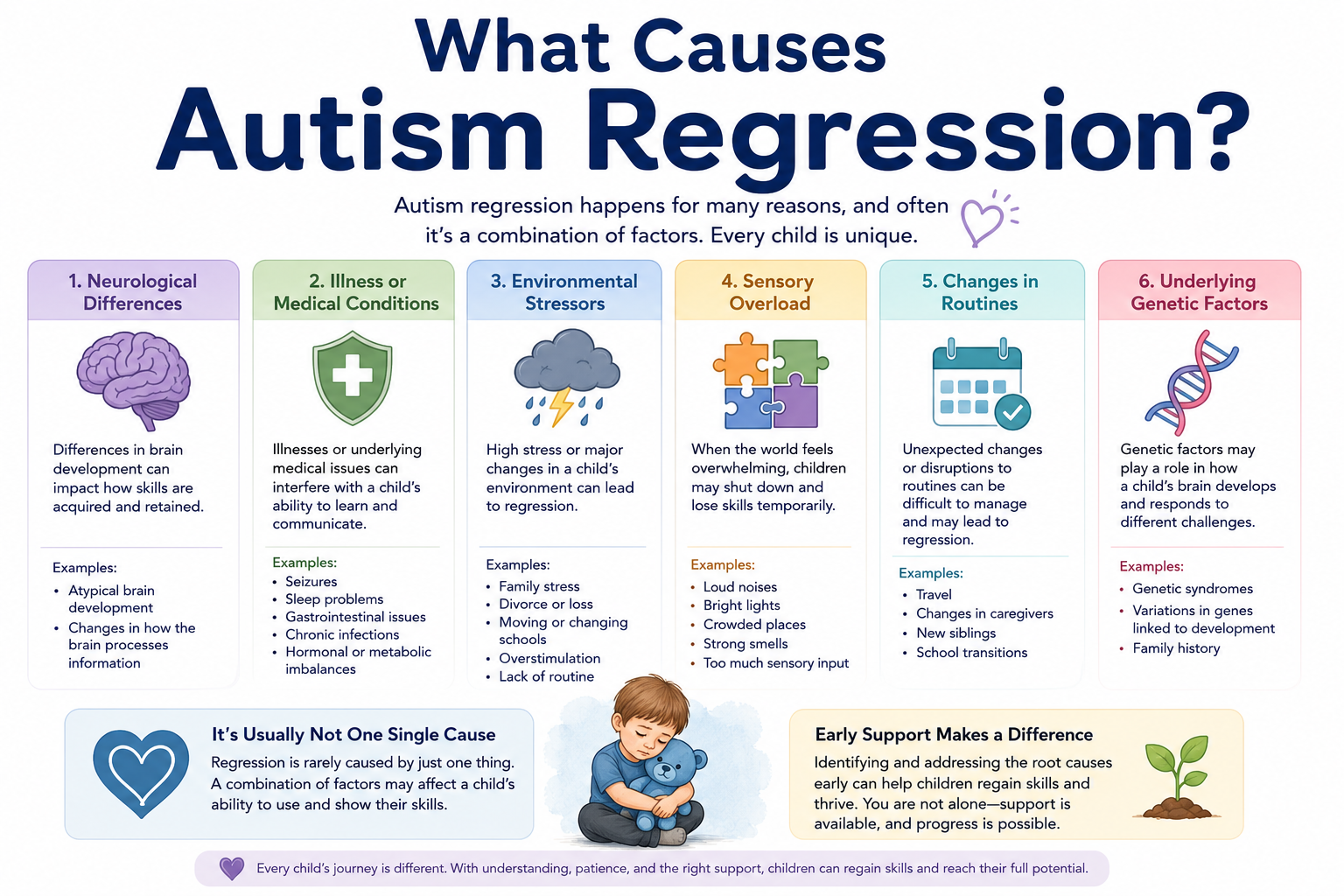
causes of autism regression
What Causes Autism Regression
Autism regression rarely has a single cause. It is almost always the result of one or more of the following factors intersecting:
Environmental changes: Any significant change to the predictable environment can trigger autism regression. Changes in routine, transitions between schools or caregivers, moves, and family changes all create conditions where autism regression is more likely.
Sensory overload: Sustained sensory overload depletes the nervous system's regulatory capacity. When that capacity is depleted enough, autism regression in skills that depend on regulation becomes likely.
Social and academic pressure: As autistic children move through school, social and academic demands increase. When those demands exceed the child's capacity to manage them, autism regression often follows. This is particularly visible at transition points between school years or school settings.
Medical factors: Undiagnosed or undertreated medical conditions are a significant and frequently overlooked cause of autism regression. Epilepsy in particular can cause autism regression that is misattributed to behavioral or environmental causes.
Anxiety: Elevated anxiety is one of the most common triggers for autism regression across all age groups. When anxiety is high enough, the cognitive and communicative resources needed to maintain skills are redirected toward managing the threat response.
Masking collapse: When autistic individuals have been spending significant energy masking their autistic traits to fit in, the eventual collapse of that masking effort often presents as autism regression. The skills appear lost but they are more accurately described as temporarily inaccessible due to exhaustion.
Autism Regression in Toddlers and Young Children
Autism regression in toddlers is often the first observable sign of autism for many families. The pattern is recognizable: a child who was developing typically or near-typically in their first year or two of life begins to lose skills, most commonly language and social responsiveness, between 18 and 36 months.
Signs of autism regression in toddlers:
Loss of words or phrases that were previously used
Decreased eye contact that had previously been present
Withdrawal from social interaction that had previously been engaged
Loss of previously established play skills
Regression in self-care skills such as feeding or toileting
Autism regression in toddlers does not mean the child was developing typically and then became autistic. It means that the autistic neurology that was always present became more visible as developmental demands increased beyond the child's capacity to mask or compensate.
For parents who are in the early stages of navigating a diagnosis following autism regression in their young child, the post on pathological demand avoidance in autism covers one specific profile that can sometimes underlie early regression patterns and is worth reading alongside this one.
Autism Regression in Teenagers
Autism regression in teenagers is one of the most underrecognized and undersupported forms of autism regression. Puberty is a period of enormous neurological, hormonal, and social change, and for many autistic teenagers, those changes combine to create conditions where autism regression becomes almost inevitable.
What autism regression looks like in teenagers:
Loss of social skills that had been developing through middle childhood
Increased difficulty with communication including written and verbal expression
Withdrawal from activities and relationships that had previously been sources of connection
Academic functioning declining significantly despite consistent cognitive ability
Re-emergence of behaviors that had reduced or disappeared in earlier childhood
Significant increase in anxiety, sensory sensitivity, and emotional dysregulation
Autism regression in teenagers is often misread as typical teenage behavior, as depression, as deliberate non-compliance, or as the emergence of a new mental health condition. This misreading leads to interventions that do not address the underlying autism regression and can make things significantly worse.
Autism Regression in Adults
Autism regression in adults is the least discussed and least understood form of autism regression. Many people assume that autism regression is something that only affects young children. The reality is that autistic adults can and do experience significant autism regression, particularly in the context of autistic burnout, major life transitions, trauma, and medical events.
What autism regression looks like in adults:
Loss of communication skills including difficulty with speech or written expression
Inability to manage previously manageable daily living tasks
Regression in executive functioning skills including planning, organizing, and initiating tasks
Loss of social skills and withdrawal from relationships
Physical symptoms including motor skill regression
Significant increase in sensory sensitivities that had previously been manageable
Autism regression in adults is frequently misdiagnosed as depression, anxiety disorder, or personality disorder because the autism regression framework is rarely applied to adult presentations. This misdiagnosis leads to treatment that does not address the underlying autism regression and delays recovery.
How Autism Regression Is Different From Normal Development
All children, autistic and neurotypical, experience periods of apparent regression as part of normal development. The difference between typical developmental variation and autism regression matters for determining whether intervention is needed.
Typical developmental variation:
Temporary and self-resolving
Affects a limited area of functioning
Not associated with a specific stressor or change
Resolves within days to a few weeks
Autism regression:
More prolonged and persistent
Can affect multiple areas of functioning simultaneously
Often associated with a specific trigger, transition, or change
Does not resolve without addressing the underlying cause
May require professional support to work through
If you are unsure whether what you are observing in your child is typical developmental variation or autism regression, tracking specific skills and behaviors over time and consulting with your child's developmental team is always the right step.
What to Do When You Notice Autism Regression
When autism regression becomes apparent, the response matters as much as the recognition. Here is a practical framework for what to do:
Step 1: Document what you are observing
Write down specifically which skills have changed, when the changes began, and what else was happening in your child's life at that time. This documentation is essential for any professional consultation.
Step 2: Rule out medical causes
Autism regression can be caused or worsened by medical factors. A medical evaluation that includes screening for epilepsy, gastrointestinal issues, sleep disorders, and infections should be a priority when autism regression occurs, particularly if it is sudden or severe.
Step 3: Reduce demands immediately
The most important immediate response to autism regression is to reduce the demand load on your child. This means temporarily pulling back on academic, social, and behavioral expectations to give the nervous system space to recover.
Step 4: Increase support and connection
Autism regression is a signal that your child needs more support, not less. Increasing warmth, connection, and presence without increasing demands is one of the most effective responses to autism regression.
Step 5: Consult your child's support team
Share your documentation with your child's developmental pediatrician, therapists, and school. Autism regression may require adjustments to your child's IEP, therapy plan, or medical management.
Step 6: Look for the trigger
Autism regression almost always has a cause. Finding that cause, whether it is a sensory issue, an anxiety trigger, a medical factor, or an environmental change, is the key to resolving the regression rather than just managing it.
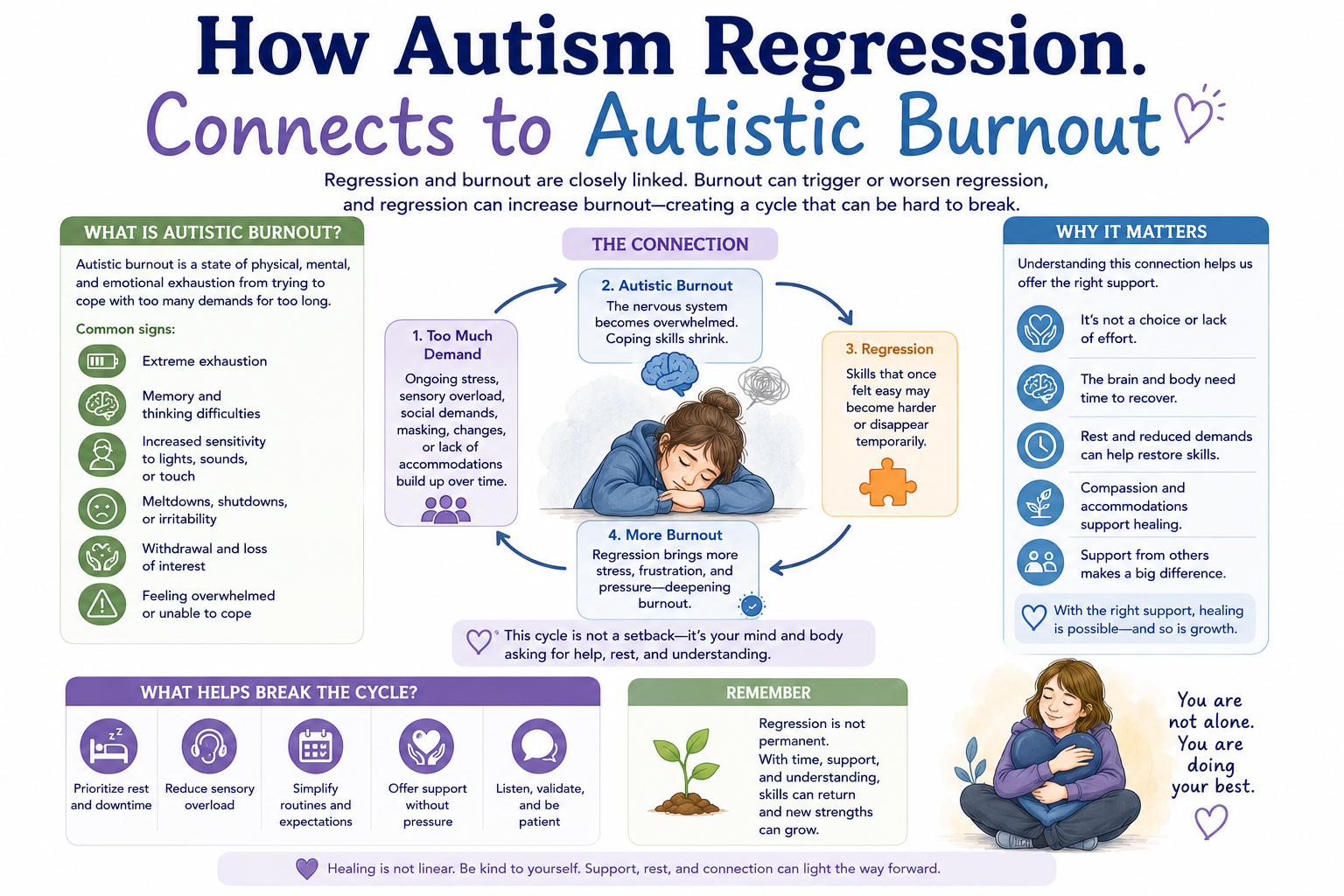
How Autism Regression Connects to Autistic Burnout
Autistic burnout and autism regression are closely related and frequently co-occur. Understanding the relationship between them helps parents respond more effectively.
Autistic burnout happens when an autistic person has been operating beyond their capacity for a sustained period, typically through masking, overcompensating, and pushing through demands that exceed what their nervous system can sustainably manage. The result is a collapse of functioning that often presents as autism regression.
When autism regression is driven by autistic burnout, the standard responses to autism regression, increasing support, reducing demands, addressing medical factors, are all still relevant. But the recovery timeline is typically longer and the most important factor is reducing the masking and demand pressure that caused the burnout in the first place.
For a deeper understanding of how demand-related pressure connects to autism regression, the post on pathological demand avoidance in autism explores how the experience of demands drives nervous system dysregulation in ways that can directly contribute to autism regression.
How Pathological Demand Avoidance Connects to Autism Regression
Pathological demand avoidance in autism and autism regression have a specific relationship that is worth understanding.
For autistic individuals with a pathological demand avoidance profile, the sustained anxiety created by high demand environments is a significant risk factor for autism regression. When the demand load exceeds the nervous system's capacity to manage it, autism regression often follows as the system essentially shuts down non-essential functioning to manage the threat response.
This means that autism regression in a child with pathological demand avoidance features requires a specifically low-demand recovery approach. Standard responses to autism regression that increase structure and expectation will worsen the regression in a child with pathological demand avoidance rather than supporting recovery.
Supporting Your Child Through Autism Regression
Supporting a child through autism regression requires patience, flexibility, and a willingness to temporarily step back from progress-oriented goals in favor of stability and recovery goals.
Practical strategies that help:
Create a low demand, high connection environment at home during the regression period
Maintain predictable routines without rigidly enforcing them
Celebrate any skill maintenance rather than focusing on what has been lost
Communicate with school about the autism regression and advocate for reduced demands during recovery
Prioritize sleep, nutrition, and sensory regulation as the foundation of recovery
Avoid comparing your child's current functioning to their pre-regression baseline
Give the recovery time it needs without rushing toward the previous level of functioning
What to avoid:
Increasing pressure in response to the regression
Interpreting autism regression as deliberate behavior
Withdrawing support or connection in an attempt to motivate recovery
Comparing your child's regression timeline to other children's experiences
Assuming the skills are permanently lost before adequate time and support have been given
FAQs
What is autism regression?
Autism regression is the loss of previously acquired skills in an autistic individual across communication, social, self-care, or daily living domains.
At what age does autism regression most commonly occur?
Autism regression most commonly occurs between 18 and 36 months but can happen at any age including during puberty and adulthood.
Is autism regression permanent?
No. Most autism regression is not permanent and skills can be recovered with the right support and time.
What causes autism regression?
Autism regression can be caused by environmental changes, medical factors, sensory overload, anxiety, puberty, and autistic burnout among other triggers.
Is autism regression a sign that my child was not actually making progress?
No. Autism regression confirms that the skills were genuinely present. Their temporary loss does not erase the progress that was made.
Can autism regression happen in adults? Yes. Autistic adults can experience autism regression particularly in the context of burnout, trauma, major life transitions, and medical events.
How long does autism regression last? Duration varies significantly depending on the cause, the type of regression, and the support provided. Some regression resolves within weeks. Burnout-related regression can take months to recover from.
Final Thoughts
Autism regression is frightening when you are watching it happen. The skills your child worked hard to develop appear to slip away and it can feel like losing ground you will never recover.
But autism regression is not the end of the story. It is a signal. A message from your child's nervous system that something needs to change, something needs attention, something needs more support than it is currently getting.
When that signal is heard and responded to with the right combination of reduced demands, increased support, medical evaluation where needed, and genuine patience, autism regression almost always gives way to recovery.
Your child's skills are not gone. They are resting. And with the right environment and the right support, they come back.
References:
Gillette H. What Is Regression in Autism? [Internet]. Healthline. Medically reviewed March 13, 2024. https://www.healthline.com/health/autism/what-is-regression-in-autism
Al Backer NB. Developmental Regression in Autism Spectrum Disorder. Sudan J Paediatr. 2015;15(1):21-26. https://pmc.ncbi.nlm.nih.gov/articles/PMC4949854/
Boterberg S, Charman T, Marschik PB, Bölte S, Roeyers H. Regression in Autism Spectrum Disorder: A Critical Overview of Retrospective Findings and Recommendations for Future Research. Neurosci Biobehav Rev. 2019 Jul;102:24-55. https://www.sciencedirect.com/science/article/abs/pii/S0149763418307279
How to Find an Autism Specialist in Your Area: A Guide
Finding the right autism specialist feels straightforward until you actually try to do it. Then comes the waiting lists, the confusing job titles, the referrals that go nowhere, and the growing sense that the system was not designed with your family in mind.
The truth is, finding the right support for your autistic child takes time, patience, and knowing what to look for before you start. Most parents figure this out by trial and error. This post exists so you do not have to.
Whether your child was recently diagnosed or you are revisiting their support plan because something is not working, this guide walks through exactly how to find the right autism specialist, what each type of professional actually does, and what to do when the usual routes are not enough.
Table of Contents
Start With a Clear Picture of What Your Child Needs
Understanding the Different Types of Autism Specialists
How to Find Autism Specialists in the UK
How to Find Autism Specialists in the US
What to Look for When Choosing a Specialist
Questions to Ask Before You Commit
When Traditional Routes Are Not Enough: Coaching as a Support Option
Socio-Emotional and Self-Esteem Coaching With Sonia Chand
Final Thoughts
Start With a Clear Picture of What Your Child Needs
Before searching for a specialist, it helps to get specific about what you are actually looking for. Autism support is not one size fits all and the right specialist for one child may not be the right fit for another.
Start by asking yourself these questions:
What is my child struggling with most right now?
Is the main challenge communication, sensory processing, behaviour, emotional regulation, or social connection?
Has my child already been diagnosed or are we still in the assessment stage?
What has already been tried and what has not worked?
Am I looking for clinical therapy, practical coaching, school support, or a combination?
Writing down the answers before you start making calls or filling in referral forms will save you a significant amount of time. It will also help you communicate your child's needs clearly to professionals who are seeing them for the first time.
The more specific you can be about what support you need, the faster you will find the right person to provide it.
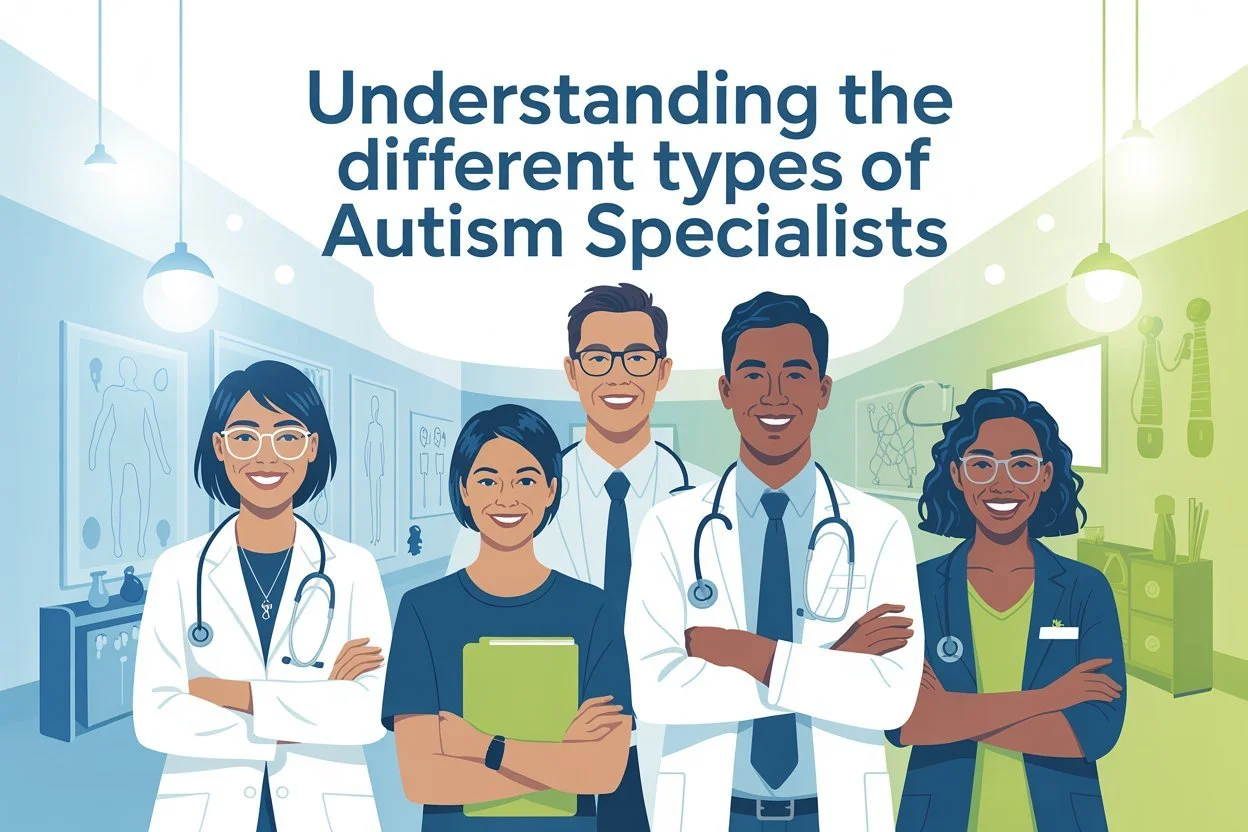
Understanding the Different Types of Autism Specialists
One of the most confusing parts of navigating autism support is the sheer number of professional titles. Here is a plain language breakdown of who does what:
Developmental Paediatrician
A medical doctor who specialises in child development. Often involved in the initial diagnosis and ongoing medical monitoring. Your first point of contact if you are still in the assessment stage.
Child Psychologist or Clinical Psychologist
Assesses and supports emotional, behavioural, and cognitive development. Can provide therapy for anxiety, emotional regulation, and mental health challenges that often accompany autism.
Speech and Language Therapist
Works on communication, both verbal and nonverbal, as well as the social use of language. Particularly important for children who are nonverbal, have limited speech, or struggle with conversation and social communication.
Occupational Therapist
Supports sensory processing, fine motor skills, and daily living tasks. Helps children manage sensory sensitivities and develop the practical skills needed for school and home life.
Behaviour Analyst or ABA Therapist
Specialises in Applied Behaviour Analysis, a structured approach to building skills and reducing challenging behaviours. This type of therapy is widely used but also debated within the autism community, so it is worth researching thoroughly before committing.
Educational Psychologist
Focuses specifically on learning and how to support a child in an educational setting. Often involved in the process of getting an Education, Health and Care Plan in the UK or an IEP in the US.
Autism Coach or Specialist Coach
Works outside the clinical framework to support individuals and families with practical strategies, emotional regulation, social skills, and confidence building. Particularly valuable when clinical waiting lists are long or when a child needs ongoing personalised support beyond what therapy sessions provide.
How to Find Autism Specialists in the US
In the US, the route to finding autism support depends on your child's age, your insurance, and your state. Here is where to start:
Talk to your paediatrician
Ask for a referral to a developmental paediatrician or a child neurologist who can conduct or coordinate a full autism evaluation.
Contact your state's early intervention programme
For children under three, early intervention services are available in every state and are free regardless of income. These services can include speech therapy, occupational therapy, and developmental support.
Request an evaluation through your school district
Under the Individuals with Disabilities Education Act, known as IDEA, every child has the right to a free and appropriate public education. Schools are required to evaluate children suspected of having a disability at no cost to parents.
Use the Autism Speaks Resource Guide
At autismspeaks.org to search for specialists, therapy providers, and support organisations by zip code. It is one of the most comprehensive directories available to US families.
Check your insurance coverage
Most states now require insurance plans to cover autism-related therapies including ABA, speech therapy, and occupational therapy. Contact your insurance provider directly to understand what is covered and how to access it.
What to Look for When Choosing a Specialist
Once you have a list of potential specialists, the next step is knowing how to evaluate them. Qualifications matter, but they are not the only thing that matters.
Look for someone who:
Has specific experience working with autistic children, not just general child development experience
Takes a neurodiversity affirming approach, meaning they support your child's differences rather than trying to eliminate them
Communicates clearly with parents and keeps you involved in the process
Listens to your child and adapts their approach based on what works
Has a clear framework for measuring progress that goes beyond surface level behaviour
Be cautious of anyone who:
Promises rapid results or guaranteed outcomes
Focuses exclusively on making your child appear more neurotypical
Dismisses your concerns or talks over your knowledge of your own child
Uses punishment-based approaches or relies on distress as a motivator
Trust your instincts. You know your child better than any specialist does. The right professional will make you feel like a partner in the process, not a bystander.
For a broader understanding of what genuinely supportive autism care looks like, the post on autism awareness vs autism acceptance explains why the approach a specialist takes matters just as much as their credentials.

Questions to ask
Questions to Ask Before You Commit
Before starting with any new specialist, ask these questions directly:
What is your specific experience with autistic children at my child's age and support level?
What approach do you use and why?
How do you involve parents in the process?
How do you measure progress and how often will we review it?
What does a typical session look like for a child like mine?
What happens if the approach is not working?
Are you familiar with the current thinking around neurodiversity and autistic identity?
The answers will tell you a great deal about whether this is someone who will genuinely support your child or simply go through the clinical motions.
When Traditional Routes Are Not Enough: Coaching as a Support Option
Clinical therapy is essential for many autistic children. But it does not cover everything. Therapy sessions are typically short, infrequent, and focused on specific clinical goals. What many autistic children and their families also need is ongoing, personalised support that addresses the everyday challenges that do not fit neatly into a therapy framework.
This is where coaching comes in.
Coaching sits alongside clinical support rather than replacing it. It is particularly valuable for:
Autistic children and young people who struggle with social interactions and do not know how to navigate friendships, group settings, or school dynamics
Children who have the language and cognitive ability to engage in conversation but lack the emotional tools to manage relationships and regulate their responses
Young people whose confidence has been eroded by years of feeling different, misunderstood, or left out
Families who need practical, personalised guidance to implement strategies at home that actually work for their specific child
The right coach does not work from a generic template. They meet the child where they are, build on their strengths, and give them tools they can use in real situations, not just in a therapy room.
Socio-Emotional and Self-Esteem Coaching With Sonia Chand
Sonia Chand is a licensed psychotherapist offering specialised coaching services designed specifically for neurodivergent individuals and the families who support them.
There are two core coaching services available:
Socio-Emotional Coaching
Many autistic children understand the world in deep and meaningful ways but struggle to navigate the social landscape around them. They find friendships confusing, group dynamics overwhelming, and social rules that seem obvious to others completely invisible to them.
Socio-emotional coaching addresses exactly this. Working directly with the individual, Sonia provides practical, personalized guidance on navigating social interactions, building meaningful connections, and developing the emotional literacy that helps autistic people understand and express what they are feeling. The goal is not to make an autistic person behave like a neurotypical one. The goal is to give them a genuine toolkit for the world they are actually living in.
Self-Esteem Coaching
Years of feeling different, being corrected, struggling in environments not designed for them, and watching peers move through the world with what looks like ease can take a serious toll on an autistic child's sense of self. By the time many autistic young people reach adolescence, their confidence has taken significant hits that no amount of academic achievement or therapy alone can fully address.
Self-esteem coaching works on the inside. It helps autistic individuals reconnect with their strengths, challenge the narratives they have built about themselves, and develop a stable, grounded sense of who they are regardless of how the world around them responds.
Both services are available for neurodivergent individuals and are delivered with the practical, empathetic approach that comes from being both a licensed psychotherapist and someone who has navigated the autism journey personally.
Book a socio-emotional or self-esteem coaching session with Sonia here and give your child the tools to truly thrive.
Final Thoughts
Finding the right autism specialist is rarely quick and rarely straightforward. The system in both the UK and the US was not built for ease of navigation, and the waiting times alone can feel demoralizing when your child needs support now.
But the right support exists. The right people are out there. And knowing what to look for, what questions to ask, and where to search puts you in a far stronger position than most parents have when they start this process.
Go in informed. Go in with a clear picture of your child's specific needs. And do not be afraid to keep looking until you find the professional who genuinely gets your child and works with you as a partner.
Your child deserves that. And so do you.
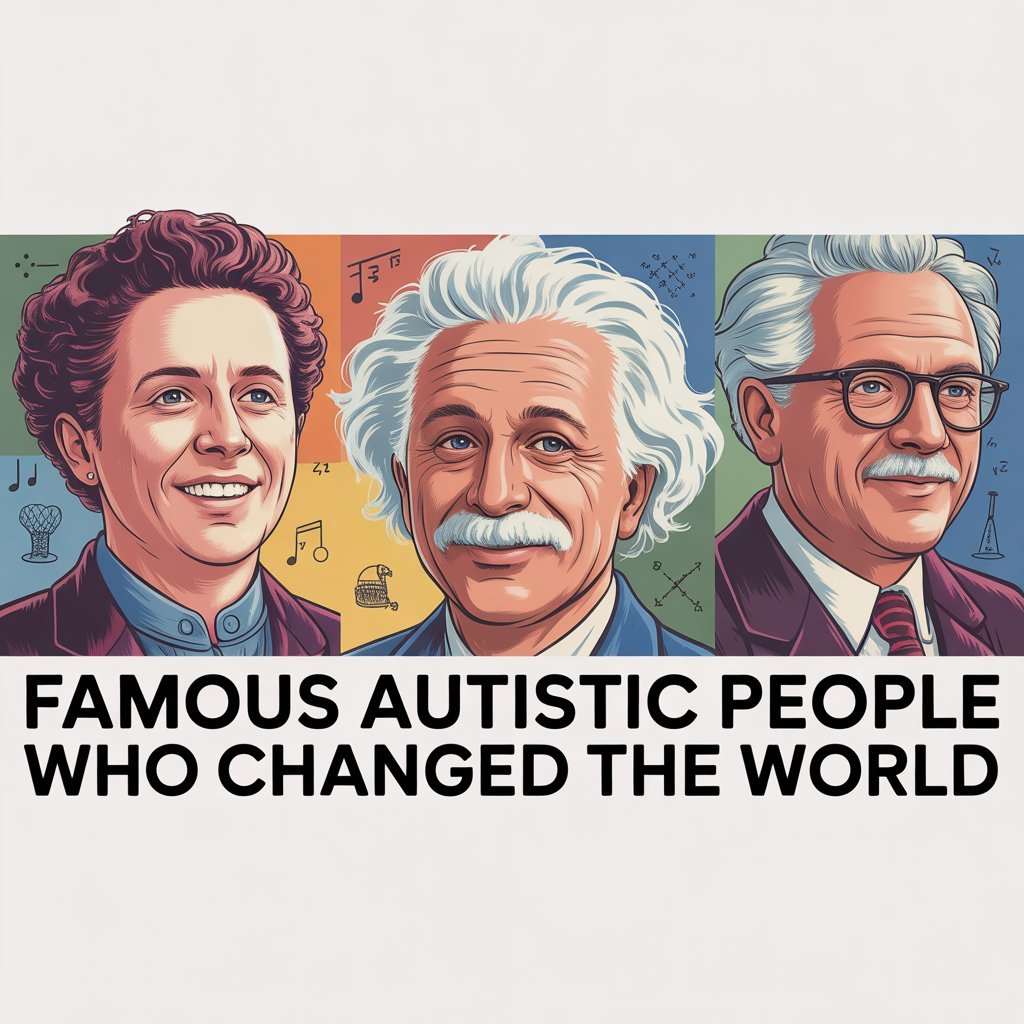
Famous Autistic People Who Changed the World
There is a story that gets told about autism that is too small.
It is the story of limitation. Of struggle. Of a life that requires constant management and intervention just to function. And while the challenges of autism are real and deserve to be acknowledged honestly, that story is dangerously incomplete.
Because alongside every challenge in the autism story, there is also this: some of the most transformative minds in human history were almost certainly autistic. Scientists who rewired how we understand the universe. Artists who created work that outlasted their lifetimes by centuries. Activists who changed the course of civil rights. Innovators who built the technology that now shapes daily life for billions of people.
Autism does not limit potential. In many cases, the very traits associated with autism, the intense focus, the pattern recognition, the willingness to think differently from everyone else in the room, are exactly what made these individuals extraordinary.
This post celebrates those people. Across history and across fields. Because when a family receives an autism diagnosis, they deserve to know the full story.
Table of Contents
A Note on Retrospective Diagnosis
Science and Innovation
Art and Music
Technology and Business
Activism and Social Change
Literature and Writing
Sport
What These Lives Tell Us
Final Thoughts
A Note on Retrospective Diagnosis
Before diving in, one important clarification.
Many of the historical figures in this post were never formally diagnosed with autism in their lifetime. Autism as a diagnosis did not exist until the 1940s, and our understanding of the spectrum has continued to evolve significantly since then.
What historians, biographers, and researchers have done is look at documented behaviours, traits, and patterns in the lives of historical figures and note significant alignment with what we now understand autism to look like.
This is called retrospective or posthumous diagnosis. It is not an exact science. It is informed analysis rather than clinical fact.
For living public figures, the picture is different. Some have been formally diagnosed. Others have self-identified as autistic. A small number have been publicly identified by others, which is more complicated and worth approaching with care.
The goal of this post is not to label anyone. It is to show the breadth and depth of what autistic minds have contributed to the world.
Science and Innovation
Albert Einstein
Einstein is one of the most frequently cited examples of a likely autistic historical figure. He was a late talker, reportedly not speaking in full sentences until age five. He had intense, narrow areas of focus. He struggled significantly with social interaction and formal schooling. He thought in images rather than words, a cognitive style that aligns closely with how many autistic people describe their thinking.
His willingness to think completely differently from the scientific consensus of his time, to pursue ideas that seemed absurd to his contemporaries until the mathematics proved them right, reflects the kind of divergent thinking that many autistic people describe as central to how their minds work.
Isaac Newton
Newton showed many traits now associated with autism throughout his life. He was deeply solitary. He became so absorbed in his work that he frequently forgot to eat or sleep. He had significant difficulty in social relationships and communication. He often became so focused on a single problem that he would work on it for years without distraction.
His ability to sustain that level of focused attention over long periods produced some of the most significant scientific breakthroughs in human history.
Charles Darwin
Darwin spent decades in meticulous, obsessive observation of the natural world before publishing his theory of evolution. He struggled with social situations and preferred the company of his work to almost anything else. His capacity for sustained, detailed observation over a lifetime, noticing patterns that others overlooked entirely, is a hallmark of the kind of autistic thinking that changes how the world understands itself.
According to the World Health Organization, in 2021 about 1 in 127 persons had autism. The fact that autistic minds have shaped the scientific foundations of the modern world is not coincidental. It reflects what focused, divergent thinking can produce when given the right conditions.
Art and Music
Wolfgang Amadeus Mozart
Mozart showed traits consistent with autism from childhood. He had extreme sensitivity to sound, reportedly covering his ears at loud noises that others found unremarkable. He displayed repetitive behaviours and movements. He had difficulty with social norms and often behaved in ways his contemporaries found inappropriate or odd. And he had an extraordinary, obsessive relationship with music that consumed his entire existence from early childhood.
His ability to hear and hold entire symphonies in his mind, to compose with a depth and complexity that has never been equalled, reflects a relationship with sound and pattern that goes far beyond what most human brains are capable of.
Michelangelo
Michelangelo was known throughout his life for his profound difficulty with social relationships. He lived in almost complete isolation by choice. He became so intensely focused on his work that he would go days without sleeping or eating. He had rigid routines and found any disruption to them deeply distressing.
His work on the Sistine Chapel ceiling, a project of almost incomprehensible complexity and detail executed over four years, reflects exactly the kind of sustained, obsessive focus that autistic people often describe as their greatest strength.
Beethoven
Beethoven's social difficulties, his rages, his rigid routines, his extraordinary sensory relationship with music that persisted even after he lost his hearing, all align closely with autistic traits. His ability to hear music internally with a precision and complexity that did not depend on external sound is one of the most remarkable documented examples of the kind of internal processing that many autistic people experience.
Technology and Business
Alan Turing
Turing is one of the most important figures in the history of computing and one of the most widely discussed likely autistic historical figures.
He was highly literal in his communication. He struggled significantly with social conventions. He had intense, focused expertise in mathematical logic that went far beyond what his peers could access. And he thought about problems in ways that were so fundamentally different from conventional approaches that his work was not fully understood by most of his contemporaries until long after his death.
His work breaking the Enigma code during World War Two is estimated to have shortened the war by two years and saved millions of lives. And his foundational work on computing laid the intellectual groundwork for the technology that now shapes virtually every aspect of modern life.
Dropped in a Maze by Sonia Chand tells the story of navigating autism from the inside. The challenges, the discoveries, and the profound reframe that comes from truly understanding what an autistic mind is capable of.
Activism and Social Change
Greta Thunberg
Greta Thunberg has been open and direct about her autism diagnosis and has described it as one of her strengths rather than a limitation.
Her ability to focus with absolute clarity on a single issue, to communicate with a directness that cuts through political noise, and to sustain her activism in the face of enormous global scrutiny reflects the kind of autistic determination that does not bend to social pressure or conventional expectation.
She began her school strike for climate at age fifteen. Within two years she was addressing world leaders at the United Nations. Her impact on the global climate conversation has been significant and documented.
Her own words on autism are worth noting. She has said publicly that she does not see autism as an illness. She sees it as a difference. A superpower in the right context.
Temple Grandin
Temple Grandin is one of the most influential autistic advocates and scientists of the twentieth century. She was diagnosed with autism in early childhood at a time when the prognosis given to her parents was deeply pessimistic.
She went on to become one of the world's leading experts in animal behaviour and humane livestock handling. Her designs are used in approximately half of all livestock facilities in the United States. And her books and public speaking have done more to help neurotypical people understand autistic thinking than perhaps any other single person.
She describes thinking in pictures rather than words and has used that capacity to revolutionise an entire industry. Her life is one of the clearest documented examples of what autistic strengths look like when they are understood and supported rather than managed and suppressed.
The post on doing autism differently: how to stop managing autism and start understanding it explores exactly the philosophy that Temple Grandin's life embodies. Understanding autism rather than managing it changes everything.
Literature and Writing
Lewis Carroll
The author of Alice in Wonderland showed many traits consistent with autism throughout his life. He had a stammer that made conventional social interaction difficult. He had rigid routines. He had a profound, lifelong obsession with mathematics and logic. And his writing reflects a mind that found the rules of the so-called normal world arbitrary and worthy of examination.
Alice in Wonderland is, among other things, a meditation on a world where the rules keep changing without explanation and the only way to navigate it is to keep asking questions. That experience resonates deeply with many autistic readers.
George Orwell
Orwell was known for his extreme social difficulties, his rigid routines, his intensely literal relationship with language, and his capacity for sustained, focused work that produced some of the most important political writing of the twentieth century.
His directness, his refusal to obscure meaning with comfortable language, and his ability to see through the social consensus to the uncomfortable truth beneath it all reflect cognitive traits that many autistic people recognise in themselves.
What These Lives Tell Us
Looking across these lives, a few things stand out.
None of these people succeeded despite their neurology. Many of them succeeded because of it.
The intense focus. The pattern recognition. The willingness to think differently. The capacity to pursue an idea or a question or a craft with a dedication that most people cannot sustain. These are autistic traits. And in the right context, with the right support and the right environment, they produce extraordinary things.
Final Thoughts
The next time someone tells you that autism limits a life, remember these names.
Einstein. Newton. Darwin. Turing. Grandin. Thunberg.
Remember what their minds produced. Remember that the traits that made their lives harder in certain contexts are the same traits that made their contributions possible.
And remember that the autistic child in front of you right now is carrying a mind that the world has not yet seen the full potential of.
That potential does not need to be managed. It needs to be understood, supported, and given the conditions to grow.
Dropped in a Maze is the story of learning to see autism that way. Not as a problem to solve but as a different kind of mind that deserves a different kind of support.
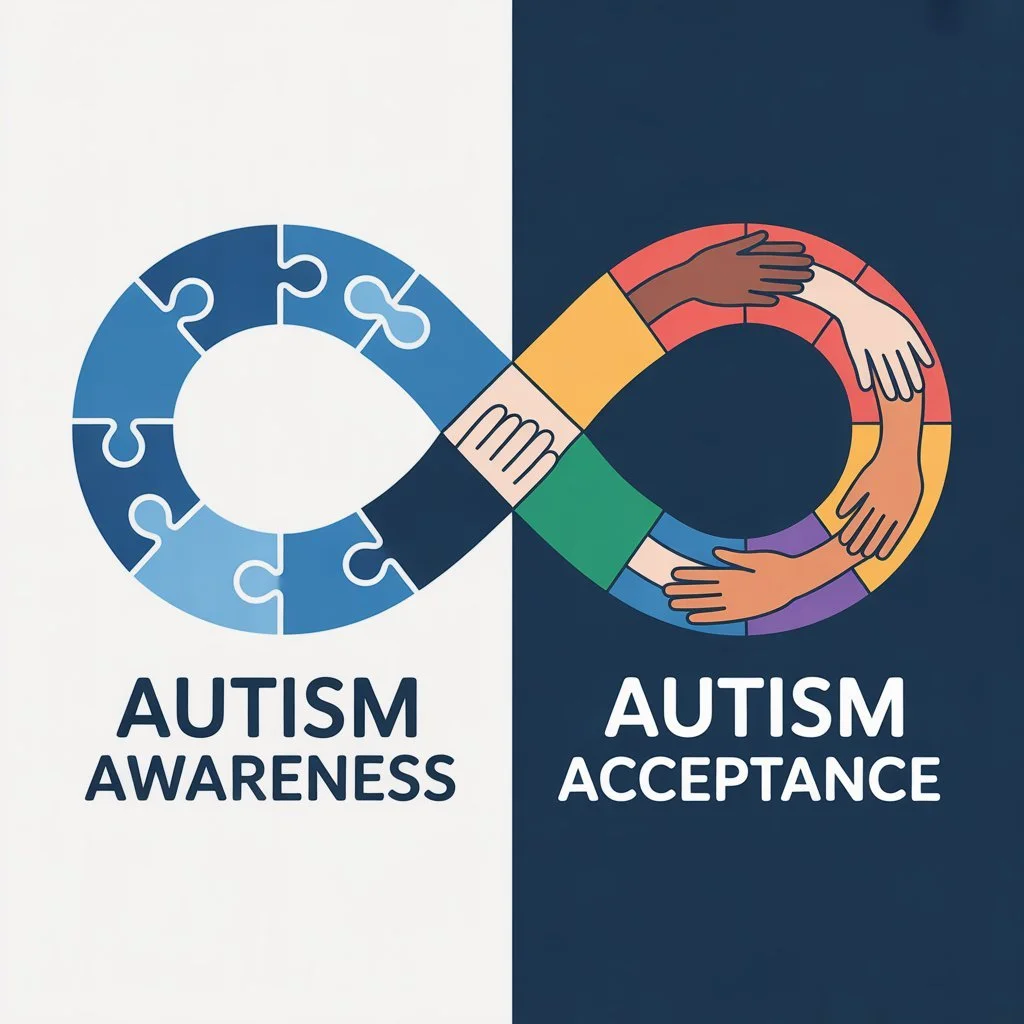
Autism Awareness vs. Autism Acceptance: What Is the Difference and Why It Matters
Every April, the conversation around autism picks up momentum. Social media fills with blue lights, puzzle pieces, and awareness campaigns. Schools send home flyers. Organizations run events. And while all of that comes from a genuine place, there is a question worth sitting with this month: is awareness actually enough?
The autism community has been asking that question for years. And the answer, increasingly, is no.
Autism awareness and autism acceptance are not the same thing. Understanding the difference between them is not just an exercise in language. It shapes the kind of support autistic people receive, the environments they are allowed to exist in, and the quality of life they get to live.
This post breaks down what each term means, why the shift from one to the other matters, and what autism acceptance actually looks like in practice.
Table of Contents
What is Autism Awareness?
What Autism Acceptance Is
Why the Language We Use Shapes the Support We Build
The History Behind the Shift
What the Research Says About Acceptance
What Autism Acceptance Looks Like in Real Life
The Symbols Debate: What It Reveals About Acceptance
Moving From Awareness to Acceptance: A Practical Starting Point
For Anyone Just Starting This Journey
Want to Keep Learning?
Final Thoughts
Autism Awareness
What is Autism Awareness?
Autism awareness is the effort to make the general public know that autism exists. It grew out of a time when autism was widely misunderstood, rarely discussed openly, and often handled with fear or shame. The goal was visibility: put autism on the public radar and make it something people could name and recognize.
That mission achieved a great deal. Today, most people have heard of autism. Most can name at least one autistic person in their life, even if they do not always realize it. Decades of awareness campaigns made autism a household word, and that was genuinely important.
But awareness has a ceiling.
It tells people autism exists without telling them what to do with that knowledge. It says "look" without saying "include." At its core, awareness is still rooted in a deficit model. It tends to focus on what autistic people cannot do, the challenges, the struggles, the ways autism makes daily life harder. It frames autism as a problem the world needs to solve rather than a difference the world needs to accommodate.
Knowing something exists and knowing how to make space for it are two very different things.
Autism Acceptance
What Autism Acceptance Is
Autism acceptance goes further. It does not just ask people to know that autism is real. It asks people to actively make room for it, in their schools, workplaces, families, and communities.
Acceptance operates from a fundamentally different starting point. It starts from the position that autistic people do not need to be fixed. They need to be included.
This shift changes everything. When a child grows up surrounded by awareness, they grow up hearing that they are a problem someone is working to solve. When they grow up surrounded by acceptance, they grow up knowing they belong exactly as they are.
The difference between those two experiences is not small. It is the difference between a life spent masking and shrinking and a life spent understanding and expressing who you actually are.
Why the Language We Use Shapes the Support We Build
Language is not just about being polite. The words used around autism directly influence the kind of support systems that get built.
Awareness thinking tends to produce interventions designed to make autistic people appear more neurotypical. The focus becomes reducing visible signs of autism rather than helping autistic individuals understand themselves and build lives that genuinely work for them.
Acceptance thinking asks different questions entirely. What does this person need to communicate effectively? What environment helps them learn and thrive? What sensory accommodations make them feel safe and focused? How do we support their strengths rather than only targeting their differences?
Those are better questions. And they lead to better outcomes.
The History Behind the Shift
World Autism Awareness Day was established by the United Nations in 2007. It was a significant milestone. Governments, schools, and organizations around the world began marking April 2nd in ways they never had before.
Over time, however, autistic self-advocates and their allies began pushing back against the framing. Awareness campaigns, they pointed out, were largely led by neurotypical people, often without meaningful input from autistic individuals themselves. And despite years of awareness, employment rates for autistic adults remained critically low, access to services remained inconsistent, and quality of life for many autistic adults had not meaningfully improved.
The Autistic Self Advocacy Network and other organizations began championing the phrase "nothing about us without us." They called for a shift from awareness to acceptance, from campaigns about autistic people to campaigns led by and centered on autistic people.
Today, many organizations including the Autism Society of America officially recognize April as Autism Acceptance Month. That is not a cosmetic change. It reflects an entire movement demanding more than visibility.
What the Research Says About Acceptance
The difference between awareness and acceptance is not just philosophical. It has measurable, documented outcomes.
Research has consistently shown that autistic individuals who experience greater social acceptance report significantly better mental health. Conversely, the pressure to mask, to suppress autistic traits in order to blend in with neurotypical peers, is strongly associated with higher rates of anxiety, depression, and autistic burnout.
A 2021 study published in the journal Autism found that autistic people who experienced higher levels of acceptance from those around them reported lower burnout and greater life satisfaction. The science confirms what autistic people have been saying for a long time: belonging is not a luxury. It is a fundamental human need. And autistic people flourish when that need is met.
What Autism Acceptance Looks Like in Real Life
Acceptance is a practice, not just a position. Here is what it looks like across everyday settings:
In schools: Sensory-friendly classrooms, flexible communication options, and educators trained to understand neurodiversity rather than simply manage behavior. An autistic student's value is not measured by how well they can mask.
In workplaces: Hiring processes that do not penalize people for stimming during interviews, offices designed with quiet spaces, and managers who communicate expectations directly and clearly.
In families: Letting go of the child you expected and getting genuinely curious about the child in front of you. Following their lead. Celebrating their interests. Building routines and environments that fit them rather than forcing them to fit a mold that was never designed for them.
In communities: Accessible events, sensory-friendly public spaces, and a culture where difference is not merely tolerated but genuinely welcomed.
Understanding what acceptance looks like inside a family, through the diagnosis, the confusion, the grief, and ultimately the clarity, is exactly what the best selling autism books in this space explore deeply. One worth starting with is Dropped in a Maze, Sonia Chand's honest account of navigating autism without a map.
Get your copy of Dropped in a Maze here and start finding your footing.
The Symbols Debate: What It Reveals About Acceptance
If you have spent time in autism spaces online, you have likely come across debates about symbols. The puzzle piece, long associated with autism awareness, has become deeply controversial. Many autistic people find it offensive, feeling it implies they are incomplete or missing something.
The gold infinity symbol has grown as an alternative, representing the infinite diversity of autistic experiences and the wholeness of autistic people.
Similarly, "Light It Up Blue" has faced criticism from autistic self-advocates, many of whom have chosen red as a symbol of their own making rather than one handed down by organizations that do not represent them.
These conversations are not just about logos and colours. They are about who gets to define what autism means. Acceptance means making room for autistic people to answer that question themselves.
Moving From Awareness to Acceptance: A Practical Starting Point
The shift from awareness to acceptance does not require a grand gesture. It is built in small, repeated choices.
Listen to autistic voices. Seek out books, podcasts, and content created by autistic people. Let their perspectives shape how you understand their experience rather than relying only on outside interpretations.
Examine your language. Do you describe autism as a tragedy? Do you talk about autistic people as "suffering from" their diagnosis? The frame matters more than most people realize.
Advocate in your immediate spaces. Does your child's school have sensory accommodations? Does your workplace have neurodiversity policies? Change does not always start at the top. It often starts exactly where you are.
Celebrate differences. The 2026 Autism Acceptance Month theme is Celebrate Differences. That is worth taking literally. What would it look like to not just accommodate but genuinely celebrate the ways autistic people experience and contribute to the world?
For anyone who wants support navigating this journey and building something sustainable around it, one-on-one coaching sessions are available for parents and caregivers who are ready to move from overwhelmed to equipped.
Book a coaching session here and get the clarity and tools you need.
For Anyone Just Starting This Journey
A new diagnosis, whether for a child or an adult, can feel completely disorienting. The system is complicated. The emotions are layered. And the advice coming from every direction is often contradictory.
Dropped in a Maze was written for exactly that moment. It is an honest account of navigating autism without a map, and it is filled with the kind of insight that only comes from having actually lived it. If you are in the early stages of this journey and you need something that speaks to the reality of what you are going through, this is the book to start with.
Order Dropped in a Maze today. You do not have to figure this out alone
Want to Keep Learning?
Reading is a great starting point. But ongoing conversation, community, and support make a lasting difference.
The podcast is where those deeper conversations happen, honest discussions about what it really looks like to move from fear to acceptance, from confusion to clarity, from surviving to building something that actually works.
Listen to the podcast here and join a community of families on the same path.
Final Thoughts
Awareness told the world that autism exists. Acceptance asks the world to do something meaningful with that knowledge.
The two are not opposites. Awareness was a starting point and it was a necessary one. But staying at the starting point is no longer good enough. Too many autistic people are sitting in classrooms, offices, and family homes waiting to be accepted, not just noticed.
This April, the goal is to go further. To build the kind of world where autistic people do not have to mask to belong, where their differences are not managed but genuinely welcomed, and where the first thing they hear about themselves is not a deficit but the full, complex, worthy truth of who they are.
That is the world worth building. And it starts with understanding the difference between knowing and accepting.