
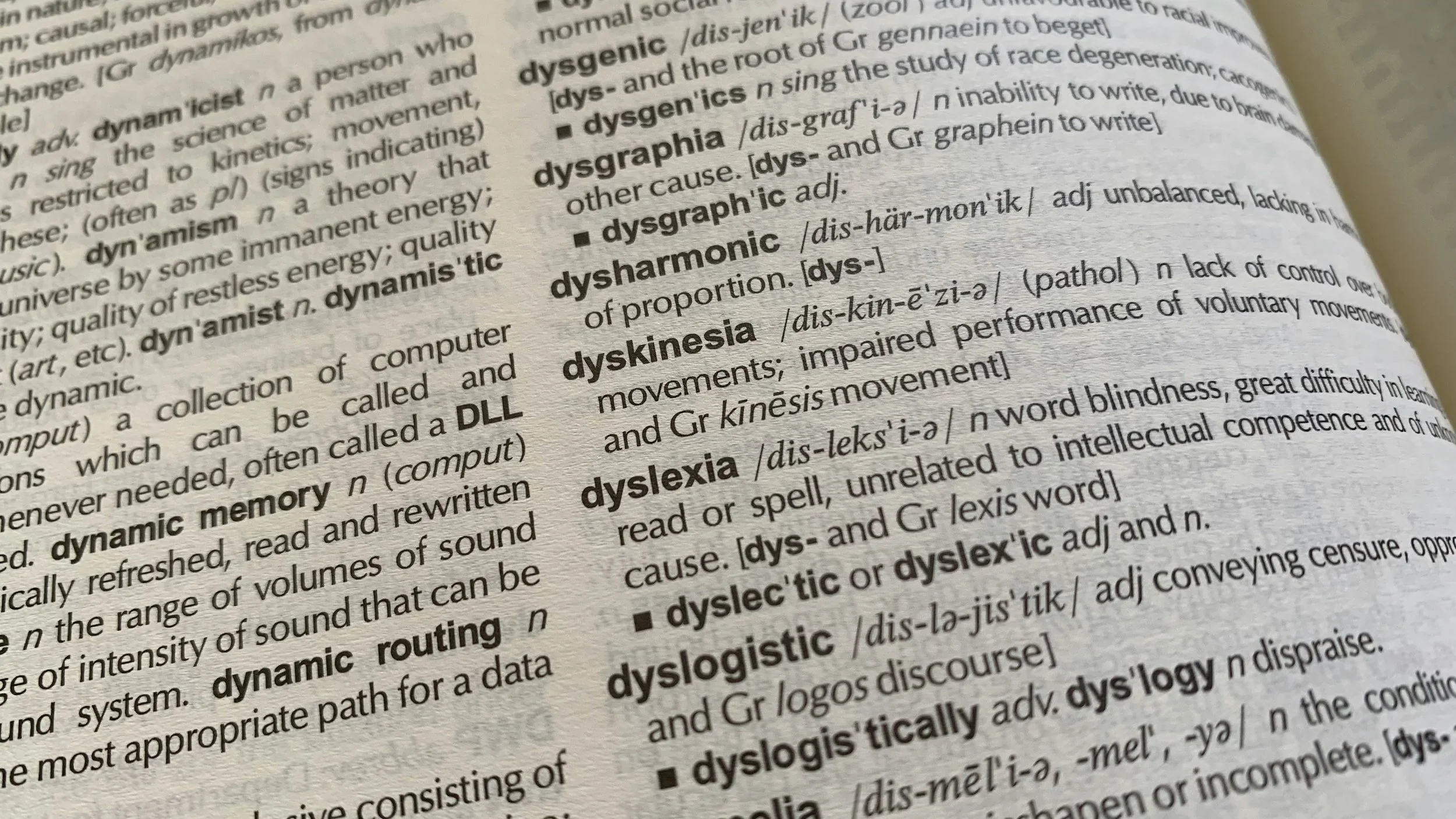
A Dyslexic Entrepreneur Explains What Finally Made Learning Click
There is a specific kind of loneliness that comes from sitting in a classroom knowing that everyone around you can do something you cannot, and not understanding why.
For Willie Blake, that loneliness started in first grade. A dyslexia diagnosis. A weekly trip to a different classroom. Friends who slowly stopped including him. A quiet, accumulating sense that something about him was fundamentally more difficult than it should be.
What happened next is a story not just about dyslexia but about confidence, identity, overcompensation, and the moment when someone finally figures out how they actually learn. Willie joined Sonia on the On the Spectrum podcast for one of the most honest and practically useful conversations the show has hosted about neurodivergent learning and entrepreneurship.
Listen to the full episode here and hear Willie's story in his own words.
This post pulls together the key moments from that conversation, the ones that stayed with you long after the episode ended.
Table of Contents
The Classroom That Made Him Different
How Isolation Spiraled Into Confidence Loss
Anger as a Second Emotion
The Discovery That Changed Everything
What Willie Learned About How He Actually Learns
From White-Knuckling It to Entrepreneurship
Why Neurodivergent Entrepreneurs Have an Extra Toolbox
The Advice That Applies to Everyone
Final Thoughts
The Classroom That Made Him Different
Willie's dyslexia was identified early, in first grade, which in many ways was a gift. He received extra support. There were tricks and tools and a dedicated classroom where he went every Friday to work on reading with other students who needed the same help.
But early identification did not prevent the social cost.
His friends noticed he was going somewhere else. The questions started. The subtle exclusions followed. Not cruel words necessarily, just the quiet drift of kids who started doing their own thing and stopped inviting Willie along. By the time he reached fifth and sixth grade, he was consistently the last one to finish writing his end-of-day summary, still sounding out words while everyone else had already moved on.
The academic difficulty was manageable. The social isolation was not.
What Willie described in the episode is something that many neurodivergent children and adults recognize immediately: it was not the diagnosis itself that hurt most. It was what the diagnosis made visible to the people around him. The difference. The slower pace. The being called on to read and taking three times as long as everyone else.
That visibility, and the social consequences it brought, is where the real damage accumulates.
How Isolation Spiraled Into Confidence Loss
Willie made a connection in the episode that is genuinely worth pausing on. He said that when he talks to parents of children with dyslexia, the thing that comes up most consistently is not which reading program to use. It is how to help with confidence.
And his answer is simple but deeply grounded: find what they love and do more of it.
The logic is direct. When confidence goes up, the impact of dyslexia goes down. When confidence goes down, the impact increases. A child who is being excluded and spending more time alone is a child whose confidence is dropping, which means the reading gets harder, the writing takes longer, and the gap between them and their peers widens further.
The isolation is not just social. It is neurological. It makes the learning harder by removing the very resource the brain needs to compensate.
For autistic adults navigating a similar pattern, where self-doubt compounds daily life difficulties in ways that feel circular and inescapable, the post on what does autistic burnout feel like in adults covers the specific relationship between depleted confidence and declining functioning in depth.

Photo by Simran Sood on Unsplash
Anger as a Second Emotion
One of the most powerful moments in the conversation came when Willie talked about anger.
He described throwing a Nerf gun hard enough to put a hole in the wall. He described pulling his sister's hair. He described the anger that lived underneath the isolation, the wanting to be heard, the wanting to be included, the not knowing any other way to make those needs visible.
Sonia reflected on this from her clinical background with a framework that is worth sharing. She described anger as a secondary emotion, the surface level of a candlestick. Underneath the anger is the scorch, the pain, the unresolved hurt that precedes it and drives it. Children do not usually have the language to say I feel rejected and I do not know how to make it stop. So the hurt becomes anger because anger is louder, more immediate, and harder to ignore.
Willie extended this beautifully by describing what he now does with his own six-year-old daughter when she gets upset. He asks her to take a breath and then asks: what is that feeling in here? He touches her heart. He gives her the words. He makes space for the emotion underneath the reaction.
That is the kind of emotional literacy that most neurodivergent children, and many adults, never received. And the absence of it shapes everything that comes after.
This is the work Sonia does in her self-esteem coaching with autistic and neurodivergent adults, helping people finally name the feelings that were never named, and challenge the narratives that formed around them.
Book a discovery call with Sonia here
The Discovery That Changed Everything
Willie did not have a therapist growing up. He had his mother, who he describes with genuine warmth as someone who gave him empathy in the moments he needed it most. He would walk to her bedroom after a stressful homework session, sit at the end of the bed, and simply exist in a space that felt safe. No words necessary.
That was enough to keep him going. But the actual shift came when he began to understand not just that he learned differently, but how he specifically learned best.
Willie is a hands-on learner. Put a concept in front of him in the form of something he can touch and move and physically interact with, and it clicks. Reading it from a page, he might go over it five or six times and still not fully grasp it. Hear it read aloud, and it lands immediately.
Once he understood this about himself, he stopped fighting the wrong battles and started building the right systems.
Dropped in a Maze by Sonia Chand is the book that gives this kind of self-discovery its fullest context, the honest account of what it means to finally understand how your brain actually works and build forward from that understanding rather than from years of misidentified failure.
What Willie Learned About How He Actually Learns
The specific strategies Willie developed for himself are worth naming because they are genuinely practical and genuinely transferable.
Music as a focus tool: Willie discovered that having music in the background, specifically the kind of long meditative study music you can find on YouTube by searching eight hour study music, helped him enter a focused state that made reading and retaining information significantly easier. The music was not a distraction. It was a regulation tool.
Audio over text wherever possible: Willie can hear and understand something far more easily than he can read and understand the same thing. In college, his now wife would read his history textbook to him while he listened. He retained and understood information that he had read himself multiple times without it sticking.
Breaking goals into one single daily action: Rather than setting ambitious targets that feel overwhelming before they start, Willie learned to ask one question: what is the one thing I can do today? No judgment. No expectation of more. Just one thing, repeated consistently, that compounds over time.
Using special interests as fuel: He echoed what research consistently shows: when a task connects to something genuinely interesting, the brain engages differently. Boredom is not a personality problem. It is a signal that the task has not found the right entry point yet.

Photo by Content Pixie on Unsplash
From White-Knuckling It to Entrepreneurship
Willie's path from dyslexic kid sitting alone by the fence to coach and entrepreneur was not linear. He started with accounting, realized he did not want to spend his life in a cubicle, switched to business management, worked in property management, and slowly discovered the world of entrepreneurship through self-help books and online content.
What drew him in was not the promise of financial freedom. It was watching people work longer hours than they ever had and love their lives more. Healthier relationships. More time with their children. More connection to what mattered. He wanted that. And he eventually built it.
He started as a generic success coach, quickly realized that talking to everybody meant reaching nobody, and niched down to what he knew most intimately: dyslexic entrepreneurs who are smart, capable, and exhausted from doing double the work for the same results as people who do not carry the same neurological weight.
His discovery that pain-specific connection is what makes people actually listen is one of the most practically useful insights in the entire episode. Not strategies. Not frameworks. The recognition that someone has been where you are and found a way through.
That is exactly what this episode is about. Listen to the full conversation with Willie Blake here.
Why Neurodivergent Entrepreneurs Have an Extra Toolbox
One of Willie's most memorable lines in the episode was this: neurotypical people have their toolbox. Neurodivergent people have that same toolbox, but they also get an extra one that most people do not have.
He was talking specifically about the tools that necessity created. AI for reading and writing support. Text-to-speech for emails and documents. The specific workplace accommodations that are available to neurodivergent employees who know to ask for them. The pattern recognition, the creative thinking, the hyperfocus, the deep empathy that comes from having spent years learning to understand a world that did not naturally accommodate you.
The extra toolbox is real. The difficulty is that most neurodivergent adults were never told it existed, or were too busy managing their perceived deficits to notice what they had gained alongside them.
Sonia's socio-emotional coaching works directly in this space, helping autistic and neurodivergent adults identify their genuine strengths, build on them deliberately, and stop spending their energy compensating for the wrong things.
Book a discovery call with Sonia here and find out what your extra toolbox actually contains.
The Advice That Applies to Everyone
Willie closed the conversation with the kind of advice that sounds simple until you realize how hard it actually is to follow.
Stop trying to do everything at once. Stop waiting until you can do it perfectly. Stop letting fear of a few bad reviews prevent you from making the podcast, writing the book, or sending the email.
Pick one thing. Do it today. Do it again tomorrow. Let it compound.
That advice did not come from a productivity book. It came from three decades of navigating a brain that made every written task harder than it should have been, and learning, slowly and with real effort, that the path through is almost always simpler than the path around.
For the On the Spectrum podcast with Sonia Chand, the full episode with Willie is one of those conversations that stays with you because it holds both the pain and the practical in the same breath.
Listen to it here and share it with anyone who has ever felt like they were doing everything right and still falling behind.
Final Thoughts
Willie Blake went from a kid sitting alone by the fence, excluded by friends who did not understand where he kept disappearing to, to a coach who helps dyslexic entrepreneurs build businesses and find their voice. That arc did not happen because the dyslexia got easier. It happened because he eventually found the right way to work with his brain instead of against it.
That is the story underneath every episode of On the Spectrum. Not that the neurology changes. But that the right understanding, the right tools, and the right support change what is possible within it.
Dropped in a Maze by Sonia Chand is the companion reading for every episode of this podcast, the honest, grounded account of what it actually feels like to navigate neurodivergent life and find your way through.