
6 Ways to Support Your Autistic Friend
You care about your autistic friend. You want to be supportive. But you're not quite sure how to help without overstepping or coming across as condescending.
Maybe you've noticed they struggle in certain situations. Maybe they've opened up to you about their challenges. Or maybe you just want to be a better friend and create a more inclusive friendship.
The good news? Supporting an autistic friend doesn't require grand gestures or complicated strategies. It requires understanding, patience, and a willingness to see the world from their perspective.
April is Autism Acceptance Month, and there's no better time to learn how to show up for your autistic friends in meaningful ways. Here are six practical strategies that actually make a difference.
Table of Contents
Learn What Autism Actually Is (Beyond Stereotypes)
Respect Their Communication Style
Understand Sensory Sensitivities Are Real
Support Their Need for Routine and Predictability
Advocate Alongside Them, Not For Them
Educate Yourself Continuously
Acceptance is the first stage of support
1. Learn What Autism Actually Is (Beyond Stereotypes)
Move Beyond What You've Seen on TV
Most people's understanding of autism comes from movies like Rain Man or TV shows that portray autistic characters as either savants or completely non-verbal. The reality is much more nuanced.
Autism is a neurological difference that affects how people process information, communicate, and experience the world. It's a spectrum, which means it looks different for everyone.
Your autistic friend might:
Make excellent eye contact or avoid it entirely
Be highly verbal or prefer written communication
Excel in certain areas while struggling in others
Need accommodations that seem unusual to you but are essential for them
Start With Reliable Resources
Instead of relying on outdated stereotypes or random internet articles, educate yourself through credible sources.
TheAutism Self Advocacy Network (ASAN) is an excellent starting point. Run by autistic people themselves, ASAN provides accurate information about autism from those who actually live with it.
Another great resource is theAutistic Women & Nonbinary Network (AWN), which addresses the unique experiences of autistic women and nonbinary individuals who are often underdiagnosed and misunderstood.
Ask Your Friend About Their Experience
Every autistic person is different. What's true for one person might not be true for another.
The best way to understand your friend's specific experience? Ask them.
Questions you might consider:
"What does autism mean to you?"
"Are there things I do that make social situations harder for you?"
"How can I be a better friend to you?"
"What do you wish people understood about autism?"
Just make sure you're asking because you genuinely want to understand, not because you're treating them like a teaching opportunity. There's a difference between curiosity and interrogation.
2. Respect Their Communication Style
Not Everyone Communicates the Same Way
Your autistic friend might communicate differently than you're used to. They might:
Take longer to process what you've said before responding
Prefer texting over phone calls
Be very direct without social "softening" phrases
Struggle with open-ended questions
Need things explained explicitly rather than implied
None of these differences make their communication "wrong." It's just different from neurotypical communication patterns.
Direct Doesn't Mean Rude
One of the biggest misunderstandings about autistic communication is interpreting directness as rudeness.
If your autistic friend says "I don't want to go to that restaurant," they're not being difficult. They're being honest. Neurotypical people might say "Oh, I'm not sure, maybe we could go somewhere else?" to soften the message.
Autistic communication tends to be more straightforward. What you hear is what they mean. No hidden messages, no passive aggression, no reading between the lines.
This is actually refreshing once you get used to it. You always know where you stand.
Give Them Processing Time
If you ask your autistic friend a question and they don't respond immediately, don't assume they're ignoring you or didn't hear you.
They might be:
Processing what you said
Formulating their response
Dealing with sensory input that's distracting them
Managing internal thoughts before they can respond
Give them time. Don't fill the silence with more questions or rephrase what you just said. Just wait.
Accommodate Their Preferred Communication Method
Some autistic people find phone calls overwhelming but are great at texting. Others prefer in-person conversations where they can read body language.
Ask your friend how they prefer to communicate and respect that preference. If they say "Can we text about this instead of calling?" that's not rejection—it's them telling you how they communicate best.
To understand how autism affects communication and daily interactions, read How Autism Affects Daily Life.
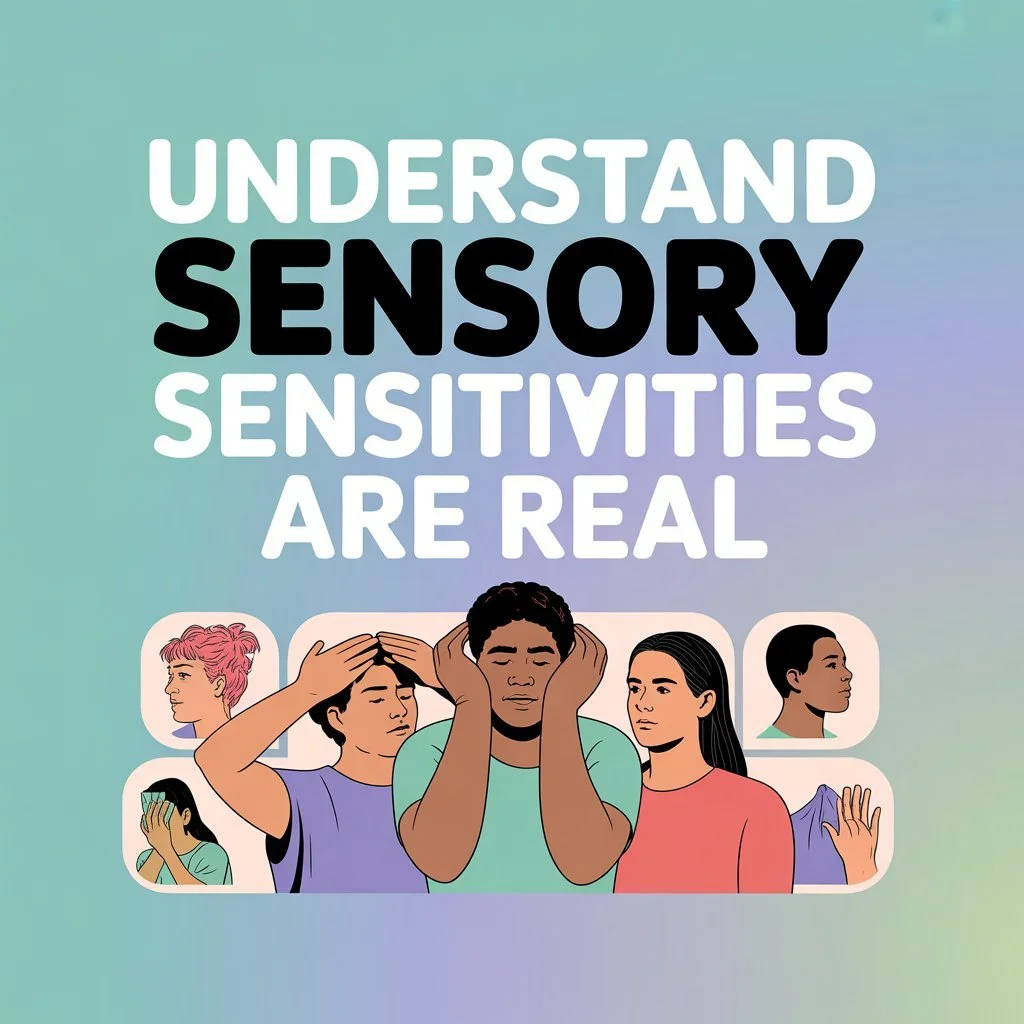
Understand Sensory Sensitivitie
3. Understand Sensory Sensitivities Are Real
The World Is Overwhelming
Imagine walking into a restaurant where the music is too loud, the lights are too bright, people are talking over each other, there are competing smells from the kitchen, and your clothes tag is scratching your neck.
For many autistic people, this isn't an occasional annoyance. This is daily life.
Sensory sensitivities mean that sounds, lights, textures, smells, and other stimuli that neurotypical people can filter out become overwhelming and sometimes painful.
Common Sensory Triggers
Your autistic friend might be sensitive to:
Sound: Background noise, multiple conversations at once, sudden loud noises, certain frequencies, humming lights or appliances
Light: Fluorescent lighting, bright sunlight, flashing lights, LED screens
Touch: Certain fabrics, tags in clothing, tight or loose clothing, unexpected physical contact, specific textures
Smell: Strong perfumes, cleaning products, food smells, air fresheners
Taste/Texture: Specific food textures, mixed textures, strong flavors
How to Be Supportive
Ask before making plans. Instead of picking a loud, crowded restaurant, ask "Is there a place you're comfortable with?" or suggest a quieter alternative.
Be understanding if they need to leave. If your friend says they need to go because they're getting overwhelmed, don't take it personally. Sensory overload is real and can be debilitating.
Don't dismiss their experience. "It's not that loud" or "Just ignore it" aren't helpful. What's manageable for you might be excruciating for them.
Respect their coping mechanisms. If they wear sunglasses indoors, use noise-canceling headphones, or stim (repetitive movements like hand-flapping or rocking), that's how they regulate their nervous system. Don't ask them to stop.
Sensory Overload Isn't Dramatic
When autistic people talk about sensory overload, they're not exaggerating for effect. It's a physiological response that can lead to:
Shutdowns (going non-verbal, unable to process information)
Meltdowns (emotional overwhelm that looks like a breakdown)
Physical pain
Exhaustion that lasts for days
Being a supportive friend means recognizing these aren't choices or tantrums. They're neurological responses to overstimulation.
Support your autistic friends always
4. Support Their Need for Routine and Predictability
Why Routines Matter
Many autistic people rely heavily on routines and predictability. This isn't about being inflexible or controlling—it's about managing a world that often feels chaotic and overwhelming.
Routines provide:
A sense of safety and control
Reduced anxiety about what's coming next
Mental energy conservation
Structure in an unpredictable world
How Last-Minute Changes Affect Them
What seems like a small, spontaneous change to you might completely derail your autistic friend's day.
"Let's grab dinner tonight instead of tomorrow" might seem fun and casual to you. For your autistic friend, it might mean:
Disrupting their planned routine for the evening
Not having time to mentally prepare for social interaction
Anxiety about the unexpected change
Needing to reorganize other commitments
This doesn't mean you can never be spontaneous. It just means understanding that what's easy for you might be difficult for them.
How to Be Considerate
Give advance notice when possible: If you're planning to get together, give your friend as much heads-up as you can. A week's notice is better than a day's notice.
Provide details: Instead of "Want to hang out Saturday?" try "Want to get coffee at that café on Main Street Saturday at 2pm? We could stay for about an hour."
Specific details help autistic people prepare mentally and reduce anxiety about unknowns.
Understand if they decline last-minute invitations: It's not that they don't want to spend time with you. They might just not have the capacity to adjust their day on short notice.
Stick to plans when you make them: Constantly changing or canceling plans is exhausting for everyone, but especially for someone who has already mentally prepared for the original plan.
5. Advocate Alongside Them, Not For Them
The Difference Between Support and Speaking Over
There's a crucial difference between advocating alongside your autistic friend and speaking for them.
Advocating alongside means:
Amplifying their voice, not replacing it
Supporting their decisions, even if you'd choose differently
Standing up against ableism when you see it
Creating space for them to self-advocate
Speaking for them means:
Deciding what's best for them without asking
Answering questions directed at them
Making assumptions about what they need
Treating them as incapable of speaking for themselves
How to Advocate Effectively
Listen to what they're telling you: If your autistic friend says something is a problem, believe them. Don't dismiss or minimize their experience.
Challenge ableist language and attitudes: When someone uses "autistic" as an insult or says something offensive about autism, speak up. You don't have to give a lecture—sometimes a simple "That's not cool" is enough.
Support their self-advocacy: If your friend is trying to explain their needs to someone (a boss, teacher, service provider), be their backup. Your presence alone can make them feel more confident.
Educate others, but don't burden your friend: If someone has questions about autism, you can direct them to resources rather than expecting your autistic friend to constantly explain themselves.
Understand the importance of advocacy. The autistic community has long fought for acceptance, accommodations, and basic respect. The Importance of Advocacy in Autism explores why this work matters and how you can contribute to creating a more inclusive world.
Respect Their Autonomy
Your autistic friend is the expert on their own experience. Even if you think you know what's best for them, check yourself.
They have the right to:
Make their own decisions
Decline help they don't want
Choose how they navigate the world
Define what support looks like for them
Good intentions don't override autonomy. Always ask before assuming what kind of support someone needs.
One powerful way to advocate is by sharing resources that increase understanding. The On the Spectrum Empowerment Stories podcast features real conversations with autistic individuals and experts, providing authentic perspectives that challenge stereotypes. Listening to episodes together or recommending specific episodes to your friend shows you're committed to understanding their experience.
6. Educate Yourself Continuously
Your Friend Isn't Your Teacher
Yes, asking your autistic friend questions can be part of building understanding. But it's not their job to educate you about everything autism-related.
Constantly asking them to explain autism, justify their needs, or teach you about accommodations puts an unfair burden on them.
Instead, take initiative to educate yourself through books, articles, podcasts, and resources created by autistic people.
Seek Out Autistic Voices
The best autism education comes from autistic people themselves—not from parents of autistic children, not from therapists, not from organizations that don't include autistic leadership.
Look for content created by actually autistic individuals. Their lived experience provides insight that no amount of clinical training can match.
Sonia Chand's book offers exactly this kind of firsthand perspective. Get your copy here to understand the autistic experience from someone who's lived it. Reading books like this not only educates you but also shows your friend you're willing to put in the work to understand their world.
Stay Current on Autism Research and Advocacy
Our understanding of autism continues to evolve. What was considered "best practice" ten years ago might be considered harmful today.
Stay updated on:
Current research about autism
Advocacy movements led by autistic people
Changes in terminology and language
Critiques of harmful therapies or approaches
Follow autistic advocates on social media. Read blogs written by autistic adults. Listen to podcasts hosted by autistic individuals.
Recognize Your Own Biases
We all absorb ableist messages from society. Part of being a good friend is recognizing when those biases show up in your thinking.
Ask yourself:
Am I treating my friend as less capable because they're autistic?
Am I making assumptions about what they can or can't do?
Am I viewing their differences as deficits rather than just differences?
Am I trying to "fix" them instead of accepting them?
This isn't about beating yourself up for having biases. It's about recognizing them so you can actively work against them.
Keep Learning, Keep Growing
Supporting your autistic friend isn't a one-time thing. It's an ongoing commitment to understanding, respecting, and valuing who they are.
Another way to deepen your understanding is by gifting your autistic friend resources that validate their experience. Purchase Sonia's book as a thoughtful gesture that says "I see you, I value your perspective, and I want to understand your world better." Many autistic individuals find comfort in reading about others' experiences—it reminds them they're not alone.
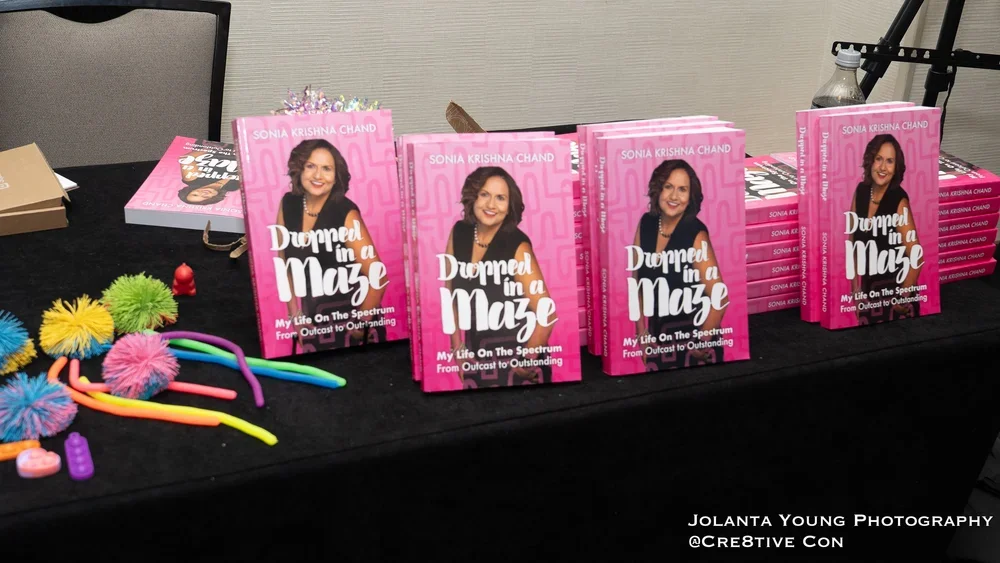
Dropped in a Maze
Being a True Friend
At the end of the day, supporting your autistic friend comes down to the same principles that define any good friendship: respect, communication, empathy, and genuine care.
The difference is being willing to expand your understanding of what those things look like. Respect might mean honoring their need to leave a loud environment. Communication might mean texting instead of calling. Empathy might mean recognizing that their brain processes the world differently than yours.
You don't have to be perfect. You'll make mistakes. What matters is that you're willing to learn, adjust, and show up consistently.
Small Actions Make a Big Difference
You don't need to become an autism expert overnight. Small, consistent actions matter more than grand gestures:
Believe them when they tell you something is hard
Don't force eye contact
Accept their stims without comment
Choose quieter venues when possible
Give them advance notice about plans
Don't take it personally when they need space
Challenge ableism when you encounter it
Keep educating yourself
These aren't difficult things. They just require awareness and intention.
This Autism Acceptance Month, Go Deeper
April is Autism Month—a time to move beyond simple "awareness" and into genuine understanding and inclusion.
Here are three concrete actions you can take this month:
1. Listen to autistic voices: Start with the On the Spectrum Empowerment Stories podcast, which features real conversations about the autistic experience. Share episodes that resonate with your autistic friend—it might spark meaningful conversations between you.
2. Educate yourself: Read books written by autistic authors. Sonia's book provides invaluable firsthand perspective on navigating the world as an autistic person. Understanding her journey will help you understand your friend's.
3. Have a conversation: Use what you've learned as a starting point to ask your friend how you can be more supportive. Listen without defensiveness. Adjust your behavior based on what they tell you.
Autism Month isn't just about posting blue puzzle pieces (which many autistic people actually find offensive). It's about doing the real work of creating a world where your autistic friend feels safe, valued, and fully accepted for who they are.
That work starts with you. It starts with education, empathy, and a willingness to see the world through their eyes.
Be the friend who says "You don't have to mask with me. You don't have to pretend. You're perfect exactly as you are."
That's what real support looks like. And that's what every autistic person deserves.
When Is Autism Awareness Month? And Why It Matters
Table of Contents
Intro
Why Autism Awareness Month Was Created
Autism Awareness vs Autism Acceptance
Why Autism Awareness Month Still Matters
How Autism Awareness Month Is Observed
Autism Awareness Month and Adults
How to Participate Thoughtfully
Moving Beyond One Month
Conclusion
When Is Autism Awareness Month?
Autism is being talked about more openly than ever before. Many people are learning about autism for the first time. Others are discovering that they or someone they love may be autistic. Because of this growing awareness, one question keeps coming up again and again:
When is Autism Awareness Month?
This blog post will explain when Autism Awareness Month takes place, why it exists, how it is observed, and why many people are now shifting the conversation from awareness to acceptance. It will also explore why listening to autistic voices matters, especially for adults who are only now beginning to understand themselves.
When Is Autism Awareness Month?
Autism Awareness Month is observed every year in April.
Within Autism Awareness Month, April 2nd is recognized as World Autism Awareness Day. This day was officially designated by the United Nations to help raise global awareness about autism and encourage inclusion and understanding.
Throughout April, you will often see educational campaigns, social media conversations, community events, and fundraising efforts focused on autism. The month serves as a focal point for individuals, families, educators, and advocates to come together and share knowledge about the autistic experience.
Why Autism Awareness Month Was Created
Autism Awareness Month was created to help people learn what autism is and to challenge harmful myths and misunderstandings.
For many years, autism was misunderstood or ignored. It was often seen only as a childhood condition, and many autistic people were overlooked, misdiagnosed, or misunderstood. Some were institutionalized or subjected to harmful treatments based on fear rather than understanding. Awareness efforts were meant to bring attention to autism and help people recognize that autistic individuals exist in every community and at every age.
Awareness was an important first step. It helped open the door to conversations that were long overdue. It created opportunities for families to access support and for society to begin questioning long-held stereotypes about what autism looks like and what autistic people are capable of achieving.
Autism Awareness vs Autism Acceptance
Over time, many autistic people began to say that awareness alone is not enough.
This is where the idea of autism acceptance comes in.
Awareness is about knowing autism exists. Acceptance is about understanding, respecting, and supporting autistic people as they are.
Acceptance focuses on things like inclusion, accommodations, listening to lived experiences, and valuing neurodiversity. It moves beyond simply talking about autism to actually improving the quality of life for autistic people. Acceptance means recognizing that autistic people do not need to be fixed or changed, but rather understood and supported in ways that honor their unique needs and strengths.
Today, many people use Autism Awareness Month as a time to promote both awareness and acceptance together. The goal is not just to spread information, but to create real change in how autistic individuals are treated in schools, workplaces, healthcare settings, and communities.
Why Autism Awareness Month Still Matters
Autism Awareness Month still plays an important role, especially for people who are just beginning to learn.
It helps reduce stigma by challenging outdated ideas about autism. It encourages education in schools, workplaces, and healthcare settings. It creates space for autistic voices to be heard. It reminds people that autism is lifelong, not something limited to childhood.
For many adults, Autism Awareness Month is the moment they first see stories that feel familiar and validating. It can be the catalyst for someone to pursue a diagnosis, seek community, or finally understand why they have always felt different. The visibility that comes with this month can be life-changing for those who have spent years feeling isolated or misunderstood.
If you want to hear honest conversations about autism, identity, and lived experience, this is a great time to listen to Sonia's podcast. Her episodes cover different topics around neurodiversity, emotional awareness, and real life experiences that many autistic adults relate to deeply.
How Autism Awareness Month Is Observed
Autism Awareness Month is marked in many different ways around the world.
Some communities host educational talks, workshops, or panel discussions. Schools and organizations share learning resources. Social media fills with personal stories and advocacy messages. Some landmarks are lit up in blue as a symbol of autism awareness.
In recent years, there has also been a stronger push to center autistic led conversations rather than speaking over autistic people. Many advocates encourage the use of the phrase "nothing about us without us," emphasizing that autistic individuals should be the ones leading discussions about their own lives and needs. This shift has brought more authenticity and nuance to public conversations about autism.
Autism Awareness Month and Adults
One important shift in recent years is the growing recognition of autistic adults.
Many adults were never identified as children. Some were misdiagnosed. Others learned to mask their traits in order to survive. Autism Awareness Month has become a powerful time for adults to finally see themselves reflected in the conversation.
This is why personal stories matter so much. When adults hear experiences that mirror their own, it can bring both relief and validation. It can answer questions they have carried for decades about why certain things have always felt harder for them or why they never quite fit in.
Books and podcasts created by autistic people help others feel less alone. Sonia's book, My Life on the Spectrum, is one of those resources. It offers insight, reflection, and emotional clarity for anyone wanting to understand autism beyond stereotypes. Her work speaks directly to the lived reality of being autistic in a world that was not designed with neurodivergent people in mind.
How to Participate Thoughtfully
You do not need to be an expert to participate in Autism Awareness Month in a respectful way.
You can start by listening to autistic voices. You can learn from books, podcasts, and first hand experiences. You can reflect on how workplaces, schools, and families can be more inclusive. You can be mindful of language and assumptions.
Thoughtful participation is about curiosity, compassion, and humility. It means being willing to unlearn old ideas and embrace new perspectives. It also means recognizing that every autistic person is different, and no single story or experience can represent the entire community.
Moving Beyond One Month
Autism Awareness Month happens in April, but autism does not end when the month is over.
True support means continuing the conversation all year long. It means listening, learning, and making space for difference every day. It means advocating for systemic change, accessibility, and accommodations long after the blue lights have been turned off and the social media posts have stopped.
Resources like Sonia's podcast and her book My Life on the Spectrum are valuable not just during April, but anytime you want to deepen your understanding and connect with authentic experiences. Building genuine understanding takes time, patience, and ongoing effort.
Conclusion
Autism Awareness Month takes place every year in April, with World Autism Awareness Day on April 2nd.
It exists to promote understanding, reduce stigma, and create space for autistic voices. While awareness is important, acceptance and inclusion are just as essential.
Whether you are autistic, love someone who is autistic, or are simply learning, Autism Awareness Month can be a meaningful time to listen, reflect, and grow.
And most importantly, it can be a reminder that autistic people have always been here and deserve understanding, respect, and support every day of the year.

World Autism Awareness Day 2025: How We Celebrate
Every year on April 2nd, the United Nations established World Autism Awareness Day to promote understanding, inclusion, and support for individuals with autism. This day is a beacon of hope and advocacy for millions.
History and Significance
World Autism Awareness Day was established to highlight the need for improved quality of life for those with autism. The goal is to foster an environment where sufferers are accepted and celebrated for their unique perspectives.
Tips for Support and Inclusion
Employers: Create inclusive hiring practices that are autism-friendly.
Educators: Use tailored teaching techniques to support diverse learners.
Community Members: Participate in autism-friendly community events.
FAQs and Clarifications
What is Autism Spectrum Disorder (ASD)?
Autism is a developmental disorder affecting communication and behavior. Although autism can be diagnosed at any age, it is said to be a developmental disorder because symptoms generally appear in the first two years of life.
What are the typical characteristics?
People with autism may face challenges with communication, restricted interests, and repetitive behaviors, yet many also have exceptional strengths and abilities. [Source: American Psychological Association]
How prevalent is autism globally?
Approximately 1 in 100 children worldwide are affected by autism. [Source: World Health Organization, 2021]
In the United States, 1 in 36 children were identified with autism as of 2023, according to the CDC.
Autism by the Numbers
Statistics
U.S. children diagnosed with autism (2023).
1 in 36, a notable increase illustrating greater awareness and detection. Frequency in boys vs. girls. Boys are four times more likely to be diagnosed than girls.
Adult employment rates for individuals with ASD. Only about 16% are in full-time paid jobs, highlighting the need for enhanced employment support [Source: National Autistic Society]
Strategies to Create an Inclusive Society
Workplace Inclusivity: Companies can embrace autism-friendly policies, promoting neurodiversity in their workforce.
Educational Adjustments: Tailored learning plans and sensory-friendly classrooms can make significant differences.
Community Engagement: Participate in local autism walks, fundraisers, and events to show continuous support.
Through education, active participation, and supportive policies, World Autism Awareness Day serves as an annual anchor in our collective effort toward a more inclusive society. Let's pledge today not only to increase awareness but to take concrete steps towards empowering those on the autism spectrum.
World Autism Awareness Day is not just about raising awareness but also about fostering solidarity and action. By contributing to a more inclusive society, we honor those with autism and reaffirm our commitment to equality and understanding.
Sources: