
Why Autistic Adults May Avoid Phone Calls
If the person you love goes to extraordinary lengths to avoid making a phone call, you have probably wondered more than once whether it is something they could push through if they really needed to, or whether something genuinely different is happening for them.
The answer is that something genuinely different is happening. Phone call avoidance in autistic adults is not stubbornness, social laziness, or a preference that could be overridden with enough motivation. It is a neurological response to a specific set of demands that the phone call format places on an autistic brain, and understanding what those demands actually are changes everything about how you interpret the avoidance and how you respond to it.
This post is for the partners, family members, and friends who want to understand, because understanding is where everything helpful begins.
Table of Contents
What Phone Calls Actually Demand From an Autistic Brain
The Sensory Dimension of Phone Call Avoidance
The Unpredictability Problem
Processing Speed and Real Time Communication
The Anxiety That Builds Before the Call
When Phone Calls Involve Masking
How Phone Call Avoidance Connects to Autistic Burnout
What Does Not Help
What Actually Helps
When Phone Calls Cannot Be Avoided
FAQs
Final Thoughts
What Phone Calls Actually Demand From an Autistic Brain
To understand why autistic adults avoid phone calls, you need to understand what a phone call is asking of a brain that processes the world differently.
A phone call strips away almost every communication channel except the voice. There is no facial expression to read. No body language. No visual context. No time to think before responding. No ability to reread what was just said. No pause button. No processing time between turns.
For neurotypical people, the voice carries enough information to make conversation work comfortably without all of those other channels. For many autistic adults, voice alone is not enough. The missing visual and contextual information creates a gap that the autistic brain has to work very hard to fill in real time, drawing on cognitive resources that get depleted quickly and leave the person exhausted in a way that feels completely disproportionate to what just happened.
A ten minute phone call can feel, neurologically, like an hour of concentrated effort. And the harder the call, the worse the recovery time afterward.
This is not dramatic. It is not exaggerated. It is the actual neurological cost of a communication format that was never designed for autistic processing, and understanding that cost is the starting point for everything else.
Book a discovery call with Sonia here to find out how coaching can help you.
The Sensory Dimension of Phone Call Avoidance
Sensory processing differences are a core feature of autistic neurology, and they contribute to phone call avoidance in specific ways that are worth understanding clearly.
Many autistic adults experience auditory processing differences that affect how clearly and how accurately they can process spoken language, particularly when other variables are introduced. Background noise on either end of the call, poor audio quality, an unfamiliar accent, or a caller who speaks quickly all compound the processing demand significantly.
Unlike an in-person conversation where visual cues help fill in the gaps when auditory processing struggles, a phone call offers nothing to compensate. The autistic adult is processing speech under genuinely difficult conditions and doing it entirely in real time without any support channel.
For some autistic adults, the sensory experience of a phone pressed against the ear is also a genuine physical discomfort. The pressure, the sound quality, and the unnatural intimacy of a disembodied voice played directly into the ear can all contribute to a sensory experience that makes the call harder to tolerate from the first moment.
The Unpredictability Problem
One of the most consistent and most underappreciated reasons autistic adults avoid phone calls is the unpredictability of the format itself.
Autistic brains generally function more efficiently in predictable environments. When what is coming next can be anticipated, the nervous system does not have to stay on high alert for unexpected input. When the environment is unpredictable, the threat detection system stays activated, consuming cognitive and emotional resources and making calm, efficient functioning significantly harder.
A phone call is inherently unpredictable. You do not know what the other person is going to say, how long the call will last, what tone they will take, whether they will ask something you are not prepared for, or when it will end. For an autistic adult, the entire duration of the call involves sustained vigilance against these unknowns, which is exhausting in a way that is genuinely neurological rather than simply psychological.
This is also why the prospect of a call that has not happened yet can feel overwhelming before it begins. The anticipatory anxiety of an unpredictable event that is coming is, for many autistic adults, as draining as the event itself.
The On the Spectrum podcast with Sonia Chand covers the real experiences of autistic adults navigating exactly these kinds of daily challenges in honest, accessible conversations that help families and partners understand what they are witnessing.

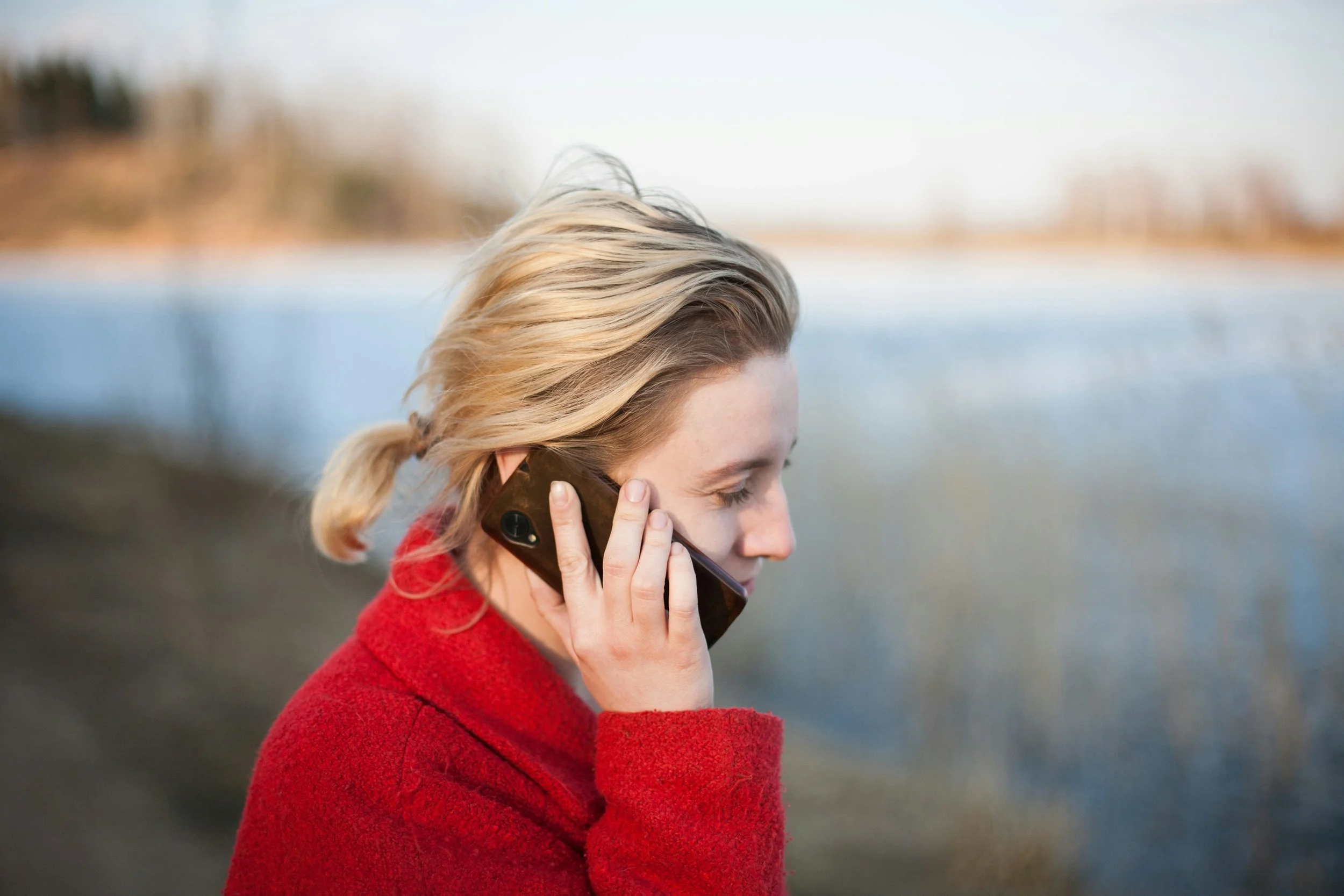
Photo by Priscilla Du Preez 🇨🇦 on Unsplash
Processing Speed and Real Time Communication
One of the most significant neurological contributors to phone call avoidance is the difference in processing speed that many autistic adults experience.
Many autistic adults need more time than the typical phone call allows to process what has been said, formulate a response, translate that response into spoken words, and deliver it in a way that is coherent and socially appropriate. In a written conversation, that processing time is invisible. Nobody sees the gap between reading a message and composing a reply. The autistic adult can take the time they genuinely need without the social awkwardness of silence.
In a phone call, that gap is immediately visible and socially uncomfortable. The silence feels like incompetence or disengagement to the person on the other end, even when the autistic adult is simply doing the neurological work that the question requires. The awareness of that discomfort adds a layer of social anxiety on top of the processing demand itself, making the whole experience significantly harder.
This is why many autistic adults express themselves much more clearly and confidently in writing than they do on the phone. It is not that they communicate better in one medium because they have practiced more. It is that one medium accommodates their processing speed and the other does not.
The Anxiety That Builds Before the Call
For many autistic adults, the hardest part of a phone call is not the call itself. It is the hours, or sometimes days, before it.
Anticipatory anxiety around phone calls is one of the most consistent features of the experience that autistic adults describe, and it is worth taking seriously rather than dismissing as overthinking or catastrophizing.
The anxiety builds because the call represents a known upcoming experience with unknown specific content. The autistic brain, which functions best with predictability, knows a call is coming and cannot fully prepare for it because the specific demands of the call are unknown until it happens. This combination of the known and the unknown is one of the most reliable triggers for autistic anxiety.
The result is that a single scheduled phone call can meaningfully affect the quality of an autistic adult's entire day in the hours leading up to it, which means the cost of the call is significantly higher than the duration of the call itself suggests.
Dropped in a Maze by Sonia Chand gives this experience the honest, grounded account it deserves, writing from the inside of autistic daily life in a way that helps families and partners genuinely understand what the person they love is navigating.
Get your copy of Dropped in a Maze here
When Phone Calls Involve Masking
Phone calls require a specific kind of masking that is worth understanding as a distinct contributor to the avoidance.
Masking is the process of suppressing natural autistic responses to appear more neurotypical. In a phone call, this means managing the pace and tone of speech to sound appropriately engaged and natural, monitoring for the subtle cues that indicate when it is your turn to speak, producing appropriate verbal feedback sounds like mm and yes and right at the right moments, and maintaining the social performance of ease while doing all of the processing work described above simultaneously.
This is cognitively expensive in a way that is very hard to convey to someone who does not experience it. For neurotypical people, most of this is automatic. For autistic adults, much of it is conscious, deliberate, and effortful. The phone call is not just a conversation. It is a performance of a conversation running on top of a conversation, requiring significantly more cognitive resources than the duration of the call would suggest.
When a person is already in a period of autistic burnout, or approaching one, the additional masking demand of a phone call can be genuinely impossible rather than simply difficult. This is worth knowing for the partners and family members who sometimes interpret the avoidance as a choice when it is genuinely a neurological limitation in the moment.
For a fuller understanding of what autistic burnout looks like and how it relates to daily life demands like phone calls, the post on what does autistic burnout feel like in adults covers this connection in depth.
How Phone Call Avoidance Connects to Autistic Burnout
Phone call avoidance often becomes more severe during or approaching autistic burnout, and understanding that connection helps family members recognize when the avoidance is a signal of something that needs attention beyond the phone call itself.
During burnout, the cognitive and emotional resources that would ordinarily make a hard thing manageable are significantly depleted. The already considerable demands of a phone call become genuinely impossible for a nervous system that is running on empty. The avoidance intensifies not because the person is being less cooperative but because the available resources have dropped below what the task requires.
If you have noticed that the person you love is avoiding phone calls more than usual, and that this increased avoidance is accompanied by other signs of withdrawal, exhaustion, or reduced functioning, it is worth gently opening a conversation about how they are doing overall rather than focusing on the phone call specifically.
The phone call avoidance is rarely the problem. It is a symptom of the problem, and the problem is usually a nervous system that is carrying more than it can sustainably hold.
What Does Not Help
Before covering what helps, it is worth being direct about the responses that consistently make phone call avoidance worse.
Telling them to just push through it
Willpower does not resolve a neurological processing demand. Suggesting that they simply try harder communicates that you do not understand the nature of the difficulty, which adds shame to the existing anxiety.
Making it a character assessment
Phone call avoidance is not laziness, social selfishness, or a sign that the autistic adult does not care enough about the person they are avoiding calling. Framing it that way misattributes the cause and damages the relationship without addressing anything.
Repeatedly pushing during a period of burnout
When someone is in burnout, pushing them to do things that require significant masking effort does not build resilience. It depletes what little resource is left and extends the recovery period.
Making them feel guilty about the accommodation
Needing written communication rather than phone calls is a genuine neurological accommodation, not a preference or a convenience. Treating it as an imposition rather than a need communicates that their neurological reality is less important than your comfort with the format.
What Actually Helps
What helps is genuinely practical and, in most cases, genuinely simple once the underlying reason for the avoidance is understood.
Default to written communication where possible.
Text messages, emails, and messaging apps give the autistic adult the processing time they need, remove the performance demand of real-time speech, and produce clearer, more considered communication from both parties. This is not lowering the bar. It is choosing the right tool for the brain you are communicating with.
Give advance notice when a call is necessary
When a phone call genuinely cannot be avoided, giving as much advance notice as possible, along with a clear indication of what the call will cover, reduces the anticipatory anxiety significantly. Knowing what is coming allows some preparation, and preparation is one of the most effective anxiety management tools available.
Keep necessary calls short and structured
A call with a clear beginning, middle, and end, covering a defined list of topics, is significantly more manageable than an open-ended call with no defined scope or duration. Agree on the agenda before the call if possible.
Offer alternatives for medical and administrative calls
Many of the phone calls that feel unavoidable because they involve medical providers, insurance companies, or official bodies actually do have written alternatives. Online portals, secure messaging, and email options exist for many of these calls. Helping the autistic adult find and use these alternatives is a genuinely supportive act.
Do not interpret the avoidance personally
Phone call avoidance is almost never about the relationship. It is about the format. The autistic adult who struggles to call their partner about something practical is not struggling because they do not care about their partner. They are struggling because the phone call format is genuinely hard, regardless of who is on the other end.
For autistic adults who are working with a coach to build practical daily life strategies including communication management, Sonia's socio-emotional coaching addresses exactly these kinds of real-world challenges with personalized, autism-informed guidance.
Book a discovery call with Sonia here to find out how coaching can help you.
When Phone Calls Cannot Be Avoided
There are situations where a phone call genuinely cannot be replaced with written communication, and it is worth having a plan for those rather than hoping they will not arise.
Useful strategies for unavoidable phone calls include:
Scripting in advance
Writing out what needs to be said and keeping the script nearby during the call reduces the real-time processing demand significantly. The script does not need to be followed word for word. It provides a fallback when processing becomes difficult.
Choosing the right time
Making a call during a period of genuine regulation, not during a high anxiety period, not immediately after a draining activity, and not during sensory overload, produces significantly better outcomes than making the call when the nervous system is already stretched.
Using speakerphone or headphones
Removing the physical pressure of a handset pressed against the ear reduces one layer of the sensory demand and allows some physical movement during the call, which can support regulation.
Having someone else present
A trusted person in the room during a difficult call provides co-regulatory support and can step in to help if processing becomes too difficult.
Debriefing afterward
Having a low-demand, comfortable decompression period after a difficult phone call is not an indulgence. It is a genuine neurological necessity that should be planned for rather than apologized for.
FAQs
Why do autistic adults avoid phone calls?
Phone calls remove visual and contextual communication channels, require real-time processing under time pressure, involve unpredictability, and demand a specific kind of masking that is neurologically expensive for autistic adults.
Is phone call avoidance a choice?
No. It is a neurological response to a demanding communication format. It is not something that can be resolved through willpower or motivation.
What should I do if my autistic partner avoids calling me?
Default to written communication where possible, give advance notice when calls are necessary, and avoid interpreting the avoidance as a reflection of the relationship rather than a response to the format.
Does phone call avoidance mean they do not care?
No. The avoidance is about the format, not the relationship. Autistic adults who avoid calling the people they love most are responding to the neurological demands of the format, not communicating disinterest.
Can autistic adults learn to handle phone calls more easily?
With the right support and strategies, the experience of phone calls can become more manageable. But the goal is management rather than elimination of the underlying neurological reality, which does not change.
What is the most helpful thing I can do?
Stop requiring phone calls where written alternatives exist, and stop interpreting the avoidance as something that reflects on the relationship or the person's character.
Final Thoughts
Phone call avoidance in autistic adults is not a quirk, a preference, or a habit that could be changed with enough effort. It is a neurological response to a communication format that places specific and genuinely difficult demands on an autistic brain, and those demands do not become less real because the phone call seems like a normal everyday thing to the person making the request.
Understanding this does not mean phone calls never happen. It means when they do, they happen with genuine awareness of the cost, adequate preparation, and the kind of compassion that comes from knowing what you are asking.
That understanding, built through honest information rather than assumption or frustration, is one of the most genuinely supportive things a partner, family member, or friend can offer an autistic adult who is navigating a world full of communication formats that were not designed for their brain.
Dropped in a Maze by Sonia Chand gives this understanding its fullest human context, the honest account of daily autistic life in all its complexity, written for everyone in the autistic person's world who wants to understand rather than simply manage.
References:
Howard PL, Sedgewick F. 'Anything but the phone!': Communication mode preferences in the autism community. Autism. 2021;25(8):2265-2278. https://doi.org/10.1177/13623613211014995
Cacchiotti N. Individuals with ASD rate phone calls as worst communication mode [Internet]. Autism Research Review International; 2024 Feb 29. https://arrionline.org/individuals-with-asd-rate-phone-calls-as-worst-communication-mode/
de Marchena A, Cuneo N, Gurbuz E, Brown M, Trujillo J, Bergstrom J. Communication in Autistic Adults: An Action-Focused Review. Curr Psychiatry Rep. 2025;27(8):471-481. https://pmc.ncbi.nlm.nih.gov/articles/PMC12271282/