
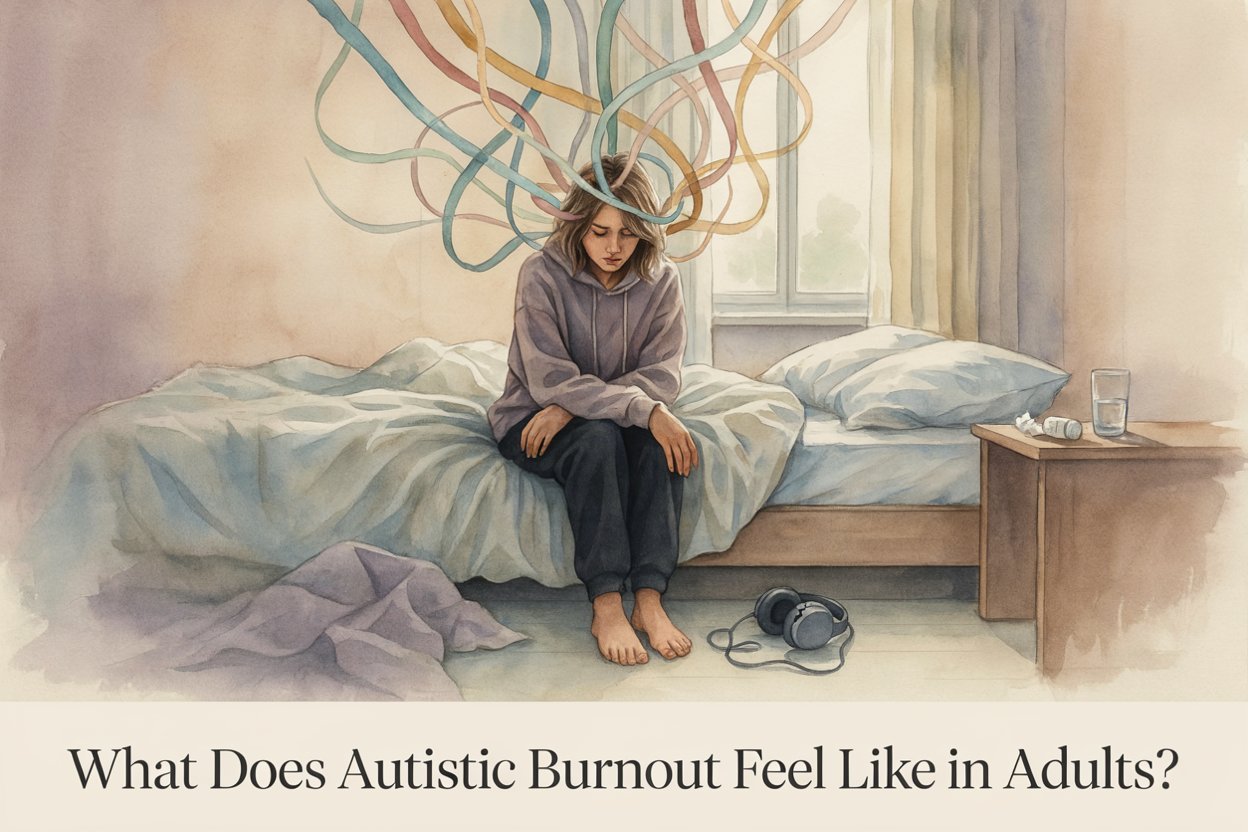
What Does Autistic Burnout Feel Like in Adults?
What does autistic burnout feel like in adults is a question that often gets searched in the quiet hours of the night by someone who is already in the middle of it, exhausted in a way that does not make sense, unable to do things they could do last month, and terrified that this is what the rest of their life looks like now.
What does autistic burnout feel like in adults is also one of the most validating questions a person can ask, because finding the words for something that has been invisible and unnamed is often the first step toward actually recovering from it.
This post covers what autistic burnout actually feels like from the inside, how long it lasts, what causes it, and what genuine recovery looks like for autistic adults who are navigating one of the most misunderstood experiences in the entire autism landscape.
Table of Contents
What Does Autistic Burnout Feel Like in Adults
What Makes Autistic Burnout Different From Regular Burnout
The Physical Experience of Autistic Burnout
The Cognitive Experience of Autistic Burnout
The Emotional Experience of Autistic Burnout
How Long Does Autistic Burnout Last
What Causes Autistic Burnout in Adults
Autistic Burnout vs Depression: How to Tell the Difference
What Helps Autistic Burnout Recovery
FAQs
Final Thoughts
References
What Does Autistic Burnout Feel Like in Adults: The Direct Answer
What does autistic burnout feel like in adults? It feels like running out of everything at once.
Not just energy. Everything. The capacity to speak. The ability to mask. The tolerance for sensory input that was manageable last week. The skills you spent years building, the social scripts, the coping strategies, the ability to organize a day or hold a conversation or get off the couch, all of it becomes inaccessible in a way that does not respond to rest, to pushing through, or to any of the strategies that used to work.
What does autistic burnout feel like in adults is different from person to person in its specifics but consistent in its essence. It is a profound, pervasive depletion that affects functioning across almost every domain of life simultaneously. Not one bad day. Not a rough week. A sustained, often frightening collapse of the capacity to live at the level that was previously possible.
Many autistic adults describe discovering the concept of autistic burnout as one of the most significant moments of their lives, because it gives language to an experience that they had previously interpreted as evidence that they were fundamentally broken. They were not broken. They were depleted. Those are very different things, and the distinction matters enormously for what recovery actually looks like.
If you are in the middle of this right now and need immediate, skilled support from someone who
What Makes Autistic Burnout Different From Regular Burnout
Regular burnout, the kind described in most workplace wellness conversations, is primarily characterized by exhaustion, cynicism, and reduced professional efficacy. It responds reasonably well to rest, reduced workload, and recovery time.
What does autistic burnout feel like in adults compared to this? Categorically different.
Autistic burnout involves the loss of skills and capacities that regular burnout does not touch. An autistic adult in burnout may lose the ability to use spoken language reliably. They may lose the capacity to mask at all, meaning autistic traits that were previously concealed become visible regardless of the person's wish to conceal them. They may lose the ability to tolerate sensory environments that were previously manageable. They may lose executive functioning capacities including the ability to plan, initiate tasks, or manage daily routines.
This skill regression is one of the most frightening aspects of what autistic burnout feels like in adults because it can look from the outside, and feel from the inside, like a sudden and dramatic deterioration that seems to have no cause. Understanding that the cause is accumulated depletion rather than neurological deterioration is both more accurate and more hopeful.
The experience of watching yourself lose capacities you worked hard to build is also deeply connected to identity and self-esteem, which is one of the reasons that recovery from autistic burnout requires more than just rest. It requires the kind of skilled, informed support that helps rebuild a sense of self alongside the practical capacities.
Book a self-esteem coaching session with Sonia here and start rebuilding from the inside out, with support that genuinely understands what burnout has taken and what is still there underneath it.
The Physical Experience of Autistic Burnout
What does autistic burnout feel like in adults physically is one of the most consistent and most surprising aspects of the experience for people encountering it for the first time.
Autistic burnout is not primarily a mental experience. It is a full-body experience that includes:
Profound physical exhaustion that does not improve with sleep
Increased sensory sensitivity across all channels, meaning lights, sounds, textures, and smells that were previously tolerable become genuinely painful
Physical pain including headaches, body aches, and gastrointestinal disturbances that have no clear medical cause
Extreme fatigue after activities that previously required no recovery time
The return or intensification of previously managed physical symptoms including gut issues and sleep disruption
Motor difficulties including clumsiness, difficulty with fine motor tasks, and physical sluggishness
The physical dimension of autistic burnout is important to understand because it is one of the clearest signs that this is a neurological experience rather than a motivational or emotional one. The body is not performing wellness because the neurology does not have the resources to maintain it.
The Cognitive Experience of Autistic Burnout
What does autistic burnout feel like in adults cognitively is often the most distressing dimension because it directly affects the ability to function at work, in relationships, and in daily life.
Cognitive symptoms of autistic burnout include:
Executive functioning collapse including inability to plan, organize, or initiate tasks that were previously manageable
Memory difficulties including forgetting familiar words, losing track of conversations, and being unable to retain information reliably
Difficulty processing language, both spoken and written, at speeds that were previously comfortable
Loss of previously reliable coping strategies and compensatory skills
Inability to manage sensory regulation that was previously automatic
Extreme difficulty making decisions including very minor ones
Loss of the ability to mask, meaning the autistic person can no longer perform the social behaviors they have practiced for years
This cognitive dimension of what autistic burnout feels like in adults is also what makes it so frequently misdiagnosed as depression, anxiety disorder, or even early onset neurological disease. The cognitive deterioration is real and significant, but it is driven by depletion rather than disease.
The Emotional Experience of Autistic Burnout
What does autistic burnout feel like in adults emotionally is perhaps the hardest dimension to put into words, but it is one of the most important to understand for anyone trying to support an autistic adult in burnout.
The emotional experience of autistic burnout typically includes:
A profound and pervasive sense of emptiness that is different from sadness
Loss of connection to things that previously brought joy including special interests, which is one of the most alarming signs for autistic adults who recognize how central those interests are to their sense of self
Emotional numbness alternating with emotional overwhelm in response to things that previously felt manageable
Intense shame about the loss of function, particularly for autistic adults who have spent years building the appearance of capability
Social withdrawal that goes beyond preference into genuine inability to manage social interaction
A sense of not recognizing yourself, of being a diminished version of who you were
For many autistic adults, the loss of connection to special interests during burnout is one of the clearest signals that something genuinely different is happening. Special interests are not just hobbies. They are regulatory tools and identity anchors. When even those feel inaccessible, the depth of the depletion is significant.
Dropped in a Maze by Sonia Chand speaks directly to the experience of losing yourself in the autism journey and finding your way back, with the kind of honest, grounded wisdom that makes you feel less alone in what you are going through.

How Long Does Autistic Burnout Last
How long autistic burnout lasts is one of the most urgent questions for autistic adults who are in the middle of it, and the honest answer is: it depends significantly on the individual, the cause, and the conditions of recovery.
Mild autistic burnout, where the depletion has not reached complete functional collapse, may resolve over weeks to a few months with significant reduction in demands and genuine recovery conditions.
Moderate to severe autistic burnout, where skill regression is significant and functioning is substantially impaired across multiple domains, typically takes months to recover from and sometimes longer than a year.
Autistic burnout that has been building for years and is finally expressing itself fully, as often happens in autistic adults who have been masking intensively for decades, can take considerably longer to recover from because the depletion is deeper and the underlying conditions that caused it need to be addressed structurally rather than just temporarily reduced.
Several factors significantly influence recovery time:
How quickly demands are reduced after burnout onset
Whether the underlying causes are identified and addressed
The quality of support available during recovery
The degree to which masking pressure is reduced rather than just temporarily paused
The autistic person's access to genuine recovery conditions including low sensory load, minimal social demands, and connection to their own regulation tools
The most important thing to know about how long autistic burnout lasts is that recovery is possible. It does not always feel that way from inside the burnout. But with the right conditions and the right support, autistic adults do recover and do return to functioning, often with a better understanding of their own limits and needs than they had before.
What Causes Autistic Burnout in Adults
Understanding what causes autistic burnout helps both prevent future episodes and make sense of what happened.
The primary causes of autistic burnout in adults include:
Sustained masking: Years of suppressing autistic traits to appear neurotypical depletes the cognitive and emotional resources that daily functioning depends on. Masking is the single most consistent contributor to autistic burnout in adults.
Cumulative demand overload: When the total demand load, including work, social, sensory, and domestic demands, consistently exceeds what the autistic nervous system can sustainably manage, depletion builds over time until burnout becomes inevitable.
Major life transitions: Starting a new job, moving home, ending a relationship, or any other significant change that simultaneously increases demands and reduces the predictability the autistic nervous system depends on.
Inadequate recovery: Insufficient genuine recovery time between demanding periods. Many autistic adults have never been taught what actual recovery looks like for their neurology, and what passes for rest in neurotypical terms is often not restorative for autistic adults.
Late diagnosis: Many autistic adults who experience significant burnout are those who were diagnosed late, having spent decades without the understanding or accommodations that would have reduced the cumulative load.
For a deeper understanding of how the autistic nervous system responds to demands and why that response drives burnout, the post onpathological demand avoidance in autism covers the specific dynamic between demand overload and nervous system dysregulation in full detail.
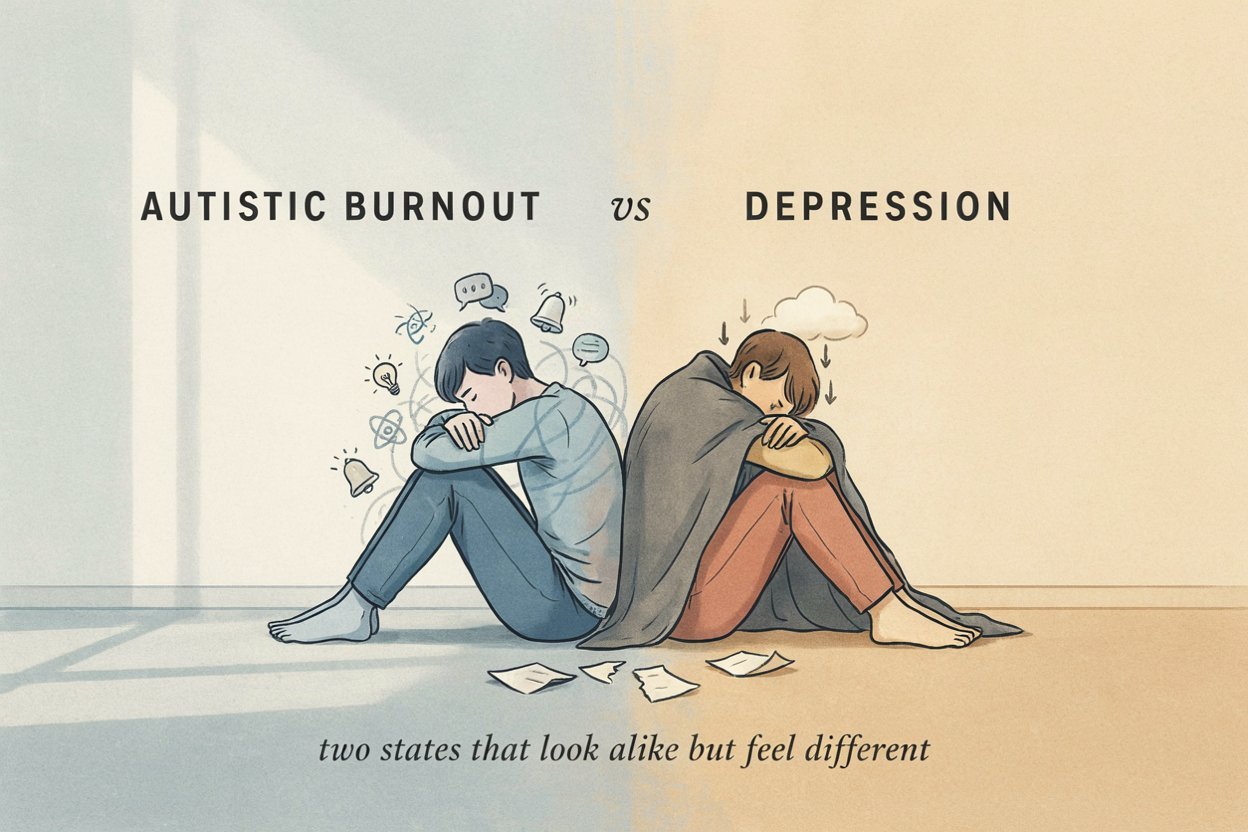
Autistic Burnout vs Depression
Autistic Burnout vs Depression: How to Tell the Difference
One of the most practically important questions around what autistic burnout feels like in adults is how it differs from depression, because the two are frequently confused and require different responses.
Autistic burnout and depression share several features including low mood, social withdrawal, loss of motivation, and reduced functioning. The key differences are:
Trigger: Autistic burnout is directly linked to a period of sustained overload and masking. Depression may not have a clear external cause.
Skill regression: The loss of previously reliable skills including language, masking, and coping strategies is specific to autistic burnout and is not typically a feature of depression alone.
Sensory sensitivity: The increase in sensory sensitivity during burnout is autism-specific. Depression does not typically produce this pattern.
Response to rest: Autistic burnout requires specific low-demand, low-sensory recovery conditions rather than general rest. Depression may respond to activity and social engagement in ways that burnout does not.
Both can co-occur, and many autistic adults in burnout also develop secondary depression. When this happens, addressing both simultaneously with autism-informed support is essential.
The On the Spectrum podcast with Sonia Chand covers autistic burnout in honest, practical conversations that help autistic adults and their loved ones understand what is actually happening and what genuinely helps.
What Genuinely Helps Autistic Burnout Recovery
Recovery from autistic burnout is not about pushing through. It is about genuinely reducing the load and creating the conditions for the nervous system to restore its depleted resources.
What genuinely helps includes:
Radical demand reduction: Temporarily reducing every possible demand to the minimum necessary. This is not giving up. It is triage.
Sensory refuge: Creating and protecting access to genuinely low sensory environments where the nervous system can rest without ongoing sensory regulation demands.
Permission to unmask: Allowing autistic traits to express themselves without suppression. Stimming, avoiding eye contact, using AAC if speech has become difficult, withdrawing from social interaction. All of it is allowed during recovery.
Connection to special interests: Even when special interests feel distant during burnout, gentle, unpressured access to them supports recovery rather than hindering it.
Addressing the underlying causes: Recovery without structural change to the conditions that caused burnout leads to repeat episodes. The masking demands, the overcommitment, the sensory environment, and the lack of genuine recovery time all need to be addressed.
Skilled, autism-informed support: Recovery from autistic burnout is significantly faster and more complete with skilled support than without it.
Dropped in a Maze by Sonia Chand is the companion reading that helps make sense of the recovery journey, offering the honest, grounded perspective of someone who understands what it means to find your way back to yourself after losing the map entirely.
Order your copy of Dropped in a Maze here
FAQs
What does autistic burnout feel like in adults?
Autistic burnout feels like a profound depletion of functioning across physical, cognitive, and emotional domains simultaneously, including loss of previously reliable skills and capacities.
How long does autistic burnout last?
Duration varies from weeks for mild burnout to months or over a year for severe or long-building burnout, depending on the individual and the recovery conditions available.
Is autistic burnout the same as depression?
No. They share some features but autistic burnout involves specific skill regression, increased sensory sensitivity, and direct links to masking and overload that depression does not.
Can you recover from autistic burnout?
Yes. With the right conditions including genuine demand reduction, sensory refuge, and skilled support, recovery is possible and complete.
What causes autistic burnout in adults?
Sustained masking, cumulative demand overload, insufficient recovery, major life transitions, and late diagnosis are the most consistent causes.
How do I know if I am in autistic burnout?
Loss of previously reliable skills, profound exhaustion that does not respond to rest, increased sensory sensitivity, and loss of the ability to mask are the clearest indicators.
Final Thoughts
What does autistic burnout feel like in adults? It feels like losing yourself. Like the version of you that managed to navigate the world has quietly collapsed and you are not sure if or when they are coming back.
But they are coming back. Recovery from autistic burnout is real. It requires the right conditions, the right support, and the willingness to stop pretending that pushing through is a viable long-term strategy. It requires honesty about what you actually need rather than what you think you should be able to manage.
You have been managing with the wrong tools for too long. That is not failure. That is the logical outcome of navigating a world that was not designed for your brain, without adequate support, for longer than anyone should have to.
The recovery starts with understanding what happened. And that understanding starts here.
References:
van Heijst BFC, Deserno MK, Rhebergen D, Geurts HM. Autism and depression are connected: A report of two complimentary network studies. Autism. 2020;24(3):680-692. https://pmc.ncbi.nlm.nih.gov/articles/PMC7168804/
Forough A. Autistic Burnout vs. Depression: Understanding the Difference [Internet]. Washington Autism Alliance & Advocacy; 2025 Apr 29. https://washingtonautismalliance.org/autistic-burnout-vs-depression-understanding-the-difference/
Ali D, Mandy W, Happé F. How does 'autistic burnout' feel? A qualitative study exploring experiences of earlier and later-diagnosed autistic adults. Autism. 2026. https://pmc.ncbi.nlm.nih.gov/articles/PMC13005893/
University of St. Augustine for Health Sciences. What Is Autistic Burnout? Symptoms, Causes & Prevention [Internet]. 2025 Mar 12. https://www.usa.edu/blog/what-is-autistic-burnout-symptoms-causes-prevention-guide/
Rankowski B, Wayman L. Autistic burnout: When navigating a neurotypical world becomes too much [Internet]. Autism Speaks; 2024. https://www.autismspeaks.org/tool-kit-excerpt/autistic-burnout-when-navigating-neurotypical-world-becomes-too-much