
If your toddler watches the same ten seconds of a video forty times, lines up every toy car by the window, or asks for the same song until you could recite it in your sleep, you may have wondered whether you should be steering them toward something new. Many parents of autistic toddlers feel this pull, especially when well-meaning relatives, playgroup leaders, and parenting books all seem to describe play as a lively, varied, constantly changing thing.
For many autistic children, play looks different, and it often involves repetition. The same action, the same sound, the same sequence can feel calming, predictable, and deeply satisfying. That is not a sign that your child is stuck or that you are doing something wrong. It is often how they make sense of the world and settle their body.
This post is for parents who want practical ideas. It covers why repetition matters, what to do with it, simple play activities that work with repetition rather than against it, and gentle ways to add a little variety without taking away the comfort. Every child is different, so treat these as ideas to try, not a checklist.
Table of Contents
Why Repetition Matters in Toddler Play
Following Your Child's Lead
Simple Play Activities Built Around Repetition
Sensory Play Ideas
Songs, Books and Routines
How to Add Gentle Variety
Keeping Play Safe and Comfortable
When to Seek Extra Support
FAQs
Final Thoughts
Why Repetition Matters in Toddler Play
Repetition is part of how all young children learn. Toddlers drop the spoon again and again, ask for the same story every night, and rebuild the same tower to knock it down. For autistic children, repetitive play is often more intense and lasts longer, and it tends to serve a few real purposes.
Predictability: When you know exactly what will happen next, the world feels safer. A ball rolls down a ramp the same way every time, and that reliability is soothing.
Regulation: Repeated movement, sound, or touch can help a child's body settle, particularly when they are tired, excited, or overwhelmed.
Learning through practice: Repeating an action lets a child master it at their own pace and notice small details others may miss.
Enjoyment: Sometimes the answer is simply that it feels good. Delight in a repeated action is play, and it deserves respect.
Repetitive behaviors and strong preferences for sameness are recognized features of the autism profile, which is why this is so common. It is worth remembering that repetition is not the problem to solve. It is a doorway into your child's world, and the most useful thing you can do is walk through it with them.
Following Your Child's Lead
The simplest and most effective starting point is to join your child in what they already enjoy, rather than redirecting them to something else. Several well-known play-based approaches for autistic children, such as DIR Floortime, are built on this idea of following the child's lead and building connection through shared play.
Here is how to put that into practice:
Watch first: Spend a minute simply observing. What is your child doing, and what seems to be the appeal: the sound, the movement, the pattern, the feel?
Get down to their level: Sit on the floor, face to face if they will tolerate it, or side by side if that feels easier.
Copy what they do: If they stack three blocks, stack three of your own. Imitation tells your child you are paying attention and that their play matters.
Join without taking over: Offer a toy, a sound, or an action, and let them accept or ignore it.
Slow down: Leave pauses so your child has time to notice you and respond.
Enjoy it: Your relaxed, warm presence is worth more than any clever technique.
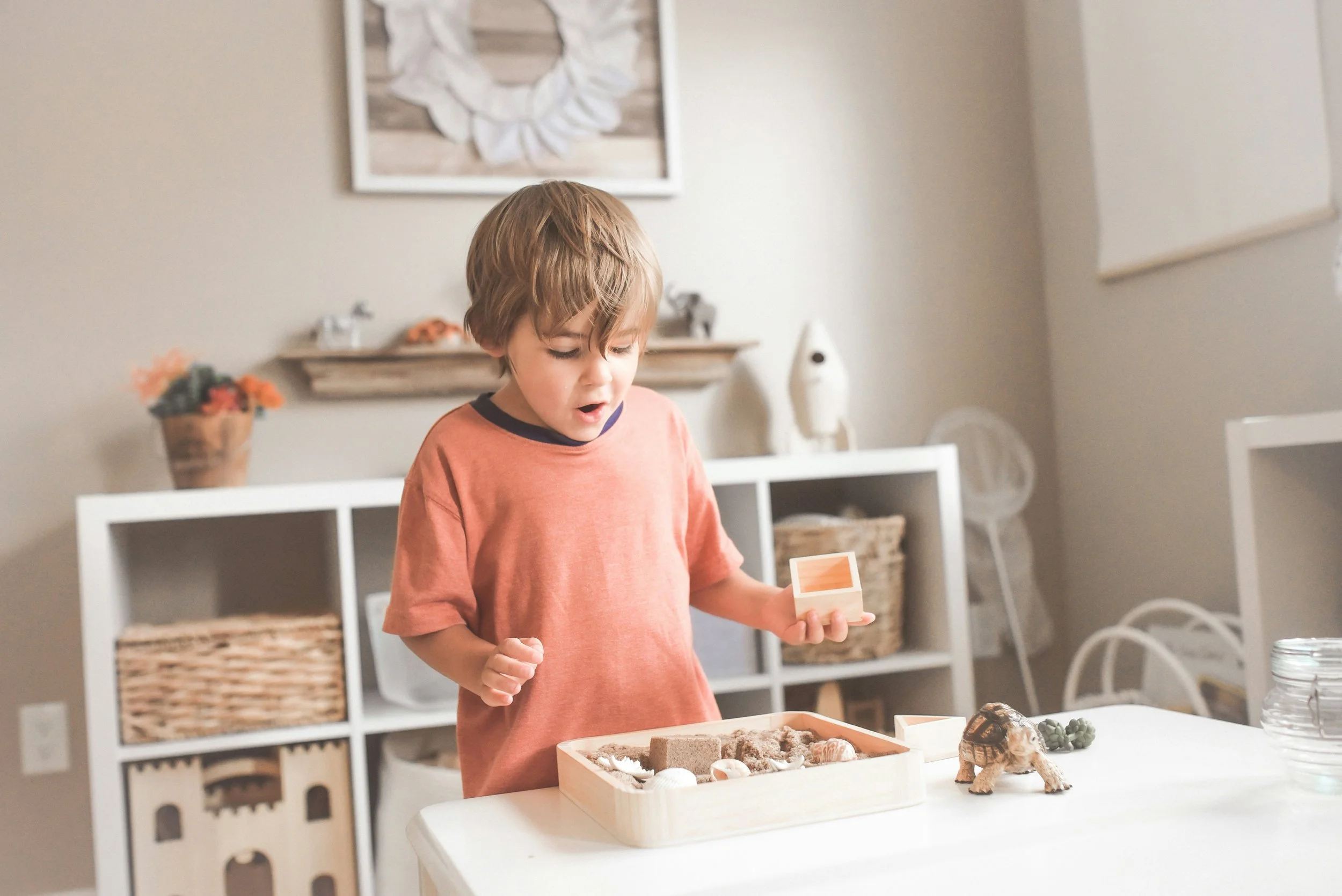
Photo by Paige Cody on Unsplash
Simple Play Activities Built Around Repetition
These activities use repetition as the whole point. Most need nothing more than everyday items.
Cause and effect play
Roll balls or toy cars down a ramp made from a tray or cardboard
Push a button toy or pop-up toy again and again
Drop objects into a bucket and listen to the sound
Fill and empty play
Put blocks or pompoms into a container, tip them out, and start again
Post large objects through a slot in a box or a tub with a hole in the lid
Scoop and pour dry rice, pasta, or oats in a tray
Stacking, lining up and sorting
Stack blocks or cups and knock them down together
Line up cars, animals, or lids if your child loves lines
Sort by colour, size, or shape if sorting is already something they enjoy
Movement play
Rolling, rocking, bouncing, and swinging
Pushing a toy trolley or walker back and forth
Gently spinning a wheel, a toy, or a top while your child watches
Water play
Pouring water from cup to cup
Splashing or pouring in the bath or a washing-up bowl
Floating and sinking small, safe objects
Peekaboo and chasing games
Peekaboo with a scarf or blanket
A simple "I'm going to get you" chase that repeats the same way each time
Hiding a toy under a cloth and revealing it
Offer one or two activities at a time. Too many choices can be overwhelming, and a simple set-up is easier for a toddler to engage with.
For visual resources and practical ideas, follow Sonia on Pinterest here.
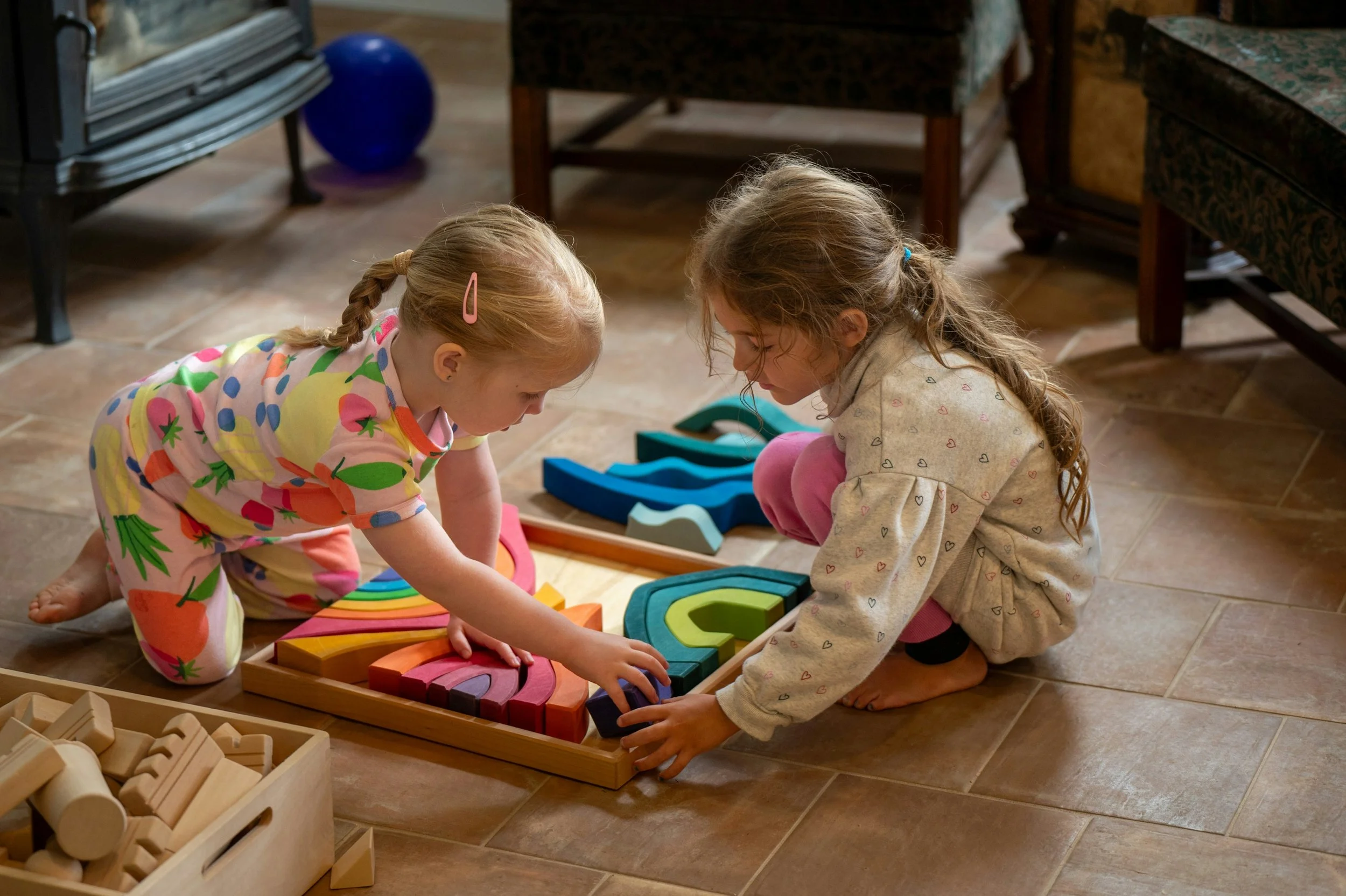
Photo by Amanda Costelloe on Unsplash
Sensory Play Ideas
Sensory play often fits naturally with repetition because the same touch, sound, or movement can be explored again and again. Notice what your child seeks out and what they avoid. Some toddlers love a sensation, while others find the same one distressing, so let your child lead.
Sensory bins. A shallow tub of dried pasta, rice, oats, or kinetic sand with scoops and cups.
Play dough. Squishing, rolling, pressing, and poking, with tools if they like them.
Bubbles. Blowing, watching, and popping, which many toddlers love to repeat.
Light and shadow. A torch under a blanket, or a lamp projecting shapes on the wall.
Textured items. Soft fabrics, a smooth stone, or a brush to explore by hand.
Music and sound. A shaker, a drum, or a bell to make the same sound over and over.
For ongoing conversations about autism and daily life, the On the Spectrum podcast with Sonia Chand is a good companion.
Listen to the On the Spectrum podcast here.
Songs, Books and Routines
Songs and books are some of the most natural forms of repetition for toddlers, and they offer a great way to build connection.
Songs with actions. Simple, repeated songs like "Twinkle Twinkle" or "Wheels on the Bus" give you a chance to pause and wait for your child to fill in a sound, a gesture, or a word.
Repeated books. Choose books with simple pictures and repeated phrases, and read the same one as many times as your child wants. Repeating a book gives them a chance to predict what comes next.
Predictable games. Games like "ready, steady, go" or "one, two, three" that always end the same way build anticipation and shared attention.
Play routines. A tidy-up song, a bath-time sequence, or a goodnight ritual makes play and everyday life feel predictable.
How to Add Gentle Variety
You do not need to change your child's favorite activities, and you do not have to push for variety. If you would like to open things up a little, small, gentle steps can work without removing the comfort of the repeated action.
Keep the core the same: Stay with the familiar activity and change one small detail only.
Change one thing at a time: Roll a different colored ball down the same ramp, or use a new container for the same pouring game.
Add a small step: After the car goes down the ramp, add a quiet "whee" or a tiny pause before it lands.
Take a turn: Pass the ball back and forth once or twice, then let your child return to the pattern.
Offer, do not insist: If your child says no or turns away, return to the original activity without fuss.
Warn about endings: A calm heads-up that play is finishing can help. The post on how to help an autistic child with transitions between activities shares ways to make those moments gentler.
Progress may be slow, and that is fine. A tiny variation that your child accepts is a real step.
Keeping Play Safe and Comfortable
A few practical points keep play enjoyable for everyone.
Supervise closely: Toddlers can choke on small objects such as pompoms, beads, and dried pasta, so check that items are age-appropriate and keep a close eye on mouthing.
Check materials: Use non-toxic, toddler-safe items, especially if your child puts things in their mouth.
Watch for sensory comfort: If your child avoids a texture or sound, do not push it. Offer an alternative and try another day.
Reduce distractions: A quiet, uncluttered space makes it easier to stay with an activity.
Allow breaks: If your child steps away or seems tired or overwhelmed, let them rest.
Stay flexible: There is no right way to play. If your child enjoys it and it is safe, it counts.
When to Seek Extra Support
Repetitive play on its own is not a cause for alarm, and it is a common part of how autistic children play. If you have wider concerns about your toddler's development, such as communication, social connection, or movement, it is worth speaking with your child's pediatrician or health visitor.
In the United States, early intervention services are available for children from birth to age three, and parents can usually request an evaluation directly through their state's program. Other countries offer similar pathways, so ask your child's doctor what is available locally. Speech and language therapists and occupational therapists can also help with play, communication, and sensory needs if your child would benefit.
FAQs
Is repetitive play normal for autistic toddlers?
Yes. Repetitive play and a preference for sameness are common in autistic children, and they often serve a real purpose such as comfort, regulation, or practice.
Should I stop my child from repeating the same activity?
Usually not. Repetition is often calming and meaningful. Joining in and gently adding small variations is generally more helpful than stopping it.
How do I join my toddler's play without interrupting it?
Observe first, sit nearby, copy what they do, and offer small additions without taking over. Let them lead.
What if my child only wants to line up toys?
Lining up is a common form of play. You can join in by handing over toys, adding one to the line, or lining up a second row beside theirs.
Are screens a good form of repetitive play?
Screens can be soothing, but real-world play usually offers more chances for connection, movement, and shared attention. Many families use a mix, and the right balance depends on your child and household.
When should I worry about repetitive behavior?
If it is intense, distressing for your child, causes injury, or comes with other developmental concerns, speak with your child's doctor.
Final Thoughts
When your toddler plays the same way again and again, they are not wasting time. They are learning, regulating, and enjoying something that feels safe to them. Your job is not to talk them out of it. It is to sit beside them, share the moment, and let your connection grow from there.
Start small. Pick one repeated activity your child already loves, join in, and notice how they respond. Over time, those shared moments become the foundation for everything else.
If you would like to feel less alone while you raise your child, Dropped in a Maze by Sonia Chand is an honest account of navigating autism without a map, and many readers find it validating.
